What Is the Best Brownie Pan Size for Fudgy Crackly Tops?

You know that moment when you pull a pan of brownies out of the oven, and instead of that glossy, paper-thin crackled crust, you’re met with a dull, flat surface? The kind that tears when you cut, and the inside is either too cakey or too gooey? It’s frustrating, especially when you followed the recipe to the letter. A Reddit baker recently posted a photo of perfect fudgy brownies with that iconic crackly top, and the secret wasn’t a fancy ingredient—it was the pan. The right pan size and material can make or break your brownie game. Let’s dig into the science and the gear that gets you there.

Is a Divided Brownie Pan Actually Worth Buying

Is a Divided Brownie Pan Actually Worth Buying

Let’s be honest. There are few kitchen moments more frustrating than trying to cut a pan of warm, gooey brownies. You wait patiently for them to cool (or maybe you don’t, I’m not judging), you grab your best knife, and you make the first slice. It comes out messy, covered in fudgy goodness, and tears the delicate top of the next row. By the end, you have a few perfect squares, a couple of mangled trapezoids, and a pile of delicious rubble. And then the battle begins: the fight for the four coveted corner pieces.

Why Does My Cake Burn on the Edges and Stay Raw Inside?

Why Does My Cake Burn on the Edges and Stay Raw Inside?

You’ve done everything right. You followed the recipe to the letter, measured your flour perfectly, and even let your eggs come to room temperature. You preheat the oven, set the timer, and slide your beautiful cake batter in, full of hope. But when the timer dings, you’re met with that all-too-common tragedy: dark, over-baked edges that threaten to turn into crust, and a gooey, under-baked center that sinks sadly as it cools.

Does Your Cake Pan Material Really Change How It Bakes?

Does Your Cake Pan Material Really Change How It Bakes?

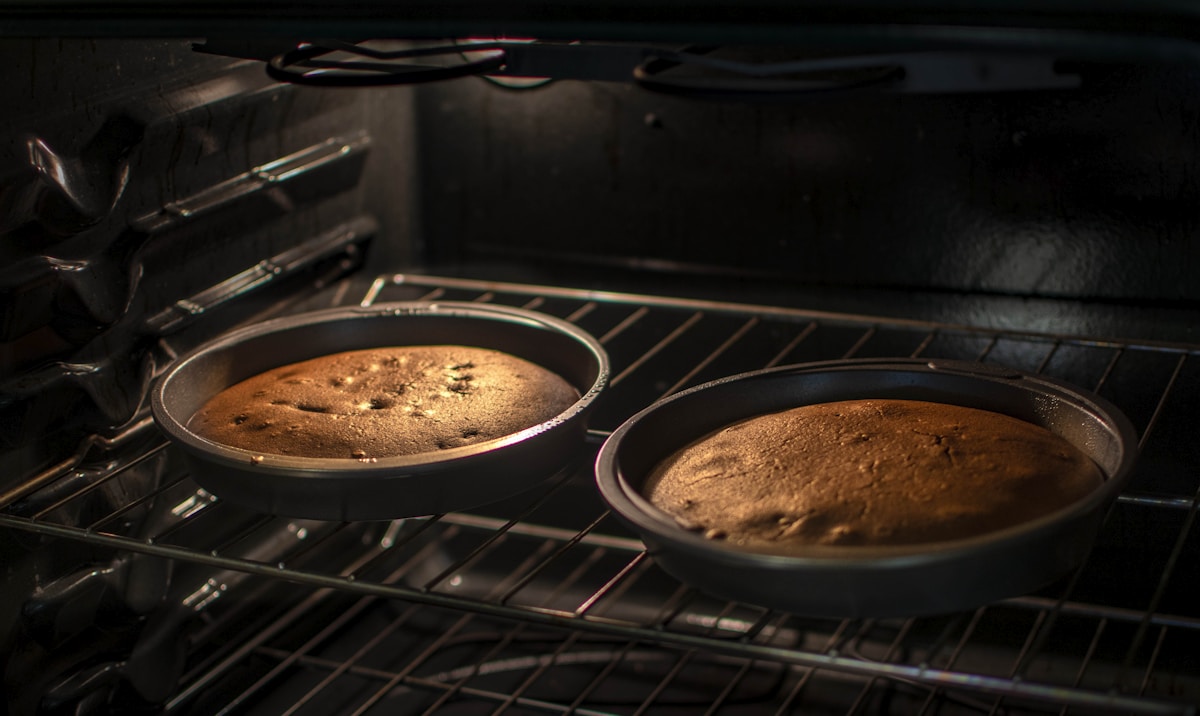
Hey there, Lucas here from kitchen-fun.com. Let’s talk about a moment of pure baking frustration. You’ve followed a recipe to the letter. You measured your flour perfectly, brought your eggs to room temperature, and creamed your butter and sugar into a fluffy cloud. You divide the batter evenly between two cake pans, pop them into a preheated oven, and set the timer.

Are Silicone Pans Ruining Your Perfect Cakes

Are Silicone Pans Ruining Your Perfect Cakes

You’ve done everything right. You followed the recipe to the letter, creamed the butter and sugar until it was light and fluffy, and folded in the flour with the lightest touch. The batter was perfect. You slide the pan into your preheated oven, filled with anticipation. The timer goes off, a skewer comes out clean, and you pull out… a pale, slightly sweaty-looking cake. The edges are soft, not crisp, and the color is more anemic than golden brown.

Are Metal Cake Pans Really Better Than Silicone for Baking

Are Metal Cake Pans Really Better Than Silicone for Baking

You’ve been there. You followed the recipe perfectly. You measured your flour, creamed the butter and sugar until fluffy, and preheated the oven to exactly 350°F (175°C). But when the timer dings, you pull out three cake layers that look like distant, estranged cousins. One is perfectly golden, one is pale and sad, and the third has a weirdly dense bottom.

Why Are My Cakes Pale and Dense in a Silicone Pan?

You did everything right. You measured your flour perfectly, brought your eggs to room temperature, and creamed the butter and sugar until it was light and fluffy. You slid the pan into your preheated oven with high hopes, only to pull out… a disappointment. The cake is pale, the edges are soft instead of crisp, and the texture is dense and a little gummy. Sound familiar?

Do insulated cake pans really stop cakes from doming?

Do insulated cake pans really stop cakes from doming?

We’ve all been there. You followed the recipe to the letter. You preheated the oven, mixed your batter just right, and poured it into your trusty cake pan. After 30 minutes of delicious smells filling your kitchen, you pull it out and see… the dome. That mountain in the middle of your otherwise beautiful cake layer that you now have to saw off, wasting cake and creating a pile of crumbs before you can even think about frosting.

Does the Color of Your Cake Pan Really Matter for Baking

Does the Color of Your Cake Pan Really Matter for Baking

You followed the recipe to the letter. You measured the flour correctly, your butter was the perfect room temperature, and you even set a timer. Yet, when you pull your beautiful cake from the oven, you’re met with disappointment. The edges are dark brown and a little tough, pulling away from the sides of the pan, while the center has domed up and cracked, and a tester comes out just a little too moist.

Why Does My Cake Bake Badly in a Silicone Pan?

Why Does My Cake Bake Badly in a Silicone Pan?

It’s a scenario I hear about all the time. You followed the recipe for that perfect vanilla layer cake to the letter. You measured your flour correctly, your butter was at the perfect room temperature, and you folded everything together with care. You pour the batter into your brand-new, brightly colored, flexible silicone pan, feeling good about its modern, non-stick promises.

Is a Brownie Divider Pan a Genius Gadget or a Kitchen Gimmick?

Is a Brownie Divider Pan a Genius Gadget or a Kitchen Gimmick?

I saw a post the other day from a baker making a single pan of brownies with four different toppings for a teacher’s gift. One quadrant had walnuts, another had caramel swirls, a third had sprinkles, and the last was pure, unadulterated chocolate. It was brilliant. It also perfectly captures the dilemma many of us face: how do you please a crowd of picky eaters without spending all day baking four different trays?

Are Metal Pans Really Better Than Silicone for Baking

Are Metal Pans Really Better Than Silicone for Baking

You followed the recipe to the letter. You measured the King Arthur flour perfectly, creamed the butter and sugar until light and fluffy, and folded in the dry ingredients with a gentle hand. You poured the pristine batter into your new, brightly colored silicone cake pan—the one that promised a perfect, non-stick release every time.

Are Brownie Divider Pans Really Worth The Money

Are Brownie Divider Pans Really Worth The Money

We’ve all been there. You’re bringing dessert to a potluck, a school bake sale, or just a family dinner. You decide on brownies—a guaranteed crowd-pleaser. But then the requests start trickling in. Your niece is a die-hard purist, your brother-in-law wants walnuts, your best friend craves a salted caramel swirl, and you just want a classic fudgy brownie with extra chocolate chips.

Why Do My Cakes Bake Unevenly in Different Pans?

Why Do My Cakes Bake Unevenly in Different Pans?

It’s a moment every home baker knows. You followed the recipe perfectly. You preheated the oven, mixed the batter just right, and poured it into three identical-looking pans to make a beautiful layer cake. But when the timer goes off, you’re faced with a frustrating mystery: one cake has dark, almost-burnt edges; another is pale and sad; and the third is… well, maybe it’s just right. What gives? How can the same oven and same batter produce such wildly different results?

Are Silicone Pans Ruining Your Cakes and Breads

Are Silicone Pans Ruining Your Cakes and Breads

You followed the recipe perfectly. You measured your King Arthur flour to the gram, your butter was at the ideal room temperature, and your oven was preheated to a precise 350°F (175°C). Yet, when the timer dings, you pull out a cake that’s… disappointing. It’s pale, a little dense, and the edges are strangely soft, almost gummy. Sound familiar? Before you blame the recipe or your oven, look at the pan. If you’re using silicone, you’ve likely found the culprit.