


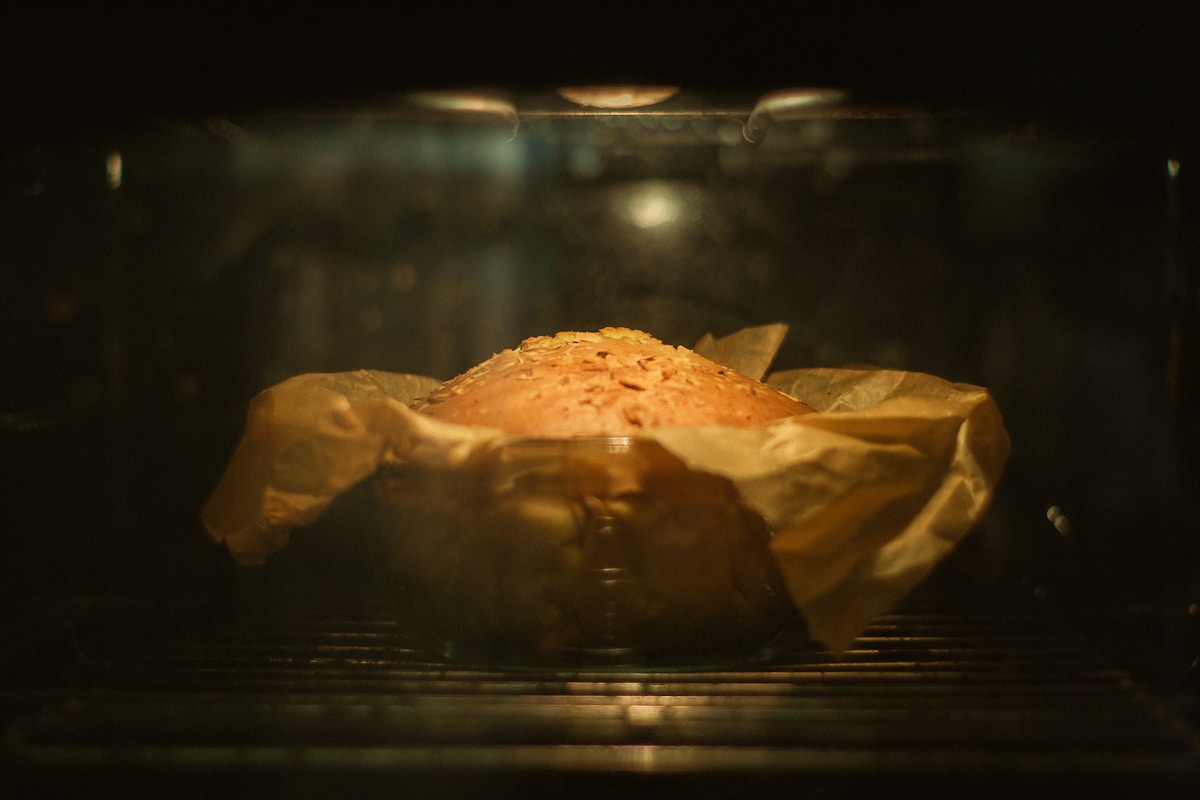
We’ve all been there. You followed the recipe to the letter. You preheated the oven, mixed your batter just right, and poured it into your trusty cake pan. After 30 minutes of delicious smells filling your kitchen, you pull it out and see… the dome. That mountain in the middle of your otherwise beautiful cake layer that you now have to saw off, wasting cake and creating a pile of crumbs before you can even think about frosting.
It’s one of the most common frustrations in home baking. I saw a post on a baking forum just the other day from someone who was heartbroken that their first-ever scratch-made birthday cake had layers that looked more like hills than discs. The problem isn’t their recipe; it’s the pan’s physics.
Today, we’re diving deep into one of the most popular proposed solutions: the insulated cake pan. Does this special piece of gear live up to its promise of perfectly flat cakes, or is it just another gadget taking up precious cabinet space? Let’s find out.
What Causes That Annoying Cake Dome Anyway?
Before we can fix the problem, we need to understand it. That dome is a result of simple heat dynamics. When you put your cake pan in a hot oven (typically around 350°F or 175°C), the metal heats up quickly.
The batter touching the sides and bottom of the pan cooks first. This outer ring of batter sets and stops rising while the center is still a liquid. The leavening agents (baking soda, baking powder) are still working in that liquid center, creating gases that cause it to rise. With the edges already set like a wall, the only place for that rising center to go is up. The result? A dome.
Standard cake pans, especially thinner ones made of aluminum or steel, are excellent heat conductors. That’s great for getting a nice brown crust, but it’s the very reason they create this uneven baking effect. The hotter and faster the edges cook, the more pronounced the dome will be.
How Insulated Pans Claim to Fix the Problem
Enter the insulated cake pan. The design is simple but clever. Instead of a single layer of metal, these pans are constructed with two layers of metal—usually aluminum—with a pocket of air sealed in between. You can think of it like a double-pane window for your cake batter.
This trapped air acts as an insulator. It significantly slows down how quickly heat transfers from the oven to the sides of the pan. Because the sides stay cooler for longer, the batter along the edges doesn’t set prematurely. This gives the center of the cake time to rise at nearly the same rate as the edges. The entire cake rises more gently and evenly, resulting in a much flatter top and a more tender crumb.
Brands like Wilton (with their Perfect Results or older Air Insulated lines) and Wear-Ever have been making these for years. They typically cost a bit more than a basic pan, usually in the $15-$25 range for a standard 8-inch or 9-inch round.
The big promise is convenience: a single tool that solves the doming problem without any extra steps. But does the reality match the promise?
My Real-World Test Insulated vs Standard
Talk is cheap. I decided to put these pans to a head-to-head test in my own kitchen. I whipped up a large batch of a classic vanilla butter cake batter, known for its tendency to dome.
I divided the batter equally among three 9-inch round pans and baked them all in the same 350°F (175°C) oven:
- The Control Pan: A standard, professional-grade heavy-gauge aluminum pan from Fat Daddio’s. This is my go-to for most baking.
- The Insulated Pan: A Wilton Perfect Results Insulated Pan.
- The Pro-Hack Pan: The same Fat Daddio’s pan, but with Wilton Bake-Even strips wrapped around the outside.
The results were clear as day.
-
The Control Pan: As expected, it produced a cake with a significant dome, probably about an inch high in the center. The edges were a lovely golden brown but noticeably darker than the top. It was a perfectly tasty cake, but it would require major surgery with a serrated knife before stacking.
-
The Insulated Pan: The difference was immediate. The cake that came out of this pan was remarkably flat. There was a very slight, gentle curve to the top, but nothing that would require leveling. The crust was a uniform pale golden color all over. One important note: it took about 8 minutes longer to bake through than the control pan. (This is a common trait of insulated pans, so always check for doneness with a toothpick rather than just relying on the recipe’s timer.)
-
The Pro-Hack Pan: This one was the gold standard. The top was perfectly, ruler-level flat. The sides of the cake were incredibly moist and light-colored because the wet strips kept them from forming a hard crust. The baking time was identical to the control pan.
So, the insulated pan worked almost as well as the industry-standard baking strips, delivering on its core promise of a flatter cake with zero extra fuss.
The Alternative The Pro’s Choice
As the test showed, baking strips are the other major player in this game. These are simply strips of fabric that you soak in cold water, wring out, and wrap tightly around the outside of a standard cake pan before it goes in the oven.
The evaporating water from the strip keeps the sides of the pan significantly cooler, mimicking the effect of an insulated pan. This is the method preferred by many professional bakers and test kitchens because it’s incredibly effective and versatile.
A set of reusable strips costs around $10-$15 and can be adjusted to fit multiple pan sizes. This means you don’t need a separate insulated pan for every size of cake you want to make.
My Favorite Kitchen Hack: You don’t even need to buy them. You can make your own DIY baking strips in a pinch. Just take an old, clean cotton dish towel, cut it into long strips about 1.5 inches wide, and soak them in water. Wrap them around your pan and secure them with a metal safety pin. (Just be sure they are 100% cotton so they don’t melt in the oven!)
The Final Verdict So Which Should You Buy?
This isn’t a simple case of one being better than the other. The right choice depends entirely on you and your baking habits. Let’s break it down.
Insulated Cake Pans
- Pros: Supreme convenience. It’s an all-in-one solution with no extra steps. They are fantastic for bakers who want consistent, repeatable results without any fiddling. The lighter crust can also be desirable for certain types of cakes.
- Cons: They are a one-trick pony. They can be bulky to store due to their double-wall construction. Most importantly, they consistently extend baking times, which you need to account for.
Standard Pan + Baking Strips
- Pros: Maximum versatility and performance. You get the best of both worlds: a standard pan that’s great for all-purpose baking (like brownies or coffee cakes where you want crusty edges) and the ability to get perfectly flat layers when you need them. The strips are cheap and take up almost no storage space.
- Cons: It’s an extra step. You have to remember to soak the strips, and they can be a little drippy and messy to handle.
My Recommendation:
For the casual baker who makes a few layer cakes a year and prioritizes simplicity above all else, an insulated pan is a great investment. It takes the guesswork out of the equation.
However, for everyone else, my advice is to invest in a couple of high-quality, heavy-gauge aluminum pans and a set of baking strips. This combination offers superior performance and far more versatility for your money. It allows you to be in control, adapting your gear to the specific bake, not the other way around. It’s the perfect example of my core philosophy: the right tool isn’t always the most expensive or specialized one, but the one that empowers you to do the job best. And in this bake-off, the humble standard pan with a little help from a wet strip still reigns supreme.


