Hey there, Lucas here from kitchen-fun.com. Let’s talk about a moment of pure baking frustration. You’ve followed a recipe to the letter. You measured your flour perfectly, brought your eggs to room temperature, and creamed your butter and sugar into a fluffy cloud. You divide the batter evenly between two cake pans, pop them into a preheated oven, and set the timer.
When the buzzer goes off, you pull them out. Pan A holds a golden-brown, perfectly risen cake. Pan B, however, holds its sad, darker cousin—a cake with a domed, slightly cracked top and edges that are way too crispy, bordering on burnt. They were in the same oven, at the same temperature, for the same amount of time. What went wrong?
The culprit isn’t your recipe or your oven (probably). It’s the pan itself. This is one of those fundamental truths in baking that can feel like a secret handshake: the material, color, and even thickness of your bakeware dramatically influence the final result. As someone who has tested dozens of pans, I’m here to tell you that the most expensive pan is rarely the best one. The right one, however, can change your baking game forever.
The Science of Heat A Baker’s Crash Course
Before we dive into comparing pans, you need to understand why they behave so differently. It all comes down to how they handle heat. Your oven uses a combination of heat transfer methods to bake, but two are critical for our discussion: convection and radiation.
Convection is the circulation of hot air, which warms the pan from the outside. Radiation is heat energy that travels in waves directly from the oven’s heating elements. How your pan reacts to this onslaught of energy determines how your cake bakes.
- Heat Conduction: This is how well heat travels through the pan’s material to the batter. Metals like aluminum and steel are fantastic conductors. They heat up quickly and transfer that heat efficiently and evenly. Materials like glass and ceramic are insulators—they are slow to heat up but hold onto that heat for a long time once they do.
- Heat Absorption & Reflection: This is all about the color and finish of the pan. Dark, matte surfaces are excellent at absorbing radiant heat. They get hotter, faster. Light-colored, shiny surfaces, on the other hand, reflect a good portion of that radiant heat. This means they heat up more gently and cook the contents more evenly.
Think of it like wearing a black shirt versus a white shirt on a sunny day. The black shirt absorbs the sun’s energy and gets hot, while the white shirt reflects it and stays cooler. Your cake pans are doing the exact same thing inside your oven. This single principle is the reason for most baking inconsistencies.
The Pan Lineup A Head-to-Head Comparison
Let’s put the most common pan types under the microscope. I’ve baked countless yellow cakes, chocolate cakes, and sponges in all of these, and the differences are consistently clear.
1. Light-Colored Aluminum Pans (The Professional’s Choice)
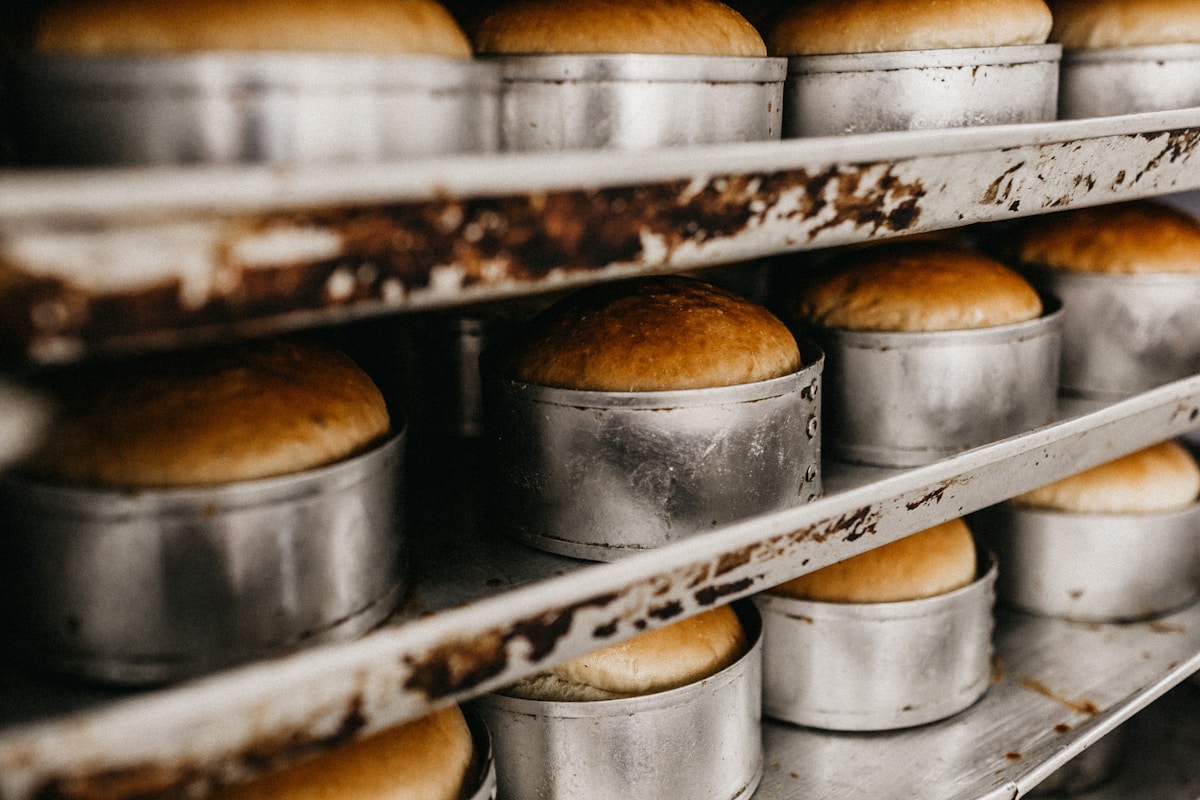
This is the gold standard for a reason. Walk into any professional bakery, and you’ll see stacks of simple, heavy-gauge, light-colored aluminum pans. They aren’t fancy, but they are incredibly reliable.
- How They Work: Aluminum is a superior heat conductor, meaning the pan heats up quickly and, more importantly, evenly. There are no hot spots. The light, matte surface reflects radiant heat, which prevents the edges of the cake from over-browning before the center has a chance to cook through. The result is a tender, evenly baked cake with a soft, golden-brown crust.
- Recommended Models: Fat Daddio’s ProSeries Anodized Aluminum Pans are my personal workhorses. The anodization process creates a non-reactive, durable surface. For a slightly more budget-friendly option, Wilton’s Performance Pans are a solid choice.
- Price Range: Typically $15 - $25 per 8-inch or 9-inch round pan.
- Pros:
- Unbeatable for even heat distribution.
- Produces light, tender crusts.
- Durable and long-lasting (especially anodized versions).
- Cons:
- Not non-stick. You must grease and flour them properly, or use parchment paper. (I see this as a pro, as it gives you more control.)
- Untreated aluminum can react with acidic ingredients like lemon or tomato, giving a slight metallic taste. Anodized aluminum solves this completely.
2. Dark Non-Stick Pans (The Convenience Trap)
This is what most home bakers start with. They’re available everywhere, and the promise of a cake that slides right out is incredibly tempting. But that convenience comes at a cost.
- How They Work: The dark, often black or dark gray, coating absorbs radiant heat like a magnet. This causes the pan to get very hot, very fast. The result? The edges and bottom of your cake bake much more quickly than the center. This often leads to a dark, thick, chewy crust, a domed top (as the center struggles to cook and rises rapidly), and a potentially drier cake overall.
- Recommended Models: If you absolutely must use non-stick, look for brands with lighter gray coatings, like some from USA Pan. But honestly, I’d steer most serious bakers away from dark-coated pans for delicate cakes.
- Price Range: $10 - $20 per pan.
- Pros:
- Excellent food release.
- Easy to clean (at first).
- Cons:
- Promotes over-browning and crispy edges.
- Can lead to uneven baking and doming.
- The non-stick coating wears out over time and is easily scratched. You should never use metal utensils on it.
3. Glass & Ceramic Pans (The Casserole Dish Impostor)
People often reach for their Pyrex or Staub dish because it’s what they have. While fantastic for lasagna or a brownie, these are poor choices for layered cakes.
- How They Work: Glass is an insulator, not a conductor. It takes a long time to heat up. Once it’s hot, however, it holds that heat extremely well. This means the batter at the edges and bottom gets blasted with sustained, high heat while the center cooks much more slowly. This often results in a cake with very dark, over-baked edges and a pale, sometimes under-cooked, center.
- Price Range: $15 - $30.
- Pros:
- You can see the browning as it happens.
- Non-reactive with all ingredients.
- Cleans up easily and can be used for serving.
- Cons:
- Terrible heat conduction for cakes.
- High risk of uneven baking.
- Can shatter with extreme temperature changes (thermal shock).
Putting It to the Test The 25°F Rule and Other Tricks
Okay, so you have a kitchen full of dark non-stick pans and you’re not ready to replace them all. I get it. The good news is you can adjust your technique to get better results.
The single most important adjustment is The 25°F Rule. When using a dark metal or glass pan, reduce your oven temperature by 25°F (about 15°C) from what the recipe calls for. So, if a recipe says to bake at 350°F, you’ll set your oven to 325°F.
Why does this work? By lowering the overall oven temperature, you slow down how quickly the heat-absorbing pan cooks the exterior of the cake. This gives the insulated center of the batter more time to cook through before the edges become tough and over-browned. You may need to add a few minutes to the total bake time, so start checking for doneness at the recipe’s original time and go from there.
Lucas’s Kitchen Hack: The Parchment Sling Forget wrestling a cake out of a pan. This works for any pan, but it’s essential for aluminum ones. Take a piece of parchment paper a few inches wider than your pan. Lay it inside, pressing it into the bottom and up two opposite sides, leaving the excess “wings” hanging over the edges. Grease and flour the pan as usual (including the parchment). Once your cake is baked and cooled slightly, you can just lift it out perfectly using the parchment wings. No flipping, no stress. (Your future self will thank you.)
And please, buy a $10 oven thermometer. Hang it inside your oven and check it against your oven’s display. Most home ovens are inaccurate, sometimes by as much as 50°F. All the best gear in the world won’t save you if your 350°F is actually 400°F.
My Go-To Recommendations for Every Baker
If you’re ready to invest in gear that will give you consistent, beautiful results for years to come, here are my top picks. The right tool makes all the difference.
- The Workhorse (Best Overall): Fat Daddio’s ProSeries Anodized Aluminum Round Cake Pan (9x2 inch). This is the pan I recommend to everyone. The anodized aluminum is tough as nails, non-reactive, and provides flawlessly even heating. It’s a professional-grade pan at a home-baker price. You will never need to replace it.
- The Budget-Friendly Pick: Wilton Performance Pans Aluminum Round Cake Pan (9x2 inch). If you’re just starting out, this simple, lightweight aluminum pan is a huge step up from any dark non-stick pan. It heats evenly and will give you great results. It’s not as durable as the Fat Daddio’s, but for the price, it can’t be beaten.
- If You MUST Have Non-Stick: USA Pan Bakeware Round Cake Pan (9 inch). The key here is that their patented AMERICOAT non-stick coating is silicone-based and significantly lighter in color than typical non-stick. This helps to mitigate the over-browning issue while still providing easy release. It’s the best compromise you can make.
The Final Crumb So Does It Really Matter?
Yes. A thousand times, yes. Your cake pan is not just a container; it’s an active participant in the baking process. The material and color dictate how heat reaches your batter, which in turn determines the final texture, color, and quality of your cake.
While you can make adjustments for dark or glass pans, the most straightforward path to consistent, bakery-quality cakes is to use the tool the pros use: a simple, inexpensive, light-colored aluminum pan. It’s a perfect example of my core philosophy: value over vanity. You don’t need to spend a fortune to get incredible results. You just need the right tool for the job.
Now go bake something amazing.