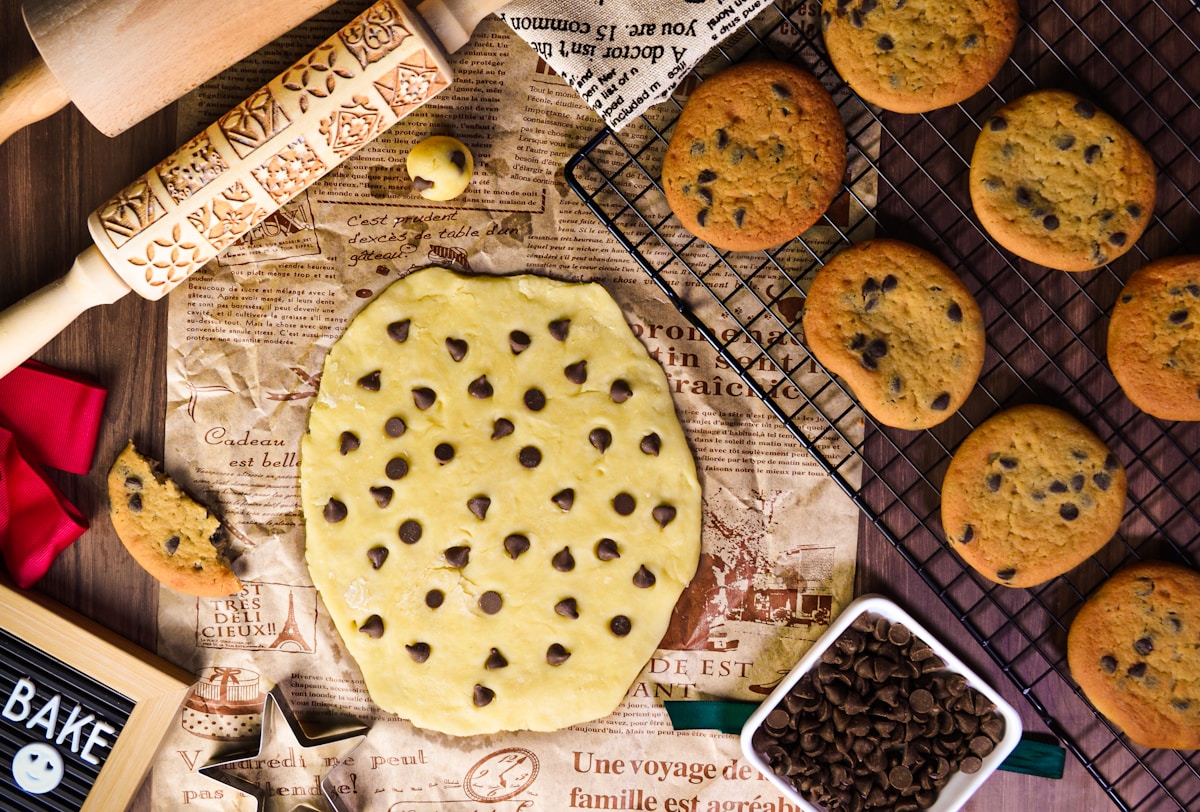
There’s a unique kind of kitchen heartbreak that comes from a beautiful tool producing a disappointing result. You have this gorgeous, intricately carved wooden cookie mold—maybe it’s a family heirloom—and you envision creating a batch of stunning, detailed chocolate cookies. Instead, you get shapeless blobs. The dough sticks, the pattern is lost, and your work of art becomes a work of frustration. I’ve been there, and I can tell you the problem isn’t the mold; it’s the chemistry of the dough.
The Science of the Stick
Most standard cookie recipes, especially for something like a chocolate chip cookie, are designed for flavor and texture—softness, chewiness, and spread. They achieve this with a relatively high ratio of fat (like butter) and leavening agents (baking soda or powder). When you press this kind of soft, butter-rich dough into a deep, detailed wooden cavity, that fat acts like a glue. The tiny wooden crevices grab onto the soft dough, and no amount of gentle tapping will release it cleanly.
Furthermore, the leavening agents are designed to create gas and make the cookie puff up in the oven. For a molded cookie, this is the enemy of definition. You want a dough with structural integrity, one that holds its shape under heat, rather than expanding out of it. We need to think less like a baker of chewy cookies and more like a sculptor. This requires a specific formula.
A Formula for Flawless Chocolate Molded Cookies
This dough is dense, shortbread-like, and specifically engineered to hold a complex shape. Precision is key here, so I highly recommend using a kitchen scale. (Trust me, it’s the single best tool for improving your baking consistency.)
Ingredients:
- 170g (about 1 cup) high-quality dark chocolate, finely chopped or in callets
- 120g (8.5 tablespoons) unsalted butter, softened but still cool
- 100g (1/2 cup) superfine or caster sugar
- 1 large egg yolk
- 1 teaspoon vanilla extract
- 250g (about 2 cups) all-purpose flour, like King Arthur
- A pinch of salt
- No leavening. (Yes, really.)
Method:
- Melt the dark chocolate gently over a double boiler or in the microwave in 20-second bursts. Set it aside to cool slightly.
- In the bowl of a stand mixer fitted with the paddle attachment, cream the cool butter and superfine sugar until just combined. We don’t want to incorporate too much air.
- Beat in the egg yolk and vanilla extract, followed by the cooled, melted chocolate.
- On low speed, gradually add the flour and salt, mixing only until a stiff dough forms. Do not overmix.
- Turn the dough out onto a lightly floured surface, form it into a disc, wrap it tightly in plastic wrap, and chill it for at least one hour. This initial chill makes it much easier to handle.
The Four-Step Method for a Perfect Impression
Once you have your chilled, architectural dough, the technique becomes paramount. Follow these steps for each and every cookie to ensure a clean release and a sharp pattern.
- Prepare the Mold: This is the most critical step. Your mold must be clean and completely dry. The secret weapon here is a dusting agent. You can use cornstarch, which will bake off invisibly, or a light dusting of cocoa powder for a richer color. My favorite kitchen hack is to use a soft, clean pastry or makeup brush to dust every single tiny crevice of the mold. Tap out any excess.
- Portion and Press: Take a small portion of your chilled dough and roll it into a smooth ball slightly larger than the mold’s cavity. Press the ball firmly and evenly into the mold, ensuring it fills every detail.
- Release: This can be the tricky part. Some bakers like to give the mold a sharp rap on the edge of the counter to release the cookie. I prefer to gently flex the mold (if possible) or use the tip of a small offset spatula to carefully pry one edge up, which often breaks the suction.
- The Critical Chill: Place the stamped cookies on a parchment-lined baking sheet. Do not bake them yet. Slide the entire sheet into the refrigerator and chill the cookies for a minimum of 2 hours, or into the freezer for 30 minutes. This step is non-negotiable. It re-solidifies the butterfat, which is essential for preventing the design from melting away in the oven. The cookies should be rock-hard before they see any heat.
Baking for Definition and Care for Your Molds
To preserve the intricate patterns, bake your cookies in a preheated oven at a slightly lower temperature than usual, around 160°C (325°F). This allows the cookie structure to set before the fat melts and causes spreading. Bake for 12-15 minutes, or until the edges are firm to the touch.
After baking, let your beautiful creations cool completely on the baking sheet before moving them. They will be fragile while warm.
Caring for your wooden molds is simple but important. Never soak them in water or put them in the dishwasher. After you’re done, use that same dry pastry brush or a stiff-bristled brush to clean out any remaining flour or dough particles. If needed, you can use a wooden toothpick for stubborn bits. Once a year, you can condition the wood with a light coating of food-safe mineral oil to keep it from drying out and cracking. These molds can last for generations if you treat them with care.
By understanding the science of the dough and following a precise method, you can turn that frustrating experience into a rewarding one, creating edible art that looks as good as it tastes.