You know the moment. The timer goes off, and the whole kitchen smells like buttery, vanilla-scented victory. You pull your beautiful cake layers from the oven, only to see it: the dreaded dome. That cracked, browned peak rising from the center of your pan like a miniature volcano.
It’s a frustration every baker has faced. You either serve a lopsided layer cake that leans like the Tower of Pisa, or you take a long, serrated knife and perform surgery, trimming off that delicious dome and turning it into a pile of scraps. (Scraps you’ll definitely eat, but still.) It feels wasteful and like an unnecessary, frustrating step.
For years, I accepted this as part of baking. Just a quirk of oven science. But what if it didn’t have to be? I kept hearing whispers in baking forums and seeing comments from pros about a ridiculously simple, cheap tool: insulated cake strips. They promise perfectly flat, even layers every single time. It sounds too good to be true, so I did what I do best: I put them to the test to see if they’re a game-changer or just another gadget cluttering up your drawer.
What Exactly Are Insulated Cake Strips?
Let’s start with the basics. Insulated cake strips are simple bands of fabric, usually a combination of materials like cotton, polyester, and a heat-reflective outer layer, sometimes made of silicone or aluminized fabric. You’ve probably seen them in the baking aisle; popular brands like Wilton, Ateco, and PME sell them in various lengths to fit common round and square cake pans.
Their purpose isn’t complicated. You soak the strip in cold water, wring out the excess, and wrap it snugly around the outside of your cake pan before you put it in the oven. That’s it. It’s a 30-second step that proponents claim completely transforms the way a cake bakes.
My first thought was skepticism. How can a damp piece of cloth possibly make that much of a difference? But the price point is what got me. A set of two strips typically costs between $10 and $15. For that price, if they can save me the hassle of trimming even a few cakes, they might just earn their keep. This isn’t a high-stakes investment like a stand mixer; it’s a low-cost potential solution to a very common problem. That’s exactly the kind of gear we love to investigate here at kitchen-fun.com.
The Science of the Bake Why Cakes Dome in the First Place
To understand why cake strips work, you first have to understand why cakes dome. It’s not your fault, and it’s not a bad recipe—it’s just physics.
Think about your metal cake pan. Metal is an excellent conductor of heat. When you place it in a hot oven preheated to, say, 350°F (177°C), the sides of the pan heat up very quickly. This intense, direct heat starts cooking the outer ring of your cake batter almost immediately.
As the edges cook, the proteins in the eggs and flour begin to set, forming a solid crust. This creates a wall around the perimeter of the cake. Meanwhile, the center of the batter is still cool and liquid. As the heat slowly penetrates inward, the leavening agents (baking powder or soda) in the center finally activate, creating gas bubbles that cause the batter to rise.
But here’s the problem: the edges are already set. The rising batter has nowhere to go but up. It’s like a geological event in miniature—the pressure from the rising center pushes upwards, creating that familiar dome and often causing the top to crack. The result is a cake that’s over-baked on the edges and perfectly baked (or even slightly under-baked) in the very center.
This is where the insulated cake strips come in. Soaking them in water turns them into a cooling band. When you wrap a wet strip around the pan, it insulates the metal from the oven’s harsh, direct heat. Through the principle of evaporative cooling, the wet strip keeps the sides of the pan significantly cooler for a much longer period of the bake. This prevents the edges of the cake from setting too quickly. Instead of a fast-forming crust, the entire cake—from edge to center—heats up and bakes at a much more uniform rate. The leaveners work their magic across the whole surface area at roughly the same time, resulting in an even, level rise. No wall, no pressure, no dome.
My Hands-On Test The Tale of Two Cakes
Theory is great, but the proof is in the pudding—or in this case, the cake. I decided to run a simple, direct comparison.
- The Control: One 8-inch round aluminum cake pan, filled with 1.5 cups of a standard yellow cake batter.
- The Test: An identical 8-inch pan, filled with the exact same amount of batter, but with a Wilton Bake-Even Strip wrapped around it, soaked for 10 minutes in cold water and gently squeezed.
Both cakes went into the same oven, preheated to 350°F (177°C), on the same rack, for the same amount of time: 30 minutes. The difference was visible even before I took them out.
Peeking through the oven door at the 20-minute mark, the control cake was already puffing up dramatically in the center. The test cake, however, was rising as a single, flat plane. When the timer went off, the results were stark.
The Control Cake (No Strip):
- Appearance: It had a significant dome, probably close to an inch high in the very center. The top had a few small cracks, and the edges were a noticeably darker shade of brown and felt quite firm to the touch.
- Trimming: To get a flat surface for stacking, I had to slice off a substantial amount of cake. It was a sad pile of delicious, wasted potential.
- Texture: The outer edge was slightly dry and crusty compared to the tender interior.
The Test Cake (With Strip):
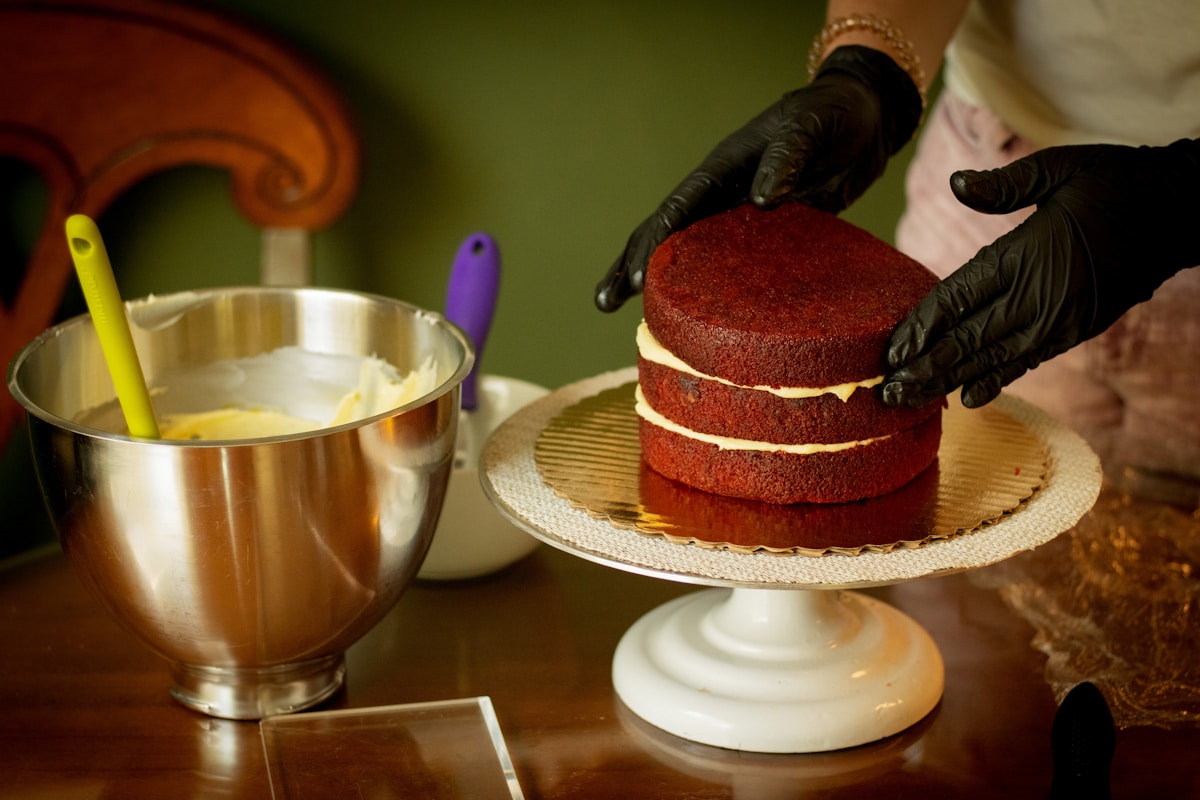
- Appearance: Astonishingly flat. I mean, ruler-level flat. The top was a uniform, pale golden brown from edge to center. No cracking, no doming.
- Trimming: It required virtually no trimming at all. Maybe a tiny shaving to be an absolute perfectionist, but for all practical purposes, it was ready to stack right out of the pan.
- Texture: The crumb was consistent and tender all the way to the edge. There was no dry, over-baked ring around the perimeter.
The difference was not subtle. It was a night-and-day demonstration. The cake baked with the strip was superior in every way: less waste, a more tender crumb, and it saved me the entire step of leveling. (Yes, really.)
How to Use Cake Strips The Right Way
Using them is incredibly simple, but a few small details ensure you get perfect results every time.
-
Measure and Fit: Before you do anything, hold the dry strip up to your pan. Most strips have a loop system for securing. Make sure you have the right size for your pan, or that your adjustable strip is set to the correct length.
-
Soak Thoroughly: Place the strips in a bowl of cold water. Don’t just give them a quick dunk. Let them soak for a good 5-10 minutes until they are completely saturated. They need to absorb as much water as possible to provide that cooling effect for the duration of the bake.
-
Gently Squeeze: Pull the strips from the water, but don’t wring them out like a dishrag. You want to gently squeeze along the length to remove the excess, dripping water. They should be very damp and heavy, not sopping wet.
-
Wrap Snugly: Wrap the strip around the outside of your filled cake pan. You want it to be snug against the metal, with no gaps. Secure it using the provided loop or pin. Make sure the strip is centered on the side of the pan, covering where the batter line is.
-
Bake as Directed: Place the pan in the oven and bake according to your recipe. You may find that your cakes take a few minutes longer to bake, as the overall baking process is gentler. Always test for doneness with a toothpick in the center.
- Kitchen Hack Alert: In a pinch, can you make your own? Yes. Some bakers create DIY strips by folding up old, clean cotton towels into strips, soaking them, and securing them with metal safety pins. However, I’d offer a word of caution: commercial strips are made from flame-retardant and oven-safe materials. A towel is not. While it can work at lower temperatures, it carries a higher risk. For the low cost and peace of mind, the real thing is the better tool.
The Verdict Are They a Must-Have for Your Kitchen?
After testing and seeing the results firsthand, my answer is an enthusiastic yes—with a small caveat. The value of this tool depends entirely on the kind of baker you are.
You absolutely should buy insulated cake strips if:
- You frequently bake layer cakes for birthdays, holidays, or just for fun.
- You hate wasting cake by trimming off domes.
- You want professional-looking, flat layers that are easy to stack and frost.
- You value consistency and want to remove one more variable from the baking process.
You can probably skip them if:
- You mostly bake single-layer sheet cakes, bundt cakes, loaf cakes, or cupcakes, where a dome isn’t a structural problem.
- You genuinely don’t mind leveling your cakes and enjoy eating the scraps.
- You bake cakes so infrequently that the extra step, simple as it is, feels like a bother.
The bottom line is this: for anyone who takes layer-cake baking even semi-seriously, insulated cake strips are one of the highest-value, lowest-cost investments you can make for your kitchen. They solve a real, tangible problem with elegant simplicity. They save you time, reduce waste, and give you a better final product. This isn’t a fancy, expensive gadget that promises the world; it’s a practical, hardworking tool that actually delivers. And in my book, that’s the best kind of kitchen gear there is.