You did everything right. You bought a beautiful 4-pound chuck roast, followed the recipe to the letter, and nestled it into your slow cooker with onions and carrots. You set it for 8 hours, dreaming of the fall-apart-tender pot roast you’d come home to. But when you opened that lid, the aroma was right, but the texture was all wrong. The meat shredded, sure, but it was stringy. Dry. Disappointing.
If this sounds familiar, you’re not alone. I’ve seen this exact complaint on cooking forums and in emails from our readers for years. The common assumption is that the slow cooker was too hot, or not hot enough, or maybe the cut of meat was bad. The real reason is usually much simpler, and it all comes down to a fundamental misunderstanding of what those ‘High’ and ‘Low’ settings actually do. (Spoiler: it’s not what you think.)
The Biggest Slow Cooker Misconception High vs Low
Let’s clear this up right away, because it’s the most important concept in slow cooking. The ‘High’ and ‘Low’ settings on your Crock-Pot, Hamilton Beach, or any other slow cooker do not determine the final cooking temperature. Both settings are designed to bring the contents of the cooker to the exact same temperature: a simmer, which is typically around 209°F (98°C), just below the boiling point of water.
The only difference between the two settings is the speed at which they reach that target temperature.
- Low Setting: Takes its time, gradually heating the contents. It typically takes about 7 to 8 hours to reach that peak simmering temperature.
- High Setting: Works much faster, almost like a race to the finish line. It will bring the food to that same 209°F (98°C) simmer in just 3 to 4 hours.
Think of it like driving to a destination. ‘Low’ is the scenic route, taking all day but enjoying the journey. ‘High’ is the interstate, getting you there as fast as possible. For many foods, the destination is all that matters. But for tough cuts of meat, the journey is everything.
The Science of Tender Meat The Magic of Collagen
So why does that longer journey on the ‘Low’ setting produce such radically different results for your pot roast or pulled pork? The answer is one beautiful word: collagen.
Tough, inexpensive cuts of meat—the very ones that are perfect for slow cooking like beef chuck, pork shoulder, and lamb shanks—are loaded with muscle fibers and tough connective tissue. This connective tissue is primarily made of a protein called collagen. When you try to cook these cuts quickly, like on a grill, the collagen remains tough and chewy. (Ever had a tough steak? That’s why.)
But when collagen is heated slowly and gently for a long period, a magical transformation occurs. It melts and breaks down, turning into rich, silky gelatin. This gelatin coats the muscle fibers, making the meat feel incredibly moist, tender, and succulent in your mouth. This is the entire goal of slow cooking tough cuts.
Here’s what happens with each setting:
- On Low: The slow, gradual temperature increase gives the collagen ample time to melt and transform into gelatin. The muscle fibers cook gently and absorb all that luscious moisture. The result is fall-apart tender, deeply flavorful, and juicy meat.
- On High: The rapid temperature increase shocks the muscle fibers. They contract quickly and violently, squeezing out their internal moisture before the collagen has a chance to fully melt and do its job. The meat will eventually become tender enough to shred, but you’ve forced all the water out first. You’re left with a product that is simultaneously falling apart and disappointingly dry.
That Redditor who cooked their pork shoulder on ‘High’ for 7 hours? They essentially rushed to the simmering point and then just boiled the meat in its own expelled juices for hours, ensuring a stringy outcome.
When to Use High and When to Always Use Low
Now that you understand the science, applying it is easy. It’s all about choosing the right setting for the right ingredients. This isn’t about being a purist; it’s about being effective.
Always Use LOW For:
- Tough Cuts of Meat: This is the golden rule. If you’re cooking beef chuck, brisket, short ribs, pork shoulder (Boston butt), or lamb shanks, ‘Low’ is your only real option for the best texture.
- All-Day Cooking: If the recipe calls for 8-10 hours, it was developed for the ‘Low’ setting. Stick to it.
- Maximum Flavor: A longer, slower cook time allows the flavors of your aromatics—the onions, garlic, herbs—to meld more deeply into the dish.
It’s Okay to Use HIGH For:
- Soups and Stews (with tender ingredients): If you’re making a vegetable soup or a chicken noodle soup where the chicken is already cooked, ‘High’ is perfect for getting it hot and ready in a few hours.
- Lean Meats: Boneless, skinless chicken breasts can actually benefit from a shorter cook time on ‘High’ (around 2.5-3 hours) to prevent them from drying out.
- Dips and Appetizers: Making a warm spinach artichoke dip or queso for a party? ‘High’ will get it melted and bubbly quickly.
- Converting Recipes: If you need to adapt a 9-hour ‘Low’ recipe to a 4-hour ‘High’ recipe in a pinch, you can often do it, but only for dishes that aren’t reliant on that collagen breakdown.
My Favorite Kitchen Hack: If you’re short on time but still cooking a tough cut, you can get a small head start. Turn the cooker on ‘High’ for the first hour to get the liquid up to a hot temperature quickly. Then, immediately turn it down to ‘Low’ for the remaining 7-9 hours of cooking. This can shave a little time off without shocking the meat too badly.
Let’s Put It to the Test A Tale of Two Pot Roasts
To really see the difference, try this simple experiment. You’ll only need to do it once to become a believer.
The Subject: One 4 lb beef chuck roast. The Prep: Pat the roast dry. Season it generously on all sides with kosher salt and black pepper. If you have time, sear all sides in a hot, oiled pan until deeply browned. (This Maillard reaction adds a huge layer of flavor.) Place the seared roast in your slow cooker on a bed of sliced onions.
The Test - Cooker A (The Right Way):
- Setting: LOW
- Time: 8.5 hours
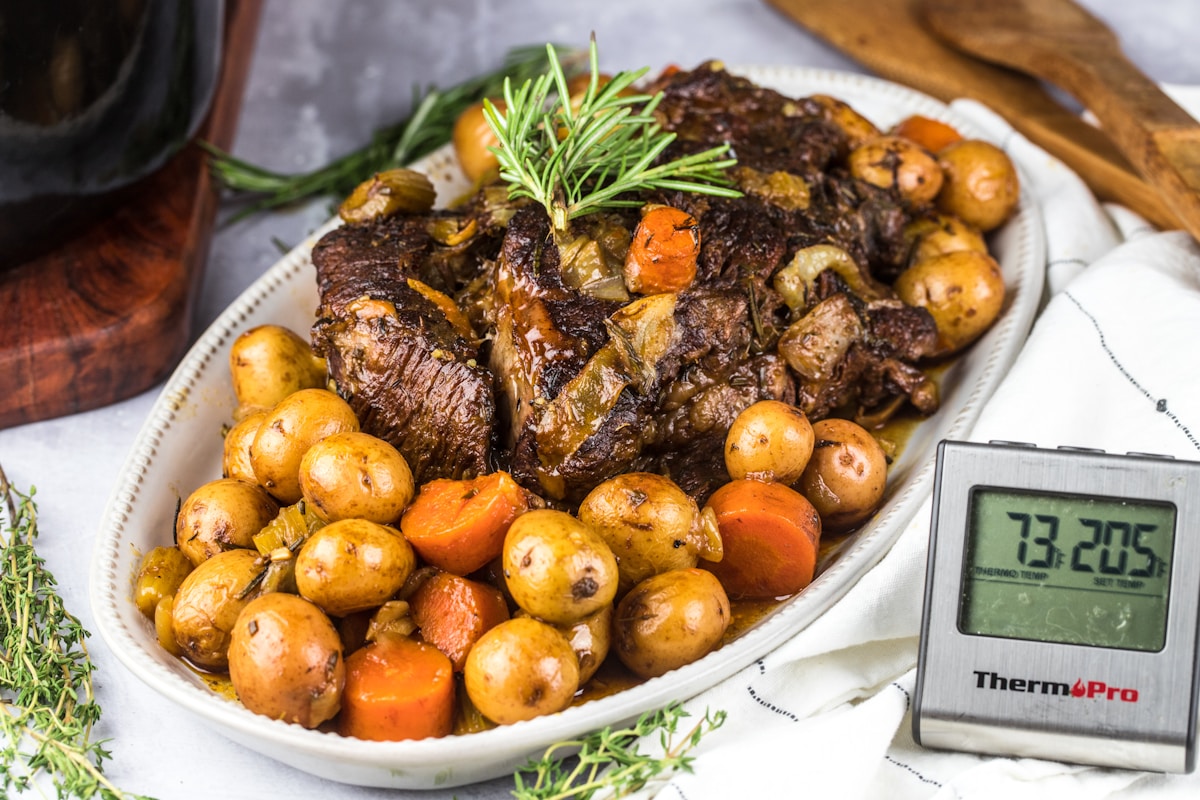
- The Result: You open the lid and the roast is slumped and glistening. When you touch it with a fork, it doesn’t just shred; it yields. It’s deeply beefy, succulent, and the melted gelatin gives the surrounding juices a rich body. Every bite is a flavor bomb of pure comfort.
The Test - Cooker B (The Rushed Way):
- Setting: HIGH
- Time: 4.5 hours
- The Result: The roast looks cooked, and it will shred with two forks. But as you pull it apart, you notice the strands are longer, more fibrous. The texture in your mouth is chewier, and while it tastes fine, it lacks that deep, unctuous moisture. It’s pot roast, but it’s not great pot roast.
Does Your Slow Cooker Model Matter?
This is a question I get all the time. Do you need a $200 multi-cooker to get great results? Absolutely not. The principle of ‘High’ vs. ‘Low’ is universal across all models. Your success depends on technique, not technology.
-
Basic Manual Models (~$30-$50): A classic like the Crock-Pot 7-Quart Manual Slow Cooker is a workhorse. It has a dial for Low, High, and Warm. That’s it. And honestly, for most people, it’s all you need. It executes the core function perfectly.
-
Programmable Models (~$60-$80): A unit like the Hamilton Beach Set & Forget Programmable Slow Cooker adds a timer. You can set it to cook on ‘Low’ for 8 hours, and it will automatically switch to the ‘Warm’ setting when the time is up. This is a fantastic feature if you’re going to be out of the house for 10 hours and don’t want your food to overcook.
-
High-End Multi-Cookers (~$150+): Models from brands like Cuisinart or the Instant Pot (using its slow cook function) often include features like a searing function right in the insert. This is a great convenience, saving you a dirty pan, but the actual slow-cooking mechanism works on the same principles. It won’t make your pot roast magically juicier than a basic model used correctly.
My advice? Spend your money wisely. A reliable, simple slow cooker and the knowledge of how to use it will always beat an expensive, feature-packed gadget used incorrectly. The right tool is important, but the right technique is what turns a dry, stringy meal into a masterpiece of comfort food.