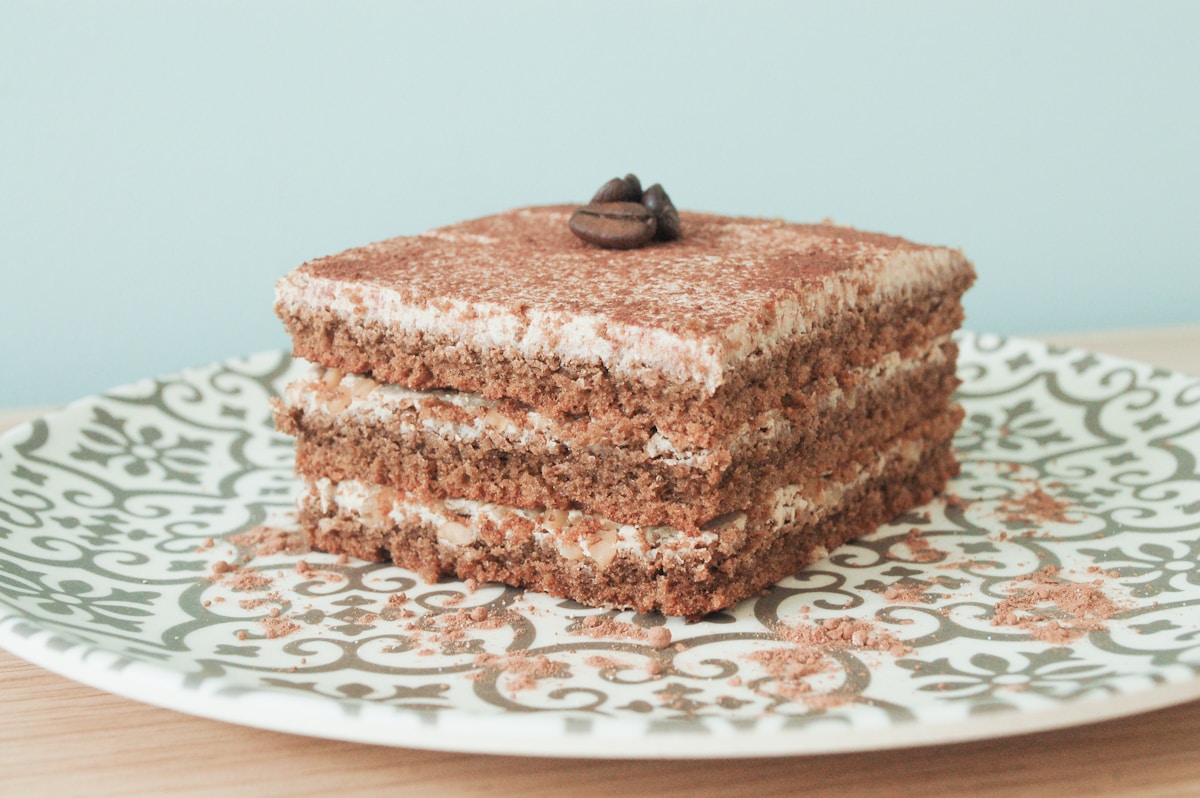
You’re standing in the grocery store, recipe pulled up on your phone, feeling excited. Tonight’s the night you finally make real, from-scratch tiramisu. You grab the eggs, the cocoa powder, the coffee… and then you get to the dairy aisle. You pick up a small, unassuming tub of mascarpone cheese, turn it over, see the price, and your heart sinks just a little. Wait, that much for cheese? By the time you’ve added the special ladyfinger cookies and a bottle of Marsala wine to your cart, your “fun little dessert project” has turned into a serious investment. If you’ve ever felt this sticker shock, please know you are not alone. It’s one of the most common surprises for beginner bakers. So let’s talk about it.
The “Big Three” Culprits of Tiramisu Cost
Tiramisu feels like it should be simple—it’s a no-bake dessert, after all! But its magic comes from a few very specific, and often pricey, ingredients. Unlike a basic chocolate chip cookie that uses pantry staples, tiramisu relies on a team of specialists.
First up is the star of the show: Mascarpone Cheese. This isn’t your everyday cream cheese. Mascarpone is an Italian double or even triple-cream cheese made from fresh cream that’s been denatured with an acidic ingredient like citric acid or lemon juice. The process gives it an incredibly high butterfat content (often 60-75%), resulting in a texture that is luxuriously smooth, rich, and barely sweet. Regular cream cheese, by comparison, is much firmer and has a distinct tangy flavor. This specialty status means it costs a pretty penny, often running anywhere from $6 to $10 for a small 8-ounce (225g) tub. (Yes, for the same price as a whole block of cheddar!)
Next, we have the foundation: Savoiardi Biscuits, also known as ladyfingers. You might think, “Can’t I just use some vanilla wafers?” Well, you could, but it wouldn’t be the same. Authentic Savoiardi are incredibly light, dry, and porous, like a very sturdy sponge. They are engineered for one glorious purpose: to quickly absorb the coffee mixture without collapsing into a pile of mush. This structure is key to the final texture of the tiramisu. Because they are a specialty import item, a package can easily cost $4 to $7.
Finally, there’s the flavor-booster: The Liqueur. A traditional tiramisu gets its complex, warming background notes from a splash of booze. Sweet Marsala wine is the most classic choice, but dark rum or a coffee liqueur like Kahlúa are also very common. Unless you’re a regular cocktail-maker, you might not have these on hand. Buying a whole bottle, which can range from $15 to $30, just for the two tablespoons the recipe calls for, can feel a bit much. This ingredient alone can double your project cost.
Doing the Tiramisu Math: Homemade vs. Store-Bought
Okay, so we’ve established that the initial grocery bill can be daunting—easily hitting $25 to $40 for all the components. Your brain immediately does the calculation: “I could buy a pretty decent tiramisu from the bakery for $20.” And you’re not wrong. So, is making it at home a total waste of money?
Let’s break it down by the slice.
A standard homemade tiramisu made in an 8x8-inch (20x20cm) pan will easily yield 9 generous servings. Let’s say your total ingredient cost was $30. That comes out to $3.33 per serving.
Now, think about the alternatives. A single, often smaller, slice of tiramisu at a restaurant or coffee shop can easily cost you $8, $10, or even $12. A pre-made tiramisu from the grocery store’s refrigerated section might cost $18, but it’s often smaller and serves maybe 4 to 6 people, putting its per-serving cost at $3.00 to $4.50.
So, while the upfront cost is high, the per-serving cost of homemade is almost always lower, especially compared to restaurant quality. The real value kicks in when you’re serving a crowd. For a dinner party or a family gathering, making it yourself is a clear financial win. Plus, you have leftover cocoa powder, coffee, and maybe even some liqueur for another day. (Your future self will thank you.)
Smart Swaps to Make Tiramisu More Affordable
What if you want that tiramisu experience without the hefty price tag? I am all for making cooking accessible, and there are definitely ways to bring the cost down. The key is to know which corners you can cut and what trade-offs you’re making.
For the Mascarpone: This is the most common substitution. You can create a mock mascarpone by blending full-fat block cream cheese with heavy whipping cream. A good starting ratio is one 8-ounce (225g) block of softened cream cheese whipped until smooth, with 1/4 cup (60ml) of heavy cream gradually beaten in. You can add a tablespoon of sour cream to mellow the tanginess a bit.
- The Verdict: It’s delicious! It will give you a creamy, stable layer that holds up well. However, it will not taste like authentic tiramisu. It will have the distinct tang of cream cheese, which some people actually prefer. It’s a tiramisu-style dessert, and a very tasty one at that.
For the Ladyfingers: If you can’t find or afford Savoiardi, you have a few options.
- Pound Cake: Slices of stale pound cake work surprisingly well. You want it to be a bit dry so it can soak up the coffee. Just slice it about 1/2-inch (1.25cm) thick and layer it in.
- Sponge Cake: A simple, plain sponge cake cut into strips is another excellent alternative.
- The Verdict: Both of these create a softer, more cake-like final dessert, which is lovely in its own right. It will be less defined than the ladyfinger version, but still wonderful.
For the Liqueur: This is the easiest and most effective budget swap.
- Skip it: Honestly, you can just leave it out entirely. The dessert will be more coffee-forward and family-friendly.
- Use an Extract: A fantastic trick is to use a non-alcoholic extract. Add 1/2 teaspoon of rum extract to your coffee mixture. It gives you that hint of warmth and complexity for a fraction of the cost.
- The Verdict: Using an extract is a brilliant kitchen hack. You get 90% of the flavor for about 5% of the cost. No one will ever know the difference.
So Is Making Your Own Tiramisu Worth It?
After all this talk of swaps and costs, we come back to the big question. My answer is a wholehearted yes, but for reasons that go beyond the per-slice math.
You make tiramisu at home not just to save money, but for the quiet magic of the process. It’s about whipping the egg yolks and sugar until they turn a pale, sunny yellow. It’s the simple, satisfying rhythm of dipping each biscuit into the cool, dark coffee. It’s the artistry of dusting the top with a thick, even blanket of cocoa powder.
When you make it yourself, you are in complete control. You can make it intensely coffee-flavored, extra boozy, or not boozy at all. You can make it sweeter or less sweet. You are the chef. That finished dessert, sitting in your fridge, represents more than just its ingredients—it represents your time, your care, and the joy of creating something truly special to share with people you love.
There’s no shame in buying a dessert when you’re short on time or energy. But if you have the desire and a bit of a budget, making tiramisu is an incredibly rewarding experience that will make you feel like a true kitchen hero.
Try This Tonight: Feeling a little intimidated? Let’s start with the easiest part. Brew a small, very strong cup of coffee or espresso (about 1/2 cup or 120ml). While it’s still warm, stir in a teaspoon of sugar until it dissolves. Let it cool completely, then add a tiny drop of vanilla or rum extract if you have it. Take a sip. That deep, slightly sweet, aromatic liquid is the soul of a tiramisu. By making just this one component, you’ve already taken the first step. The rest is just assembly, and you can absolutely do it.