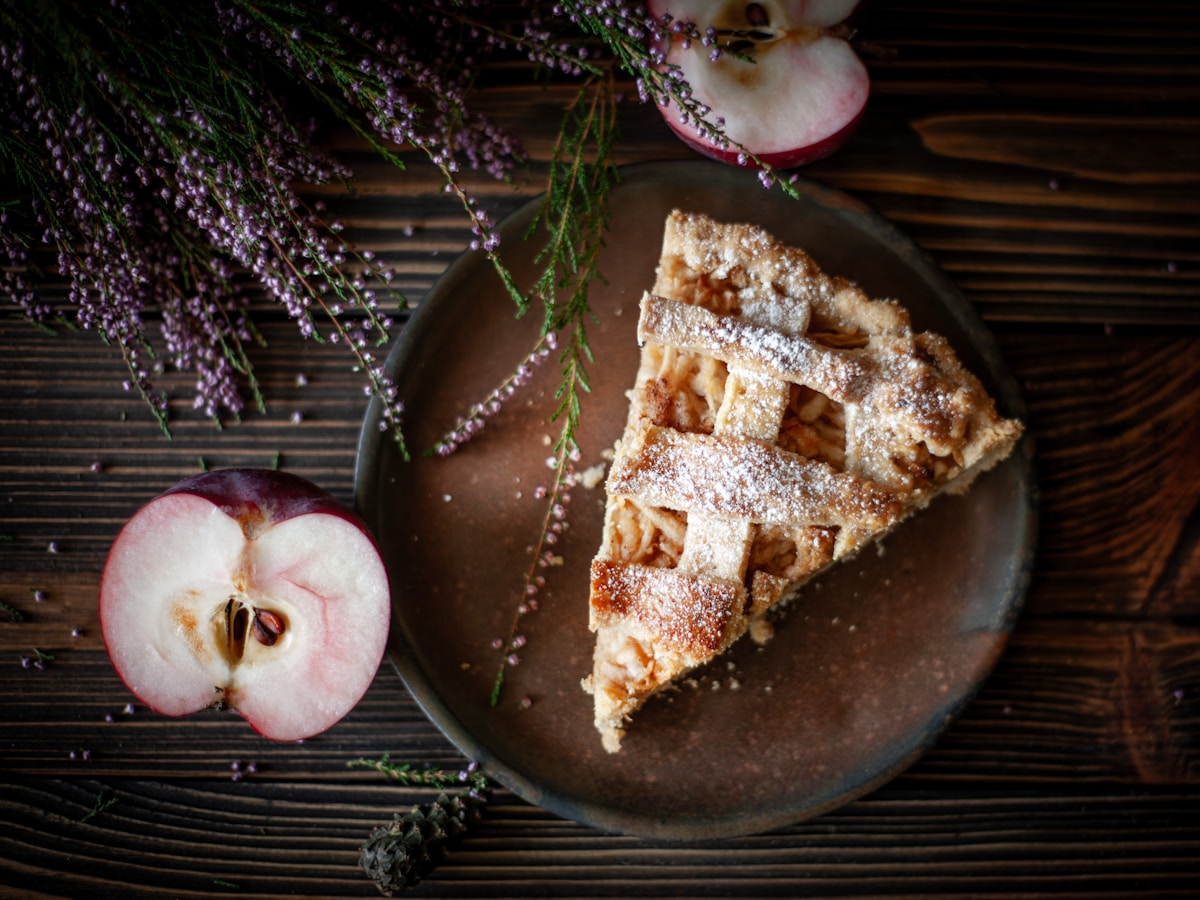
There are few kitchen moments more promising than pulling a golden-brown apple pie from the oven. The crust is flaky, the aroma of cinnamon and baked fruit fills the air, and you can practically hear the angels sing. You let it cool (mostly), slice into it, take that first eager bite, and… crunch. The apples are firm, dense, and stubbornly raw. It’s a common frustration that can make even the most beautiful pie feel like a failure.
This isn’t a personal failing; it’s a classic baking science problem. It’s a race against time where the crust is ready long before the filling is. But once you understand the chemistry at play, you can take control of the outcome and guarantee a perfectly tender, jammy apple filling every single time. Let’s break it down.
Why Do My Apples Stay Crunchy in My Pie?
The heart of the issue lies in a structural carbohydrate called pectin. Think of pectin as the cellular glue that holds the apple’s structure together, giving it that characteristic crispness. To get a soft, tender baked apple, you need to apply enough heat over enough time to break down this pectin. When that happens, the apple’s cells release their water and soften.
Your oven, however, is a very busy place. While the apples are just starting to feel the heat inside their cozy crust blanket, that same heat is working intensely on the outside, browning the butter and flour of your crust through the Maillard reaction and caramelization. An average pie bakes at around 400°F (200°C) for 45-60 minutes. For a delicate crust, this is plenty of time. For a dense pile of raw, pectin-rich apple slices, it’s often not nearly enough.
Apple variety plays a huge role here. We’re often told to use firm “baking apples” like Granny Smith, Honeycrisp, or Braeburn. This is good advice because their high pectin content means they won’t disintegrate into applesauce during baking. But that same structural integrity is what makes them so resistant to softening. A softer apple like a McIntosh will cook through much faster, but you risk a mushy, structureless filling. So, the very apples that are best for pie are also the ones most likely to cause this crunchy conundrum.
The Two Paths to Perfectly Tender Pie Apples
To solve this timing mismatch, you have two primary strategies. One is a simple adjustment of technique, and the other is a more involved but utterly foolproof method.
Method 1: The Ultra-Thin Slice
This approach relies on pure physics. The thinner an object is, the faster heat can penetrate to its center. By slicing your apples incredibly thin, you dramatically increase their surface area, allowing the oven’s heat to get to work on breaking down that pectin much more efficiently.
For this to work, you need precision and uniformity. We’re talking slices that are about 1/8-inch (around 3mm) thick. Slicing by hand can be inconsistent, which will lead to a mix of tender and still-crunchy bits. The best tool for this job is a mandoline. It will give you perfectly uniform slices in a fraction of the time. (Please, always use the safety guard.) Tossing these thin slices with your sugar and spices and packing them tightly into the pie shell gives you a much better chance of success within the crust’s baking window.
Method 2: The Pre-Cooking Guarantee (My Preferred Method)
This is the secret weapon for consistently perfect apple pie. By par-cooking the apple filling on the stovetop before it ever sees the inside of a pie crust, you completely decouple the filling’s cook time from the crust’s baking time. You give the apples a crucial head start, ensuring they are perfectly tender.
This method does more than just soften the apples. It also allows the apples to release their liquid, which you then thicken into a beautiful syrup. This not only prevents a soggy bottom crust but also solves another common pie problem: the dreaded gap between the filling and the top crust. Raw apples shrink significantly as they cook and release water in the oven, causing the filling to slump and the top crust to hover over a cavern. Pre-cooked apples have already done most of their shrinking, so you can pack your pie shell with a dense, stable filling that holds its shape beautifully.
A Step-by-Step Guide to Par-Cooking Your Apple Filling
Ready to change your pie game forever? Here is the exact method I use. This recipe provides enough filling for a standard 9-inch pie. You can use your favorite pie crust recipe, whether it’s an all-butter, shortening, or combination crust.
You Will Need:
- 4 lbs (about 1.8 kg) firm baking apples, like a mix of Granny Smith and Honeycrisp
- 4 tablespoons (57g) unsalted butter
- 1/2 cup (100g) granulated sugar
- 1/2 cup (110g) packed light brown sugar
- 1 teaspoon ground cinnamon
- 1/4 teaspoon ground nutmeg
- 1/4 teaspoon fine sea salt
- Pinch of ground cloves or allspice (optional)
- 1 tablespoon fresh lemon juice
- 2 tablespoons cornstarch (or 3 tablespoons of all-purpose flour)
The Method:
-
Prep the Apples: Peel, core, and slice your apples about 1/4-inch thick. Don’t worry about getting them paper-thin here; the stovetop will do the heavy lifting.
-
Sauté the Filling: In a large, wide-bottomed pot or Dutch oven, melt the butter over medium heat. Add the sliced apples, both sugars, all the spices, salt, and lemon juice. Stir gently until everything is coated.
-
Cook Until Pliable: Cook the mixture, stirring occasionally, for 10 to 15 minutes. The apples will begin to release their juices, and the sugars will melt into a bubbly syrup. Your goal isn’t to cook them until they are mushy. You’re looking for the “pliable” stage. To test this, pick up a slice with your tongs. If it’s flexible and bends easily without snapping, it’s ready. If it still snaps, give it a few more minutes.
-
Thicken the Juices: In a small bowl, make a slurry by whisking the cornstarch with a tablespoon or two of the liquid from the pot until smooth. Pour this slurry back into the pot and stir. Continue to cook for another 1-2 minutes, stirring constantly, until the liquid in the pot thickens from a watery syrup to a glossy sauce that coats the apples. This step is non-negotiable for preventing a soggy bottom.
-
Cool Completely: This is the most important kitchen hack I can give you. Transfer the hot filling to a baking sheet in a single layer to cool down quickly, or place the whole bowl in the fridge. You must let the filling cool to room temperature before putting it into your raw, chilled pie dough. A hot filling will instantly melt the carefully layered butter in your crust, ruining its potential for flakiness and leading to a greasy, sad result.
Once cooled, you can assemble your pie as usual and bake at 400°F (200°C) for about 45 minutes, or until the crust is deeply golden brown and you can see the thickened juices bubbling through the vents.
Common Pitfalls and How to Avoid Them
Even with the pre-cooking method, a couple of things can trip you up. Here’s how to troubleshoot them.
-
The Problem: My filling turned to mush!
- The Cause: You either cooked the apples for too long on the stovetop or you used a soft apple variety (like Gala or Red Delicious) that couldn’t handle the heat.
- The Fix: Stick to truly firm baking apples. And remember to cook only to the pliable stage, not the soft stage. They will continue to cook in the oven.
-
The Problem: My pie is still watery.
- The Cause: You likely didn’t cook the filling long enough after adding the cornstarch slurry. Cornstarch needs to reach a boiling temperature (around 203°F / 95°C) to activate its full thickening power.
- The Fix: When you add the slurry, make sure you see the juices in the pot bubble and visibly thicken before you take it off the heat. Also, ensure you let the baked pie cool for at least 4 hours before slicing. This allows the filling’s pectin and starches to fully set.
The Science of a Perfect Slice
Baking is chemistry you can eat. The mystery of the crunchy apple pie isn’t a mystery at all—it’s a predictable conflict between pectin breakdown and crust browning. By understanding this, you can intervene. Pre-cooking your filling is more than just an extra step; it’s a strategic decision that puts you in complete control of the final texture. You’re not just following a recipe; you’re manipulating the science of your ingredients to build a better pie from the inside out. And the reward is that perfect, tender, deeply satisfying slice you were dreaming of all along.