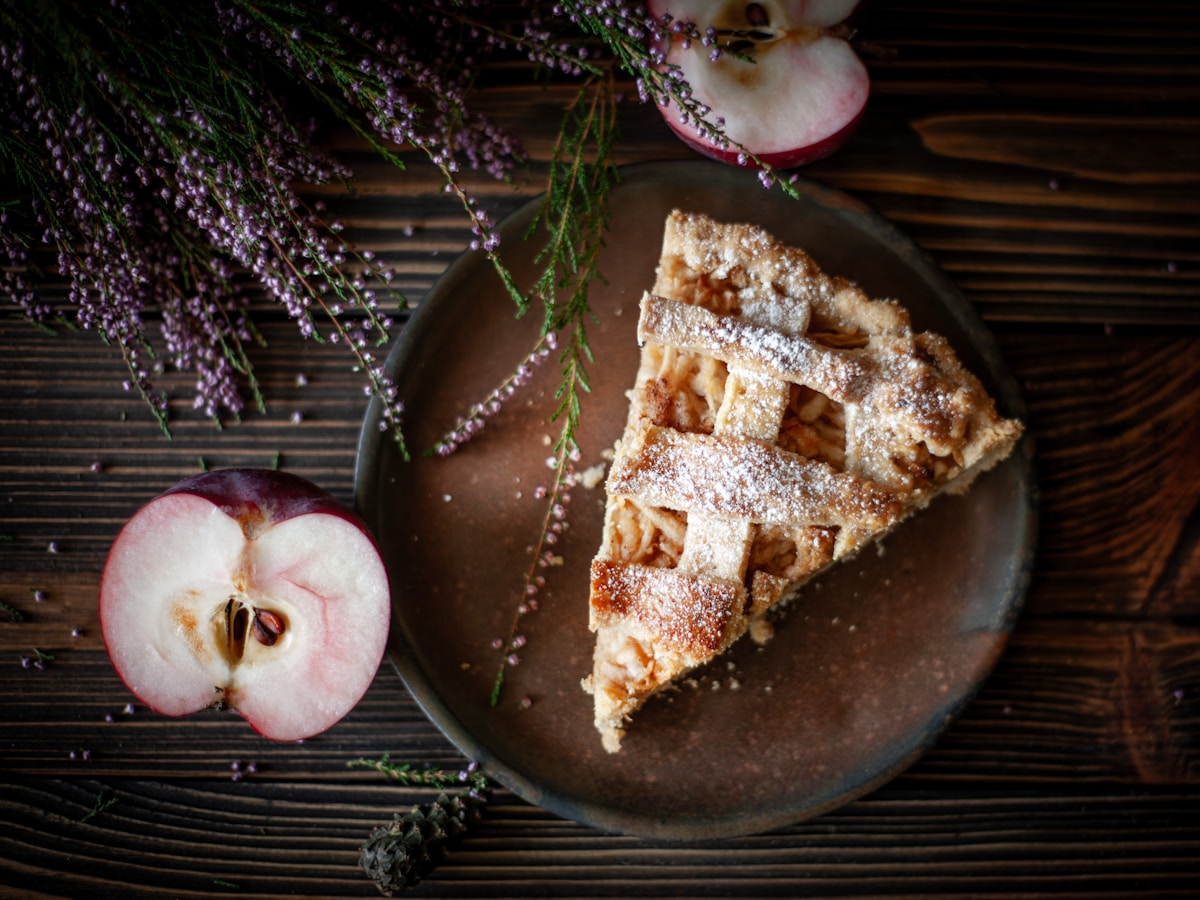
There’s a moment every new baker experiences. You’ve done everything right. You wrestled with the pie dough, you carefully peeled and sliced what felt like a hundred apples, and you created a beautiful lattice top that would make a postcard proud. Your kitchen smells like heaven. The timer goes off, and you pull out a masterpiece: a golden-brown, bubbling, perfect-looking apple pie.
You let it cool (mostly), slice into it with a trembling hand, and serve up a warm wedge. You take that first, glorious bite, expecting soft, jammy, cinnamon-spiced perfection… and then you hear it. Crunch. The apples are practically raw. The crust is perfect, but the filling is a crunchy, disappointing mess.
If this has happened to you, please know you are in good company. This is one of the most common hurdles in the wonderful world of pie making! It’s not a sign you’re a bad baker; it’s just a sign that your crust and your filling are on two different timetables. Think of it like trying to cook a delicate piece of fish and a whole potato in the oven for the same amount of time — one is going to be done long before the other. But don’t worry, synchronizing them is much, much easier than you think.
### Culprit #1 Your Apple Slices Are Too Thick
This is, without a doubt, the number one reason for crunchy pie filling. It all comes down to simple physics. For an apple to transform from a crisp, raw fruit into a tender, succulent pie filling, heat needs time to penetrate it and work its magic. The heat breaks down pectin, the natural ‘glue’ that holds the fruit’s cells together, turning it soft and luscious.
If your apple slices are too thick — say, a half-inch or more — the oven’s heat will perfectly bake your crust long before it has a chance to fully cook the center of those chunky apple pieces. You end up with a finished crust and an unfinished filling.
The Golden Rule of Slicing: Aim for a uniform thickness of about 1/4-inch (around 6mm). This is the sweet spot. It’s thick enough that the apple slices will hold their shape and not turn into complete mush, but thin enough that they will cook through completely in the time it takes to bake the pastry.
Uniformity is just as important as thickness. If you have a mix of paper-thin slices and thick chunks, you’ll get a pie with a mix of applesauce and raw apples. Take your time during the prep stage. A sharp paring knife and a steady hand work perfectly well. If you plan on making a lot of pies (and I hope you do!), a simple, inexpensive mandoline slicer can be a game-changer for getting perfectly even slices every single time. Just please, please always use the safety guard that comes with it. (Your fingertips will thank you.)
### Culprit #2 You Picked the Wrong Apple for the Job
Imagine you’re building a house. You wouldn’t use soft, pliable wood for the main support beams, would you? The same principle applies to pie. Not all apples are created equal when it comes to standing up to the heat of an oven. Some apples are destined for greatness in a pie, while others are better for snacking or turning into applesauce.
Baking apples need to be firm enough to hold their shape during their long, hot stay in the oven. They should soften but not disintegrate into a soupy mess. They also benefit from having a good balance of tart and sweet flavors that deepen and concentrate during baking.
The Pie-Baking All-Stars (Your Go-To Apples):
- Granny Smith: The undisputed champion of baking apples. It’s incredibly firm and has a powerful tartness that balances the sugar in the filling beautifully. It will never, ever turn to mush.
- Honeycrisp: A fantastic choice that lives up to its name. It’s wonderfully crisp and has a lovely sweet-tart flavor. It holds its shape extremely well in a pie.
- Braeburn: A firm apple with a complex, spicy-sweet flavor profile that is absolutely divine when baked.
- Jonagold: A large, crisp apple that’s a cross between a Jonathan and a Golden Delicious, offering a great balance of flavor and texture.
Apples to Use with Caution (The Mush-Makers):
- McIntosh: I love a McIntosh for snacking, but it’s very soft and breaks down very quickly when heated. It’s perfect for making applesauce, but it will create a pureed texture in a pie.
- Red Delicious: This apple often has a mild flavor and a mealy texture that doesn’t improve with baking.
My personal secret weapon? I never use just one type of apple. My favorite pies are always made with a combination. I’ll use half Granny Smith for that firm texture and tart backbone, and half Honeycrisp or Braeburn to add a layer of sweetness and complexity. This strategy gives you the best of both worlds!
### The Game-Changing Fix Pre-Cook Your Filling
Alright, you’ve sliced your apples to the perfect thickness, and you’ve chosen a stellar variety. Want to absolutely guarantee a tender filling and solve another common pie problem at the same time? Let me introduce you to my favorite kitchen hack: pre-cooking the filling.
This one simple step is revolutionary. By cooking the apples on the stovetop for just 10-15 minutes before they go into the pie, you give them a head start. You’re ensuring they are perfectly tender. But it also does something else magical: it prevents the dreaded ‘pie gap.’
You know that sad air pocket that sometimes forms between the baked top crust and the sunken filling? That happens because raw apples contain a lot of water and air. As they bake, they release that water and shrink down significantly, causing the filling to compact and leaving a cavern under the crust. By pre-cooking, you release most of that liquid and shrink the apples before baking, so the filling you put in the pie is the same volume it will be when it comes out.
How to Pre-Cook Your Apple Pie Filling:
- Prep Your Apples: For a standard 9-inch pie, you’ll need about 3 pounds of apples (around 6 to 8 medium ones). Peel, core, and slice them into that perfect 1/4-inch thickness.
- Combine Ingredients: In a large Dutch oven or wide pot, combine your sliced apples, 3/4 cup of sugar (use a mix of brown and white if you like!), 1 teaspoon of cinnamon, 1/4 teaspoon of nutmeg, a pinch of salt, and 3 tablespoons of cornstarch (or 1/4 cup of all-purpose flour) to thicken the juices.
- Get Cooking: Add 2 tablespoons of unsalted butter and a splash of lemon juice. Cook over medium heat, stirring gently and frequently with a rubber spatula, for 10 to 15 minutes.
- Check for Tenderness: The goal is not to make applesauce. You want the apples to become tender-crisp. They should be pliable, and a fork should be able to pierce a slice with just a little bit of resistance. The juices will have thickened into a lovely syrup.
- Cool It Down: This is critical! Let the filling cool completely — to room temperature — before you put it into your unbaked pie crust. A hot filling will melt the butter in your dough, leading to a soggy bottom crust. (Trust me on this one.)
### Your New Perfect Pie Game Plan
So, let’s put it all together. The next time you set out to bake an apple pie, you’re armed with the knowledge to make it a resounding success. No more crunchy surprises!
Remember the checklist:
- Choose Wisely: Pick firm, tart baking apples like Granny Smith, Honeycrisp, or a combination of your favorites.
- Slice Thin & Even: Keep those slices at a uniform 1/4-inch thickness.
- Give It a Head Start: Pre-cook the filling on the stovetop to guarantee tenderness and prevent the dreaded crust gap.
- Bake Smart: Start your pie in a hot oven, around 425°F (220°C), for the first 15 minutes. This helps set the bottom crust quickly. Then, reduce the temperature to 375°F (190°C) and bake for another 35-45 minutes, or until the crust is a deep golden brown and the filling is bubbling thickly through the vents.
The kitchen is more forgiving than you think, and every pie, crunchy or not, is a learning experience. You’ve got this.
Try This Tonight: Not ready to commit to a full pie? Take two apples and slice them up. Sauté them in a small pan with a tablespoon of butter, a tablespoon of brown sugar, and a sprinkle of cinnamon. Cook until they’re tender and fragrant. Spoon this warm, glorious mixture over a scoop of vanilla ice cream. It’s all the joy of a perfect pie filling, and you’ll see for yourself just how beautifully the apples transform.