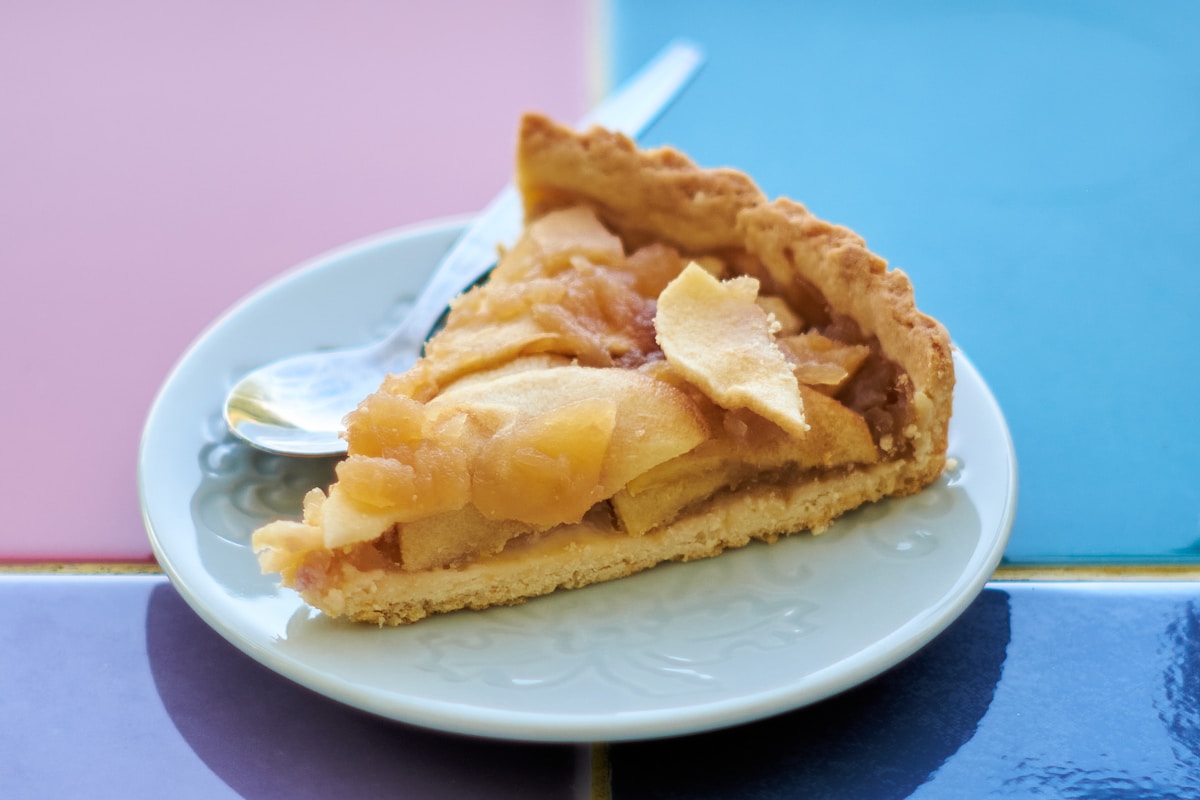
It’s one of the most heart-sinking moments in baking. The timer buzzes. You pull a masterpiece from the oven—an apple pie with a perfectly golden, flaky, latticed crust, smelling of cinnamon and caramelized sugar. You let it cool (impatiently), slice into it with pride, and serve it up. Then, the first bite. Instead of a soft, yielding, jammy apple filling, you get… crunch. The apples are firm, starchy, and stubbornly raw.
This isn’t a sign that you’re a bad baker. It’s a sign that you’ve run into one of baking’s most common physics problems. The heat required to bake a perfect crust and the heat required to fully cook a dense, watery fruit filling are on two different timelines. But understanding the science behind this common issue is the key to fixing it forever. Baking is chemistry you can eat, and today we’re running the experiment for perfect apple pie.
The Apple Autopsy Why Variety is Crucial
Not all apples are created equal, especially when they’re headed for a 375°F (190°C) oven. The choice of apple is your first and most important variable. The difference between a great baking apple and a great eating apple comes down to cell structure and pectin content.
Apples that are ideal for baking, like Braeburn, Honeycrisp, or Jonagold, have a robust cellular structure. When heated, they soften beautifully but don’t completely disintegrate. Their pectin—the natural fiber that acts like glue—is stable enough to help them hold their shape.
On the other hand, an apple like a Red Delicious or McIntosh has a finer, more delicate structure. It’s fantastic for applesauce because it breaks down into a lovely puree when cooked, but it will turn to flavorless mush in a pie. (A pie with a soupy filling is a whole other problem we’ll tackle another day.)
Then there’s the classic, the Granny Smith. It’s prized for its tartness, which provides a beautiful contrast to the sweet filling. However, it’s also one of the firmest apples you can buy. Its dense flesh takes significantly longer to cook and soften than other varieties. If you use only Granny Smiths and cut them into thick chunks, you are practically guaranteeing a crunchy result unless you take other precautions.
My recommendation? Use a blend. This is where the art meets the science.
- For Structure: Use 50% firm apples like Braeburn, Golden Delicious, or Pink Lady.
- For Flavor & Softness: Use 50% apples that are a mix of tart and sweet, like Granny Smith (for that classic zing) and Honeycrisp (for juicy sweetness).
This combination gives you the best of both worlds: apples that hold their shape, apples that melt slightly to create a jammy sauce, and a complex flavor profile that is both sweet and tart.
The Geometry of the Slice Uniformity is Not Optional
Let’s talk about heat transfer. A pie bakes from the outside in. The heat has to penetrate the crust and then slowly work its way through a dense, insulated pile of fruit. The size and shape of your apple slices directly control how efficiently this process happens.
Imagine two apple pieces: one is a 1/2-inch (1.3 cm) thick wedge, and the other is a uniform 1/4-inch (6 mm) thick slice. The thicker wedge has far more internal mass that the heat needs to reach. The thinner slice has a greater surface-area-to-volume ratio, allowing heat to penetrate quickly and cook it evenly.
If your slices are all different shapes and sizes—some chunky, some thin—you’ll get an inconsistent filling. The thin pieces will turn to mush while the thick ones remain stubbornly firm. The goal is uniform tenderness in every single bite.
The target thickness for your apple slices should be a consistent 1/4-inch (around 6mm).
How do you achieve this kitchen precision? While a sharp knife and a steady hand work, my secret weapon is a simple mandoline slicer. (Yes, really.) Set to its 1/4-inch setting, it produces perfectly uniform slices in a fraction of the time it would take by hand. Just be sure to use the safety guard—those blades are incredibly sharp. Uniform slices are the single biggest non-ingredient change you can make for a better pie filling.
The Ultimate Solution Par-Cooking Your Filling
If you want to guarantee a perfectly tender apple pie filling every single time, with zero guesswork, this is the technique. Par-cooking—or partially cooking—your apples before they ever see a pie crust is the method used by most professional bakers, and for very good reason. It solves three problems at once.
1. It Guarantees a Tender Texture. By sautéing the apples on the stovetop first, you control the cooking process completely. You can cook them until they are exactly as tender as you want them. No more praying that they’ll soften in the oven. You know they’re perfect before the pie is even assembled.
2. It Prevents the Dreaded "Crust Gap." Have you ever cut into a pie to find a large air pocket between the filling and the top crust? This happens because raw apples are full of water and air. As they bake, they release that water and shrink dramatically, sometimes by up to 40%. Par-cooking collapses the apples’ cell structure and releases most of that liquid before baking, so the filling volume stays stable. No gap, just wall-to-wall apple goodness.
3. It Creates a Deeper, Richer Flavor. This is where the real chemistry magic happens. Tossing raw apples with spices is fine, but cooking them in butter first is transformative. The heat "blooms" the spices like cinnamon and nutmeg, releasing their volatile oils and deepening their aroma. More importantly, sautéing the apples in butter and sugar begins the Maillard reaction and caramelization, creating complex, nutty, toasty notes that you simply can’t get from baking alone.
My Go-To Par-Cooked Apple Filling Method: This recipe is for a standard 9-inch pie.
-
Ingredients:
- 8 medium baking apples (about 4 lbs / 1.8 kg), peeled, cored, and sliced 1/4-inch thick
- 1/2 cup (113g) unsalted butter
- 1 cup (200g) granulated sugar
- 1/4 cup (55g) packed brown sugar
- 1 tsp ground cinnamon
- 1/4 tsp ground nutmeg
- 1/4 tsp salt
- 2 tbsp cornstarch (or 4 tbsp all-purpose flour) to thicken
- 1 tbsp lemon juice
-
Instructions:
- In a large pot or Dutch oven, melt the butter over medium heat.
- Add the apples, sugars, spices, and salt. Stir gently to coat.
- Cook, stirring occasionally, for 10-15 minutes. The apples should become tender but still hold their shape. A fork should easily pierce a slice, but it shouldn’t fall apart.
- You’ll see a lot of liquid in the bottom of the pot. A pro tip: use a slotted spoon to transfer the apples to a bowl, leaving the liquid behind.
- Bring the remaining liquid to a simmer. Whisk in the cornstarch (mixed with a tablespoon of cold water to prevent lumps) and cook for another minute until it thickens into a glossy caramel sauce.
- Pour the thickened sauce and lemon juice back over the apples and stir gently.
- Let the filling cool completely—this is critical—before pouring it into your unbaked pie shell. A hot filling will melt your crust’s butter, resulting in a soggy bottom. (Your future self will thank you for being patient.)
Final Checks and Troubleshooting in the Oven
Even with a par-cooked filling, you still need to know the signs of a perfectly baked pie.
- The Bubble Test: The most reliable indicator is the filling. It should be bubbling thickly and slowly through the vents in your top crust. Gentle simmering isn’t enough; you’re looking for a lava-like "blurp, blurp" that tells you the sugars have reached a high temperature and the thickeners have activated.
- The Temperature Test: For the truly precise baker, an instant-read thermometer is your best friend. The internal temperature of the filling should be at least 195°F (90°C).
- The Skewer Test: Gently insert a thin metal skewer or cake tester through a vent. It should slide through an apple slice with almost no resistance.
- The Foil Shield Hack: What if your crust is perfectly brown but your filling isn’t bubbling yet? Don’t pull the pie! This is where you deploy the foil shield. Loosely tent a piece of aluminum foil over the top of the pie. This deflects the direct heat, preventing the crust from burning while giving the filling the extra 15-20 minutes it needs to finish cooking.
Baking a magnificent apple pie isn’t about luck; it’s about control. By choosing the right apples, slicing them uniformly, and—most importantly—par-cooking your filling, you take the guesswork out of the equation. You’re no longer hoping the apples cook in time; you’re ensuring they do. Embrace the science, and you’ll be rewarded with a perfect, tender, glorious apple pie every single time.