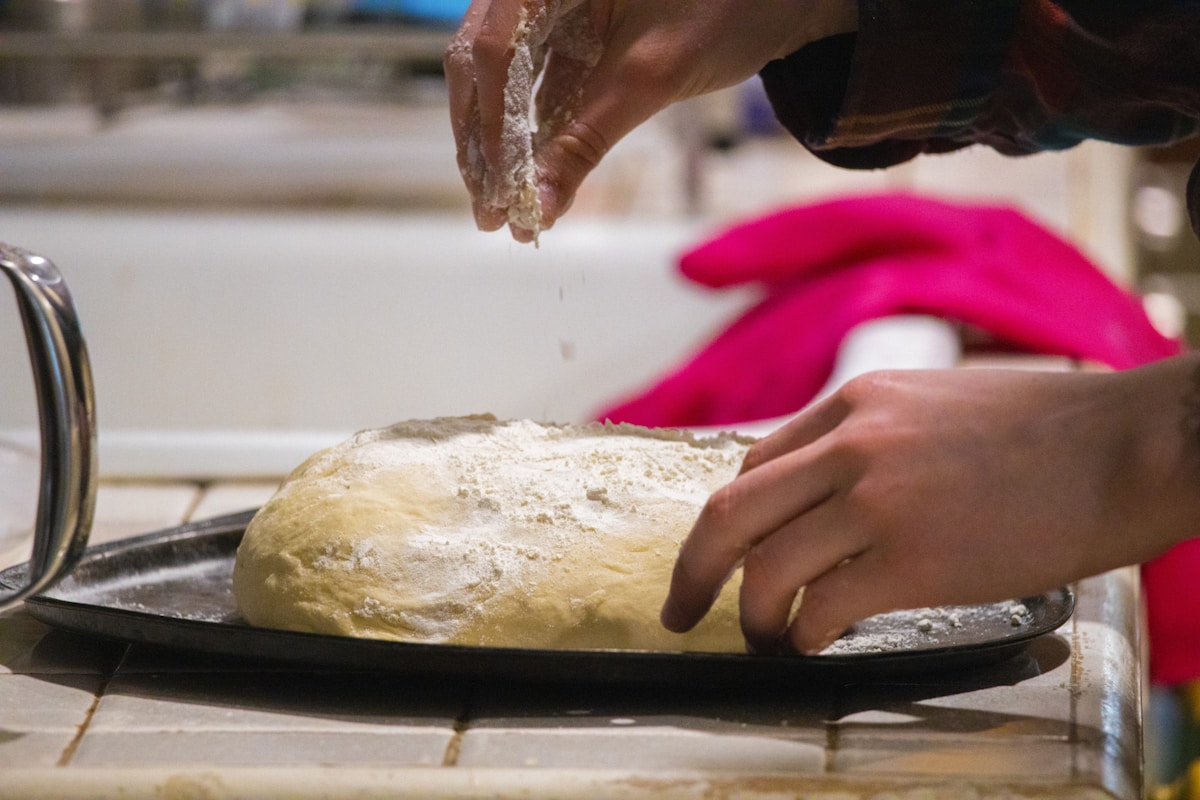
Let’s be honest. You’ve seen those gorgeous, crusty loaves of sourdough bread all over social media. You’ve imagined the smell of one baking in your own oven. And then you hear the word… starter. Suddenly, it all seems impossibly complicated, like a secret club with a secret handshake. It feels like something that requires constant, scientific attention, and one wrong move will ruin everything.
I get it. I really do. But I’m here to let you in on the secret: a sourdough starter is more like a very, very low-maintenance houseplant than a complex chemistry experiment. It’s a living thing, yes, but it’s also incredibly resilient. All it really wants is a little flour, a little water, and a bit of your attention. Today, we’re going to demystify the entire process, step by simple step. You can do this.
What Exactly Is a Sourdough Starter?
Before we start mixing, let’s talk about what this magical goo actually is. A sourdough starter is a living culture of wild yeast and beneficial bacteria that are all around us—in the air, on our hands, and, most importantly, in flour. When you mix flour and water and leave it in a warm spot, you’re essentially creating a little home where these tiny microorganisms can thrive.
These little guys eat the sugars in the flour and, in return, they produce carbon dioxide gas (which makes your bread rise) and organic acids (which give sourdough its signature tangy flavor). That’s it! You’re not creating life from scratch; you’re just cultivating the life that’s already there. Think of it as your first kitchen pet. It doesn’t bark, it doesn’t shed, but you do have to feed it regularly.
Your First 7 Days A Step-by-Step Guide
Ready to get started? All you need is a clear jar (a simple quart-sized mason jar is perfect), some unbleached all-purpose or whole wheat flour (King Arthur Flour is a fantastic, reliable choice), water, and a digital kitchen scale. Using a scale is non-negotiable here. It’s the only way to be truly accurate, and accuracy is your best friend in baking.
Here’s your schedule for the first week:
-
Day 1: The Creation. In your clean jar, mix 60 grams (about 1/2 cup) of whole wheat flour with 60 grams (about 1/4 cup) of lukewarm water. Stir it until it forms a thick, lump-free paste, like pancake batter. Scrape down the sides, cover the jar loosely (just set the lid on top, don’t screw it tight), and place it in a warm spot, ideally around 75-80°F (24-27°C). A spot near your stove or in a turned-off oven with the light on works great.
-
Day 2: Patience. You might not see much today, and that’s okay. Just leave it be.
-
Day 3: First Feeding. You might see a few bubbles and notice a slightly funky smell. This is good! It’s time to feed. First, you’ll discard most of the starter. This sounds wasteful, but it’s crucial for keeping the yeast population healthy and manageable. Remove all but 60 grams of the starter from the jar. To that remaining starter, add 60 grams of unbleached all-purpose flour and 60 grams of lukewarm water. Mix well, scrape the sides, and put it back in its warm spot.
-
Days 4, 5, 6, & 7: The Routine. Repeat the process from Day 3 every 24 hours. Discard all but 60 grams, then feed it with 60 grams of flour and 60 grams of water. (As your starter gets stronger, you may need to feed it every 12 hours, but let’s stick to 24 for now.) During this time, the smells will change from funky to pleasantly sour and yeasty. The activity will become more predictable.
How to Know Your Starter is Healthy and Ready
After about a week (sometimes two, be patient!), you’ll start to see signs that your starter is mature and ready to bake with. Here are the three key indicators you’re looking for:
-
Predictable Rise: Your starter should reliably double in size within 4 to 8 hours after a feeding. A great kitchen hack is to place a rubber band around the jar at the level of the starter right after you feed it. This makes it super easy to see how much it has grown.
-
Lots of Bubbles: A healthy starter is visibly active. It will look airy, bubbly, and almost web-like in texture when it’s at its peak.
-
The Float Test: This is the classic test of readiness. When your starter is at its peak (doubled and bubbly), drop a small spoonful of it into a glass of water. If it floats, it’s full of gas and ready to leaven bread. If it sinks, it likely needs another feeding or a little more time to mature.
Common Beginner Worries (And Why You Shouldn’t Panic)
Every beginner runs into a few hiccups. It’s part of the process! Here are the most common worries and what they mean.
-
“There’s dark liquid on top!” That’s just “hooch.” It’s a mixture of alcohol and acids that forms when your starter is hungry. It’s a sign you might need to feed it a bit more often. It is not mold and it’s not harmful. You can either pour it off for a less sour flavor or just stir it right back in before you discard and feed. No big deal.
-
“It’s not bubbling or rising.” The number one culprit here is temperature. Yeast is sluggish in the cold. Try to find a warmer spot for your jar. If your house is cool, the oven-with-the-light-on trick is a lifesaver. Also, make sure you’re using unbleached flour, as the bleaching process can damage the microorganisms you’re trying to cultivate.
-
“I missed a feeding!” Don’t worry. Your starter is tough. If you miss a feeding by a day or even two, just scrape off any dry bits on top, discard as usual, and give it a good feeding. It might take a couple of feeding cycles to get back to its bubbly self, but it will almost certainly recover.
Your Starter’s New Home The Countertop vs. The Fridge
Once your starter is mature and active, you have two options for maintaining it.
- Countertop: If you plan to bake several times a week, keep your starter on the counter in its warm spot and feed it once every 12-24 hours.
- Refrigerator: If you only bake once a week or less, the fridge is your best friend. A feeding will last much longer in the cold. Just feed your starter, let it sit at room temperature for an hour, then pop it in the fridge. It will be happy in there for a week. When you want to bake, take it out, give it a couple of feedings over 12-24 hours to wake it up, and you’ll be good to go.
Start This Weekend
See? Not so scary. The biggest hurdle is just starting. So here’s your mission: this weekend, find a jar. Grab some flour and water. Mix them together. That’s it. Don’t worry about baking a perfect loaf of bread yet. Just focus on creating and getting to know your new little kitchen pet. Watch it bubble, learn its smells, and feed it. You’re not just making a starter; you’re starting a delicious new chapter in your kitchen adventures.