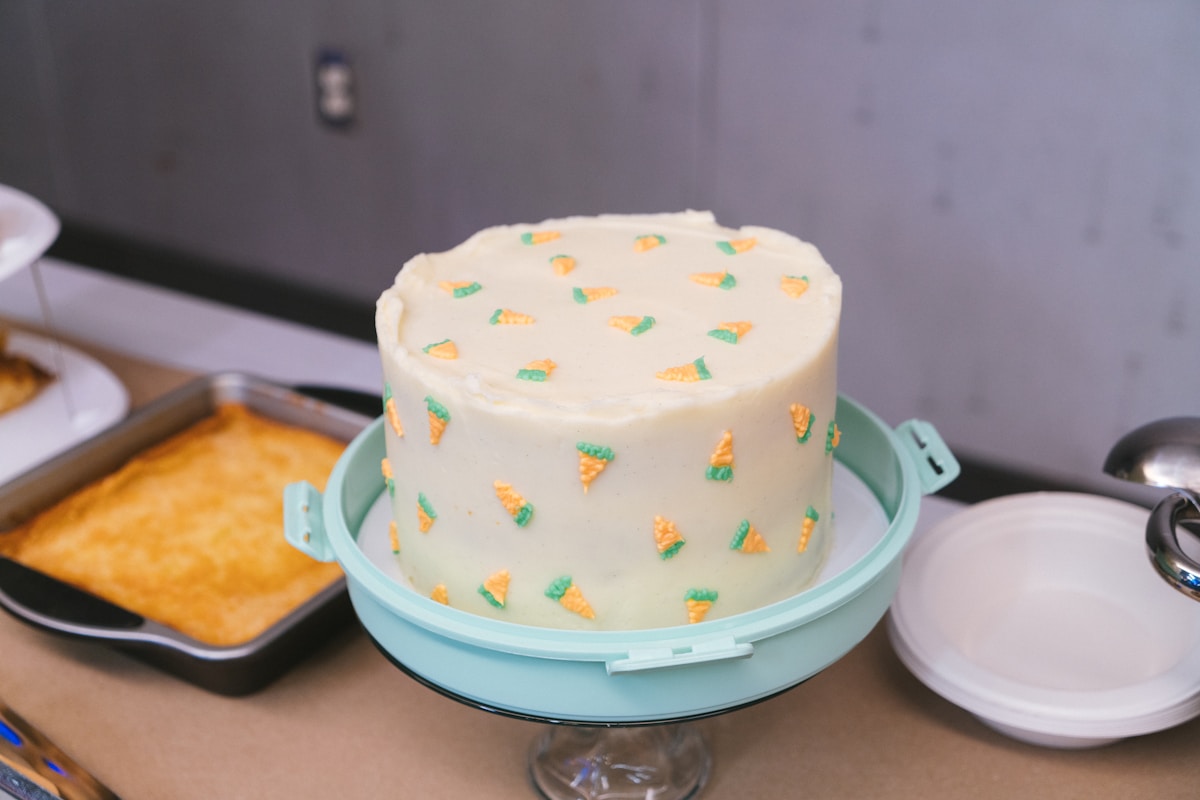
There’s a beautiful, comforting ritual to baking a carrot cake. The air fills with the warm promise of cinnamon and ginger, you get that little arm workout from grating the carrots, and your mind is already on that final, glorious step: the frosting.
For most of us, that means one thing—a beautiful, tangy cream cheese frosting. It’s a classic for a reason! But what if I told you that this beloved cake has other stories to tell? That by swapping out its classic companion, you could unlock entirely new dimensions of flavor and texture?
The kitchen is a place for joyful discovery, and today, we’re stepping just beyond the traditional to explore a few frostings that don’t just complement carrot cake—they elevate it into something truly special. Let’s get our mixers ready!
The Enduring Magic of a Classic Pairing
Before we venture out, let’s give a little nod to the reigning champion. Cream cheese frosting is iconic. Its bright, tangy flavor cuts through the richness of the cake and the sweetness of the sugar, creating a perfect balance that keeps you coming back for another bite. The dense, moist crumb of a spiced carrot cake finds its perfect counterpart in the cool, smooth schmear of cream cheese frosting.
It’s a culinary love story, a pairing that has graced countless family gatherings, spring holidays, and birthday celebrations. It’s reliable, it’s delicious, and it will always have a place in our hearts and recipe boxes. But the best part of knowing and loving a classic is understanding how to build upon it, to create a variation that’s uniquely yours.
The Game Changer Brown Butter Cream Cheese Frosting
If you want to introduce a layer of sophisticated, nutty depth to your carrot cake, look no further than brown butter. The French call it beurre noisette, or hazelnut butter, and the name is a perfect description of the magic that happens when you gently toast milk solids in butter. The flavor transforms from simple and creamy to complex, toasty, and deeply caramelized.
When you fold this liquid gold into a cream cheese frosting, it harmonizes with the warm spices in the cake—the cinnamon, nutmeg, and allspice—in a way that plain butter simply can’t. It adds a savory, nutty note that makes the entire dessert feel more grown-up and incredibly decadent.
How to Make It Sing:
The key is browning the butter perfectly. This isn’t a step to rush! (Your patience will be rewarded, I promise.)
- The Process: Take one cup (227g) of unsalted butter (using a quality brand like Kerrygold or Plugrá makes a difference) and slice it into pieces. Place it in a light-colored saucepan over medium-low heat. A light-colored pan is crucial so you can see the milk solids changing color.
- The Sights and Sounds: The butter will melt, then foam and sizzle. That’s the water cooking off. Swirl the pan occasionally. After a few minutes, the sizzling will quiet down, and you’ll see tiny brown specks forming at the bottom. The aroma will shift from buttery to wonderfully nutty. This happens when the temperature reaches around 260-280°F (125-135°C).
- The Finish: Once you see those amber-brown specks and smell that toasty aroma, immediately pour the butter—brown bits and all—into a heatproof bowl to stop the cooking process. Let it cool to a solid, paste-like consistency. You can speed this up in the fridge, but don’t let it get rock-hard.
Once your brown butter has solidified to a soft, scoopable texture, you can proceed with your favorite cream cheese frosting recipe. Simply cream it with 8 ounces (226g) of softened, full-fat block cream cheese until smooth, then gradually beat in 3-4 cups of powdered sugar, a teaspoon of vanilla extract, and a pinch of salt.
The result is a frosting with beautiful golden flecks and a flavor that is out of this world. It’s familiar enough to feel comforting but special enough to make everyone ask, “What is in this?”
The Silky Sophistication of Mascarpone Frosting
What if you love the creaminess of a dairy-based frosting but want something less tangy and more luxurious than cream cheese? Allow me to introduce you to mascarpone.
This Italian cream cheese is made from whole cream, giving it a higher fat content and a much richer, smoother, and sweeter flavor profile. It’s the star ingredient in Tiramisu for a reason! When used as a frosting, it’s pure elegance. It doesn’t compete with the cake’s spices; instead, its subtle, milky sweetness provides a velvety canvas that lets the carrot and spice flavors shine.
Its texture is its superpower: unbelievably silky and melt-in-your-mouth smooth. It feels lighter than cream cheese frosting, yet more decadent.
The Critical Kitchen Hack for Perfect Mascarpone Frosting:
Mascarpone has a reputation for being finicky. Its high fat content means it can break or curdle if it gets too warm or is over-whipped. But fear not! The secret is temperature.
- Keep Everything COLD: Before you start, place your mixing bowl and beater attachments in the freezer for about 15 minutes. Your mascarpone cheese and heavy cream should be used straight from the fridge.
- Whip Gently: This is not the time to turn your KitchenAid to high. Over-mixing is the enemy. Mix on low to medium-low speed just until the ingredients combine and form soft, luscious peaks.
A Simple, Stunning Recipe:
- In your chilled bowl, gently beat 16 ounces (450g) of cold mascarpone cheese on low speed for about 30 seconds until it’s smooth.
- With the mixer still on low, slowly stream in 1 to 1 ½ cups of cold heavy whipping cream.
- Once combined, add 1 ½ cups of powdered sugar and 2 teaspoons of vanilla extract.
- Increase the speed to medium and whip for just 1-2 minutes, until the frosting is thick and holds its shape. Stop immediately once you reach this stage. If it starts to look grainy, you’ve gone too far.
This frosting is delicate, so it’s best for a cake that will be served relatively soon and kept chilled. Its understated, creamy perfection is the ultimate complement to a beautifully spiced carrot cake.
The Lighter-Than-Air Option Spiced Ermine Frosting
For those who find most frostings cloyingly sweet, I present a treasure from the past: Ermine frosting. Also known as boiled milk frosting or flour frosting, this old-fashioned recipe predates the popularization of American buttercream. It was, in fact, the original frosting for Red Velvet cake!
Its unique method creates a texture unlike any other. It’s impossibly smooth, stable at room temperature, and tastes like a cross between whipped cream and buttercream—but far less sweet. It gets its structure from a cooked flour-and-milk paste, which is then whipped into softened butter.
By infusing the milk with spices, you can create an Ermine frosting that beautifully echoes the flavors within the carrot cake itself.
The Two-Step Technique:
- Make the Paste (Roux): In a small saucepan, whisk together 1/4 cup (30g) of all-purpose flour, 1 cup (240ml) of whole milk, and 3/4 cup (150g) of granulated sugar. Here, you can also add a cinnamon stick or a few whole cloves. Cook over medium heat, whisking constantly, until the mixture becomes a very thick paste, like pudding. This takes about 5-7 minutes. Remove the whole spices.
- Cool Completely: Transfer the paste to a bowl and press a piece of plastic wrap directly onto the surface to prevent a skin from forming. Let it cool completely to room temperature. (This is a non-negotiable step! If the paste is even slightly warm, it will melt the butter.)
- Whip the Frosting: In a large bowl, beat 1 cup (227g) of softened unsalted butter with an electric mixer for 3-4 minutes until it’s very light and fluffy. Then, add the cooled flour paste one spoonful at a time, beating well after each addition. Finally, add a teaspoon of vanilla and a pinch of salt and whip for another 2-3 minutes until it looks like a glorious, fluffy cloud.
The final result is a frosting that’s stable enough to pipe, silky on the tongue, and has a subtle sweetness that lets your carrot cake be the star of the show.
So next time you pull a beautiful carrot cake from the oven, pause for a moment. Will it be the tangy classic? The nutty, complex brown butter? The luxuriously silky mascarpone? Or the cloud-like spiced Ermine? Each one tells a different, delicious story. The only question is, which one do you want to tell today?