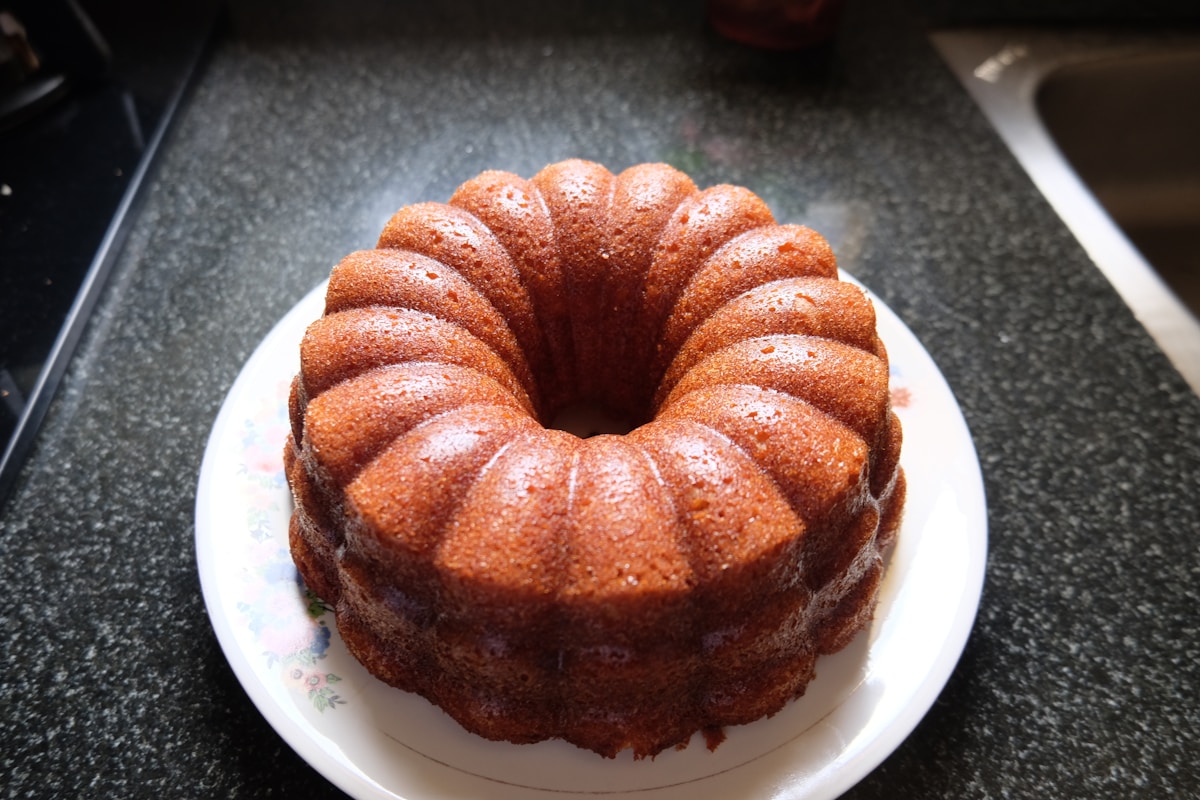
You know that moment when you pull a pound cake from the oven and the top is a uniform golden brown, but you’re secretly wishing for something more? A crust that crackles when you slice it, that shatters into buttery glass shards on your tongue? That’s exactly what happened to a baker in the r/Baking community who tried Sohla El-Waylly’s trick: coating the pan with turbinado sugar before adding the batter. The result was a vanilla pound cake with a deeply caramelized, crunchy exterior that contrasted gloriously with the tender, fine-crumbed interior. Commenters went wild, and for good reason. This simple swap — using turbinado instead of plain white sugar on the pan — can completely transform the texture and flavor of a classic pound cake. Let’s dig into the why and how, so you can replicate that bakery-level crust in your own kitchen.
The Science Behind the Crunch: Turbinado vs White Sugar
Turbinado sugar, often sold under brand names like Sugar in the Raw, is a partially refined cane sugar. Its crystals are noticeably larger than standard granulated white sugar, and each crystal retains a thin coating of molasses. That molasses is the secret weapon. When you coat a well-greased pan with turbinado, those large, molasses-coated crystals behave differently during baking than fine white sugar would.
Here’s the chemistry: White sugar (sucrose) begins to melt around 320°F (160°C) and caramelizes at higher temperatures, typically 340-350°F (171-177°C). But because the crystals are small and uniform, they dissolve quickly into the fat on the pan and then into the batter’s exterior, creating a thin, glassy crust. It’s nice, but it’s subtle.
Turbinado, on the other hand, has larger crystals that take longer to dissolve. They sit on the surface of the batter like tiny sugar gravel. As the pound cake bakes for an hour or more, those crystals slowly melt and caramelize, but because they are physically larger, they retain their structure longer. The result is a pronounced crunch — audible when you bite into it. The molasses content also accelerates Maillard browning (the reaction between amino acids and sugars that produces toasty, complex flavors), giving the crust a deeper, almost nutty caramel taste. It’s the same principle behind using Demerara sugar for crème brûlée or bagels topped with coarse sugar — the larger crystals create texture.
Getting the Technique Right: Greasing and Coating
The key to success lies in the preparation. The sugar must stick to the pan, and that means the pan needs a generous, even layer of fat. Butter is traditional and adds flavor, but its milk solids can burn during the long bake. If you use butter, make sure it’s softened but not melted — you want a thick, spreadable paste. Alternatively, use a high-quality vegetable shortening like Crisco (which has a higher smoke point) or a mix of butter and shortening. I personally prefer a 50:50 blend: the butter for taste, the shortening for reliability.
Once your pan is thoroughly greased — don’t miss the corners or the center tube if you’re using a Bundt pan — sprinkle in about 2 to 3 tablespoons of turbinado sugar. Tilt and tap the pan to coat all surfaces, then invert it and tap out the excess. Set the sugar-coated pan aside while you prepare the batter. This gives the sugar time to adhere firmly.
Temperature matters. Bake your pound cake at 325°F (163°C). Why not 350°F? The longer, slower bake at 325°F allows the interior to set and rise fully while the sugar on the exterior caramelizes gradually. At 350°F, the sugar might burn before the cake is done, especially if you’re using a dark or nonstick pan that absorbs heat faster. Stick with a light-colored aluminum or steel pan for even heat distribution. (Trust me on this one.)
Why This Works Best for Dense Cakes Like Pound Cake
This turbinado technique isn’t for every cake. It works beautifully with pound cake because the batter is dense, rich in butter and eggs, and takes 60 to 75 minutes to bake through. That extended time gives the sugar plenty of opportunity to caramelize without scorching. Lighter, airier cakes like chiffon, sponge, or angel food cake bake in 30-40 minutes, which isn’t enough time for the turbinado to fully develop its crust. The sugar may stay grainy or, worse, burn because the oven temperature is often higher for those cakes.
Pound cake’s structure also supports a crunchy crust. The high fat content (butter) ensures that the exterior stays moist enough to allow the sugar to melt and adhere, rather than drying out and flaking off. Plus, the dense crumb provides a sturdy base for that satisfying crackle. If you want to experiment, try this trick with a similar dense loaf like lemon loaf or banana bread — just watch the baking time and reduce the sugar slightly if the batter is more acidic.
Troubleshooting Common Issues
Even with careful execution, things can go off track. Here are the most common problems and how to fix them.
Problem: The sugar burns before the cake is done. Cause: Oven too hot, or using a dark/coated pan. Solution: Lower your oven temperature by 10-15°F (5-8°C). If the top is browning too fast but the center isn’t set, tent the pan loosely with aluminum foil halfway through baking. Also, check that your pan is light-colored.
Problem: The sugar falls off when you unmold the cake. Cause: The pan wasn’t greased enough, or you didn’t let the sugar adhere before adding batter. Solution: Apply the fat more generously and evenly. After sprinkling the sugar, let the coated pan sit for 5-10 minutes at room temperature. You can also gently press the sugar into the fat with your fingers (use a clean, dry hand).
Problem: Uneven coating, with patchy bare spots. Cause: Sloppy sprinkling or too little sugar. Solution: Use a fine-mesh sieve to dust the turbinado sugar evenly over the greased surface. Tap the pan vigorously to spread the crystals, and don’t be shy with the sugar — you can always tap out the excess.
Problem: The crust is too thick or chewy, not crunchy. Cause: Too much sugar, or the sugar crystals were too large. Turbinado is fairly consistent, but if you’re using a coarser raw sugar like Demerara, you may need to crush it slightly with a rolling pin or pulse it in a spice grinder. Stick with plain turbinado for best results.
A Step-by-Step Method for Perfect Turbinado Sugar Pound Cake
Here’s a reliable recipe that highlights the turbinado crust. This is adapted from classic pound cake proportions, with a few tweaks for moisture.
Ingredients:
- 1 cup (2 sticks, 226g) unsalted butter, softened
- 1 1/2 cups (300g) granulated white sugar
- 4 large eggs, room temperature
- 2 cups (240g) all-purpose flour (King Arthur Flour works well)
- 1 teaspoon baking powder
- 1/2 teaspoon fine sea salt
- 1/2 cup (120ml) whole milk, room temperature
- 2 teaspoons vanilla bean paste (or pure vanilla extract)
- 2-3 tablespoons turbinado sugar (for coating the pan)
Instructions:
- Preheat your oven to 325°F (163°C). Grease a 9x5-inch loaf pan (or a 10-cup Bundt pan) thoroughly with butter or shortening. Sprinkle the turbinado sugar into the pan, tilt to coat, tap out excess, and set aside.
- In a large bowl, cream the butter and granulated sugar together using a hand mixer or stand mixer fitted with the paddle attachment. Beat on medium speed for 4-5 minutes until light and fluffy. Scrape the bowl halfway through.
- Add the eggs one at a time, beating well after each addition. Stir in the vanilla paste.
- In a separate bowl, whisk together the flour, baking powder, and salt. Add the dry ingredients to the butter mixture in three additions, alternating with the milk. Begin and end with the flour. Mix just until combined — overmixing will toughen the cake.
- Pour the batter into the prepared pan and smooth the top with a spatula. Bake for 60-70 minutes, until a toothpick inserted into the center comes out clean with a few moist crumbs. If the top is browning too quickly, tent with foil after 45 minutes.
- Let the cake cool in the pan on a wire rack for 10 minutes. Then run a thin knife around the edges and carefully invert the cake onto the rack. Do not skip this resting time — the sugar needs to set so it doesn’t peel off. Cool completely before slicing.
Kitchen hack: For an even more intense caramelized crust, brush the hot cake with a simple syrup made from turbinado sugar after unmolding, then let it set. (Your future self will thank you.)
Conclusion: A Small Change, a Giant Crunch
The beauty of this technique lies in its simplicity. You don’t need a new pan, a special ingredient, or complicated steps. Just swap the sugar you use to coat the pan, and you’ll unlock a crust that’s crunchy, caramelized, and memorable. It’s the kind of detail that makes a humble pound cake feel like a special-occasion treat. So next time you’re creaming butter and sugar, reach for that box of turbinado. Your taste buds — and anyone lucky enough to share a slice — will thank you.