


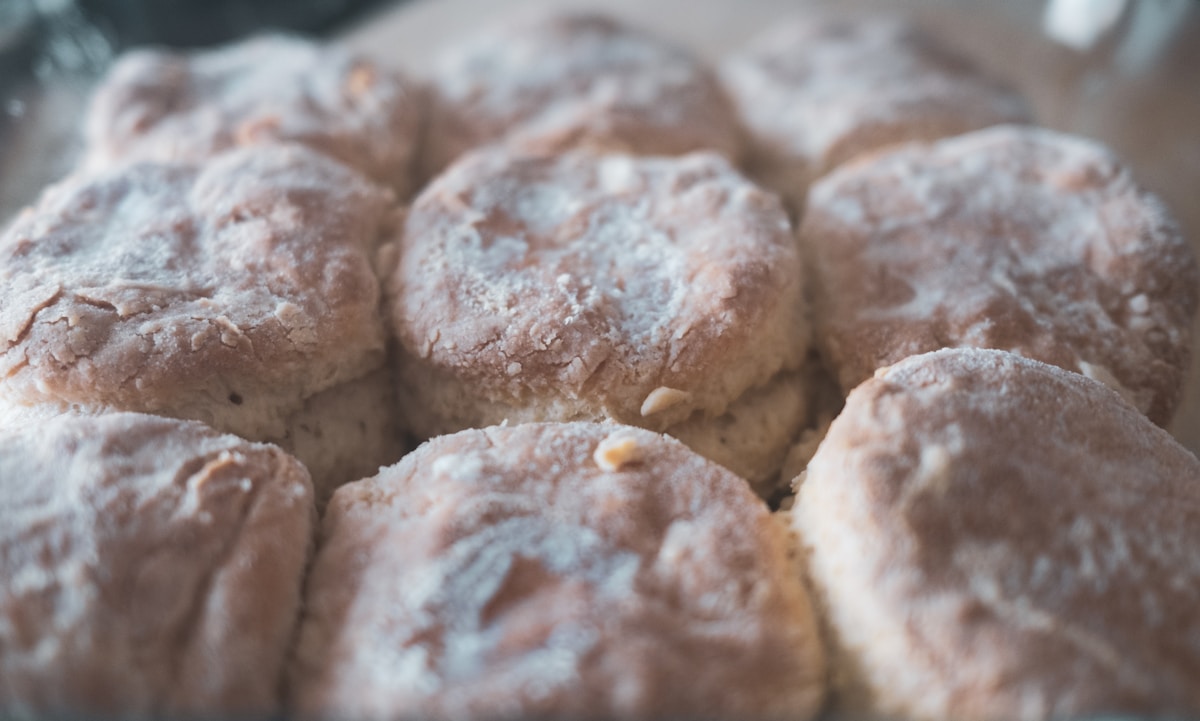
The Tale of the Dense Biscuit
You pulled out a baking sheet, you followed the recipe step by step, and when you bit into that biscuit… it was a sad, hockey-puck of dough. It wasn’t tender. It wasn’t flaky. It was just dense. I’ve been there. In fact, that was my first three attempts at buttermilk biscuits. And here’s the good news: once you understand a few simple rules, you can turn out golden, buttery layers every single time.
Why Biscuits Go Wrong (And Right)
Biscuit failures usually come down to two culprits: warm butter and overmixing. When butter melts before the biscuit hits the hot oven, it gets absorbed into the flour instead of creating steam. That steam is what pushes the dough up into those beautiful, flaky layers. Overmixing develops gluten, turning a tender biscuit into a tough one. The goal is to keep the butter cold and handle the dough as little as possible.
The Cold Butter Trick That Changes Everything
The number one hack from Southern bakers on Reddit’s r/Baking is to freeze your butter and grate it into the flour. Yes, really. Pop a stick of unsalted butter (Kerrygold is great for its high butterfat content) into the freezer for at least 30 minutes. Then use the large holes of a box grater to shred it directly into your flour mixture. This creates tiny, cold butter pieces that are evenly distributed. No cutting in, no worrying about pea-sized chunks. (Your fingers stay clean, too.)
Step-by-Step: The Lamination Method
Lamination sounds fancy, but it just means folding the dough over itself to create layers. Here’s how to do it without fear:
- Mix dry ingredients: In a large bowl, whisk together 2 cups of all-purpose flour (King Arthur Flour works beautifully), 1 tablespoon baking powder, 1 teaspoon sugar, and ½ teaspoon salt.
- Add grated butter: Toss the frozen grated butter into the flour until each shred is coated. (This prevents clumping.)
- Add buttermilk: Make a well in the center and pour in ¾ cup cold buttermilk. Stir with a silicone spatula just until a shaggy dough forms. It will look dry in spots — that’s perfect.
- Turn out and pat: Dump the dough onto a lightly floured surface. Pat it into a rectangle about ½ inch thick. Don’t use a rolling pin; gentle hands prevent overworking.
- Fold it over: Fold the dough into thirds like a letter. Then give it a quarter turn and pat it back into a rectangle. Repeat this folding process two more times (three folds total). This creates those distinct layers.
- Chill again: Wrap the dough in plastic wrap and refrigerate for 15 minutes. This lets the butter re-harden. (Your future self will thank you.)
- Cut with a sharp cutter: Use a sharp 2½-inch biscuit cutter. Press straight down — no twisting. Twisting seals the edges, preventing the biscuit from rising. If you don’t have a cutter, a sharp-edged glass works fine.
- Bake hot: Place biscuits on a parchment-lined baking sheet (Lodge’s steel baking sheets are excellent) so they just barely touch. Bake at 450°F (230°C) for 12–15 minutes until golden brown.
The “Sharp Cutter” Rule
One Redditor shared their third attempt that finally worked — the game-changer was using a sharp biscuit cutter instead of a dull one. A dull edge crushes the layers together, stopping the steam from pushing upward. If you only have a round cookie cutter that’s a bit blunt, dip it in flour and use a quick, straight-down motion. No twisting. (Trust me on this one.)
What If They Still Don’t Rise?
A few common pitfalls:
- Your baking powder is old. Check the date. Fresh baking powder is key for lift.
- Your oven runs cold. Invest in an oven thermometer. Many home ovens are off by 25°F.
- You handled the dough too much. Once you add buttermilk, mix only until the flour is just moistened. Gluten develops quickly.
Try This Tonight
Start with the grated frozen butter method. Make a small batch of six biscuits. While they bake, the butter melts into steam pockets, and the folds create delicate layers. Slather one with butter and honey. You’ll taste the difference immediately — and you’ll never go back to dense biscuits again.


