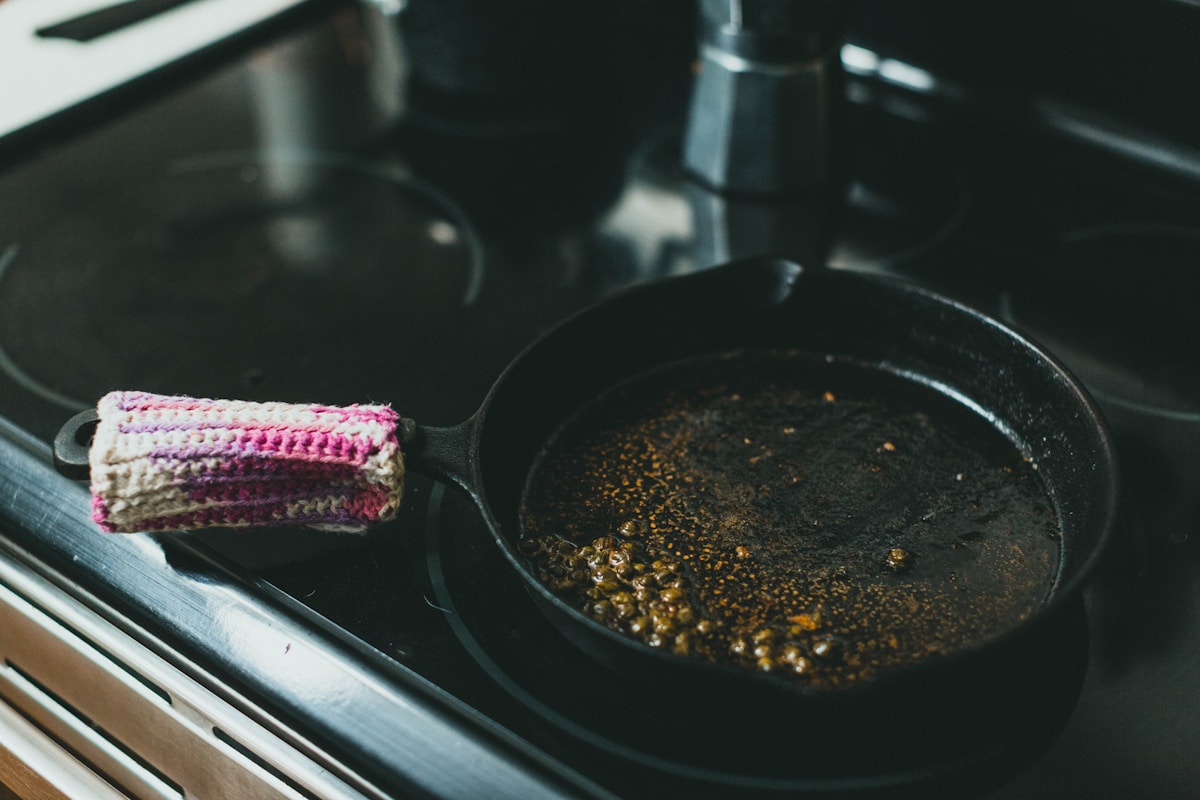
Picture this: you’re wandering through an antique mall, and there it is — a whole wall of vintage Griswold cast iron skillets. Large block logos, slant logos, early handles, all perfectly restored. Your heart races. But then doubt creeps in. If you buy one of these beauties, do you actually cook with it? Or do you hang it on the wall like a museum piece? I’ve asked myself the same question, and after hours of testing, research, and scrolling through r/castiron, I’ve got real answers for you.
The Griswold Appeal: Why These Pans Are So Prized
Griswold Manufacturing Company, based in Erie, Pennsylvania, produced some of the finest cast iron cookware from the 1870s until the mid-20th century. The pre-1960s skillets, especially those with the classic “Griswold” logo and early handle designs, are legendary for two reasons: their glass-smooth cooking surface and their surprisingly light weight.
Modern cast iron, like the standard Lodge skillet, is made using sand molds that leave a rougher texture. Griswold pans were machined and polished after casting, creating a surface that feels almost like nonstick when properly seasoned. They’re also about 20-30% lighter than modern skillets of the same size. A vintage #8 Griswold (10.5 inches) weighs around 3.5 pounds, while a modern Lodge #8 weighs closer to 5 pounds. That difference matters when you’re flipping pancakes or tossing vegetables.
The collectible value ranges widely. A common slant-logo Griswold #8 in good condition might sell for $80–$120. But a rare large block logo with an early handle and no pitting can fetch $200–$400 or more. I’ve seen museum-quality pieces hit $600 at auction. So it’s understandable that owners hesitate to subject these heirlooms to daily abuse.
Cooking Performance: Smooth Surface vs Modern Rough Cast
Here’s where things get practical. I’ve cooked side-by-side with a restored Griswold #8 and a new Lodge #8. The Griswold heated up faster and more evenly — the thinner walls and smooth bottom distribute heat without hot spots. When I seared a steak, the crust formed beautifully without sticking. When I baked cornbread, the surface released the bread with a gentle shake. The Lodge, while perfectly functional, required more oil and a watchful eye to prevent sticking in the center.
But here’s the catch: the smooth surface is only a benefit if the seasoning is intact. A restored Griswold with a well-maintained seasoning layer is a dream. One that’s been stripped down to bare iron? You’ll need to build up seasoning from scratch, which takes time. And if you’re afraid to scrub it or use too much heat, you’ll never get that nonstick performance.
If you’re considering cooking with a vintage skillet, prioritize seasoning level over logo rarity. A slightly scratched slant logo with a deep black seasoning will outperform a pristine large block logo that’s been stripped bare. Your steak doesn’t care about the logo — it cares about heat transfer and release.
The Value Question: Will Using It Ruin the Investment?
This is the heart of the debate. The r/castiron community is split, but the majority lean toward using restored vintage pieces. Why? Because a well-maintained cast iron pan doesn’t lose value from cooking — it loses value from damage. Cracks, deep rust pits, and warped bottoms are the real enemies. A pan that’s been used for years with proper care can hold its condition and even improve its appearance through a rich, dark patina.
However, there’s a threshold. If you own a truly rare piece — say, a #13 Griswold spider skillet or a #1 with an early heat ring — that’s worth $1,000+ in mint condition, even seasoned collectors recommend displaying it. The risk of accidentally dropping it, thermal shocking it, or leaving it on a burner too high is real. Use a “user grade” pan: something with a little character wear, a slightly wobble-free bottom, and a seasoning that’s already begun. That way you get the performance without financial anxiety.
It’s not all-or-nothing. You can have a “daily driver” Griswold that you cook with every day, and a “showpiece” that lives on a shelf. I personally use a slant-logo #8 that cost me $80 — it has a few faint scratches and a slightly uneven rim, but it cooks like a dream. My large block logo #9 with the early handle? That one sits on my mantle. I admire it, but I don’t risk it.
Practical Advice: Which Pans to Use and Which to Display
Here’s a simple rule: if the skillet has no cracks, no major pitting, and a stable base, you can cook with it — provided you’re okay with some potential value depreciation from normal use. The key is to assess the pan’s current state and rarity.
Use it if:
- It’s a common size (#5, #6, #7, #8, or #9).
- It already shows signs of use (scratches, uneven seasoning).
- You can find a replacement for under $150.
- You’ve fully restored it (seasoned properly at 350°F–400°F for 1 hour with a high-smoke-point oil like grapeseed or flaxseed).
Display it if:
- It’s a rare pattern, size, or logo variation (e.g., early handle with heat ring, or a #0 or #13).
- The original paint or label is intact (some lids had red or black lettering — that’s museum-worthy).
- The pan is in near-mint condition with no scratches or patina.
- You can’t bear the thought of a scratch on that perfect surface.
Worth noting: even collectible Griswolds can be used for baking. Cornbread, cobbler, or even bread in the oven doesn’t expose the pan to the same thermal shock as stovetop searing. Oven temperatures are gradual, and the pan heats evenly. I’ve baked sourdough in a restored Wagner (Griswold’s sister company) with no issues.
Caring for Vintage Cast Iron: Keep the Patina Alive
If you do decide to cook with your Griswold, proper cleaning is non-negotiable. Forget the old myths about never using soap. A tiny amount of mild dish soap once in a while won’t hurt a well-seasoned pan, especially if you’re cooking acidic foods. But for daily cleaning, stick to hot water, a stiff brush, and salt as an abrasive if needed. Dry immediately over low heat, then rub a thin layer of oil onto the surface before storing.
Never soak vintage cast iron, and never put it in the dishwasher. Those are the fastest ways to strip seasoning and invite rust. Also: avoid cooking highly acidic foods (tomato sauce, wine reductions) for long periods until the seasoning is thick and glossy. The iron can react and leave a metallic taste — and it can also damage the seasoning layer.
A quick kitchen hack: after cleaning, heat the pan on low for 2 minutes, then wipe with a paper towel dipped in vegetable oil. Turn off the heat and let it cool. That extra minute of care will keep your vintage pan nonstick for years.
Final Verdict: Cook With Confidence
So should you cook with rare Griswold cast iron? My answer is yes — with one condition. Choose your battles. Use a user-grade vintage skillet for everyday cooking, and save the mint-condition heirlooms for display. The joy of cooking on that smooth, lightweight surface is real. I’ve fried eggs that slide like glass, baked cornbread with a crust that shatters, and seared steaks so perfect they’d make a chef jealous. And all from a pan that cost me less than a modern stainless steel skillet.
Vintage cast iron isn’t just about nostalgia — it’s about performance. The Griswold pan you found at that antique mall was designed to be used. It was born in a foundry, shaped by hands, and meant to hold food. As long as you treat it with respect — no thermal shock, no metal scouring pads, no sudden temperature changes — it will serve you for another century. And guess what? Your grandchildren will argue over who gets it next.
So go ahead. Buy that Griswold. Season it properly. Cook with it. And don’t be afraid to fry an egg or bake a pie. That’s what it was made for. (Your future self will thank you.)