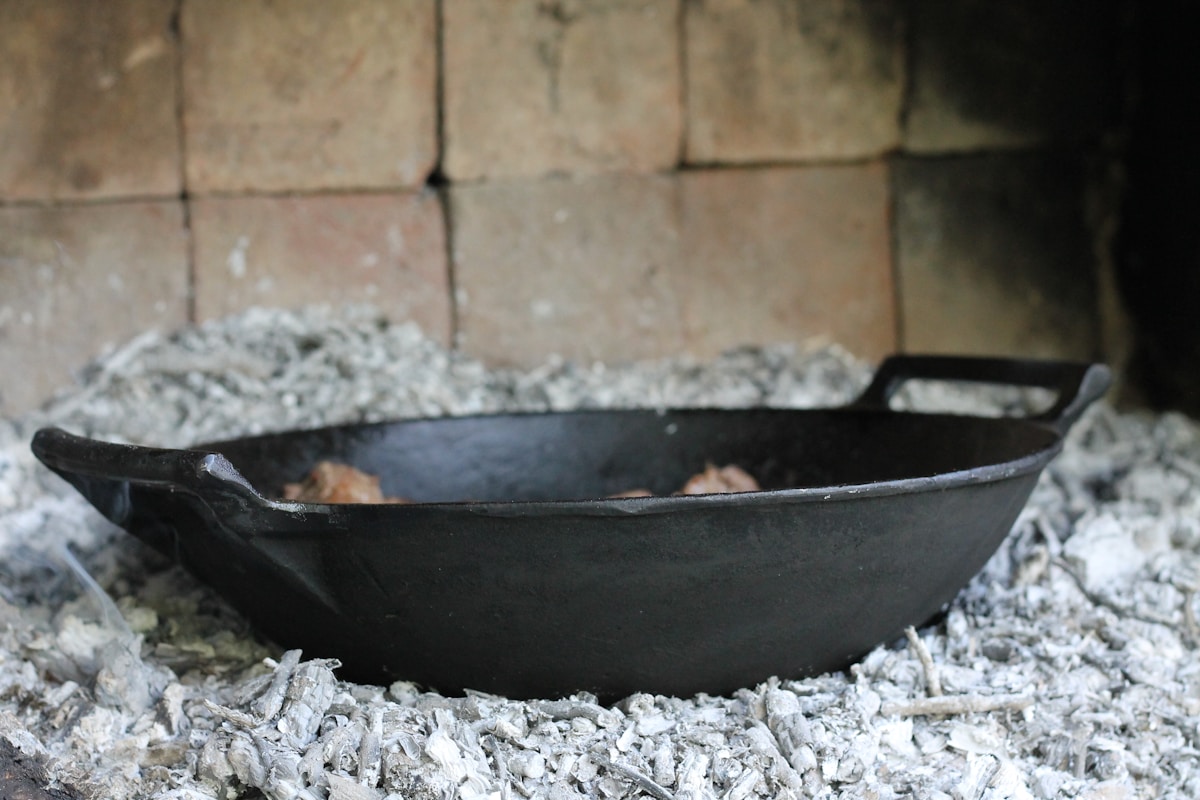
Walk into a restaurant supply store and it feels like you’ve found a secret club for chefs. Giant whisks, stacks of sheet pans, and no-frills equipment that looks like it means business. Tucked away on a steel shelf, you’ll find them: cast iron skillets. They look a little rough, they feel heavy, and they’re shockingly cheap.
The question is, are these industrial pans a hidden gem for the home cook, or should you stick with the familiar brands you see at retail stores? As someone who has cooked on both for years, I can tell you the answer isn’t about which is ‘better’—it’s about what you value in a pan.
Let’s break down the real-world differences between a restaurant supply skillet and its consumer-grade cousins.
The Tale of Two Finishes: Gritty vs. Smooth
The first thing you’ll notice is the surface. Most consumer cast iron pans today, like a standard Lodge, have a slightly pebbly, sand-cast finish. High-end boutique brands might sell you on a super-smooth, polished surface that looks incredible out of the box.
Then you have the restaurant supply pan. It often looks… unfinished. You might see faint circular marks from machining or a generally rougher, more porous texture. Why? Because in a commercial kitchen, nobody cares about looks. That rough surface is a feature, not a bug. It’s designed to give the first few layers of seasoning something to mechanically grip onto, creating a durable, non-stick foundation that can withstand the abuse of a busy service.
A super-smooth pan looks nice, but it can sometimes be a little trickier for seasoning to adhere to initially. The industrial pan skips the cosmetics and gets straight to the point: building a bulletproof cooking surface.
Heat, Weight, and Raw Performance
At the end of the day, cast iron is cast iron. Its magic comes from its ability to hold a massive amount of heat and radiate it evenly. Where these pans differ is in their build.
Industrial pans are built for war. They are often thicker and heavier than their consumer counterparts of the same diameter. This extra mass means two things:
- Slower to Heat: It will take a few extra minutes to get up to temperature.
- Incredible Heat Retention: Once it’s hot, it stays hot. This is the key to a perfect steak sear or getting a crispy, golden-brown crust on your cornbread.
That heft means it can handle the thermal shock of going from a 500°F (260°C) oven straight to a cool stovetop without any risk of warping. Many lighter, consumer-grade pans can’t make that same promise. The weight is a direct indicator of its durability.
While both types will be magnetic (it’s iron, after all), the sheer density of a commercial pan is something you can feel. It’s a tool, not a showpiece.
The Seasoning Showdown: A Little Work Upfront
Most consumer pans come “pre-seasoned.” This is a very thin layer of factory-applied oil to prevent rust and give you a head start. (Pro tip: You should always add a few of your own seasoning layers anyway.)
Restaurant supply pans are often sold with just a light wax or oil coating to prevent rust during shipping. They expect the user—the professional chef—to season it themselves, and to do it right. This is where you, the home cook, can get a professional-grade tool for a bargain price, provided you’re willing to do a little setup.
Kitchen Hack: The Industrial Seasoning Method
To turn that rough pan into a non-stick workhorse, here’s the game plan:
- Wash the new pan with warm, soapy water to remove the factory coating. Dry it immediately and thoroughly. (Yes, this is one of the only times soap should touch your cast iron).
- Place the dry pan in a 200°F (95°C) oven for 15 minutes to open up the pores of the iron.
- Carefully remove the pan. Apply a very thin layer of a high smoke point oil, like grapeseed, canola, or Crisco, all over the pan—inside and out. Use a paper towel to wipe off all the excess until it looks dry. (Trust me, less is more here.)
- Place the pan upside down in a 450-500°F (230-260°C) oven. Bake for one hour. Turn the oven off and let the pan cool completely inside the oven.
Repeat steps 3 and 4 at least two more times. After three cycles, you’ll have a fantastic foundational seasoning that will only get better with every steak you sear and every batch of bacon you fry.
The Price Tag: Function Over Fashion
Here’s where the difference becomes impossible to ignore. A 12-inch consumer skillet from a well-known brand might cost you $25-$40. A fancy, artisan-polished skillet? That could be $150 or more.
A heavy-duty, 12-inch skillet from my local restaurant supply store costs about $18. Eighteen dollars.
You aren’t paying for a marketing budget, a beautiful box, or a celebrity chef endorsement. You are paying for a hunk of shaped iron, and that’s it. It’s the ultimate expression of value in the kitchen. For the price of one boutique pan, you could buy an entire set of industrial cast iron and still have money left over for a really nice steak.
The Verdict: Which Pan Belongs in Your Kitchen?
So, should you rush out to your local Bowery or restaurant depot? It depends on your priorities.
Go for a Restaurant Supply Pan if:
- You value performance and durability above all else.
- You’re on a budget but want a tool that will last multiple lifetimes.
- You don’t mind a rugged, utilitarian aesthetic.
- You enjoy the process of seasoning and caring for your cookware.
Stick with a Consumer Brand Pan if:
- You prefer a more finished look or a specific brand name.
- You want a slightly lighter pan that’s easier to handle.
- You want something that feels more ‘ready to cook’ straight out of the box.
My take? The restaurant supply cast iron skillet is one of the best-kept secrets for the serious home cook. It’s an honest, hard-working tool that delivers professional-level results for a fraction of the cost. It might not be the prettiest pan on the rack, but it will almost certainly be the one you reach for most often.