Have you ever walked into one of those giant, warehouse-style restaurant supply stores? The ones with shelves stacked to the ceiling with industrial-sized everything, from 50-pound bags of flour to spatulas the size of canoe paddles. It’s a magical, slightly intimidating place. And somewhere, usually tucked away on a bottom shelf, you’ll find them: a stack of plain, heavy, almost brutally simple cast iron pans for a price that seems too good to be true.
You pick one up. It feels heavier than the ones you see at the department store. There’s no fancy logo, no colorful box, and the surface feels… different. A little smoother, maybe, with faint lines from a machine. You wonder, is this a hidden treasure or just a cheap piece of metal? As the gear reviewer here at Kitchen Fun, I’ve asked myself the same question. So I bought one, took it home, and put it through its paces. Here’s the honest breakdown.
What Exactly Is Restaurant Supply Cast Iron?
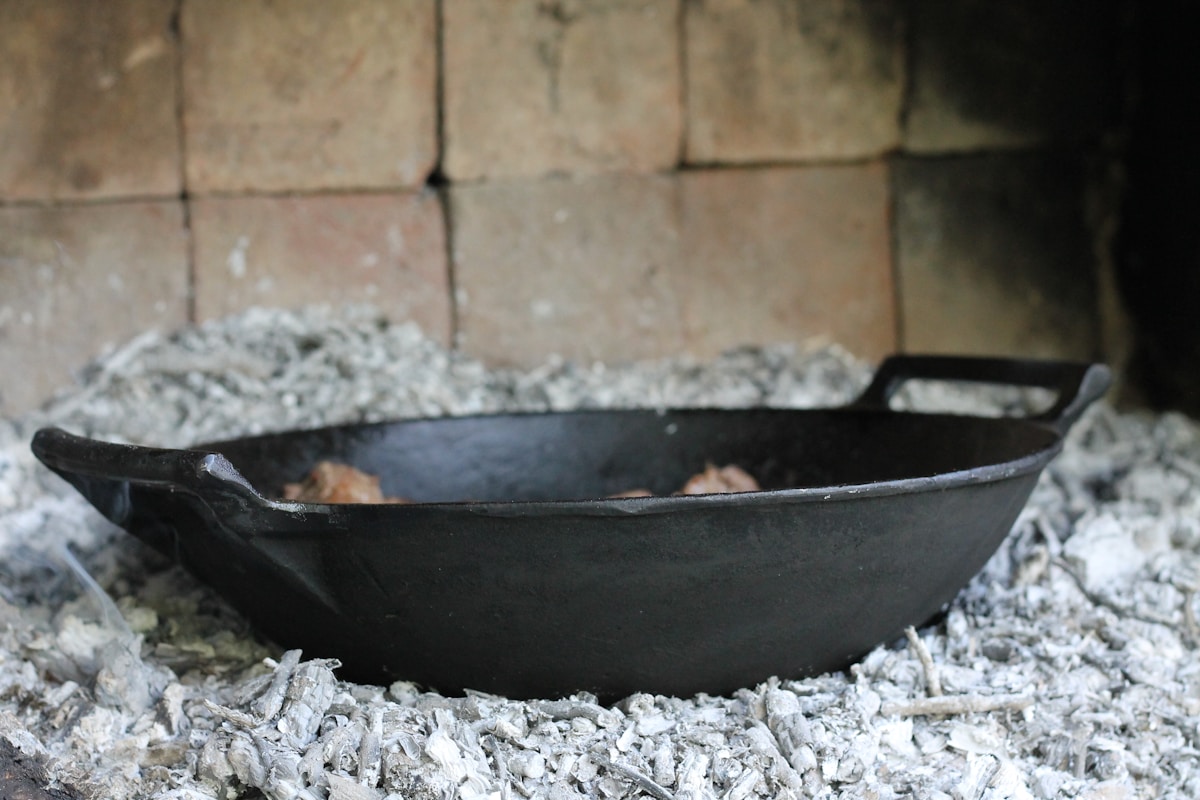
First, let’s get one thing straight: this isn’t your grandma’s antique skillet, nor is it a fancy, modern boutique pan. Commercial-grade cast iron is a different beast altogether, designed for one purpose: to survive the brutal, high-heat, high-volume environment of a professional kitchen.
Brands you’ll find at home goods stores, like Lodge, have a characteristic pebbly surface from the sand-casting process. High-end brands like Finex or Stargazer spend a lot of time and money milling that surface down to a mirror-smooth finish. Restaurant supply pans often fall somewhere in between. They are typically sand-cast but then get some level of machining to knock down the highest peaks of the raw casting. The result is a semi-smooth surface that feels different to the touch.
Why do they do this? It’s all about performance, not looks. A slightly smoother surface can heat more evenly on the monster gas burners found in restaurant kitchens. The focus is 100% on function. These pans are built to be workhorses, not showpieces. They are tools, plain and simple.
The Good The Great and The Utilitarian
There are some compelling reasons to add one of these no-name pans to your collection. The advantages aren’t just about saving a few bucks; they’re about owning a fundamentally solid piece of equipment.
-
The Unbeatable Price: This is the most obvious draw. A 12-inch commercial skillet from a supplier like Restaurant Depot might set you back $20-$30. A comparable 12-inch Lodge skillet is usually in the $30-$40 range. A high-end, smooth-surfaced pan of the same size? You’re looking at $150 or more. For the cost of one boutique pan, you could outfit your entire kitchen with a full set of commercial cast iron. That’s serious value.
-
Built Like a Tank: These pans are made to be abused. They’re often thicker and heavier than their consumer-grade counterparts because they need to withstand constant thermal shock—going from a ripping hot stove to a cool sink over and over. They have no frills, which means there’s less to break. The handles are part of the single cast mold, so you never have to worry about a rivet coming loose. This is a true “buy it for life” item.
-
A Perfect Blank Slate: While the out-of-the-box seasoning is often minimal (or non-existent), the semi-smooth surface is a fantastic starting point. With a little effort, you can build up a seasoning layer that is incredibly durable and slick. You control the process from day one, using the oil you prefer, to create a surface tailored to your cooking style.
The Catch What You Need to Know Before Buying
Of course, a $20 price tag comes with some trade-offs. This is where you decide if the value proposition is worth the required effort. (Spoiler: for me, it usually is.)
-
The Seasoning Project: This is the big one. Most commercial pans come with a thin coating of wax or oil just to prevent rust during shipping. It is not a ready-to-cook seasoning. You absolutely must strip this off and season it yourself from scratch. This means giving the pan a good scrub with soap and water (yes, this is the one time soap is okay!), drying it thoroughly in the oven, and then beginning the seasoning process. My go-to method is applying a micro-thin layer of grapeseed or canola oil, wiping it all off so it looks dry, and baking it in the oven at 475°F (245°C) for an hour. You’ll need to repeat this process at least 3-4 times to get a good foundational layer.
-
Zero Frills Aesthetics: If you want a pan that looks beautiful hanging from a pot rack, this is not it. They are often dull grey or black, may have casting imperfections, and lack any sort of branding or design flourish. They are the definition of utilitarian. Their beauty lies solely in their function.
-
The Weight: I mentioned they are built like tanks, and they have the weight to match. A commercial pan can be noticeably heavier than a Lodge of the same size. This provides excellent heat retention, but it can also be a challenge to maneuver, especially when it’s full of hot food. Make sure you’re comfortable lifting it with one hand before you commit.
My Hands-On Test Searing Steak and Sliding Eggs
To give you a real-world comparison, I put a generic 12-inch commercial pan (after four rounds of home seasoning) up against my trusty, years-old 12-inch Lodge.
For the sear test, I heated both pans over medium-high heat for 10 minutes and then threw on two identical New York strip steaks. The commercial pan was the clear winner here. Its extra mass meant it retained heat exceptionally well, delivering a deeper, more even crust in less time. The Lodge did a great job, but the commercial pan was just a searing machine.
For the fried egg test, the results were closer. My well-loved Lodge, with its years of built-up seasoning, released the egg with a simple nudge of the spatula. The newly seasoned commercial pan required a little more persuasion and a bit more butter to get the egg to slide freely. This wasn’t a failure, but it highlights a key point: a great non-stick surface on cast iron is built over time, not just created in a single afternoon of seasoning. It will get there, but it requires patience.
The Final Verdict Is It Right For Your Kitchen?
So, should you march down to your local restaurant supply store and grab one of these pans? It depends entirely on what kind of cook you are.
You should absolutely buy one if:
- You are on a budget but want high-performance cookware.
- You enjoy the process of seasoning and caring for your pans (you see it as a project, not a chore).
- You prioritize durability and heat retention over brand names and aesthetics.
- You need a dedicated pan for high-heat searing that can take a beating.
You might want to skip it if:
- You’re a beginner and want a pan that’s ready to use right out of the box.
- You value a polished finish and the prestige of a well-known brand.
- You have difficulty lifting heavy cookware.
My personal take? If you have the slightest bit of DIY spirit, go for it. A restaurant supply cast iron skillet is one of the best-kept secrets in the culinary world. For a tiny investment and a weekend afternoon, you get a pan that will not only last your entire life but will likely outperform cookware that costs five times as much. It’s the ultimate expression of value over vanity, and that’s a philosophy I can always get behind.