You’ve walked past them before. Maybe you even have a membership to one of those giant, warehouse-style restaurant supply stores. You wander down an aisle of towering steel shelves, past 50-pound bags of flour and gallon-sized jars of pickles, and then you see it: a stack of cast iron skillets.
They don’t look like the ones at the department store. There’s no glossy box, no fancy branding, no pre-seasoned marketing hype. They’re just heavy, dark, and ridiculously cheap. You pick one up. It feels… serious. But it’s also a little rough around the edges. Is this a hidden gem, or are you just buying a problem?
As the guy who has tested, seasoned, and cooked on more pans than I can count, I can tell you this: restaurant supply cast iron can be one of the best bargains in the entire culinary world. But it’s not for everyone. Let’s break down exactly what you’re getting into and whether it’s the right choice for your kitchen.
What Exactly Is Restaurant Supply Cast Iron?
First, let’s get one thing straight. The cast iron you find at a place like Restaurant Depot or a local supply shop is not a lesser version of what you see from brands like Lodge or Finex. It’s a different tool for a different job.
Consumer-grade cast iron is designed to be appealing on a retail shelf. It often comes pre-seasoned to be usable (mostly) out of the box. The casting might be a bit more refined, and the branding is prominent. High-end brands go even further, with polished cooking surfaces and ergonomic handles.
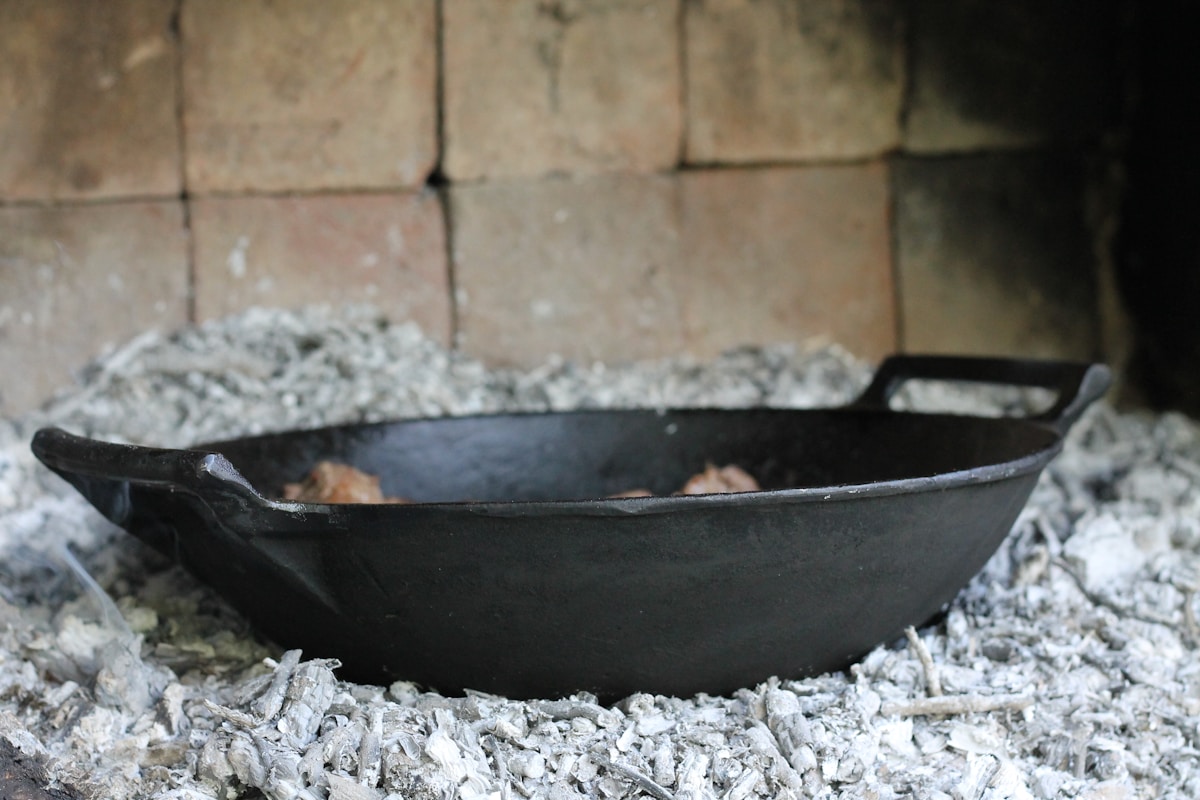
Restaurant supply cast iron has one purpose: to perform under the brutal conditions of a commercial kitchen, night after night. Aesthetics are not a priority. Marketing is nonexistent. What matters is durability and heat.
Here’s what defines these pans:
- The Finish: Most commercial pans have a raw, brushed, or machined finish. They feel gritty or metallic to the touch, unlike the slightly pebbly, black-coated surface of a pre-seasoned Lodge. This isn’t a defect; it’s a blank slate. It means the pan has zero seasoning and you are 100% responsible for building it from scratch.
- The Weight: They are often heavier and thicker than their consumer counterparts of the same size. More mass means more heat retention, which is critical for getting a consistent, powerful sear on a steak when you’re firing off dozens an hour.
- The Design: Purely utilitarian. Handles are simple, often just a loop of iron. There are no fancy pour spouts or helper handles. It’s built to be grabbed with a towel and thrown onto a high-BTU burner.
Think of it like a professional contractor’s power tool versus the one you buy for weekend projects. Both do the job, but one is built for relentless, heavy-duty work without any frills.
The Good The Bad and The Utilitarian
So, is that professional workhorse right for you? Let’s weigh the pros and cons. I’ve cooked with both extensively, and the trade-offs are very real.
The Pros (Why It’s a Steal):
- Unbeatable Price: This is the biggest draw. You can often get a 12-inch commercial skillet for half the price of a similar-sized pan from a major consumer brand. We’re talking $15-$25 for a pan that will literally last centuries. The performance-per-dollar ratio is off the charts.
- Raw Performance: Because they are often thicker, these pans can be absolute beasts for searing. Once you get one properly seasoned and heated, it delivers a crust on a steak or a piece of fish that is second to none. The heat retention is phenomenal.
- A Blank Slate: For enthusiasts, the lack of a factory pre-seasoning is a plus. You get to build your own seasoning from the ground up, using your preferred oils and methods. You have total control over the cooking surface you create.
The Cons (Why It’s a Project):
- Serious Initial Effort: This is not an out-of-the-box experience. Your first task is to scrub off any industrial wax or coating it shipped with. Then, you’ll need to do at least two or three rounds of oven seasoning before it’s even remotely non-stick. Your first few meals might stick a little as the surface builds up. (Patience is a virtue here.)
- Questionable Quality Control: These pans are mass-produced for function, not form. It’s more common to find minor casting flaws, like small pits on the cooking surface or rough, sharp edges on the handle. You have to inspect it yourself.
- It’s Just Plain Ugly: Let’s be honest. These pans will never be kitchen decor. They look industrial because they are. If you love displaying a beautiful Le Creuset or a polished Stargazer, this isn’t the pan for you.
Your 5-Point In-Store Inspection Checklist
If you decide to take the plunge, you become the quality control department. Never grab the first pan off the stack. Spend two minutes inspecting it right there in the aisle. Here’s what to look for:
- The Wobble Test: Find a flat piece of concrete floor in the store. Place the pan on it. Does it sit perfectly flat? Press on the edges. If it wobbles, put it back. A warped pan is useless on an electric or induction cooktop and annoying on gas.
- Crack Inspection: Look closely at the entire pan, especially where the handle meets the body. This is the most common stress point. If you see any hairline cracks, it’s an immediate no-go.
- Surface Check: Run your hand over the cooking surface. You’re not looking for smoothness—it will be rough. You’re feeling for significant pits, bumps, or casting inclusions that could trap food or weaken the pan. A little bit of texture is fine, but avoid any large deformities.
- Handle Feel: Grab the handle. Is it reasonably comfortable? Are there any uncomfortably sharp bits of metal (called flashing) on the underside? A little roughness can be filed down at home, but a fundamentally bad design is forever.
- Wall Consistency: Look at the pan from the side. Do the walls seem to be a relatively consistent thickness all the way around? Inconsistent thickness can lead to hot and cold spots.
Your First 48 Hours: From Industrial Metal to Kitchen Tool
Okay, you found a good one and brought it home. Now the real work begins. Follow these steps, and you’ll turn that raw piece of iron into a cooking machine.
Step 1: The Deep Clean. Your pan is likely coated in a rust-preventative wax. You need to get it off. Use hot water, a generous amount of dish soap (yes, this is the one time soap is required!), and a stiff-bristled brush or stainless steel scrubber. Scrub every single surface—inside, outside, and the handle. Rinse thoroughly and dry it IMMEDIATELY over a low flame on your stovetop until every drop of water has evaporated.
Step 2: The First Seasoning Layer. While the pan is still warm, apply your first layer of seasoning oil. I recommend grapeseed oil or Crisco for their high smoke points and polymerizing ability. Pour a small amount (about a teaspoon) into the pan. Using a paper towel, rub it into every surface of the pan. Now, here’s the most important part: take a clean paper towel and try to wipe all the oil off, as if you made a mistake. You won’t get it all, but this leaves the perfect microscopic layer.
Step 3: The Bake. Place the oiled pan upside down in your oven. Put a sheet of aluminum foil on the rack below to catch any potential drips. Heat your oven to 450-500°F (232-260°C). Let the pan bake for one full hour. After an hour, turn the oven off but leave the pan inside to cool down slowly.
Step 4: Repeat. Your pan will look a little splotchy and bronze. That’s normal. For best results, repeat steps 2 and 3 at least two more times. Each layer will build on the last, creating a hard, durable, non-stick foundation. Your pan will gradually darken from bronze to a deep black.
Kitchen Hack: For your first cook, make something fatty. Sauté a batch of onions with plenty of oil, fry up some bacon, or shallow-fry some potatoes. This will help fill in any microscopic pores and kickstart the lifelong seasoning process.
So, What’s the Verdict?
After all that work, is it worth it? For a certain type of cook, absolutely.
You should buy restaurant supply cast iron if:
- You are on a tight budget but demand high performance.
- You enjoy the process of restoring or seasoning cookware—you see it as a project, not a chore.
- You prioritize function over form and want a true kitchen workhorse that you don’t have to baby.
- You primarily use your cast iron for high-heat searing of meats and vegetables.
On the other hand, you should probably stick to consumer brands like Lodge if:
- You want a pan that is ready to use with minimal prep.
- You value aesthetics and want a pan that looks good in your kitchen.
- You don’t have the time or patience for multiple rounds of initial seasoning.
Personally, I keep a couple of these commercial pans in my collection. They are my go-to for outdoor cooking on the grill or for when I need a truly ripping hot sear. They are cheap, indestructible, and perform flawlessly. They aren’t pretty, but they have an undeniable, rugged charm. If you’re willing to put in a little love upfront, you’ll be rewarded with a pan that will serve you—and probably your grandkids—for life.