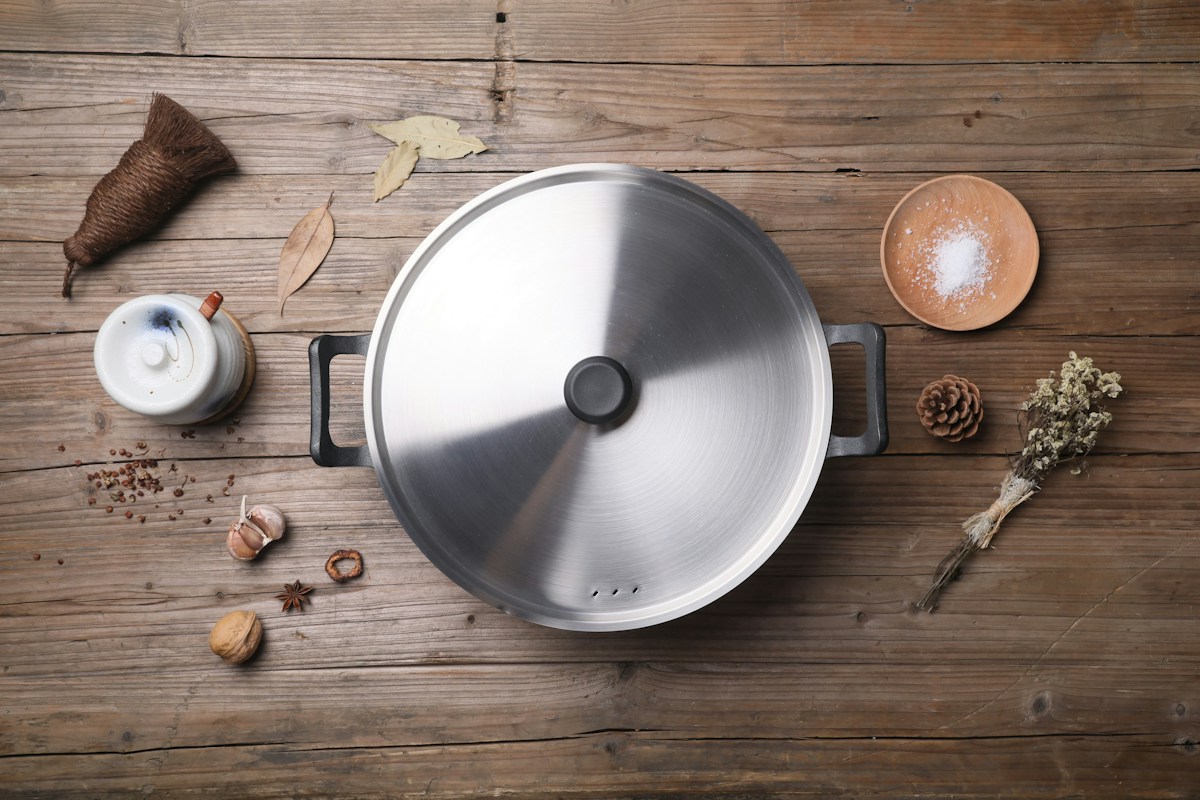
A pot has cooled on the stove, a Dutch oven has come out of the freezer, and now the lid refuses to move. You pull once, stop, and wonder whether the cookware is about to crack or the lid is about to fly off.
The safest way to remove a vacuum-stuck pot lid is to identify the problem first, make the vessel safe to handle, and use the least force possible. Start with gentle pressing, rotating, and light tapping. Avoid knives, screwdrivers, sudden temperature changes, and any attempt to force open a vessel that may still contain pressure.
Key Takeaways
- Confirm that the lid is held by suction, not pressure, ice, dried food, a damaged gasket, or a warped rim.
- Let hot cookware cool naturally and thaw frozen cookware only according to the manufacturer’s guidance.
- Stabilize the pot, then try gentle pressing, small rotations, and light tapping with a suitable non-sharp utensil.
- Never pry with a knife, squeeze or bend the cookware, or use sudden heating or cooling.
- Stop immediately for steam, hissing, cracking, swelling, liquid spray, or any sign of trapped pressure.
Quick safety check before trying to remove the lid
First identify what you are dealing with. This advice is for an ordinary saucepan, stockpot, Dutch oven, or similar cookware that developed a vacuum-like seal as it cooled. It is not a substitute for the instructions for a pressure cooker, electric pressure appliance, canning vessel, or any container that may still be pressurized.
If the pot was used for pressure cooking, stop and follow the appliance manual. Do not treat a locked pressure-cooker lid as a simple case of pot-lid suction. A pressure-locked lid can release hot steam or liquid if handled incorrectly.
Next, check the condition of the vessel. Do not start if it is still dangerously hot, recently removed from a burner, frozen solid, cracked, swollen, or visibly under tension. Look and listen for warning signs such as steam, hissing, bubbling, a warped lid, or a gasket that looks damaged or out of place.
Move children and pets away from the work area. Place the cookware on a stable, heat-safe surface where it cannot slide. Use suitable dry hand protection, but do not rely on a wet towel or loose cloth that could slip or conduct heat.
If the pot is large, heavy, or awkward, ask another adult to help stabilize it. The second person should steady the cookware only; neither person should pull hard, hold the pot in the air, or apply force that could make the vessel tip.
Stop immediately if you see steam, hear hissing, notice cracking or unusual swelling, or suspect trapped pressure. Those signs require pressure-specific instructions or qualified assistance.
Determine why the pot lid is stuck
A vacuum-like seal can form when hot contents and air inside a pot cool down. As the trapped air contracts, the pressure inside may become lower than the pressure outside. The outside air then presses the lid against the rim, making it feel locked even though there is no mechanical latch.
A Dutch oven vacuum and a stuck saucepan lid can look almost identical. In both cases, the lid may resist an upward pull and may not have an obvious place where air can enter. However, the correct approach changes if another problem is responsible.
A lid may be physically wedged by dried sauce, starch, sugar, grease, or food particles around the rim. A warped lid or pot can also bind at one point. A damaged gasket may create an unusually tight seal or indicate that the cookware should not be used until it has been inspected.
Freezing creates another complication. A frozen pot lid may be held by contraction, ice, or a seal that has become rigid. If the pot or lid is glass, ceramic, enamel-coated, or otherwise sensitive to thermal shock, sudden heating or cooling can cause damage. Do not force a frozen pot lid while the contents and cookware are still rigidly frozen.
Ask yourself three questions before proceeding:
- Was this ordinary cookware, or could it be a pressure appliance?
- Is the lid simply tight, or is there visible damage, swelling, steam, or a distorted gasket?
- Is the pot at a safe handling temperature and sitting securely on a stable surface?
If any answer is uncertain, pause and check the cookware or appliance manual before trying a release method.
Use the least-force release steps first
Once the cookware is safe to handle, work slowly. Recheck the lid after every small attempt rather than combining several methods at once.
1. Let the vessel settle.
If the pot is hot, allow it to cool naturally until you can handle the exterior safely. Do not rapidly cool hot cookware unless the manufacturer specifically permits that method. Placing a very hot pot under cold water or on a cold surface can create a damaging temperature difference, especially with glass, ceramic, enamel, and some coated cookware.
If the vessel is frozen, follow the container or cookware manufacturer’s thawing guidance. Keep it away from uncontrolled heat, open flames, and sudden hot water. The goal is to reduce the frozen condition gradually, not to shock the material into changing temperature quickly.
2. Stabilize the pot.
Keep the pot on the counter or another stable, heat-safe surface. If it is light enough and safe to hold, place one hand on the side or handle to stop it from rotating. Do not put fingers beneath the lid rim, where they could be pinched when the seal releases.
For a heavy Dutch oven, have another adult steady the pot while you work the lid. Make sure handles are secure and that nobody is positioned where a sudden release could send the lid toward their face or body.
3. Press down gently, then rotate.
Instead of pulling sharply upward, press down lightly on the center or sturdy top area of the lid while trying to rotate it a small amount. This can sometimes reduce uneven binding around the rim. Use only modest hand pressure; the lid should show some response without straining the pot or your wrist.
If the lid does not move at all, do not escalate immediately. A completely immovable lid can indicate dried food, warping, freezing, or pressure rather than a simple vacuum.
4. Tap lightly around the rim.
Using a wooden utensil or another tool approved by the cookware manufacturer, tap gently around the lid’s outer rim. The purpose is to encourage a tiny change in the seal, not to hammer the lid open.
Do not strike glass, ceramic, enamel, or coated lids aggressively. Avoid tapping handles, thin edges, vents, or visibly damaged areas. After a few gentle taps, try the light press-and-rotate method again.
5. Consider a controlled temperature change only if approved.
A gradual temperature change may help in some ordinary cookware situations, but it is not universally safe. Check the manufacturer’s instructions first, especially for glass lids, ceramic cookware, enameled vessels, nonstick coatings, and cookware with bonded or removable handles.
If the instructions permit warming the lid or outer vessel, use only controlled, indirect warmth and keep it away from handles, vents, flammable surfaces, and vulnerable coatings. Do not use an open flame, boiling water, a heat gun, or uncontrolled heating.
For a frozen pot, use the approved thawing method rather than pouring hot water over it. Recheck the lid as the vessel gradually returns toward a normal handling condition. If the seal remains tight, stop rather than applying more heat or force.
Why common shortcuts can damage the pot or cause injury
A knife or screwdriver may seem like an easy way to let air under the lid, but it is a poor choice. Pointed tools can slip, cut your hand, chip the rim, damage a gasket, scratch a coating, or suddenly release the lid while your fingers are nearby.
The same concern applies to forks, pry bars, drills, hammers, clamps, and other high-force tools. They can turn a minor suction problem into a damaged rim or broken lid. A damaged rim may prevent the cookware from sealing correctly in the future.
Do not squeeze, bend, twist, or clamp the pot or lid. Cookware can deform even when the change is difficult to see. Bending the vessel to break a seal may make it less stable, damage its coating, or create a new leak point.
Adding water may not help when the seal is tight. If water cannot reach the joint between the lid and rim, it cannot change the seal. Pouring water over the outside can also create a burn, slipping, or thermal-shock risk, particularly if the water and cookware are at very different temperatures.
Do not pull the lid directly toward your face. Keep your hands away from the rim and avoid placing your body over the vessel. Even an ordinary vacuum seal can release suddenly if the seal changes or dried food breaks free.
A useful rule is simple: if gentle pressure, rotation, and approved light tapping produce no movement, do not compensate with more force. The lack of progress is information that the cause may not be suction.
When to stop and get help
Stop immediately if steam, hissing, liquid spray, cracking, unusual swelling, or a broken handle appears. Also stop if the lid begins to lift unevenly, the pot shifts, or the gasket looks torn, displaced, or melted.
Treat any possible pressure-cooker or appliance-pressure situation as a separate safety issue. Do not loosen, puncture, pry, or dismantle a pressure lid unless the manufacturer’s instructions specifically direct you to do so.
Contact the cookware manufacturer or seek qualified assistance when the pot is cracked, warped, expensive, unusually heavy, or still tightly locked after safe attempts. Manufacturer guidance should take priority over general kitchen advice because materials, coatings, seals, and lid designs vary.
Get another adult to help lift or stabilize a large pot, but do not have someone hold it while another person applies excessive force. If the cookware must be moved, wait until it is safe to handle and use two people when necessary.
After the lid finally comes off, inspect the lid, rim, gasket, handles, and coating. Look for chips, cracks, distortion, scratches, or pieces of damaged seal. If anything appears compromised, set the cookware aside until the manufacturer confirms that it is safe to use.
FAQ
Can I use a knife to release a pot lid stuck by suction?
No. A knife can slip, injure your hand, damage the rim or gasket, and cause a sudden release. Use gentle pressing, rotation, and light tapping with an appropriate non-sharp utensil instead. If those steps do not work, stop and investigate whether the lid is wedged, frozen, damaged, or pressurized.
How do I remove a Dutch oven lid that formed a vacuum after cooling?
Let the Dutch oven return to a safer handling temperature naturally, then place it securely on a heat-safe surface. Press the lid down gently while trying a small rotation, followed by light tapping around the outer rim with an approved wooden utensil. Avoid sudden cooling, aggressive striking, prying, or forcing the lid upward.
What should I do if a frozen pot lid still will not come off?
Do not force it while frozen. Follow the cookware or container manufacturer’s thawing instructions and avoid sudden hot-to-cold or cold-to-hot changes. If the lid remains locked after gradual, approved thawing, or if the cookware shows cracks, swelling, or distortion, stop and seek manufacturer guidance.
Why did adding water not release the lid?
A tight seal may prevent water from reaching the lid-to-rim joint. Water also introduces burn and thermal-shock risks when its temperature differs greatly from the cookware. It is not a guaranteed solution, so do not keep adding water or increase the temperature to force a result.
How do I know whether this is pressure rather than suction?
You cannot reliably confirm that by pulling on the lid. Steam, hissing, swelling, a pressure-cooker design, a locked indicator, or a recently active pressure cycle should be treated as possible pressure. Stop and follow the appliance manual rather than using ordinary vacuum-seal techniques.