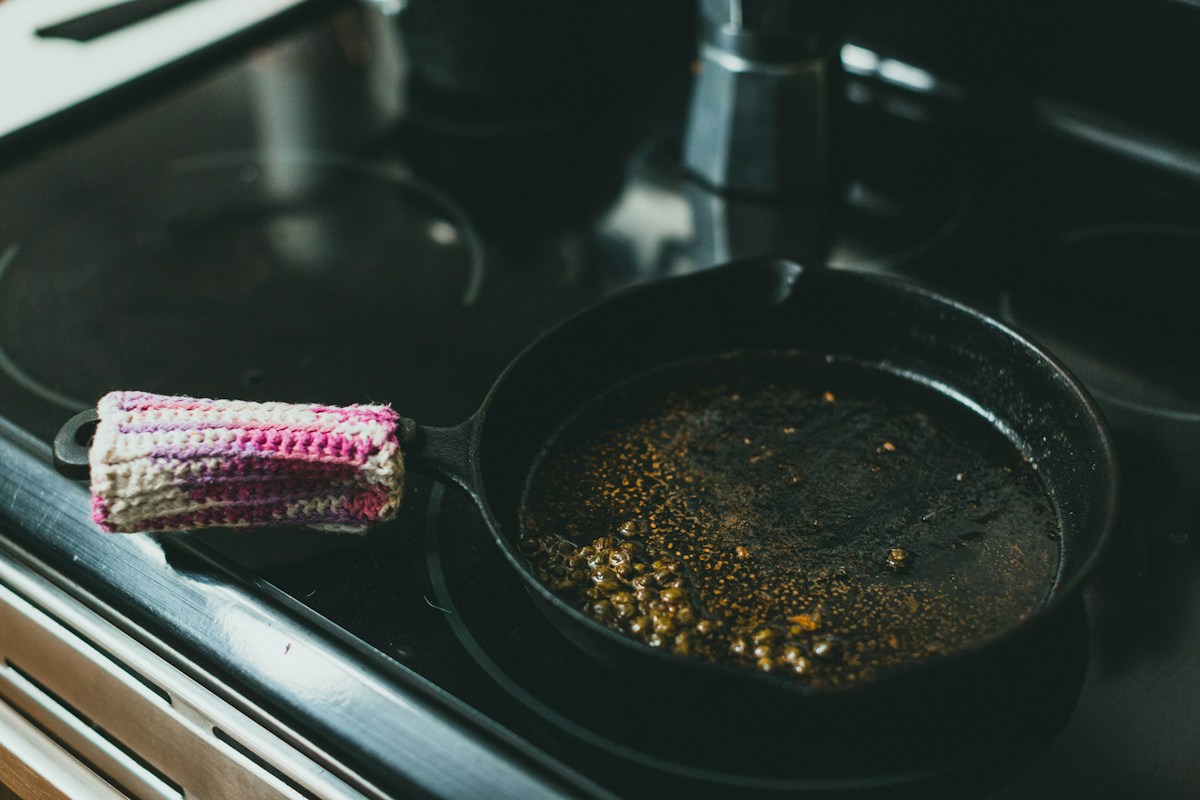
You are halfway through cooking when a dark chip appears in the food. The skillet looks black and seasoned, so it is not immediately clear whether the piece is old seasoning, burnt food, or something more concerning.
The short answer is this: cast iron seasoning flaking usually appears as thin, brittle dark chips or sheets that lift from the surface. It does not automatically mean the pan is ruined, but stop cooking until you identify and remove the loose material. A few unstable spots may need careful scrubbing. Thick, widespread, or repeatedly peeling buildup may justify a fuller restoration.
Key Takeaways
- Loose seasoning usually looks like thin, dry, brittle dark chips or sheets rather than a firmly attached coating.
- Do not assume that unidentified cast iron flakes in food are safe to eat; stop cooking, clean the pan, and inspect it.
- Scrub small, isolated areas first. Consider a full strip when the coating is thick, widespread, or repeatedly peeling.
- Reseason with a completely dry pan and an extremely thin film of oil; excess oil can create a tacky, uneven coating.
- Retire or seek guidance for a pan with cracks, severe warping, a loose handle, deep uncleanable pitting, or possible chemical contamination.
Identify What Is Flaking From the Pan
Seasoning is the hardened layer formed when a thin film of cooking oil bonds to cast iron during heating. Stable seasoning generally feels smooth or firmly attached, even if the pan retains some texture from use. Flaking seasoning looks different: it may appear as dark, thin plates, brittle chips, or raised edges that catch on a fingernail or lift during scrubbing.
Appearance is not a perfect test, so do not assume every dark particle is harmless seasoning. Compare the possibilities:
- Loose seasoning: Usually dark brown to black, thin, dry, and brittle. It may come away in flakes or small sheets when an edge is disturbed.
- Rust: Often orange, red, brown, or gray. It may feel rough, powdery, or uneven rather than forming a black chip.
- Carbonized food: Usually forms hard, glossy, irregular patches. It may be thick and firmly stuck, especially where food or grease has repeatedly burned.
- Fresh residue: Grease, sauce, or cooked-on food may feel sticky, soft, greasy, or uneven. It may transfer to a cloth rather than breaking into a dry flake.
These materials can overlap. Old food residue can sit over seasoning, and rust can develop where the protective coating has been damaged. Visual inspection alone cannot identify every contaminant.
If you find cast iron flakes in food, stop and remove the food from the pan while you assess the skillet. Do not declare unidentified flakes safe to eat. Clean the pan, inspect it under good lighting, and look for structural problems before using it again. If the material remains unexplained or the pan may have contacted an inappropriate chemical, seek product-specific guidance from the cookware manufacturer.
Decide Whether the Skillet Needs Light Cleaning or a Full Strip
Use a simple decision path rather than stripping every dark skillet automatically.
Choose light cleaning first when there are only a few loose areas, the underlying iron appears sound, and the rest of the seasoning is firmly attached. The goal is to remove unstable material without removing sound seasoning merely because its color is uneven.
After cleaning, run a clean cloth over the surface and inspect the cooking area, rim, underside, and handle connection. If no loose particles remain and the surface feels stable, you may be able to dry, lightly oil, and continue maintaining the pan.
Consider a more complete strip when the seasoning is thick across much of the pan, peeling in several places, repeatedly shedding after cleaning, or built up in uneven layers that make inspection difficult. Starting over can be more practical than preserving a coating that is already unstable. This is especially true for an ordinary inherited or vintage-style skillet whose value is practical cooking rather than collector-level preservation.
Stop using the pan for restoration or replacement if you find a crack, severe warping, a loose handle, or another structural defect. Deep pitting also deserves caution if it leaves places that cannot be cleaned effectively. Seasoning can be rebuilt; a compromised pan body or handle is a different problem.
A full strip is not automatically better. It takes more work, creates more opportunities for rust, and is unnecessary when only one small area is loose. The right choice depends on how widespread the flaking is and whether the remaining surface is stable.
Remove Old Seasoning Without Damaging the Pan
To remove old cast iron seasoning, begin with the least aggressive method that addresses the problem. First remove food and grease from the pan. Then scrub the cooking surface, rim, and affected exterior areas with an appropriate brush or abrasive recommended by the cookware manufacturer. Work over a sink or protected area so loosened particles do not spread around the kitchen.
Rinse thoroughly and inspect again. Pay attention to edges and small pits, where flakes and residue can remain hidden. Repeat the scrub-and-inspect cycle only as needed. If the unstable layer is gone and the remaining coating is firmly attached, there is usually no practical reason to remove every dark mark.
Some manufacturers allow particular soaking or cleaning methods, while others recommend avoiding prolonged soaking. Follow the care instructions for your specific pan whenever available. If you use a commercial stripping product, follow its label, including instructions for gloves, ventilation, contact time, rinsing, and disposal. Keep cleaning chemicals away from food, and do not cook with the pan until it has been thoroughly cleaned according to the product and cookware guidance.
A more complete strip may be appropriate when scrubbing leaves large areas of peeling buildup or when several layers separate from one another. The exact method may involve a manufacturer-approved cleaner, controlled heat, or another restoration process. Product formulas, cookware finishes, and instructions vary, so do not treat one chemical recipe, oven method, or soaking time as universal.
Be particularly careful with aggressive abrasion. Sandpaper, abrasive pads, wheels, sanders, and grinders can remove material quickly, but they can also alter the pan’s surface and create airborne dust. Do not grind a skillet indoors without suitable dust control and ventilation. Use any power tool only according to its instructions, with the protective equipment specified for that tool and task, including appropriate eye protection.
For a beginner restoring a common skillet, hand scrubbing or a clearly labeled cookware-safe method is usually easier to control than power tools. Do not use unknown chemicals, mix cleaners, or improvise with open flames. If you cannot safely control the method, choose a less aggressive approach or seek manufacturer guidance.
Rebuild and Test the Cooking Surface
Once loose seasoning or old buildup has been removed, the pan must be completely clean and dry before you reseason a cast iron skillet. Dry the cooking surface, rim, underside, and handle thoroughly. Water left in small pits or around fittings can contribute to new rust, so inspect the pan rather than relying only on a quick towel wipe.
Next, apply a very thin, even film of suitable cooking oil. Spread the oil over the cooking surface and any other areas covered by the care instructions, then wipe away visible excess with a clean cloth or paper towel. The pan should look lightly coated, not wet or glossy with pools of oil.
Follow the cookware manufacturer’s heating or baking instructions for the pan and the oil you are using. There is no single temperature or timing schedule that applies to every skillet, oil, or finish. Use suitable ventilation, keep the hot pan away from children and pets, and allow it to cool safely before handling.
You can repeat thin coats if the care instructions call for them or if the surface needs additional rebuilding. More oil is not a shortcut to better seasoning. A heavy layer can become tacky, uneven, wrinkled, or soft enough to peel. If the pan feels sticky after cooling, excess oil is a likely cause; clean or wipe it according to the care guidance rather than adding another coat.
After the pan has cooled and the coating is stable, test it with a simple, low-stakes food. Avoid starting with delicate eggs, fish, or an expensive batch of pancakes. Cook something forgiving, then inspect the pan for new flakes, sticky patches, unusual residue, or excessive sticking.
A restored surface does not have to be perfectly smooth or uniformly black to be usable. The practical tests are whether the coating stays attached, the pan cleans without releasing particles, and food does not stick unusually badly when you use appropriate heat, oil, and technique. If fresh flakes appear again, stop and reassess instead of repeatedly covering them with more oil.
For maintenance, clean the pan promptly after cooking using the manufacturer’s recommended method. Remove food residue, rinse as directed, dry thoroughly, and apply only the light protective coating recommended for that cookware. Avoid leaving water in the pan or storing it while damp. Regular, controlled care is more useful than building a very thick layer in one session.
Know When to Keep, Retire, or Replace the Pan
Flaking seasoning alone does not automatically mean a cast iron skillet is ruined. Many pans can return to useful service after loose material is removed and the surface is properly cleaned and rebuilt.
Keep using the pan only when the cooking surface is clean and stable, no unexplained residue remains, and there is no structural damage. A few cosmetic marks or variations in color matter less than whether the coating stays attached and the iron remains sound.
Seek manufacturer guidance or retire the skillet if flaking continues after proper restoration, especially when the cause cannot be identified. Deep pitting that traps residue, cracks, severe warping, a loose handle, or possible chemical contamination are stronger reasons to stop using it than an unattractive appearance.
Do not keep a sentimental or inherited pan in service solely because it has history. If the structure is compromised, replacement is the practical choice. Conversely, do not discard an ordinary skillet merely because you had to strip and reseason it. Restarting the seasoning process is maintenance, not a failure.
FAQ
Is flaking seasoning safe to eat?
Do not assume unidentified flakes are safe to eat. Dark particles may be loose seasoning, burnt food, rust, or another residue, and appearance alone cannot confirm what they are. Stop cooking, remove the food, clean and inspect the pan, and follow the cookware manufacturer’s guidance if the material remains uncertain.
How do you remove old seasoning from a cast iron pan?
Start by removing grease and food, then scrub loose flakes and residue with an appropriate brush or abrasive. Rinse, dry, and inspect before repeating. If the coating is thick, widespread, or repeatedly peeling, use a more complete stripping method approved by the cookware manufacturer or the product label. Avoid unknown chemicals and uncontrolled grinding.
How can you tell whether a cast iron skillet is ready to use after reseasoning?
The surface should be dry, clean, and free of loose particles, sticky oil pools, and unexplained residue. Test it with a simple food before using it for delicate cooking. Afterward, check for new flakes, tacky patches, unusual residue, and excessive sticking. If the coating remains attached and the pan has no structural defect, it is a better candidate for regular use.