


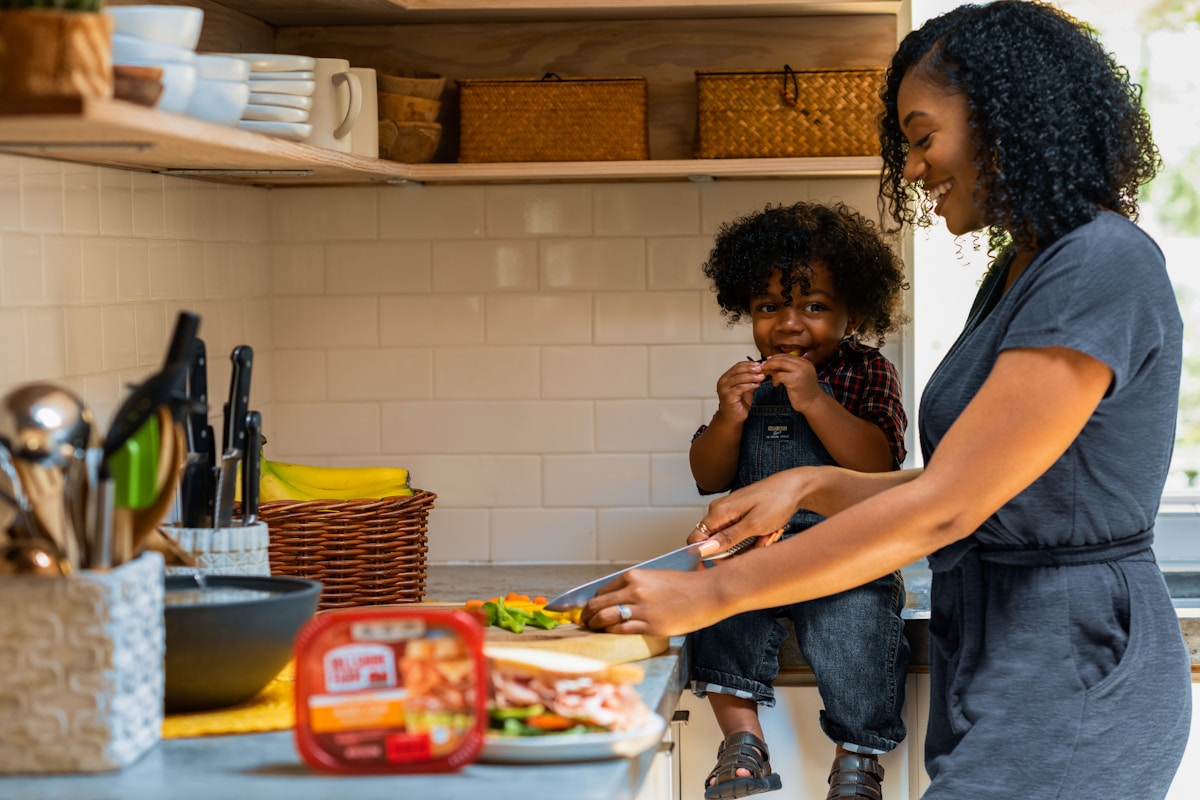
I remember the first time my three-year-old niece asked to “cook” with me. She grabbed a wooden spoon and started banging on a pot, giggling like it was the best thing ever. And you know what? She was right. The kitchen, with its sizzles, smells, and stirring, is pure magic to a preschooler. But if you’re a parent, you’ve probably wondered: “Should I let my preschooler help in the kitchen?” The answer is a resounding yes, but with a few smart boundaries. Today we’re going to walk through exactly how to make it work, what tasks are safe, and why it’s worth the mess.
Why your preschooler belongs in the kitchen
Let’s start with the “why.” The American Academy of Pediatrics (AAP) recommends that children ages three to five can safely participate in simple kitchen tasks—always under close adult supervision. And the Reddit parents in r/Cooking back that up: one dad shared how volunteering at his son’s preschool showed him that even the youngest kids can help wash veggies, stir batter, or tear lettuce. These aren’t just busywork. They build fine motor skills (think pinching, pouring, and mixing), boost curiosity about food, and often lead to fewer picky-eating battles. When a child helps make a meal, they’re far more likely to taste it. That’s a win for everyone.
The golden rule of safety (and sanity)
Before we get into the fun stuff, let’s talk safety. You cannot, I repeat cannot, leave a preschooler unattended near a hot stove, sharp knife, or electrical appliance. Supervision is non-negotiable. I always tell parents: your job is to be the firefighter and the cheerleader at the same time. Set up a safe workspace: move sharp objects out of reach, turn pot handles inward, and keep hot pans on back burners. Invest in a sturdy step stool (I like the KidKraft Adjustable Stool) so they can reach the counter without teetering. And here’s a practical tip I swear by: lay a silicone mat or a clean towel on the counter to catch spills. It makes cleanup a thousand times easier. (Your future self will thank you.)
Age-appropriate tasks that build confidence
Now for the good part: what can your three-to-five-year-old actually do? The key is matching tasks to their fine motor abilities. At this age, little fingers are learning to grip, twist, and press. Start with no-cook tasks and gradually work up to heat-safe activities. Here are my go-to ideas:
Washing fruits and vegetables – Fill a large bowl with cool water and let them scrub potatoes, apples, or carrots with a soft brush. It’s sensory play and practical prep all in one. Bonus: they’ll feel proud seeing “their” clean veggies on the cutting board.
Tearing lettuce or herbs – Give them a head of romaine or a bunch of basil. Tearing is fantastic for hand strength and doesn’t require any sharp tools. For lettuce, you can even turn it into a game: “Let’s see who can make the tiniest pieces!”
Stirring batters – A sturdy wooden spoon and a bowl with a damp towel underneath (to keep it from sliding) are perfect. Muffin batter, pancake mix, even cookie dough—they’ll love turning the mixture into a smooth swirl. Yes, some will splatter. That’s part of the fun.
Using cookie cutters – Set out some pre-rolled dough (store-bought or from scratch using King Arthur Flour’s simple recipe) and a set of metal cutters. Show them how to press straight down and lift. You’ll get wonky stars and lopsided hearts, but those shapes taste exactly the same.
Whisking eggs – For older preschoolers (around four and up), a small wire whisk in a shallow bowl is great. They won’t get a perfectly uniform scramble, but they’ll feel like a real chef. Just keep the bowl low to prevent flinging.
Using a salad spinner – This is magic for little hands. Let them pump the top (with your supervision) to dry greens or berries. It’s a mini workout and a lesson in cause and effect.
Building skills step by step
You don’t need to do everything in one day. Start with one or two tasks and let your child master them before adding more. I’ve seen parents get overwhelmed trying to make a full meal with a preschooler. Instead, pick a single recipe that matches their attention span. A batch of no-bake energy balls, for example, has only a few steps: mixing, rolling, and pressing. That’s enough for a twenty-minute session.
Gradually, you can introduce tasks that involve a tiny bit of heat—but always with extreme caution. For instance, after they’ve stirred the muffin batter, you’re the one who puts the pan in the oven. Let them press the “on” button on a stand mixer (like a KitchenAid) while you hold the bowl. Or give them a whisk and let them stir a sauce on a low, simmering burner, standing a safe distance away. The goal is to build their comfort with the kitchen environment without ever compromising safety.
Real-life parent wisdom from the Reddit trenches
I always learn a ton from real parents, and the Reddit r/Cooking community is full of wisdom. One dad who volunteered at his son’s preschool noted that the teachers had kids do all the veggie washing and lettuce tearing for their snack. He said that simple involvement reduced whining at dinner time. Another parent shared that her four-year-old loves to peel hard-boiled eggs (after she cracks them slightly) and use a plastic table knife to spread butter on toast.
Professional chefs chimed in, too, with a key insight: early kitchen exposure reduces picky eating. When a child has a hand in making their food, they’re more invested in tasting it. That’s backed by child development research, too. So the mess, the flour on the floor, the extra time—it’s all worth it.
My favorite kitchen hack for this age
Here’s a tip you can use tonight. Set up a “snack station” on a low counter or a small table. Fill a few small bowls with pre-prepped ingredients: cubes of cheese, cherry tomatoes, cucumber slices, and crackers. Give your preschooler a small plate and let them assemble their own snack. It’s a no-cook, low-pressure way to practice portion control and fine motor skills. And it teaches independence. (Trust me, they’ll feel so grown-up.)
When things go wrong (and they will)
Let’s be real: a preschooler in the kitchen means spills, dropped eggs, and flour clouds. That’s not a failure—it’s a lesson. I always keep a roll of paper towels within arm’s reach and remind myself that cleanup is part of the process. If your child accidentally knocks over a bowl of batter, don’t scold. Instead, say, “Oops! Let’s clean this up together. Next time we’ll put the bowl further back on the counter.” That teaches resilience and problem-solving.
And if they refuse to help one day? That’s okay, too. Cooking with kids is about the relationship, not the recipe. Some days they’ll be enthusiastic, other days they’ll just want to watch. Let them. Even watching you chop an onion or whisk a vinaigrette teaches them something.
The bottom line
So, should you let your preschooler help in the kitchen? Absolutely. With a little planning, a lot of supervision, and a generous dose of patience, you’re not just making a meal—you’re making memories. You’re teaching skills that will last a lifetime: how to measure, how to taste, how to work together. And yes, how to laugh when the flour goes everywhere. The kitchen is a magic place where yummy food adds joy to life. And you get to share that magic with the smallest, most important people in your life.
Now go on—pull up that step stool, choose a task, and start cooking together. The muffins might be a little lopsided, but they’ll taste better than anything you’ve ever made. Because they were made with love, and a little help from your favorite little sous-chef.


