You’re standing in your kitchen, ready to make the freshest, most vibrant bowl of pico de gallo. You have juicy red tomatoes, a sharp white onion, and a fiery jalapeño. You can practically taste the crunch of the tortilla chip already. You reach into the fridge for the final two, crucial ingredients and… disaster. The cilantro is wilted and sad, or worse, you completely forgot to buy it. And the one lime you have is rock-hard.
Take a deep breath. This is not a catastrophe; it’s a creative opportunity. The kitchen police are not going to show up at your door. I promise. While traditionalists might gasp, you can absolutely make a delicious, fresh, and zesty salsa without cilantro or lime. The key is understanding why those ingredients are there in the first place.
What Really Makes Pico de Gallo Tick?
Pico de gallo, at its heart, is a beautiful balancing act of just a few simple things. It’s not about a rigid set of rules; it’s about a formula. Think of it less like a baking recipe and more like a superhero team where each member has a specific job.
- The Body: This is your diced tomato and onion. They provide the fresh, sweet, and pungent base. This is the foundation of everything.
- The Heat: The jalapeño (or serrano pepper) brings that little kick of excitement. You control the power level here by adding more or less, with or without seeds.
- The Brightness (The Herb): This is cilantro’s job. It adds a fresh, green, almost citrusy note that cuts through the richness of whatever you’re eating it with (hello, carnitas).
- The Zing (The Acid): This is lime’s role. Acid is a magical ingredient that makes all the other flavors pop. It’s like turning up the volume on your food. It wakes everything up and keeps the salsa tasting fresh and vibrant.
So, when we’re missing an ingredient, we just need to find a good understudy to do the same job. It might have a slightly different style, but it can still save the show.
The Great Cilantro Debate and Your Best Swaps
First, let’s talk about cilantro. For a lot of people, it tastes bright and wonderful. But for others, thanks to a specific gene, it tastes exactly like a bar of soap. (Yes, really.) If you’re in the soap camp, you’ve probably been avoiding pico your whole life! Well, no more.
Your goal is to replace that fresh, green, herbal note. Your best bet is fresh flat-leaf parsley (also called Italian parsley).
It doesn’t taste like cilantro, but it provides a similar green freshness that works beautifully with tomato and onion. It’s bright and clean-tasting. Start by chopping up about half the amount of parsley you would have used for cilantro and give it a taste. You can always add more.
What if you have no fresh herbs at all? Don’t use dried herbs—they’ll just get lost and create a weird texture. Instead, you can simply leave the herbs out and add a little something else for complexity. My favorite trick is to add two or three finely chopped scallions (green onions), using both the white and green parts. This adds a milder, slightly different onion flavor that fills the space nicely.
Cilantro Substitute Quick Guide:
- Best Bet: Fresh flat-leaf parsley. Use about half the amount and add more to taste.
- Good Alternative: Finely chopped scallions (green onions). Adds a mild oniony freshness.
- The Purist Swap: Just leave it out! Your pico will be simpler, but still delicious. The tomato and onion are the real stars anyway.
No Lime No Problem Your Acidic Allies
Now for the zing. If your lime is a fossil or you just don’t have one, you cannot skip the acid. Without it, your pico will taste flat and boring. It’s the difference between a black-and-white photo and one in vibrant color. But lime juice is just one type of acid. Your pantry is full of other options!
Think about what acid does: it provides a sour, sharp tang. The best substitute here is a good quality vinegar.
My top recommendation is red wine vinegar. It has a robust flavor that pairs perfectly with tomatoes. Start small. For a recipe that calls for the juice of one lime (which is about 2 tablespoons), start with just 1 tablespoon of red wine vinegar. Stir it in, let it sit for a minute, and taste. You might find that’s all you need.
White wine vinegar or even plain white distilled vinegar will also work in a pinch. They are a bit sharper, so definitely start with less and adjust.
Here’s a fun one: have a jar of pickles or pickled jalapeños in the fridge? A splash of that pickle brine can work wonders! It has acid (from the vinegar) and salt, so it does double duty. (Just be sure to adjust your salt accordingly.)
Acid Substitute Quick Guide:
- Best Bet: Red wine vinegar. Use about half the amount of lime juice called for and adjust.
- Good Alternative: White wine vinegar or a splash of pickle brine.
- In a Pinch: White distilled vinegar. Use sparingly as it can be very sharp.
A Recipe for “Rebel” Pico de Gallo
Ready to put it all into practice? Let’s make a batch right now with our trusty substitutes. This is a base recipe; feel free to add more jalapeño for heat or more onion for crunch.
You Will Need:
- 4 ripe Roma tomatoes, diced small
- 1/2 a white onion, diced very small
- 1 jalapeño, seeds and ribs removed, minced
- 1/4 cup chopped fresh flat-leaf parsley (our cilantro sub)
- 1 tablespoon red wine vinegar (our lime sub)
- 1/2 teaspoon salt, plus more to taste
Instructions:
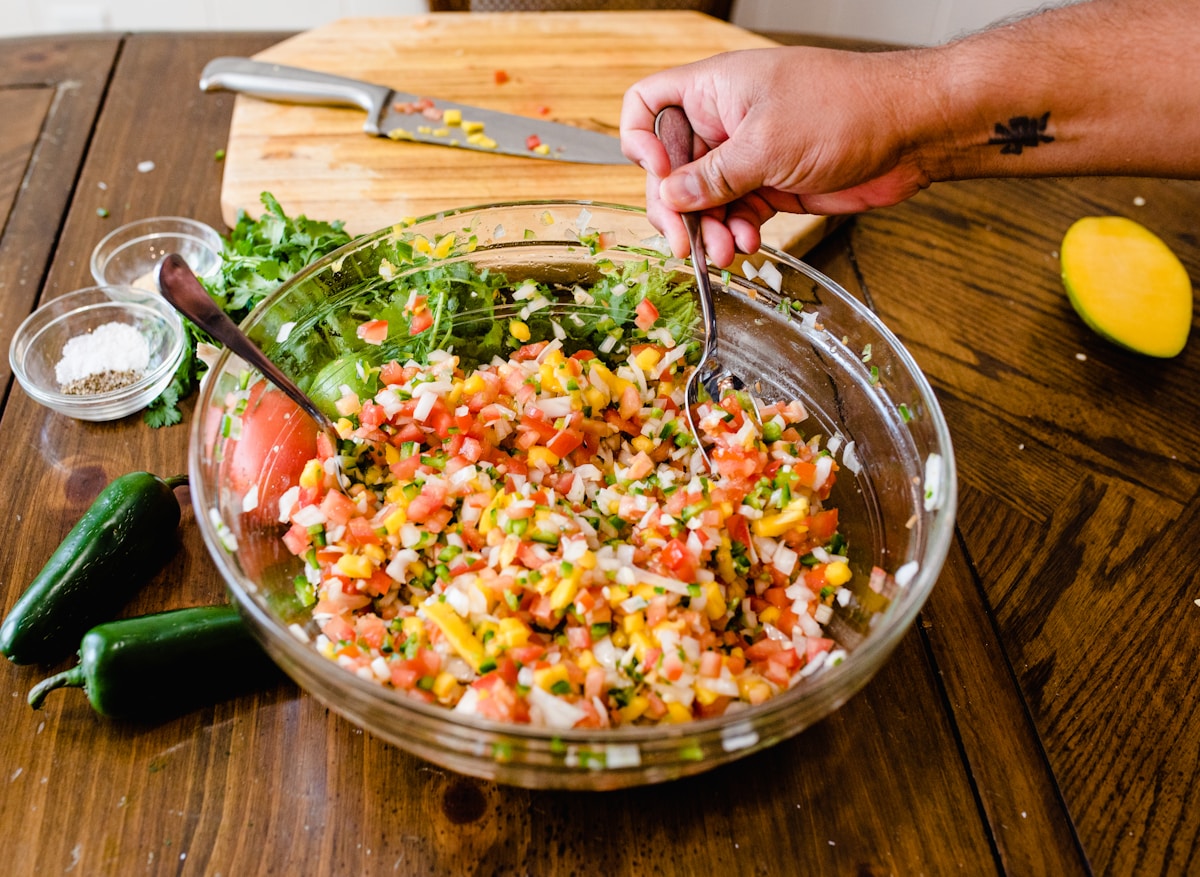
- Combine the Solids: In a medium bowl, add your diced tomatoes, onion, jalapeño, and parsley. Give it a gentle stir to combine everything. Look at those beautiful colors!
- Add the Flavor: Drizzle the red wine vinegar over the mixture and sprinkle in the 1/2 teaspoon of salt.
- Stir and Rest: Stir everything together until it’s well mixed. Now for the most important step: let it sit for at least 15 minutes. This allows the salt to draw out the juices from the tomato and for all the flavors to meld together. (Your future self will thank you for your patience.)
- Taste and Adjust: After 15 minutes, give it one last stir and taste it with a chip. Does it need more salt? A little more vinegar for zing? A bit more parsley? Now is the time to adjust it until you love it.
And that’s it! You just made a fantastic, fresh salsa using the power of smart substitutions. You didn’t let a missing ingredient stop you—you understood the why and found a new how.
Try This Tonight
You don’t need to make a giant batch to prove this works. Grab one tomato, a small slice of onion, and whatever vinegar you have in the cupboard. Chop them up, add a tiny pinch of salt and a small splash of the vinegar. Stir it up and taste it on a cracker or a chip. That’s it. That’s the foundation of cooking—learning to create something delicious with what you have on hand. Welcome to the club.