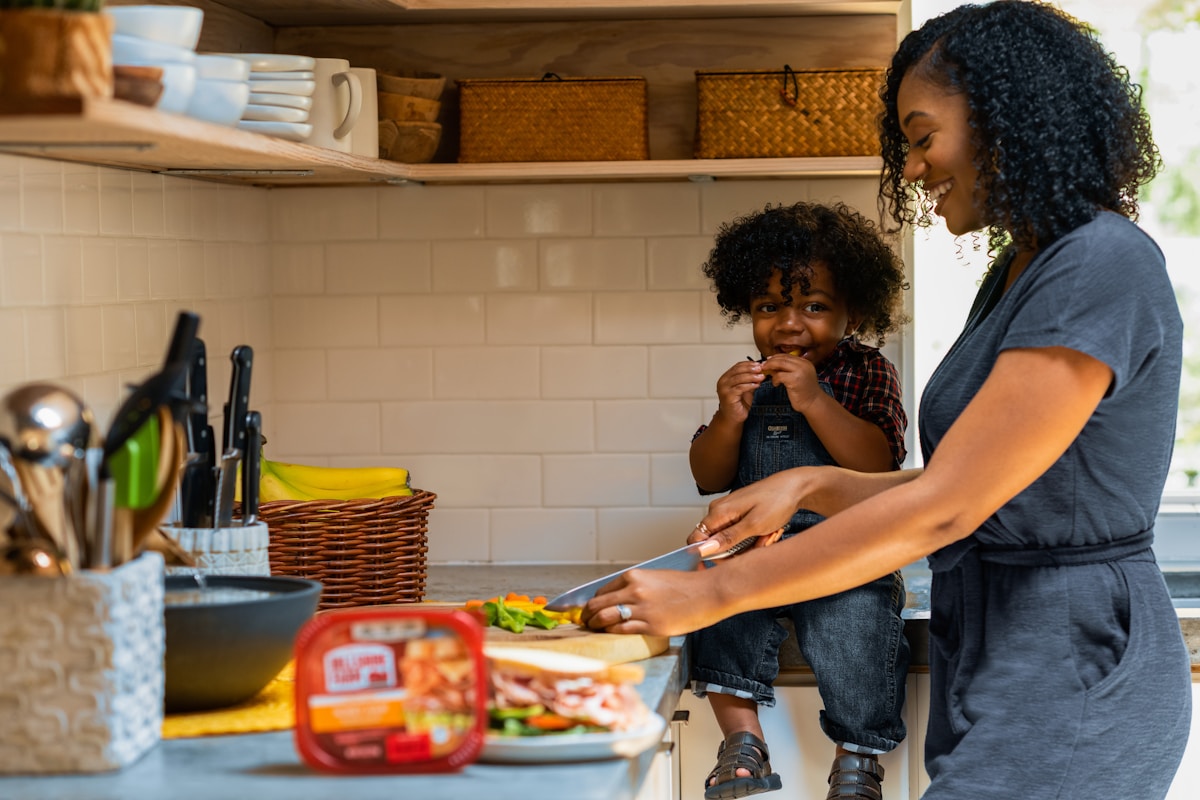
It is 5:20 p.m., dinner is half started, and your toddler suddenly needs to be held, stir the pot, open every drawer, and stand beside the stove. This difficult stretch of the day is very normal.
The goal is not to make a toddler play alone for an hour. To keep a toddler busy cooking, aim for short, supervised stretches: set up an activity before you begin, establish a nearby boundary, offer a brief helper job, and move your child away for knives, heat, and raw foods.
Key Takeaways
- Plan for short bursts of play and connection, not long periods of independent entertainment.
- Set up a supervised safe zone and a small dinner-time activity before cooking starts.
- Give toddlers simple, low-risk helper jobs only during calm parts of meal prep.
- Keep heat, sharp tools, appliances, raw animal foods, and hot cookware adult-only.
- Use leftovers or an easy fallback meal when cooking and close supervision are not manageable at the same time.
Start With a Realistic Goal: Safe, Connected, and Busy in Short Stretches
Late afternoon can be hard because toddlers are often tired, hungry, and ready for connection. They may lose interest in an activity after a few minutes. That does not mean the activity failed or that you are doing dinner wrong.
Think in small blocks rather than one long stretch of independent play. Your child might use stickers while you wash vegetables, help put napkins on the table, then return to a puzzle while you finish another step. Those small windows can be enough to move dinner forward.
A repeatable toddler dinner time routine makes the transition more familiar. Try this sequence:
- Put out a kitchen-time activity before you start cooking.
- Show your toddler where they can play or sit nearby.
- Complete one low-risk prep task.
- Offer a short helper job when appropriate.
- Move your child back to the safe zone before using a knife, turning on heat, or handling raw foods.
- Reconnect at a natural transition, such as when dinner goes into the oven or reaches the table.
Use plain, repeatable language: “You play here while I chop. Then you can help put napkins on the table.” Your toddler will not always cooperate, but a calm, familiar pattern can make boundaries feel less surprising over time.
Active supervision is still necessary whenever a toddler is nearby. A routine can reduce the chaos, but it cannot make the kitchen a place for unsupervised exploration.
Build a Safe Dinner-Time Zone Within Sight of the Kitchen
Choose one place where your toddler can feel close to you without being in the active cooking area. Depending on your home, that could be a small table near the kitchen doorway, a defined floor-play spot in the next room, or a gated space you can see from where you cook.
Keep the area away from the stove, oven, sharp tools, hot drinks, cleaning supplies, cords, and breakable items. The best setup is one you can reset quickly each day; it does not need to look like a dedicated playroom.
Make the boundary clear and simple. A low table, washable mat, or single activity basket can help show where play happens. Too many toys spread across the room may make it harder for a toddler to understand the limit.
Try a short script:
“The kitchen is for grown-up cooking right now. You can play at your table. When I am done chopping, you can help with napkins.”
Avoid long explanations during a stressful moment. A brief phrase repeated kindly is usually easier for a toddler to follow than a new speech every evening.
If you use a gate, closed door, or another physical barrier, follow the manufacturer’s instructions and current child-safety guidance. Barriers do not replace supervision, especially if your child climbs, moves furniture, or becomes upset trying to get through.
Set Up a Pre-Dinner Activity Basket That Is Easy to Repeat
A dinner-time activity basket works best when it appears before your toddler is already underfoot. Put it out while you unload groceries, before meal prep begins, or when you first notice the late-afternoon slump.
Use a small basket or bin with one or two choices at a time. A large selection can lead to dumping, switching activities, and more requests. Reserving a few items specifically for dinner prep can also help them stay interesting.
Practical activities while cooking dinner include:
- Board books or a felt board.
- Large-piece matching toys or a simple puzzle suited to your child.
- Reusable sticker scenes on a tray or table.
- Chunky crayons and a few sheets of paper, used as intended and supervised.
- A small bin with toy animals, cars, or figures.
- A lidded container activity with age-appropriate items that are suitable for your child.
- A contained sensory activity, such as soft fabric squares in a bowl, when you can supervise directly.
Choose activities that are easy to stop. If you need to drain pasta or handle a hot pan, it is much easier to say, “The stickers go back in the folder now,” than to manage something that spills, sticks, or scatters across the room.
Be cautious with small objects, loose food items, beads, craft pieces, and anything your child may mouth. These may create choking or ingestion risks, particularly for younger toddlers. Match materials to your child’s age and habits, and stay close enough to supervise.
A timer, one familiar song, or a simple “first/then” statement can make transitions more predictable without making the routine rigid. For example: “First books until the song ends, then you can help put forks on the table.”
Offer Safe Kitchen Helper Tasks and Separate Them From Cooking Hazards
Cooking with a toddler nearby often goes better when helping has a clear beginning and end. Toddlers do not need an important job; they usually want a small role that helps them feel included.
Offer helper tasks only during low-risk parts of meal prep and with close supervision. Depending on your child’s abilities, suitable tasks may include:
- Washing sturdy produce in a bowl or colander.
- Moving premeasured dry ingredients into a larger bowl.
- Tearing leafy greens or herbs when the task suits your child.
- Stirring cool, non-raw ingredients with a child-appropriate utensil.
- Carrying napkins to the table.
- Placing unbreakable utensils on the table.
- Putting unopened packaged items into a grocery basket.
Keep the job short and specific. “Put these two napkins here” is more likely to work than “Set the whole table.” When the task is done, name the success and transition right away: “You did it. Now the spoon goes in the sink, and your puzzle comes back out.”
Some tasks should remain adult-only, even when a toddler seems eager or capable. Do not involve toddlers in using knives or graters, handling raw meat, eggs, or seafood, operating appliances, reaching over a stove, opening the oven, carrying hot dishes, or touching cookware that may be hot.
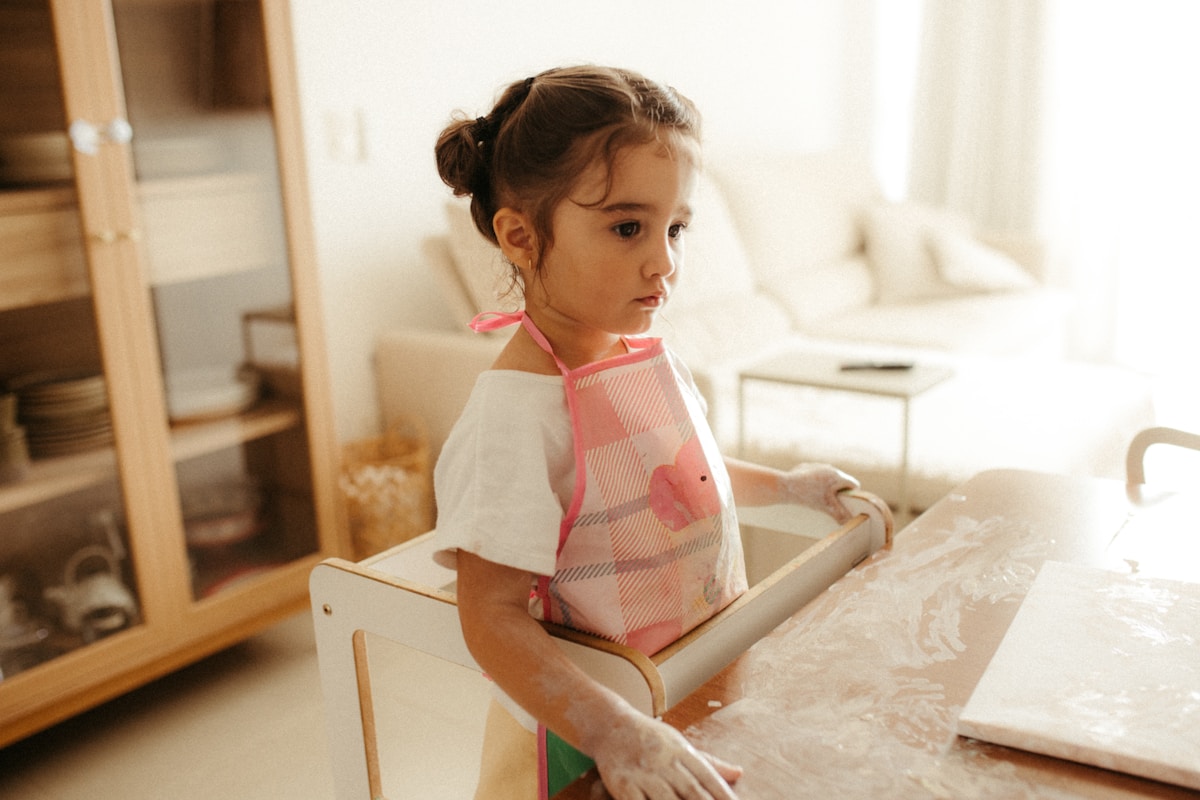
A learning tower or kitchen stool can bring a child to counter height, but it also brings them closer to hazards. Use only a stable product as directed, supervise continuously, keep it well away from heat and sharp tools, and reassess whether it suits your child and kitchen layout. It is not a hands-free place to keep a toddler while you cook.
Plan for High-Risk Moments: Heat, Knives, Raw Foods, and Open Ovens
Some parts of dinner require your full attention. Chopping, using a grater, draining hot water, opening the oven, moving hot pans, transferring food, and managing raw foods are not toddler-helper moments.
Plan the transition before you reach that step. End the helper task, move your child to the safe zone, and offer something fresh from the activity basket. You might say, “Helping is finished for now. I am using the hot pan, so it is sticker-book time. After dinner is on the table, we will read together.”
Stage ingredients and tools before the heat is on whenever possible. Wash and cut what you need, find the pot lid, set out serving utensils, and clear a safe path before you begin cooking. Fewer last-minute searches mean fewer moments when your attention is divided.
When possible, use back burners and turn cookware handles away from edges. These are helpful habits, not complete childproofing. Keep hot drinks and hot food well out of reach, and take extra care during draining, serving, and transferring food.
If your toddler repeatedly leaves the safe area or needs immediate attention, pause cooking. Turn off or step away from the task if you can do so safely, tend to your child, and reset. A delayed dinner is safer than trying to manage a hot pan while physically blocking a determined toddler.
Use a Fallback Dinner Plan on High-Need Days
Some evenings are not suitable for cooking a full meal from scratch. Your toddler may be sick, overtired, hungry, unusually clingy, or simply having a day when every boundary brings tears. Changing the plan is not giving up; it is choosing a manageable dinner.
Keep a few low-effort meals in regular rotation. Options may include leftovers, a previously frozen family meal, breakfast for dinner, a cold assembled meal, or a simple sheet-pan dinner prepared at an easier time when another adult is available.
A cold assembled dinner can be practical: bread or crackers, cheese, appropriately prepared produce, beans, yogurt, or other familiar components. The point is not to make a picture-perfect meal. It is to feed everyone without turning the kitchen into a daily emergency.
Hunger can intensify the pre-dinner struggle. When it fits your family routine, offer a simple snack or one component of dinner early, such as bread, vegetables, or another familiar item. Keep the portion modest if you want it to support dinner rather than replace it.
You can also reduce the dinner workload with one small task earlier in the day: wash produce during breakfast cleanup, cook grains during nap time, or portion ingredients when another adult is home. Even a few minutes of advance prep can make the evening feel calmer.
A workable routine is built from short activities, clear boundaries, safe connection, and flexible expectations. You do not need perfect independent play to finish dinner. You need a plan that responds to the child in front of you while keeping the riskiest cooking moments adult-only.
FAQs
How long should I expect a toddler to play independently while I cook dinner?
Expect short stretches rather than a guaranteed block of time. Some days your toddler may play happily for several minutes; other days they may need frequent reconnection. Plan dinner in stages and rotate between a nearby activity, a brief helper job, and a check-in with you.
What are safe kitchen helper tasks for a 1-, 2-, or 3-year-old?
Development varies, so choose tasks based on your child’s abilities and attention rather than age alone. Many toddlers can help with closely supervised jobs such as washing sturdy produce, moving premeasured dry ingredients, tearing greens, carrying napkins, or placing unbreakable utensils on the table. Keep all tasks away from knives, heat, appliances, raw animal foods, and hot cookware.
Is a learning tower or kitchen stool safe to use while I cook?
A tower or stool may be useful for a closely supervised, low-risk task, but it does not make active cooking safe for a toddler. Use a stable product as directed, keep it away from the stove and sharp tools, and do not treat it as a substitute for close supervision. If your child climbs, leans, or tries to reach hazards, return to a floor-level safe zone instead.