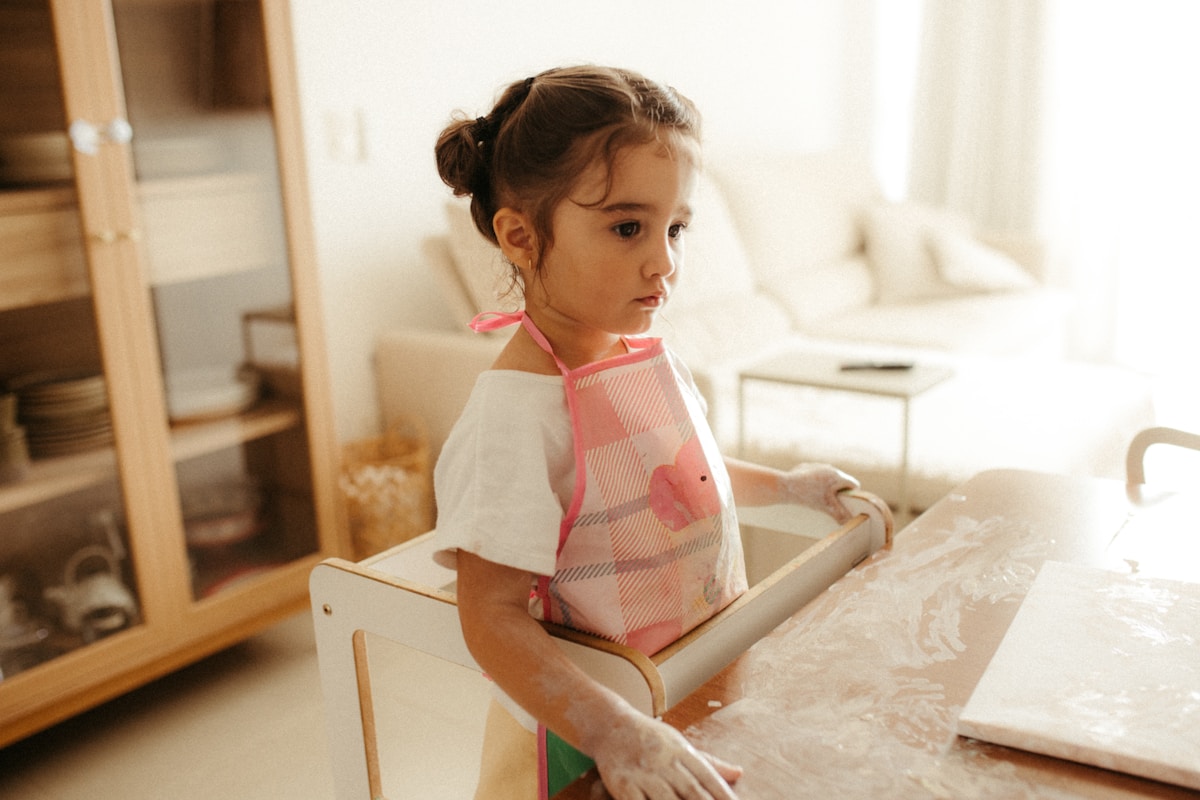
The vegetables are on the counter, dinner needs to happen, and your toddler is finally absorbed in stacking blocks. It is tempting to rush through every kitchen job at once. A better approach is to cook with a toddler nearby in small, pause-friendly steps while keeping them in sight and staying ready to respond.
Independent play while cooking does not mean becoming unavailable. It means creating a simple nearby setup, choosing a realistic task, and accepting that some nights the best dinner is leftovers, toast and eggs, or a snack plate.
Key Takeaways
- Keep your toddler in a visible, childproofed play space outside the active cooking zone.
- Choose meal-prep tasks that can stop immediately, such as washing produce or assembling cold ingredients.
- Save high-attention tasks involving heat, knives, raw foods, or cleaning products for another time or another adult.
- Check in often, keep your phone away, and treat wandering, climbing, or distress as a cue to pause.
- A simple backup dinner is a practical plan, not a parenting failure.
Start With a Visible, Safer Play Zone Near—Not In—the Cooking Area
The goal is not to keep a toddler busy for a set amount of time. The goal is to give them a familiar place to play while you remain actively aware of what they are doing.
Choose a spot you can see easily from your main prep area, but keep it outside the path to the stove, oven, sink, knives, hot drinks, and heavy appliances. A corner of the dining room, the far end of the kitchen, or a childproofed room visible through a doorway can work better than having your toddler directly underfoot.
Keep the invitation small. Put down a mat or use a familiar contained area where appropriate, then offer a few simple items:
- Two or three chunky blocks and a small container
- A board book and a soft toy
- A chunky puzzle with pieces you have checked for damage
- A closed activity bin with large, familiar items
- A few unbreakable cups for stacking or nesting
Rotating a small selection can feel more interesting than emptying every toy basket. You might reserve one simple dinner-prep activity, such as placing large toy animals in a bowl or moving fabric squares between containers.
If your home has limited floor space, use the safest nearby area you can still watch directly. Before starting, scan it for small objects, loose packaging, cords, unstable furniture, and anything your toddler could pull down. A gate, play yard, or helper tower may support your setup when used as directed, but none replaces close adult supervision.
Avoid setting up play next to the oven door, dishwasher, pantry shelves with glass, or a counter with dangling cords. Even a content toddler may suddenly decide that the appliance you turned on is the most interesting thing in the room.
Match Dinner Prep to Your Toddler’s Attention Window
When you are doing meal prep with toddlers, start with work that can stop instantly. Think of dinner as several small jobs rather than one uninterrupted cooking project.
Low-interruption tasks include washing produce, opening packaged ingredients, sorting pantry items, assembling cold foods, or measuring dry ingredients well away from your child. You can also prepare sheet-pan ingredients before turning on the oven, then pause if your toddler needs you.
These dinners are often easier to manage during independent play:
- Snack plates with fruit prepared appropriately for your child, crackers, vegetables, cheese, and a dip
- Sandwiches, wraps, or simple quesadillas prepared before cooking
- Salads topped with pantry beans, cooked grains, or leftovers
- Pasta with a sauce assembled ahead of time
- Slow-cooker ingredients loaded during a calm part of the day
- Sheet-pan meals with washing, sorting, and seasoning done before the oven is on
- Leftovers paired with a fresh side
Try a three-stage dinner plan. First, prep cold ingredients while your toddler plays. Second, cook only when they are settled, with another caregiver, or asleep. Third, keep a backup meal available if the cooking stage does not happen.
For example, wash and cut vegetables earlier, place them in a covered container, and set out the seasonings. Later, if the timing works, cook them. If not, save the vegetables for tomorrow and serve yogurt, toast, beans, or leftovers tonight.
Some jobs deserve your full attention and are better saved for nap time, bedtime, or another adult’s help. These include stovetop frying, managing boiling water, moving hot pans from the oven, knife-heavy preparation, pressure cooking, handling raw animal foods, and deep cleaning with household products.
If you are wondering how to cook with a 16-month-old, make the plan even smaller. A child that age may enjoy a short stretch of nearby play and then want connection, movement, food, or a diaper change. That is normal. Plan to wash one vegetable or assemble one meal component rather than finish an elaborate recipe.
Use a Simple Supervision Routine Instead of Trying to Multitask Everything
The easiest routine is one you can repeat without much thought. Set up the play zone, say what you are doing, complete one short kitchen step, check in visually, reconnect briefly, and decide whether to continue or pause.
You might say, “I’m washing vegetables where I can see you. You can build with these blocks, and then I’ll come see what you made.” This reassures your toddler that you are nearby and gives the activity a clear beginning.
After washing the vegetables, pause for a real check-in. Notice what your child is doing, respond if they show you something, and decide whether the setup is still working. If they are happily playing, move to one more short step, such as opening beans or arranging ingredients in a bowl.
Keep your phone out of your hand except for essential use. The issue is divided attention: cooking, reading messages, supervising a toddler, and cleaning counters at the same time asks too much of one adult.
Choose one productive priority. If dinner is the priority, let the dishes wait. If you need to clean a spill, choose a cold dinner rather than trying to scrub while something cooks on the stove. A short list helps: wash produce, assemble dinner, serve. Everything else is optional.
Treat certain behavior as a signal to stop rather than a challenge to push through. Pause cooking if your toddler is wandering toward hazards, climbing, throwing objects, repeatedly calling for you, becoming distressed, or suddenly getting unusually quiet. Reconnect first, then change the setup or simplify the meal.
Offer Safe Toddler Kitchen Activities When They Want to Join In
Sometimes independent play ends because your toddler wants to be part of the action. That does not require a big cooking project. Brief, closely supervised helping can meet the need for connection while keeping the active cooking zone for adults.
Choose jobs away from heat, sharp tools, raw foods, and cleaning products. Depending on your child, the materials, and your direct supervision, simple options may include:
- Putting unbreakable utensils into a low bin
- Transferring clean produce into a large bowl
- Matching large container lids to containers
- Carrying napkins to the table
- Placing placemats on the table
- Wiping a low surface with a damp cloth
- Dropping large, pre-measured dry ingredients into a bowl while you stand beside them
Use clear, calm limits. Try: “You can help with the napkins while I keep the hot pan area for grown-ups.” Or say, “You may put the apples in this bowl. I will do the cutting.”
A toddler’s interest and ability can change quickly, so stay close and keep the task brief. Do not assume an activity is suitable simply because it worked once. Stop if your child mouths an item, throws it, becomes frustrated, or tries to reach the counter.
Toddlers should not handle knives, hot cookware, boiling liquids, raw meat, cleaning products, or small food and household items that could create a choking or swallowing risk. A napkin job or a bowl-filling task is plenty for tonight.
Build Kitchen Safety Boundaries That Make Stopping Easier
Kitchen safety with toddlers is easier when boundaries are in place before dinner becomes hectic. Put hot food and drinks well back from counter edges. Turn pot handles away from reach, keep knives secured, and make sure appliance cords are not dangling where a child can pull them.
Store cleaners and other hazardous household items out of reach, and do not leave them open while your toddler is nearby. Check the floor and play zone before cooking, especially after unpacking groceries or opening packages. Twist ties, caps, batteries, small pieces of food, and torn packaging can quickly become hazards.
Raw animal foods add another reason to keep dinner simple when you are solo with a toddler. Handling them requires attention to handwashing, cleaning surfaces, and keeping ready-to-eat foods separate. If your toddler needs you during that process, pause, wash up as needed, and switch to a backup meal rather than rushing.
Notice your child’s basic needs, too. A toddler who is hungry, tired, sick, escalating, or trying to enter the active cooking zone is telling you that independent play is over for now. There is no prize for finishing a recipe while everyone becomes more upset.
Create a fallback list before you need it: leftovers, a frozen meal you are comfortable serving, breakfast for dinner, a pantry staple, a cold plate, or a prepped component. If another adult arrives, they can take over toddler time or the cooking task. Flexibility is part of the plan, not a failure of it.
FAQs
How can I cook with a 16-month-old nearby without using screens?
Keep the goal modest: one or two short prep steps while your child plays in a visible, childproofed area. Offer a familiar activity with only a few materials, check in often, and expect to pause when your toddler needs connection. Cold assembly tasks and slow-cooker prep are often easier than active stovetop cooking.
What are safe toddler kitchen activities while I make dinner?
Choose brief, closely supervised jobs away from heat and sharp tools, such as carrying napkins, matching container lids, placing clean produce in a bowl, or putting unbreakable utensils in a bin. Consider your individual child, the size and condition of the materials, and whether you can stay right beside them.
When should I stop cooking and attend to my toddler instead?
Stop when your toddler approaches hazards, climbs, throws items, repeatedly seeks you, becomes upset, or seems unusually quiet. Also pause if you are about to handle a hot pan, boiling water, a knife, raw animal foods, or cleaning products and cannot give both tasks the attention they need. Switch to a simpler dinner whenever the setup stops feeling manageable.