Dinner is halfway chopped, something needs stirring, and your toddler suddenly needs to be held right now. It is a familiar hard moment: everyone is tired, hungry, and gathered in the busiest room of the house.
You can cook with a toddler nearby more calmly by setting up one contained activity spot before you begin, saving helper jobs for low-risk moments, and choosing dinners that can handle pauses. The goal is not uninterrupted cooking or a perfect little kitchen assistant. It is a safer routine with fewer frantic decisions.
Key Takeaways
- Set up one defined toddler area away from heat, sharp tools, the sink, and busy walking paths before dinner starts.
- Match activities to the cooking phase: supervised helping during calm prep, independent play during high-focus steps.
- Keep kitchen helper tasks short, specific, and free from heat, sharp tools, raw ingredients, and appliance controls.
- Choose low-mess activities you can repeat and dinners that can tolerate a pause.
- If the kitchen becomes unsafe or overwhelming, move your child to another supervised space and simplify the meal.
Start With a Kitchen Setup That Lets You Cook With a Toddler Nearby
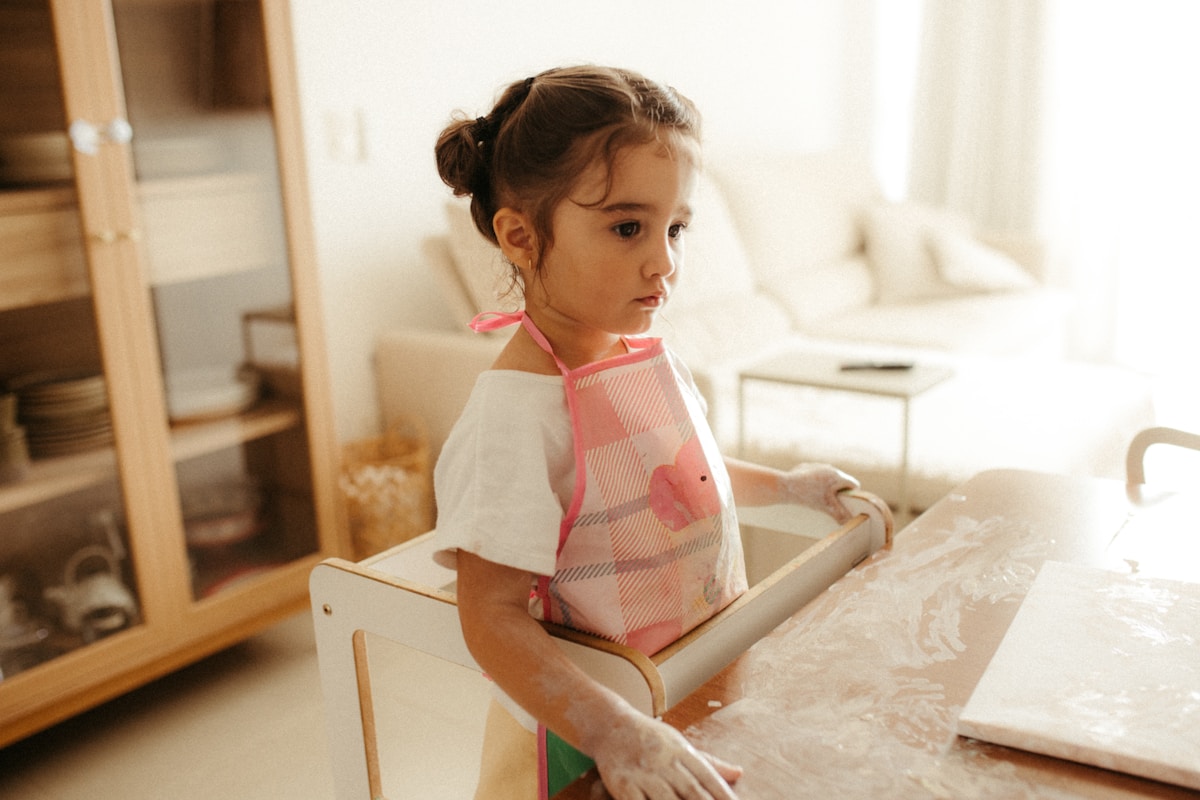
Before taking out ingredients, decide where your toddler will be. Choose one defined spot away from the stove, oven, sink, sharp tools, and the main path through the kitchen. A small table, a clear patch of floor on the far side of the room, or a child-height surface may work if you can supervise from where you cook.
Use a towel, tray, or mat to make the activity area easy to recognize. Put only a few approved items in that space rather than opening drawers or setting out a large pile of toys. Fewer choices usually mean less scattering and a faster cleanup.
Do a quick hazard sweep before your child comes in. Put away knives, graters, glass, cleaning products, hot drinks, and small loose objects. Keep hot cookware out of reach, turn pan handles inward, and treat the stove and oven area as adult-only.
Think of this setup as a working zone, not a guarantee. Toddlers are curious and quick, so stay close enough to notice climbing, wandering, frustration, or a sudden change in mood. A barrier or activity surface can help define space, but it does not replace active supervision.
A predictable snack and water routine may also make dinner easier. Offer an age-appropriate snack and drink before you begin, and supervise eating. A child who has eaten a little and had a moment of connection may be less likely to pull at your legs during the first cooking steps.
A simple script can become part of the routine: “First, water and snack. Then you have a kitchen job. Then you play on your mat while I cook.” Your toddler may not follow it perfectly, but repeating the same order can make dinner feel more predictable.
Match Toddler Kitchen Activities to the Cooking Phase
The best toddler kitchen activities depend on what you are doing. When you can look up often and stay nearby, a short supervised helper task may fit well. When you need both hands, full attention, or quick movement near heat, switch to safe kitchen play in the designated area.
During calm prep, choose a task that lasts one to five minutes. Short tasks are easier to supervise and easier to end before frustration builds. Depending on your child’s skills and your setup, you might:
- Let them rinse sturdy produce in a bowl or colander while you stay beside them.
- Have them move premeasured dry ingredients from one bowl to another.
- Offer a large spoon for stirring cold ingredients in a stable bowl.
- Let them tear washed lettuce leaves or soft herbs into a bowl.
- Ask them to place clean vegetables into a large bowl one at a time.
Set up the task before inviting your toddler to join. Measure what you need first, choose a bowl that will not slide easily, and give one clear instruction: “Put the oats in this bowl,” or “Stir until I say stop.” Avoid giving a whole recipe’s worth of directions at once.
During chopping, draining, stovetop cooking, oven use, or handling raw ingredients, your toddler does not need a counter task. This is the moment for their separate activity area. Keep raw meat, raw eggs, sharp tools, hot pans, boiling water, appliance controls, and food-prep cleanup for adults.
Hands-off cooking is your best window for reconnecting. While a dish bakes, simmers, or needs little attention, check dinner and then spend a minute or two with your child. Refill the pretend-mixing bowl, read a few pages, or admire their “recipe.” That brief connection may make the next cooking step easier.
Use Five-Minute Low-Mess Safe Kitchen Play
The most useful safe kitchen play is not elaborate. It is repeatable, easy to reset, and contained on one tray or mat. Build a small rotation so you do not have to invent a new activity every evening.
A pretend-mixing tray is a simple starting point. Set out one empty bowl, a whisk, a large spoon, and a few silicone muffin cups. Your toddler can stir, tap, fill, and dump while you prepare dinner nearby.
Nesting bowls and measuring cups are another low-prep option. Use a small set of large, sturdy pieces instead of lots of small items. Simple prompts can help: “Can you put the little cup in the big bowl?” or “Can you make a tower?”
A clean damp cloth can become a useful task. Your toddler can wipe a low cabinet front, a child-height table, or an empty lower shelf you have chosen for the purpose. Give them one small area rather than asking them to “clean the kitchen,” which can quickly become frustrating.
For a transfer activity, place a few large, age-appropriate items in one container and an empty container beside it. Your child can move the items back and forth with their hands or a large spoon. Keep the activity on a tray so rolling or spilling stays in one place.
Kitchen-themed board books, a small basket of familiar pretend food, or washable magnets used away from heat and appliances can serve as backups. Save one favorite option for the moment you need to drain pasta, move a hot pan, or finish a fast stovetop step.
Offer one activity at a time. A toddler with cups, books, utensils, and pretend food all at once may dump everything out in two minutes. One tray gives them a clearer idea of what to do.
Be thoughtful with sensory materials and loose objects. Consider whether your child still mouths items, has allergies, may scatter the material, or will need close help to use it. If an activity creates more supervision or cleanup than it saves, skip it on a weeknight.
Give Toddlers Useful Kitchen Helper Tasks Without Adding Heat or Hazards
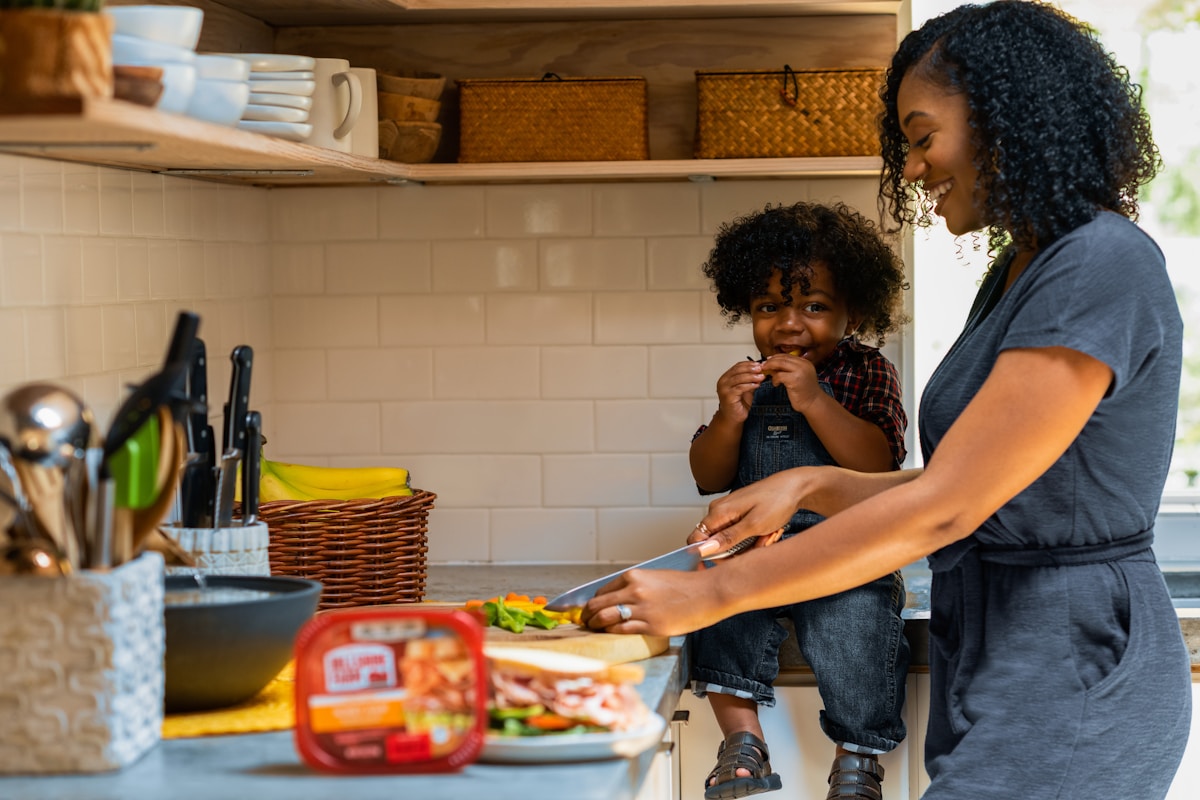
Kitchen helper tasks can help toddlers feel included, but they should be optional, brief, and directly supervised. Stop while your child is still enjoying the job instead of stretching it until everyone is frustrated.
Good low-risk jobs often happen before cooking begins or while food is away from heat. Depending on your child’s abilities and your setup, they may be able to:
- Carry a lightweight basket of napkins to the table.
- Put unbreakable plates or placemats in place.
- Place washed produce into a serving bowl.
- Sprinkle a preportioned topping onto a cold dish when appropriate.
- Stir a cold sauce or batter while you stand alongside.
- Hand you a requested item from a small basket of approved utensils.
Keep the job specific. “Put one napkin at each place” is easier than “Set the table.” “Can you put these cucumber slices in the bowl?” is clearer than “Help with dinner.” The aim is a small task your toddler can repeat, not a grown-up-sized job.
Some nights, helping may simply mean watching you stir from their safe spot. Other nights, it may mean eating a supervised snack while you make dinner with toddlers in the room. Both can be part of a workable family routine.
Adult-only jobs should remain adult-only even when your toddler wants to copy you. That includes handling knives, graters, raw meat, raw eggs, hot cookware, boiling water, oven doors, appliance controls, glass, and cleaning supplies. A brief disappointment is easier to manage than trying to supervise a hazardous task while making dinner.
Plan Dinner Around Pauses Not Around Perfect Cooperation
Busy parent meal prep does not have to mean cooking everything in advance. Often, it means choosing meals with fewer urgent moments and repeating simple systems that work for your family.
Look for dinners with forgiving gaps. Sheet-pan meals, slow-cooker meals, simple one-pot dishes, prepared components, and meals that simmer or bake can give you time to check on your child. They do not eliminate work, but they are often easier to pause than meals that require constant chopping and last-minute steps.
Do the highest-focus work first when possible. Chop vegetables, measure ingredients, open cans, and gather utensils before your toddler enters the kitchen zone. Even five minutes of preparation can reduce the number of times you need to step away from a hot pan later.
Try this repeatable dinner rhythm:
- Offer snack and water.
- Give one short supervised helper job.
- Move to one independent activity on the tray or mat.
- Check in briefly during a hands-off cooking moment.
- Bring out a backup activity for the busiest step.
Keep an easy fallback meal component in mind for especially difficult nights. This might be familiar prepared staples or a simple meal you can assemble with minimal cooking. The point is to lower pressure, not to prove that every dinner must be made from scratch.
Repetition can be helpful at the end of the day. Perhaps Monday is pretend mixing, Tuesday is napkins and books, and Wednesday is bowl nesting. A familiar routine is not boring when it saves energy at dinnertime.
Know When the Kitchen Is Too Busy and Use a Fallback Plan
There are times when including your toddler is no longer the right plan. Move them out of the kitchen area when they are climbing, repeatedly entering the hot zone, grabbing unsafe items, becoming highly upset, or when you need full concentration for a hazardous step.
Start with a calm reset. If needed, pause cooking, secure the hot area, and say what is happening in plain language: “The stove needs my full attention. We are moving to your books now.” Then transition to another supervised space nearby or ask another caregiver to take over if one is available.
If someone else can help, use that handoff for knife work, stovetop cooking, oven steps, or handling raw ingredients. Even a short shift can make dinner safer and calmer.
If you are alone and your child cannot safely remain in the kitchen zone, simplify. Turn off or pause what you can, choose the fastest safe next step, and use your fallback meal plan if necessary. Changing course is good judgment, not a failed family cooking moment.
The win is not a spotless kitchen or a toddler who stays occupied the entire time. The win is a dinner routine that makes room for real family needs: hunger, interruptions, learning, cuddles, and the occasional very fast change of plan.
FAQs
What can my toddler do in the kitchen while I make dinner?
A toddler can use a small activity tray with a bowl, spoon, whisk, nesting cups, or kitchen-themed books in a spot away from heat and sharp tools. During calm prep, they may also help with brief, closely supervised jobs such as washing sturdy produce, stirring cold ingredients, or carrying napkins to the table.
How do I create a safe kitchen play area for a toddler?
Choose one contained location away from the stove, oven, sink, sharp tools, and walking paths. Clear hazards first, use a mat or tray to define the space, and offer only a few large, simple materials. Stay nearby and supervise rather than treating the area as a place to leave your child alone.
Which dinner tasks are safe for toddlers to help with?
Choose non-heat tasks that match your child’s current skills and can be supervised directly: placing unbreakable table items, dropping washed produce into a bowl, tearing washed greens, stirring cold food, or moving premeasured dry ingredients. Keep sharp tools, hot food and cookware, raw meat and eggs, appliances, glass, and cleaning supplies for adults only.