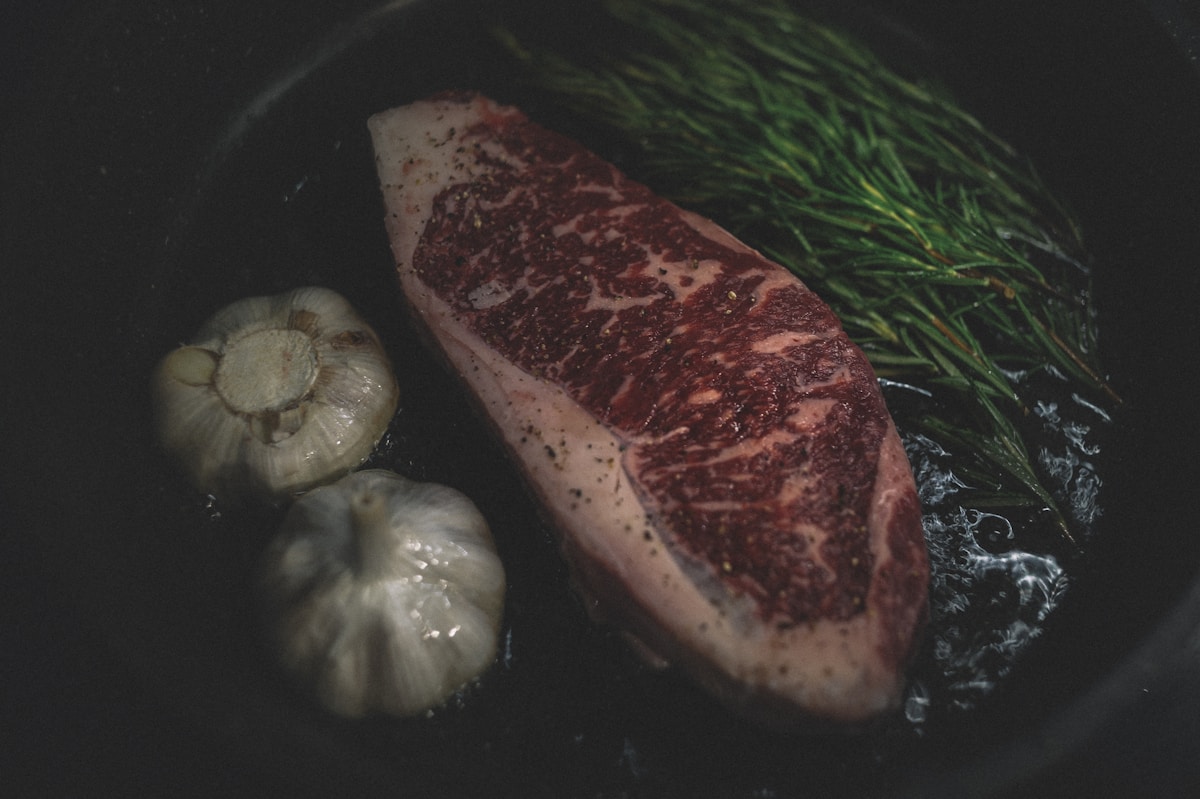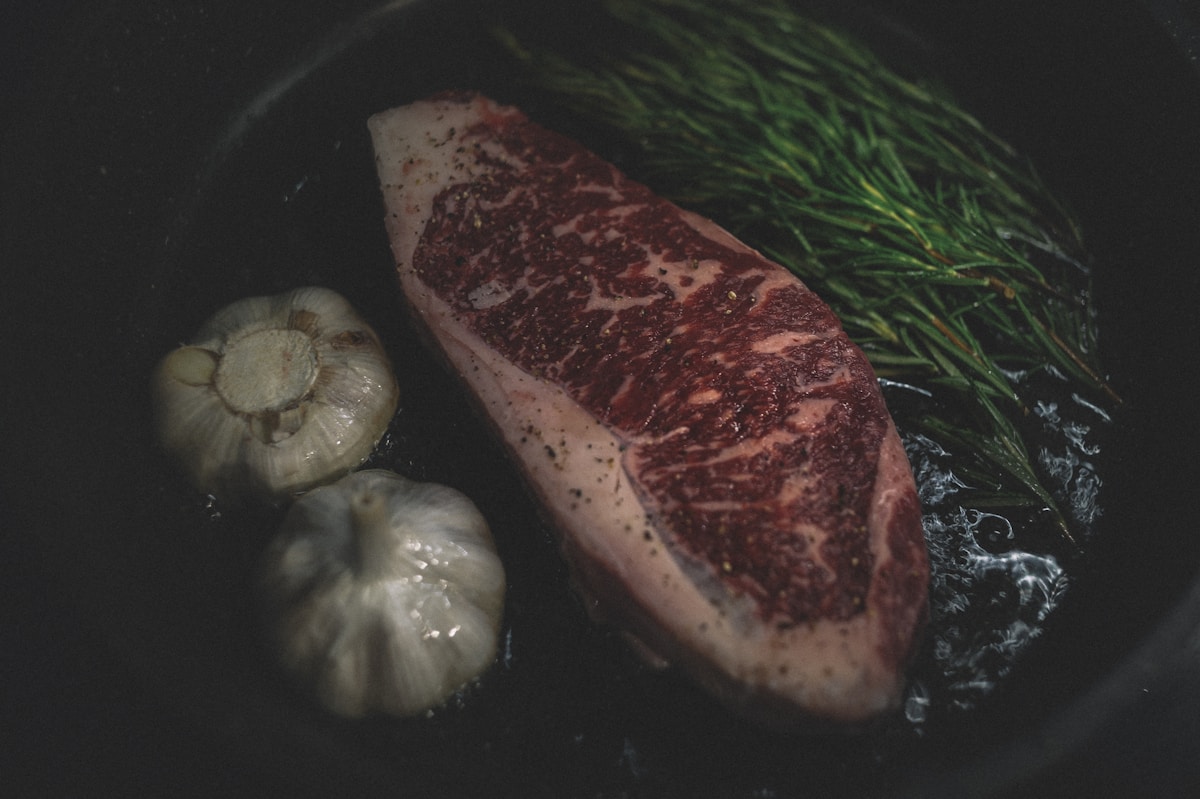
You know the feeling. You spent good money on a beautiful, thick-cut ribeye. You dreamed of that deep brown, crispy crust. You followed a recipe, but when you pulled the steak out of your trusty non-stick pan, it was… gray. A little soggy. It tasted fine, I guess, but it lacked the soul of a real steakhouse steak.
This isn’t your fault. This is a tool problem. In the world of cooking, using the right pan for the job is half the battle, and when it comes to searing meat, there is an undisputed champion. Today, we’re settling the debate: cast iron versus non-stick for that perfect steak. The answer might just change the way you cook forever.
The Science of the Sizzle Why Heat Is Everything
Before we even talk about pans, we need to talk about heat. The magic you’re chasing is a chemical process called the Maillard reaction. In simple terms, when amino acids and reducing sugars in meat are exposed to high heat (above 300°F / 150°C), they create hundreds of new aroma and flavor compounds. This is what gives you that nutty, roasted, deeply savory crust.
To achieve this, you need a pan that can do two things exceptionally well:
- Get incredibly hot: Your pan surface needs to be in the 400-450°F (204-232°C) range to kickstart a powerful Maillard reaction instantly.
- Stay incredibly hot: This is the key. When you place a cool, room-temperature steak onto a hot surface, the pan’s temperature will inevitably drop. The question is, by how much?
A pan with poor heat retention will lose a massive amount of energy to the steak. The surface temperature will plummet, and instead of searing, the moisture from the steak will start to steam it. Steaming creates that sad, gray, rubbery surface we’re trying to avoid. A pan with excellent heat retention, however, has so much thermal energy stored up that the introduction of a steak barely makes a dent. It keeps on searing, creating that glorious crust.
This is where the physical properties of your pan become the hero (or the villain) of your story.
Head-to-Head Pan Showdown Cast Iron vs Non-Stick
Let’s put our two contenders in the ring. They’re both round, they both have a handle, but that’s where the similarities end.
The Challenger: The Non-Stick Skillet
We all have one, and for good reason. They are fantastic for cooking scrambled eggs, pancakes, or delicate fish fillets without a fuss. Their primary feature is a coating, usually Polytetrafluoroethylene (PTFE), that prevents food from bonding to the surface.
- Pros: Easy to clean, great for low-to-medium heat cooking, requires less fat/oil.
- Cons: Cannot handle the high heat required for searing. Most manufacturers warn against heating them empty or exceeding 500°F (260°C), as the coating can degrade and release fumes. They also have poor heat retention due to their typically lightweight aluminum construction.
- The Steak Test: When you put a steak in a preheated non-stick pan, the temperature drops dramatically. The pan struggles to recover, and you often end up steaming the meat in its own juices. You’ll never get a world-class crust. It’s simply the wrong tool for the job.
- Price Range: $30 - $80 for a decent one like a T-fal or Tramontina.
The Champion: The Cast Iron Skillet
This is old-school technology. A single piece of molded iron. It’s heavy, it’s rugged, and it’s a thermal powerhouse. Its secret isn’t that it heats evenly (it doesn’t, it actually has hot spots), but that once it gets hot, it stays hot.
- Pros: Unbeatable heat retention. Durable enough to last for generations (literally). Can go from stovetop to oven. Develops a natural non-stick surface (called seasoning) over time. Incredibly affordable.
- Cons: It’s heavy. It requires a bit of maintenance (no dishwashers, please). It must be kept dry to prevent rust.
- The Steak Test: Once you get a cast iron skillet properly preheated, its massive thermal mass means the temperature barely drops when the steak hits it. You get an immediate, violent sizzle and a deep, even sear. This is the pan that delivers the Maillard reaction in spades.
- Price Range: $20 - $40 for a classic 12-inch Lodge skillet, which is arguably the best value in all of cookware.
| Feature | Cast Iron Skillet | Non-Stick Skillet |
|---|---|---|
| Max Safe Heat | Extremely High (700°F+ / 370°C+) | Medium-High (~500°F / 260°C) |
| Heat Retention | Excellent | Poor |
| Searing Ability | Superior | Inferior |
| Durability | Generational | 1-5 Years |
| Maintenance | Seasoning required | Easy to clean, but fragile surface |
| Best For | Searing, Frying, Roasting, Baking | Eggs, Pancakes, Delicate Fish |
The Perfect Steak Sear A Step-by-Step Guide
Ready to put the theory into practice? Grab your cast iron skillet. Here’s how you get a steakhouse-quality sear at home.
-
Prep the Steak (The Most Important Step): Take your steak out of the fridge about 45 minutes before cooking. Pat it completely dry with paper towels. I mean it. Bone dry. Moisture is the enemy of a good crust. Season it very generously on all sides with coarse salt and freshly cracked black pepper.
-
Preheat the Pan: Place your 12-inch cast iron skillet on the stove over medium-high heat. Let it preheat for a solid 5-7 minutes. You want it screaming hot. A simple test is to flick a drop of water on it; it should sizzle, dance, and evaporate almost instantly.
-
Oil and Sear: Add one tablespoon of a high-smoke-point oil like avocado, grapeseed, or even canola oil. Swirl it to coat. Gently lay the steak in the pan, placing it away from you to avoid any oil splashback. You should hear a loud, aggressive sizzle. If you don’t, your pan isn’t hot enough.
-
Hands Off!: Do not touch, poke, or move the steak for at least 3 minutes. Let the pan do its work and form that beautiful crust.
-
Flip and Finish: Using tongs, flip the steak. The first side should be a deep, rich brown. Now, for the flavor bomb: add 2 tablespoons of butter, 2 smashed garlic cloves, and a sprig of thyme or rosemary to the pan. As the butter melts, tilt the pan and use a spoon to baste the steak continuously for about a minute. (This is where you’ll feel like a real chef.)
-
Check for Doneness: Cook to your desired temperature. A reliable instant-read thermometer is your best friend here.
- Rare: 125°F (52°C)
- Medium-Rare: 135°F (57°C)
- Medium: 145°F (63°C)
-
The Essential Rest: Remove the steak from the pan and place it on a cutting board or wire rack. Let it rest for 10 minutes. This is non-negotiable. It allows the juices to redistribute throughout the meat, ensuring a tender, flavorful steak instead of a dry one.
Demystifying Cast Iron Care Is It Really That Hard?
Many people are scared off by cast iron maintenance. Don’t be. It’s simple once you know the rules.
- To Clean: After cooking, let the pan cool slightly. Use a stiff brush or a pan scraper to remove any stuck-on bits. Use hot water. A little bit of dish soap is perfectly fine on a well-seasoned modern pan—the idea that soap strips seasoning is a myth from the days when soap contained lye. (Your regular Dawn is fine.)
- To Dry: This is the most critical step. Never let it air dry. After washing, place the skillet back on the stove over low heat for a few minutes until every drop of water has evaporated. This prevents rust.
- To Season: While the pan is still warm, pour about a teaspoon of a neutral oil (like canola or grapeseed) into it. Use a paper towel to rub that thin layer of oil all over the interior surface. Keep wiping until it looks dry and not greasy. The heat will help the oil polymerize, building up your non-stick seasoning.
That’s it. That’s the whole routine. It takes about two minutes and will keep your pan in perfect shape for your grandkids to use.
The Final Verdict The Right Tool for the Job
So, is a cast iron skillet really better for searing a steak? The answer is an unequivocal, resounding YES. It’s not about brand names or fancy marketing. It’s about physics.
The superior heat retention of cast iron is the key to unlocking the Maillard reaction and producing that incredible crust you can’t get from a non-stick pan. A non-stick pan still has a valuable place in your kitchen for delicate, low-heat tasks, but for high-heat searing, it’s out of its league.
If you take cooking seriously and want to elevate your results, the single best investment you can make is a 12-inch Lodge cast iron skillet. For less than the price of two nice steaks, you get a piece of equipment that will fundamentally change your cooking and will last a lifetime. It’s the definition of value over vanity, and the right tool will always make cooking easier and more delicious.