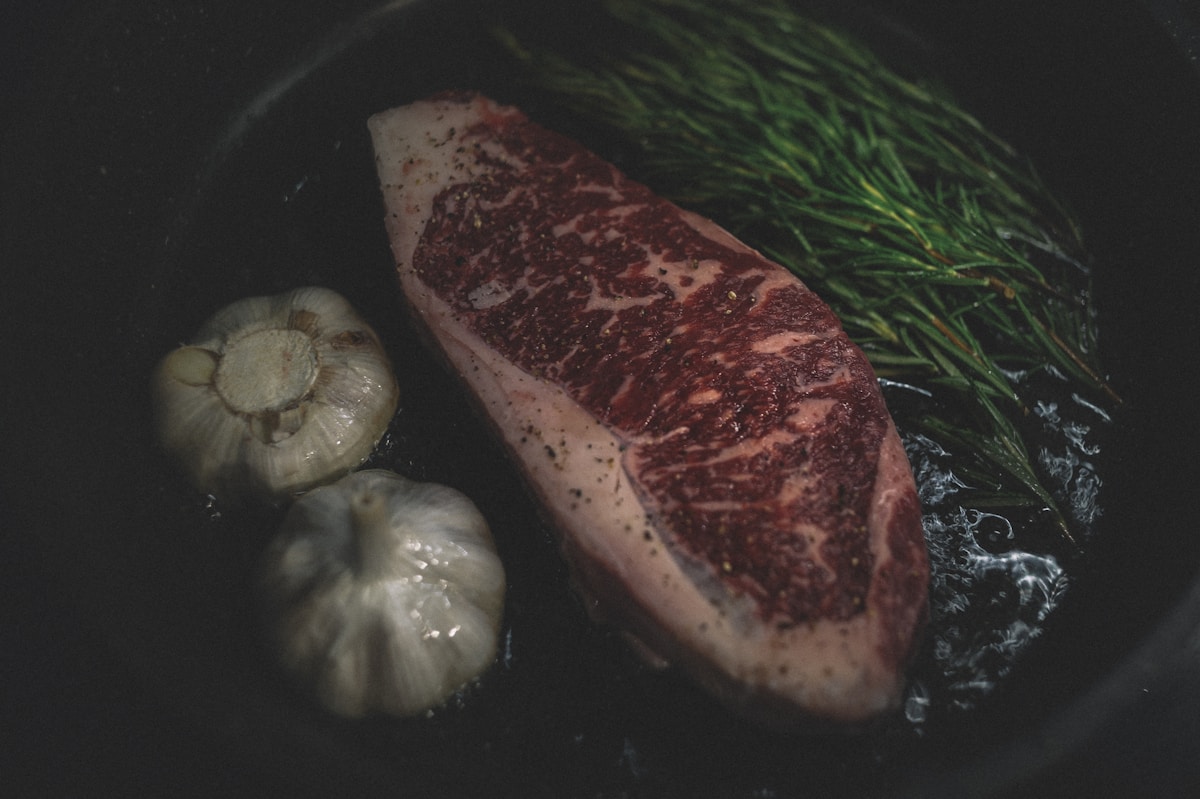
You’ve done everything right. You bought a beautiful, thick-cut ribeye. You let it come to room temperature. You seasoned it perfectly. You put it in a hot pan, filled with anticipation for that glorious, sizzling crust. But when you flip it, you’re met with a patchy, grayish-brown surface. It’s a sad, disappointing moment we’ve all had in the kitchen.
The difference between a steakhouse-worthy crust and a lackluster one often comes down to one simple thing: your pan. The debate between cast iron and stainless steel is a classic for a reason. Both are fantastic tools, but when it comes to the singular goal of a deep, flavorful, edge-to-edge sear on a piece of beef, they are not created equal. So, let’s settle this. I’ve cooked more steaks than I can count on both surfaces, and I’m here to tell you which one earns its place as the king of the steak sear.
The Science of the Sizzle What We’re Chasing
Before we pit these pans against each other, you need to understand what we’re actually trying to achieve. That delicious, brown crust is the result of something called the Maillard reaction. It’s a complex chemical reaction between amino acids and reducing sugars that occurs at high temperatures, typically starting around 300°F (149°C).
This isn’t just browning; it’s flavor creation. The Maillard reaction is responsible for hundreds of new aromatic compounds that give seared steak its distinctive, savory, and nutty taste. To get a great one, you need two things: a dry surface on your steak (moisture creates steam, and steam is the enemy of crust) and intense, sustained heat from your pan.
The pan’s job is to dump a massive amount of thermal energy into the steak as quickly as possible. The better it does this, the faster the crust forms, which means you can pull the steak off the heat before the inside overcooks. This is the whole game, and how each pan handles heat is where the real difference lies.
The Heavyweight Champion Cast Iron’s Brute Force
When you think of a classic steak sear, you’re probably picturing a cast iron skillet. There’s a good reason for that. Cast iron is a dense, thick material that is relatively poor at conducting heat but is an absolute champion at retaining it.
Think of a cast iron pan as a heat battery. It takes a while to charge up (you should preheat it for at least 5-7 minutes), but once it’s hot, it holds an incredible amount of energy. When you place a cool steak onto its surface, it doesn’t flinch. It has so much stored heat that it instantly vaporizes surface moisture and kickstarts a powerful Maillard reaction. This property is called high heat capacity, and it’s cast iron’s superpower.
- Recommended Model: Lodge 12-Inch Cast Iron Skillet
- Price Range: $25 - $40 (Yes, really.)
Pros:
- Incredible Heat Retention: It delivers a deep, even sear that’s very forgiving for beginners.
- Durability: It is practically indestructible. Your grandkids could be using your pan.
- Affordability: It’s one of the best value-for-money purchases you can make for your kitchen.
- Naturally Non-Stick: When properly seasoned, it develops a fantastic cooking surface.
Cons:
- Heavy: A 12-inch skillet can weigh over 8 pounds.
- Slow to Heat: It requires patient preheating.
- Requires Maintenance: You need to keep it seasoned and dry to prevent rust. (It’s easier than it sounds.)
- Poor for Pan Sauces: The dark, seasoned surface makes it hard to see the fond (the browned bits stuck to the pan), and its seasoning can react with acidic ingredients like wine or vinegar, potentially stripping it or giving the sauce a metallic taste.
The Nimble Fighter Stainless Steel’s Finesse
Stainless steel is the workhorse of most professional kitchens. A good quality pan isn’t just a piece of steel; it’s a multi-layered construction, typically with a core of a highly conductive metal like aluminum or copper sandwiched between layers of durable, non-reactive stainless steel. This construction allows it to heat up quickly and respond instantly to changes in burner temperature.
This responsiveness is its greatest strength and its biggest challenge for searing. Unlike cast iron’s stable thermal mass, a stainless steel pan can experience a significant temperature drop when a cold steak hits its surface. If you haven’t preheated it perfectly, you risk the temperature falling below the Maillard threshold, resulting in the steak steaming in its own juices and turning that dreaded gray color.
- Recommended Models: All-Clad D3 12-Inch Fry Pan (premium), Tramontina 12-Inch Tri-Ply Clad Fry Pan (value)
- Price Range: $60 - $200+
Pros:
- Responsive Heat Control: Perfect for delicate tasks where you need to adjust heat quickly.
- Pan Sauce Champion: The light-colored surface lets you see the fond develop, and it releases beautifully when you deglaze with liquid, forming the base of an incredible sauce.
- Versatile: You can cook anything in it, including acidic tomato sauces or wine reductions, with no fear of reaction.
- Easy to Clean: Most are dishwasher safe and don’t require seasoning.
Cons:
- Less Forgiving Sear: Requires more precise heat management to avoid sticking and achieve a great crust.
- Prone to Sticking: Food will stick if your heat and oil management isn’t on point.
- More Expensive: Good quality multi-ply cookware is a significant investment.
The Steak Showdown My Head-to-Head Test
To put this to bed, I cooked two identical 1.5-inch thick ribeyes, patted bone-dry and seasoned liberally with kosher salt and black pepper.
In the Cast Iron: I preheated the Lodge skillet over medium-high heat for about 7 minutes until a drop of water vaporized instantly. I added a tablespoon of grapeseed oil. The steak went in with a roar. I didn’t touch it for 3 minutes. The crust that formed was a deep, uniform mahogany brown. After flipping and searing the other side, I basted with butter, garlic, and thyme and pulled it at an internal temperature of 125°F (52°C) for medium-rare.
In the Stainless Steel: I preheated the All-Clad pan over medium-high heat until the oil was shimmering and just starting to smoke. The steak went in with a healthy sizzle, but it was noticeably quieter than the cast iron. I had to resist the urge to move it until it released naturally from the pan, about 3 minutes. The resulting crust was good, but slightly less even and a shade lighter than the cast iron steak. The upside? The fond left in the pan was spectacular. I whipped up a quick pan sauce with shallots, cognac, and cream that was absolutely divine.
The Verdict Which Pan Is for You?
After countless tests, the answer is clear, but it comes with a choice about what kind of cook you are.
For the best possible crust, especially if you are a beginner, buy the cast iron skillet. Its brute-force heat retention is simply more reliable for developing that deep, flavorful sear. It’s forgiving, it’s cheap, and for the specific task of searing meat, it consistently outperforms stainless steel. The Lodge 12-inch is the best $30 you will ever spend on a piece of cookware. (Your future self will thank you.)
If you value versatility and believe the pan sauce is half the dish, choose stainless steel. It requires more skill to get a perfect sear, but its ability to build a world-class pan sauce is unmatched. If you want one pan that can do almost everything—from searing a steak to simmering a delicate tomato sauce—a quality stainless steel skillet from a brand like Tramontina or All-Clad is a worthy long-term investment.
My honest, practical advice? Start with the cast iron. Master the sear. Then, when you’re ready to elevate your cooking and sauce-making game, add a great stainless steel pan to your arsenal. Having both isn’t redundancy; it’s having the right tool for the right job, and that’s what makes cooking easier and a whole lot more fun.