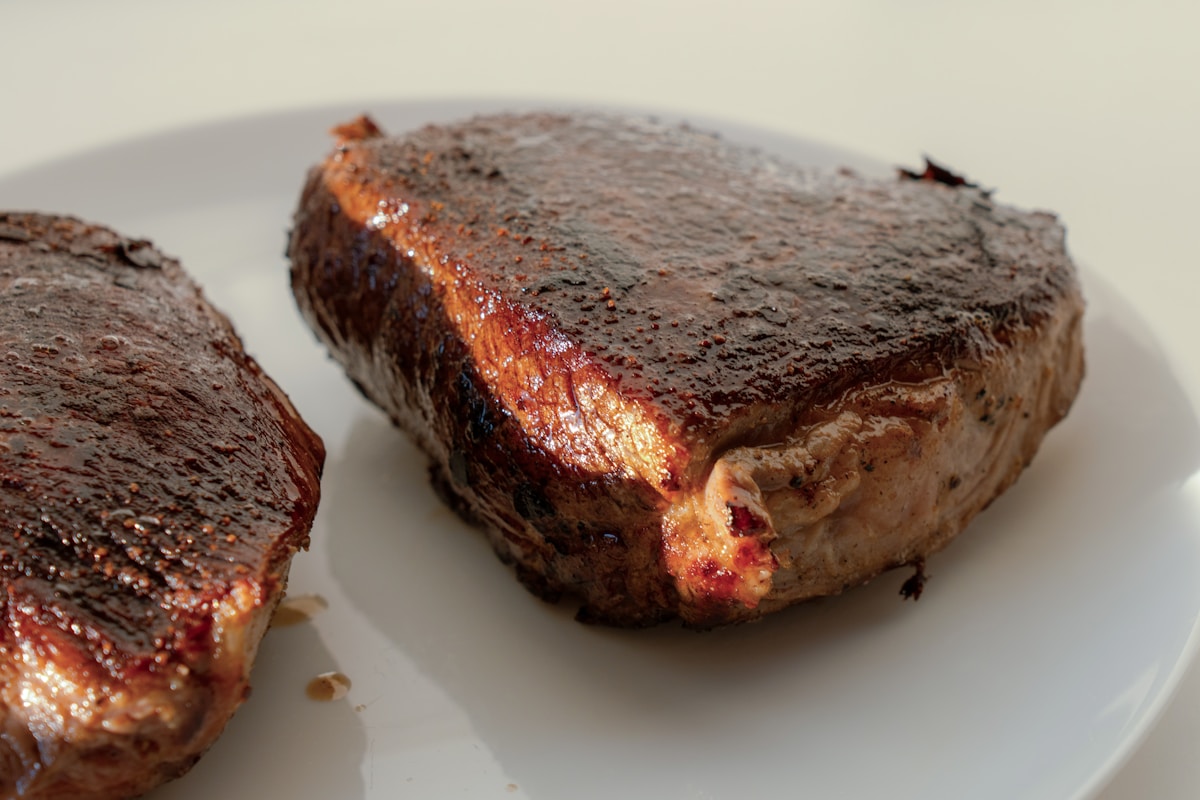
We’ve all been there. You spend good money on a beautiful, thick-cut ribeye. You’ve been looking forward to it all day. You heat up your pan, toss it in, and hear a promising sizzle that quickly fades to a sad sputter. The result? A steak that’s more steamed-gray than deep, mahogany brown. It’s one of the most common frustrations in the home kitchen, but it’s a problem with a simple, affordable solution.
The secret to a restaurant-quality steak isn’t some fancy marinade or a secret chef’s technique. It starts with the tool you use. And for this job, one tool stands head and shoulders above the rest. Let’s settle the debate and talk about why a heavy, old-fashioned cast iron skillet is your best friend for getting a legendary crust.
The Science of the Sear Why Heat Is Everything
Before we compare pans, we need to understand what we’re trying to achieve. That beautiful, dark brown, intensely flavorful crust on a steak is the result of something called the Maillard reaction. This isn’t just browning; it’s a complex chemical reaction between amino acids and reducing sugars that creates hundreds of new flavor and aroma compounds. It’s the difference between a steak that tastes just ‘meaty’ and one that tastes deeply savory, nutty, and complex.
Here’s the catch: the Maillard reaction really kicks into high gear at temperatures above 350°F (175°C), with the sweet spot for a hard, fast sear being closer to 500°F (260°C). If your pan’s surface can’t get that hot and—more importantly—stay that hot when the cool steak hits it, you won’t get a proper sear. Instead of the surface moisture flashing into steam instantly, it will linger, boiling the surface of the meat and preventing that crucial crust from forming. (This is how you get that dreaded gray banding.)
The goal, then, is to find a pan that can act like a heat battery: one that can store a massive amount of thermal energy and deliver it directly and continuously into the steak.
Head-to-Head The Pan Showdown
Not all pans are created equal when it comes to high-heat searing. Let’s break down the three most common types you have in your kitchen and see how they stack up.
1. Cast Iron (The Heavyweight Champion)
A classic cast iron skillet, like the ubiquitous Lodge 12-inch model you can find for about $30, is made of a thick, heavy slab of iron alloy. It takes a while to heat up, but once it’s hot, its density and mass mean it holds onto that heat with incredible tenacity.
- Heat Performance: This is its superpower. When you place a steak in a properly preheated cast iron pan, the pan’s surface temperature barely drops. It continues blasting the steak with intense, direct heat, creating a perfect Maillard reaction and a deep, even crust. It’s forgiving because it retains heat so well.
- Pros: Unbeatable heat retention, extremely durable (it will outlive you), develops a natural non-stick seasoning over time, and is incredibly affordable.
- Cons: It’s heavy. It requires a little maintenance (seasoning). It can react with acidic foods like tomatoes if the seasoning isn’t well-established.
2. Stainless Steel (The Nimble Contender)
High-quality stainless steel pans, often with an aluminum or copper core (think brands like All-Clad), are the workhorses of many professional kitchens. They are fantastic all-around pans.
- Heat Performance: Stainless steel heats up much faster than cast iron, but it also loses heat much faster. It doesn’t have the same thermal mass. When a steak hits the pan, you can experience a significant temperature drop, which can hinder the initial sear. It’s more prone to hot spots, though good multi-ply construction helps mitigate this.
- Pros: Heats up quickly, is responsive to temperature changes, is excellent for developing a “fond” (those cooked-on brown bits) to make a pan sauce, and is relatively easy to clean.
- Cons: Poor heat retention compared to cast iron, requires more careful temperature management to avoid sticking, and high-quality models can be very expensive (often over $100 for a single skillet).
3. Non-Stick (The One to Avoid)
Your go-to pan for eggs is the absolute wrong tool for searing a steak. Period.
- Heat Performance: Most non-stick coatings, typically PTFE-based, are not designed for the high heat required for a proper sear. Heating them to 500°F (260°C) can cause the coating to break down, releasing potentially harmful fumes and ruining the pan forever.
- Pros: Food doesn’t stick. That’s about it.
- Cons: Cannot be safely used at searing temperatures, not durable, easily scratched, and completely ineffective for creating a proper crust.
The Cast Iron Method A Perfect Sear in 5 Steps
Ready to put the theory into practice? Grab your cast iron skillet and a good steak (about 1.5 inches thick is ideal). This method works every time.
- Kitchen Tip: The driest steak gets the best crust. Before you do anything else, pat your steak completely dry with paper towels. Moisture is the enemy of the Maillard reaction.
-
Prep the Steak: After patting it dry, season it generously on all sides with coarse salt and freshly cracked black pepper. Let it sit at room temperature for at least 30 minutes, and up to an hour. This helps it cook more evenly.
-
Preheat the Pan: This is the most critical step. Place your cast iron skillet over medium-high heat and let it preheat for a solid 5-10 minutes. You want it screaming hot. A drop of water flicked into the pan should sizzle violently and evaporate in a second.
-
The Sear: Add a tablespoon of a high-smoke-point oil like grapeseed, avocado, or canola oil to the pan. It should shimmer almost instantly. Carefully lay your steak in the pan, away from you. You should hear a loud, aggressive sizzle. Do not touch it. Let it sear for 2-3 minutes to build that crust.
-
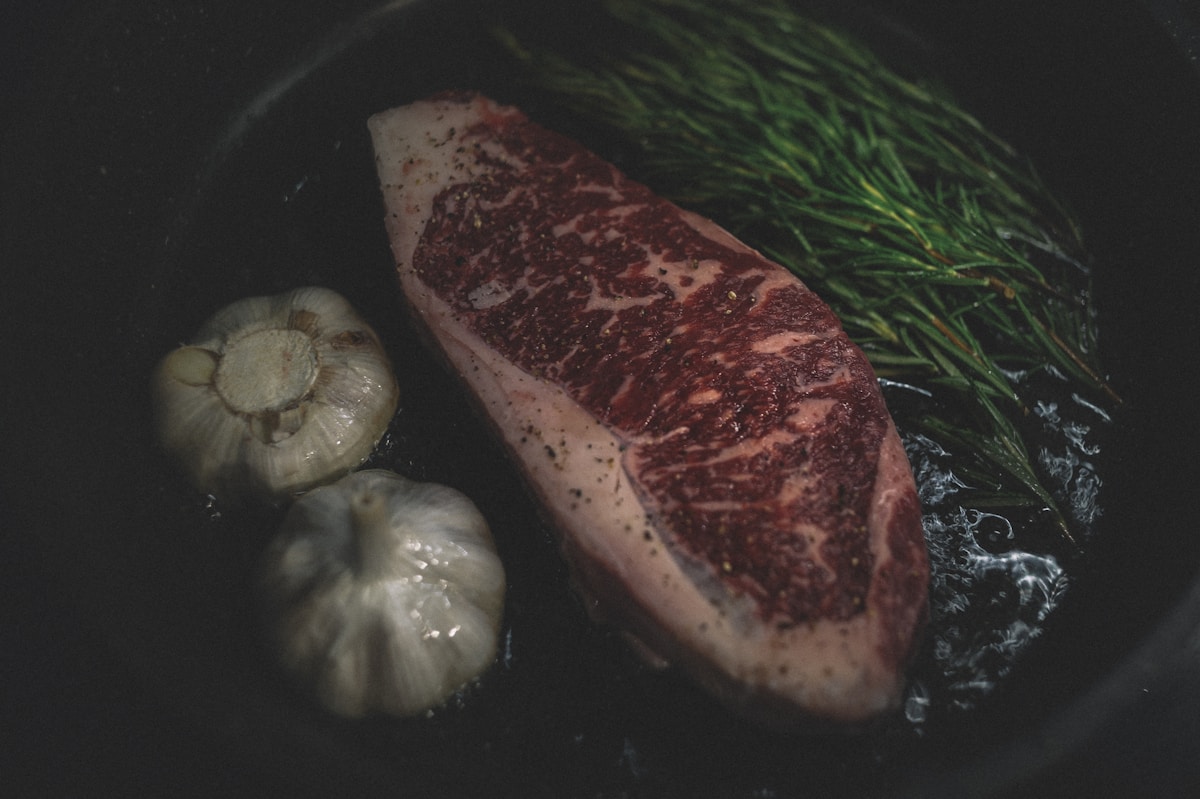
The Flip & Baste: Using tongs, flip the steak. Sear the other side for another 2-3 minutes. For the final minute of cooking, add 2 tablespoons of butter, a couple of crushed garlic cloves, and a sprig of rosemary or thyme to the pan. Tilt the pan and use a spoon to continuously baste the steak with that fragrant, sizzling butter. For a perfect medium-rare, you’re looking for an internal temperature of around 130°F (54°C).
-
The Rest: This is non-negotiable. Transfer the steak to a cutting board and let it rest for 10 minutes before slicing. This allows the juices to redistribute throughout the meat, ensuring it’s tender and juicy, not dry.
A Quick Word on Care
Don’t be intimidated by cast iron care. It’s simple. After cooking, let the pan cool slightly. Scrape out any bits, then wash it with hot water and a stiff brush or scraper. Avoid harsh soaps if you can, as they can strip the seasoning.
The most important part: Dry it immediately and thoroughly. The easiest way is to put it back on the stove over low heat for a minute. Once dry, wipe a very thin layer of cooking oil inside the pan. (Your future self will thank you.)
The Verdict For Steak There Is No Contest
As I always say, the most expensive tool isn’t always the right one. While a high-end stainless steel skillet is a beautiful and versatile piece of cookware, for the specific task of searing a steak to perfection, a humble, affordable cast iron skillet is the undisputed king. Its ability to store and dump a massive amount of heat into the meat is simply unmatched.
For less than the price of two good ribeyes, you can own a tool that will give you a steakhouse-quality crust for the rest of your life. If you’re serious about your steak, it’s not just a recommendation; it’s essential equipment.