Let’s be honest for a moment. Is there anything more intimidating in the kitchen than a big, sharp chef’s knife when you’re just starting out? You’ve seen chefs on TV moving so fast their hands are a blur. Meanwhile, you’re trying to chop an onion that keeps wobbling, and the whole process feels more dangerous than it should.
Take a deep breath. Every single one of those chefs started exactly where you are: feeling clumsy, slow, and a little bit scared. The difference between them and you is just a little bit of knowledge and a lot of practice. Learning to use a knife properly isn’t about speed; it’s about safety and confidence. It’s the single biggest skill that will transform your time in the kitchen from a chore into a creative, relaxing process. And I promise, it’s easier than you think.
Your First Best Friend The 8-Inch Chef’s Knife
Walk into any kitchen store and you’ll see massive knife blocks with a dozen different blades. It’s overwhelming! But here’s a little secret: for 90% of your daily kitchen tasks, you only need one. The 8-inch chef’s knife.
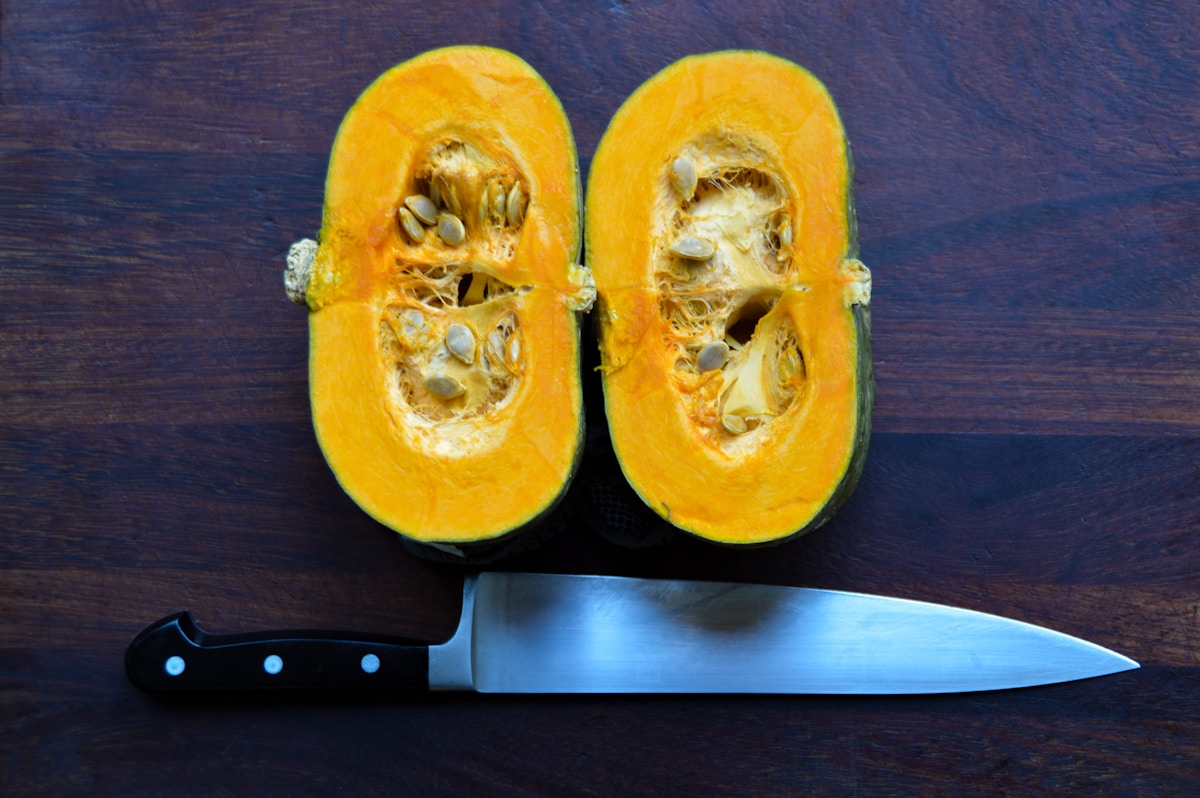
This is your workhorse. It’s designed to be a multi-purpose tool. The long, wide blade is perfect for chopping vegetables, slicing meat, and mincing herbs. The gentle curve of the blade (we call it the ‘belly’) allows for a smooth rocking motion, which is key for efficient chopping. The pointy tip is great for more detailed work.
When you’re choosing one, don’t worry about the most expensive German or Japanese steel just yet. Look for a knife that feels balanced in your hand. It shouldn’t feel too heavy in the blade or too heavy in the handle. A brand like Victorinox Fibrox Pro is a fantastic, affordable starting point that chefs and beginners both love. Hold it. Does it feel like an extension of your arm? Good. That’s your knife.
The Biggest Kitchen Myth Busted A Sharp Knife Is a Safe Knife
This sounds completely backward, but it is the most important rule of knife safety. A dull knife is far more dangerous than a sharp one. Why? Think about cutting a tomato. A sharp knife will slice cleanly through the skin with very little pressure. It bites right into the food and does what you want it to do.
A dull knife, on the other hand, can’t easily break the skin. You have to push down hard. The blade is more likely to slip off the rounded, waxy surface of the tomato and go somewhere you don’t want it to go—like toward your fingers. Most kitchen cuts happen because of a dull knife slipping.
So, how do you keep your knife sharp? There are two main tools:
- A Honing Steel: This is the long metal rod that comes with most knife sets. Honing doesn’t actually sharpen the knife; it realigns the microscopic edge of the blade, which gets bent out of shape with regular use. You should hone your knife frequently, maybe every few times you use it. Just a few gentle swipes on each side is all it takes.
- A Sharpener: This tool actually removes a tiny bit of metal to create a brand-new, sharp edge. You only need to do this a few times a year, depending on how often you cook. You can use a whetstone, a pull-through sharpener, or take it to a professional. (Yes, really! Many kitchen stores offer this service for a small fee.)
If you find yourself squishing your food instead of slicing it, it’s time to show your knife some love.
The Secret Handshake The Claw Grip
Okay, here it is. This is the one technique that will immediately make you safer and more confident. The ‘Claw Grip’ protects your fingertips and turns your guide hand into the ultimate safety bumper.
Let’s break it down, nice and slow. Grab a carrot or a cucumber for practice.
- Place your non-knife hand on the vegetable.
- Curl your fingertips inward, like you’re gently gripping a ball. Your fingertips should be pointing down into the food, tucked away from the blade.
- Your knuckles should be bent and facing forward, creating a flat wall. Think of a cat’s paw when it’s relaxed.
- Hold your knife properly. Pinch the blade with your thumb and index finger right where it meets the handle. Wrap your other three fingers around the handle. This gives you maximum control.
- Now, bring the knife to the food. The flat side of the knife blade should rest gently against your knuckles. Your knuckles are now the guide. The blade cannot jump over them to get to your fingertips.
- Begin to slice. As you slice, the knife blade glides up and down against that knuckle wall. Your fingertips remain safely tucked away. As you make each cut, you simply inch your ‘claw’ hand backward down the vegetable. It feels weird at first, but practice it slowly. It will become second nature.
This one grip is the foundation of all safe and efficient cutting.
The Three Essential Cuts You’ll Use Forever
With your sharp knife and your claw grip, you’re ready to learn the three basic cuts that will handle almost any recipe.
-
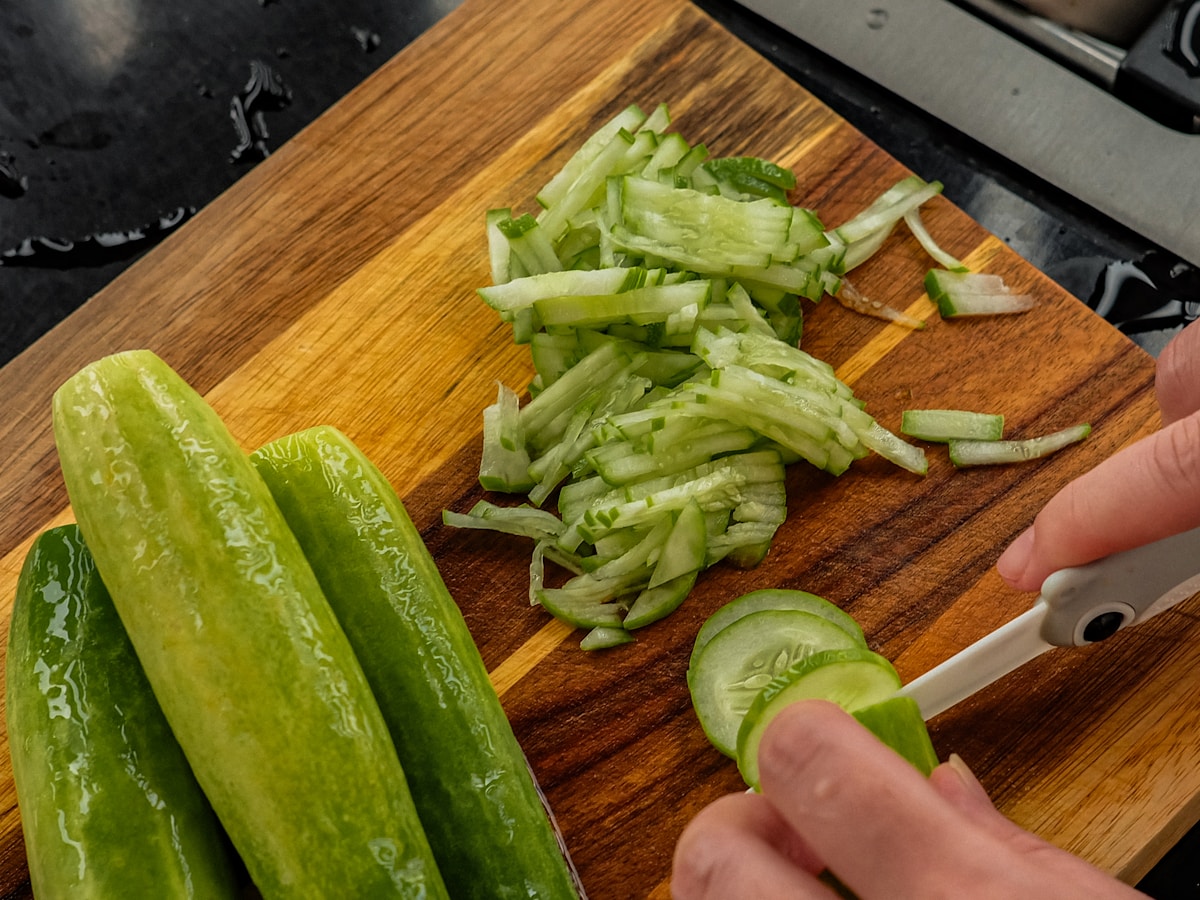
The Slice: This is the most basic cut. It’s for creating round coins from things like carrots and zucchini, or for making long, flat ‘planks’ from potatoes or onions. The key here is uniformity. You want each slice to be roughly the same thickness. This isn’t for looks; it’s so that everything cooks evenly. Nobody wants one mushy carrot and one crunchy one in their stew.
-
The Dice: Dicing just means cutting something into cubes. It’s a two-step process built on the slice. First, you slice your vegetable into planks of your desired thickness. Then, you stack those planks and slice them into sticks. Finally, you gather those sticks and chop them into uniform cubes. A small dice is about 1/4-inch (6mm), a medium dice is about 1/2-inch (13mm), and a large dice is about 3/4-inch (20mm). Uniformity is king!
-
The Mince: This is for getting things super, super fine. Think garlic, fresh ginger, or delicate herbs like parsley. After you’ve roughly chopped the item, place your non-knife hand flat on the tip of the blade to hold it steady against the cutting board. Then, using a rocking motion with your knife hand, rock the blade up and down, moving it back and forth over the pile until the pieces are as tiny as you want them.
Try This Tonight Your First Perfect Onion
Ready to put it all together? The onion is the ultimate practice vegetable. Let’s dice one.
- Cut the top off, but leave the root end intact. The root will hold everything together for you.
- Place the onion on its flat top and slice it in half straight down through the root.
- Peel the papery skin off one half.
- Place it cut-side down on your board. Now it’s stable and won’t roll around.
- Make vertical slices. Using the tip of your knife, make several parallel slices from the top towards the root, but don’t cut all the way through the root.
- Make horizontal slices. Turn the onion and carefully make one or two cuts horizontally, parallel to the cutting board. (Be careful here! Keep your claw grip strong.)
- Dice! Now, simply slice downwards across your previous cuts. Perfect little cubes of onion will fall away from your blade. That’s it! You did it.
Don’t worry if your pieces aren’t perfectly uniform at first. Mine weren’t either. The goal is to practice the motions and the safety grips. The consistency and speed will follow. Cooking isn’t about perfection; it’s about making delicious food and enjoying the process. You’ve got this.