


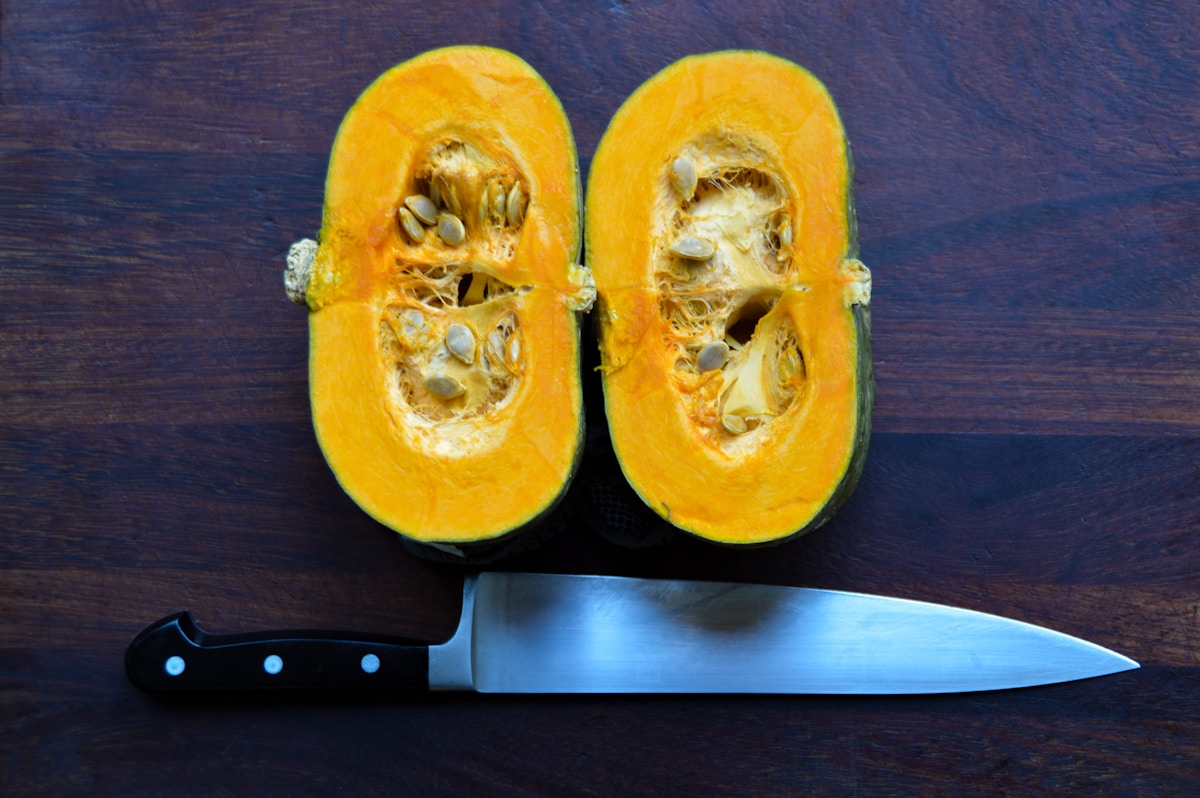
That wobbly feeling, the slow, careful sawing motion, the way a tomato squishes instead of slices… we’ve all been there. A kitchen knife can feel more like a dangerous obstacle than a helpful tool. But what if I told you that the secret to becoming a faster, safer, and more confident cook starts with making friends with that blade?
It’s true! And it’s so much easier than you think.
Why a Sharp Knife Is a Safe Knife
This sounds completely backward, I know. But think about it this way: trying to cut a carrot with a dull knife is like trying to push a log through it. You have to apply a ton of pressure, and when the knife finally gives way, it can slip in any direction—often towards your fingers.
A sharp knife, on the other hand, glides. It bites into the food with very little pressure from you. You are in complete control. The single biggest safety upgrade you can make in your kitchen isn’t a fancy gadget; it’s learning to keep your main knife sharp.
The Secret Handshake The Pinch Grip
Okay, let’s fix the number one mistake most beginners make: holding the knife like a club. Gripping only the handle puts all the control in your wrist and makes the blade feel clumsy and disconnected. We can do better.
This is the Pinch Grip, and it will change your cooking life.
- Take your cutting hand and make a “pinch” with your thumb and index finger.
- Grip the blade itself, right where the metal meets the handle. Your thumb should be on one side, and your index finger on the other.
- Now, curl your remaining three fingers comfortably around the handle.
It might feel strange for a minute, but try rocking the knife. See? The blade feels like an extension of your hand, not a separate object you’re wrestling with. This is the grip professional chefs use because it offers maximum control and reduces fatigue. (Your future self will thank you.)
Your Guide Hand’s Only Job The Claw
Your cutting hand has the blade, but your other hand—the guide hand—is just as important for safety. Its job is to hold the food securely and protect your fingers. Welcome to “The Claw.”
Instead of holding food with your fingertips pointing out, curl them under, like you’re gently gripping a ball. Your knuckles should be pointing forward.
Now, when you slice, the flat side of the knife blade can rest right against your knuckles. Your knuckles become a safe, sturdy guide, and your fingertips are tucked safely out of harm’s way. This one move makes it almost impossible to cut yourself.
What Knife Should I Actually Buy
Walk into any kitchen store and you’ll see walls of expensive blades—Japanese steel, German steel, Damascus steel. It’s overwhelming! My advice? Ignore all of that for now.
You do not need a $200 knife to learn great skills. In fact, one of the most recommended knives by professional chefs is surprisingly affordable. Look for an 8-inch chef’s knife like the Victorinox Fibrox Pro, which usually costs around $40-$50. It’s a workhorse: it holds a good edge, it’s comfortable, and it won’t make you cry if you accidentally ding it.
A sharp $40 knife will outperform a dull $200 knife every single day of the week. Spend the money you save on a simple pull-through knife sharpener to keep your new best friend in top shape.
Try This Tonight Your First Perfect Dice
Ready to put it all together? Let’s tackle the humble onion—the best training partner a beginner could ask for.
- Create a Flat Surface: Cut the onion in half from the stem to the root. Peel the skin off and place one half flat-side-down on your cutting board. A stable object is a safe object.
- Vertical Slices: Using your new pinch grip, make thin, parallel slices from the stem end towards the root, but don’t cut all the way through the root. The root holds it all together for you. Use your “claw” hand to hold the onion steady.
- Horizontal Slices: Turn the onion. Make one or two slices horizontally, parallel to the cutting board, again not cutting through the root.
- The Dice: Now, simply chop across your first set of cuts. You’ll be left with a surprisingly uniform, beautiful dice. (Yes, really!)
Your first few onions might look a little wonky, and that is completely, 100% okay. You’re not aiming for perfection; you’re building muscle memory. Keep practicing, and soon that knife will feel like it was made just for you. Happy chopping!


