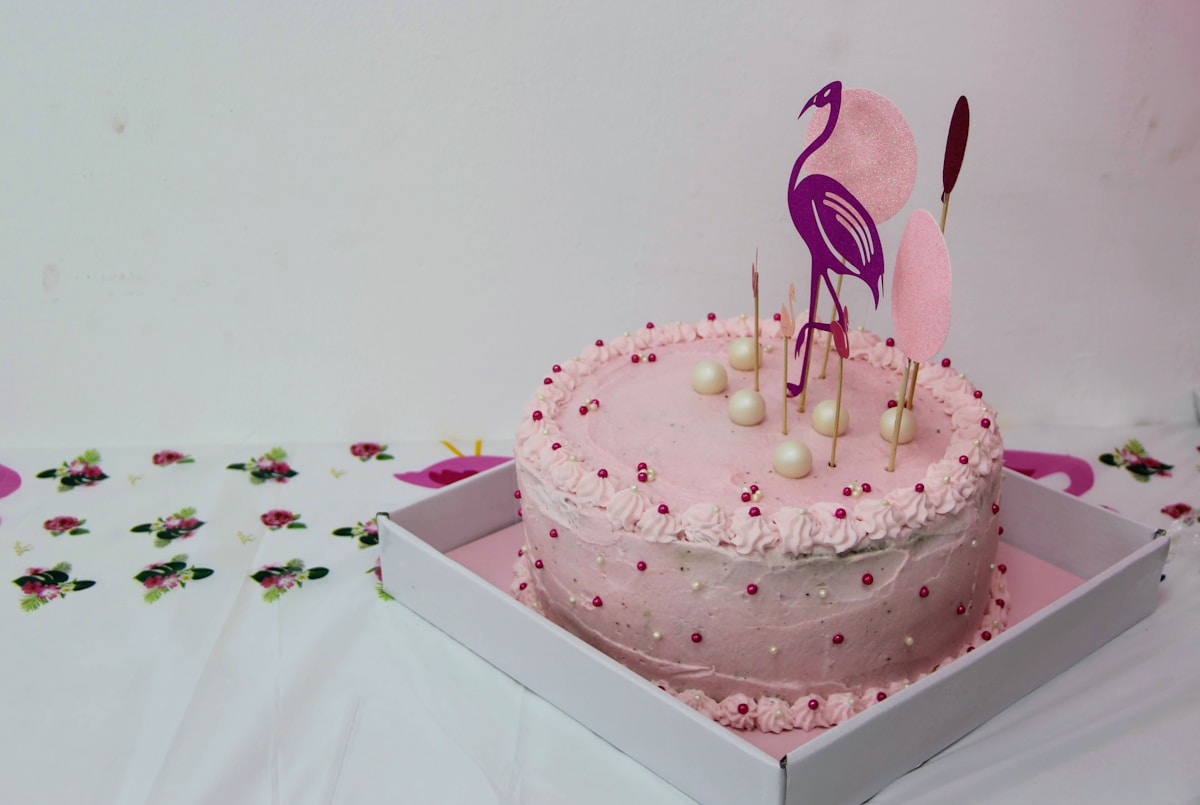
There’s a special drawing that lives on refrigerators in homes everywhere. It’s usually done in crayon, with a gleeful disregard for physics. It’s the drawing of The Birthday Cake. You know the one. It’s five layers tall, has a princess on top, is surrounded by dinosaurs, and has rainbow frosting dripping down the sides. Your six-year-old hands it to you with wide, hopeful eyes and says, “Can you make this for me?”
And your heart melts, while your stomach ties itself into a knot. Because you know that cake plus gravity equals… a potential disaster right in the middle of the party.
Oh, honey, I have been there. I’ve had that moment of panic, watching the bottom layer of a perfectly good cake start to bulge ominously under the weight of the tiers above it. It’s a feeling no home baker should have to endure! But the secret to those towering, magnificent birthday cakes isn’t magic. It’s a little bit of high school geometry and a few tricks from the pros. Today, we’re going to turn that fear into fun and build a cake that will have your little one squealing with delight—and stay standing tall through the entire “Happy Birthday” song.
The Kitchen Science Behind the Wobble
Before we build, let’s understand why cakes get wobbly in the first place. A cake is just a delicious collection of air pockets held together by a delicate, tender crumb. It’s light, it’s fluffy, and it is absolutely not designed to be a structural support beam.
When you stack one cake layer directly on top of another, and then another, you’re putting all that weight—cake, filling, frosting—directly onto the very bottom layer. Imagine stacking fluffy pillows. The one on the bottom is going to get squished, right? The same thing happens to your cake. The bottom tier compresses, the soft filling in between starts to squeeze out the sides, and you get that dreaded bulge. If the cake is on the warmer side, or the frosting is soft, it can lead to a lean, a slide, or a full-on cake-tastrophe.
So, how do professional bakers create those sky-high wonders? They cheat! They build an internal, invisible support system inside the cake. It’s a simple, brilliant trick that distributes the weight and keeps every layer happy. And you can do it, too.
Your Cake Construction Toolkit
Building a sturdy cake is like any good construction project—you need the right tools for the job. You won’t need a hard hat, but gathering these simple items from a craft store or baking supply aisle will make all the difference.
- Cardboard Cake Circles: These are non-negotiable. You will need one for each tier of your cake. A “tier” can be two or three layers of cake glued together with filling. The cake circle should be the exact same diameter as your cake layers for that tier. For example, if you’re stacking an 8-inch tier on top of a 10-inch tier, you’ll need an 8-inch cardboard circle.
- Dowel Rods: This is your internal scaffolding. You have a few options here. Traditional wooden dowels are fantastic and very sturdy. You can also find food-safe plastic dowels. My favorite kitchen hack? Thick, plastic bubble tea straws! They are incredibly easy to cut to size with a pair of sturdy kitchen scissors and are strong enough for most family-sized birthday cakes.
- A Ruler: Precision matters here. You’ll want to measure your dowel heights carefully.
- Strong Scissors or a Small Serrated Knife: To cut your dowels. If you’re using wooden dowels, a small, clean craft saw works best.
- A Sharpener (Optional but Recommended): For a central support dowel, having a sharp point makes insertion a breeze. A simple pencil sharpener works wonders on wooden dowels.
And of course, you’ll need your cake layers and a good, sturdy frosting. We’ll get to that in a moment.
A Step-by-Step Guide to Stacking Like a Pro
Alright, aprons on! Let’s get building. Take a deep breath. This is easier than it looks, I promise.
Step 1: Get Your Tiers Chilly
This is a tip I learned from seasoned decorators, and it’s a game-changer. Before you even think about stacking, make sure your individual cake layers are well-chilled. A cool cake is a firm cake. Pop them in the refrigerator for at least an hour, or even into the freezer for 20-30 minutes. A firm cake is less likely to tear or get squished as you handle it. (Your future self will thank you.)
Step 2: Build Your Tiers Separately
Don’t try to build the whole cake at once. Work in tiers. A tier is a self-contained unit. For example, your bottom tier might be two 10-inch cake layers with a layer of filling between them. Your top tier might be two 8-inch layers with filling.
Assemble each tier on its own cardboard cake circle. So, your 10-inch tier will be built on a 10-inch cake drum (a thicker board for the very bottom), and your 8-inch tier will be built on an 8-inch cardboard circle. Give each assembled tier a thin “crumb coat” of frosting and pop them back in the fridge to set up.
Step 3: The Buttercream Dam
When filling your layers, don’t just plop the filling in the middle. First, pipe a ring of sturdy frosting around the outer edge of the bottom layer. This creates a “dam.” A good, stiff American buttercream (made with powdered sugar and butter/shortening) is perfect for this. This dam holds in any softer fillings like jam, mousse, or whipped cream and prevents it from squishing out the sides. It’s your cake’s secret girdle!
Step 4: Dowel Your Bottom Tier
Now for the magic. Take your fully assembled and chilled bottom tier. Let’s say it’s the 10-inch one. You’re about to place the 8-inch tier on top of it. You need to insert dowels into the 10-inch tier to support the weight of the 8-inch one.
- Measure: Gently push one dowel (or bubble tea straw) straight down into the center of the bottom tier until it hits the cake drum at the bottom. Use your finger or a food-safe marker to mark the dowel right where it meets the top of the frosting.
- Cut: Pull the dowel out. This is your master length. Now, cut 4-5 more dowels to this exact same length. They must be identical for the tier above to be level.
- Insert: Push the cut dowels straight down into the bottom tier. Arrange them in a circle about an inch inside where the 8-inch tier will sit. For an 8-inch tier, a pattern of 5 dowels (one in the center, four in a square around it) is perfect.
Step 5: The Big Lift
Spread a little swirl of frosting in the center of your doweled tier. This acts as glue. Now, using a large spatula, carefully lift your chilled 8-inch tier (which is on its own cardboard circle, remember?) and gently place it dead center on top of the 10-inch tier. The cardboard circle of the top tier will rest directly on your hidden dowels, not on the cake below. Ta-da! The weight has been transferred.
Repeat this process for every tier you add. The tier below always gets the dowels to support the tier above.
The Final Secret for a Wobble-Free Ride
You’ve built your masterpiece. It’s tall, it’s proud, and now you have to get it to the party. This is where the final pro move comes in: the central dowel.
Take one long wooden dowel and sharpen one end to a point with a pencil sharpener. Starting from the very top of the cake, push this dowel straight down through every tier, through every cardboard circle, until you feel it hit the main cake drum at the very bottom. This single central rod acts like a spine, locking all the tiers together and preventing them from shifting or sliding during transport.
When it’s time to go, place the cake box on a flat, level surface in your car—the floor of the passenger seat or the trunk is much better than a slanted seat. Drive like you’re transporting a tiny, delicious queen. (Slow turns!)
When it’s time to serve, just pull the central dowel straight up and out before you cut the first slice. You can then unstack the tiers for easier cutting. Everyone will be so amazed they won’t even notice the tiny hole. They’ll just see a perfect, towering, incredible cake that you—yes, you!—made.
Building a tall cake isn’t about being a professional baker. It’s about having a few clever tricks up your sleeve. It’s about knowing that cardboard and straws can be your best friends in the kitchen. So go ahead, tell your little one that yes, you can make that amazing cake from their drawing. Because now, you know exactly how to make it stand tall.