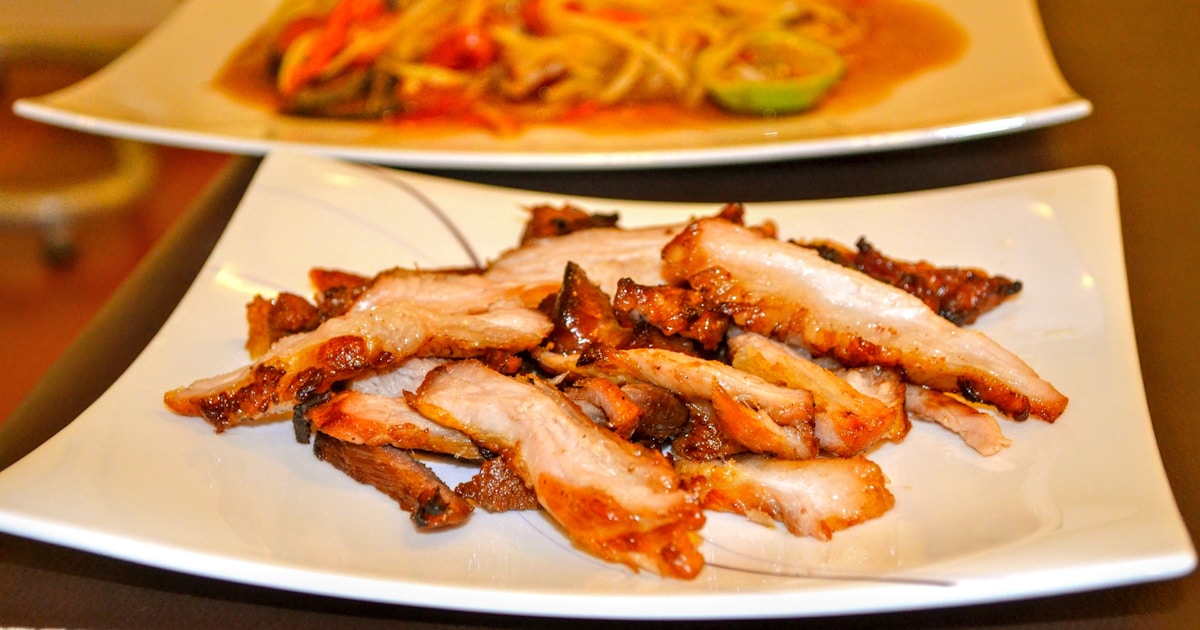
Walk past any Cantonese barbecue shop, and you’ll see them: glorious, glistening strips of ruby-red pork hanging in the window, promising a perfect balance of sweet, savory, and smoky. That’s Char Siu, or Chinese BBQ Pork. For so many of us, it feels like a restaurant-only treat, a culinary magic trick that couldn’t possibly be replicated in a home kitchen. The flavor? Maybe. But that signature sticky, slightly charred, impossibly glossy crust? That seems to require special vertical ovens and years of training.
I’m here today to share a wonderfully delicious secret: you can absolutely achieve that iconic Char Siu crust at home. The magic isn’t in a special oven; it’s in a simple two-stage technique that uses the equipment you already have. Let’s journey into the heart of this beloved dish and bring that barbecue shop magic right into your kitchen.
The Story in a Name Fork-Roasted Goodness
Before we cook, we must understand. Food always tells a story, and Char Siu’s is one of masterful simplicity. The name itself, “char siu” (叉燒), literally translates to “fork-roasted.” This refers to the traditional method of skewering long strips of seasoned pork with long forks and roasting them over a fire or in a massive, cylindrical oven. It’s a cornerstone of Cantonese cuisine, beloved on its own with a side of steamed rice, sliced into noodle soups, or tucked inside a fluffy steamed bao bun.
The deep red hue traditionally comes from red fermented bean curd, a wonderfully savory and aromatic ingredient, not red food coloring. The complex flavor is a dance between sweet and savory: hoisin sauce, soy sauce, Shaoxing wine, garlic, and a touch of five-spice powder. The marinade is everything, infusing the pork with layers of flavor long before it ever sees the heat.
Stage One The Gentle Roast for Tenderness
The first secret to amazing Char Siu is patience. It starts with the right cut of pork—pork shoulder (also called pork butt) is my absolute favorite for its fantastic marbling, which keeps the meat succulent. Slice it into long strips, about 2 inches thick.
Then, it’s time for a long, luxurious bath in the marinade. Whisk together your hoisin, soy sauce, a splash of Shaoxing wine, sugar, minced garlic, a pinch of five-spice powder, and a tablespoon or two of the red fermented bean curd. Coat the pork thoroughly and let it marinate in the refrigerator for at least 24 hours. (Yes, really. This long marinade is non-negotiable for deep, authentic flavor.)
When you’re ready to cook, the setup is key. Preheat your oven to 375°F (190°C). Place a wire rack inside a foil-lined baking sheet. Pour about a cup of water into the bottom of the sheet pan, then arrange your marinated pork strips on the rack, making sure they don’t touch.
The water pan is a brilliant kitchen hack. It serves two purposes: first, it creates a humid environment in the oven, preventing the pork from drying out as it roasts. Second, it catches the sugary drips from the marinade, which would otherwise hit the hot pan and burn, filling your kitchen with smoke. This first stage of roasting takes about 25-30 minutes per side, getting the pork beautifully tender and cooked through.
Stage Two The Broiler’s Magic Kiss
Here is where the real magic happens. This is how we build that lacquered, bubbly, slightly charred crust. After the initial roast, take the pork out of the oven and let it rest for a moment. Now, switch your oven setting to its highest broil setting.
While the broiler heats up, prepare your glaze. The secret ingredient for that incredible shine and stickiness is maltose. It’s a super thick, mildly sweet syrup derived from barley. You can find it at most Asian markets. If you can’t find it, honey is a fantastic substitute. Warm a few tablespoons of maltose or honey and mix it with a few tablespoons of the reserved marinade. It should be a thick, sticky, but brushable consistency.
Move your oven rack so it’s about 6-8 inches from the broiler element. Brush a generous layer of the glaze all over one side of the pork. Place it under the broiler.
Now for the most important instruction: DO NOT WALK AWAY.
That glaze is packed with sugar. It will go from beautifully caramelized to a burnt, bitter mess in a matter of seconds. Watch it like a hawk. After 1 to 2 minutes, you’ll see it bubbling and developing those gorgeous dark spots. Pull it out, flip the pork strips, brush the other side with glaze, and pop it back under the broiler for another 1-2 minutes.
You can repeat this process a couple of times on each side to build up a truly spectacular crust. The goal is a patchwork of deep mahogany, ruby red, and dark, charred edges. That’s where the flavor lives!
Bringing Your Char Siu to the Table
Once you’ve achieved your perfect crust, remove the pork from the oven and transfer it to a cutting board. Let it rest for at least 10 minutes. This allows the juices to redistribute throughout the meat, ensuring every slice is tender and succulent. Don’t skip this step! (Your patience will be rewarded.)
To serve, slice the pork against the grain into ¼-inch thick pieces. The cross-section is a thing of beauty: a deep red smoke ring-like exterior from the marinade, a juicy and tender interior, and that incredible, glossy crust. Drizzle any remaining glaze or pan juices over the top.
Serve it warm with steamed rice and some blanched gai lan (Chinese broccoli) for a classic meal. Use it to top a bowl of wonton noodle soup. Or, save it for the next day to make the most incredible Char Siu fried rice of your life. You’ve done it. You’ve unlocked the secret. You’ve brought the story of Char Siu home.