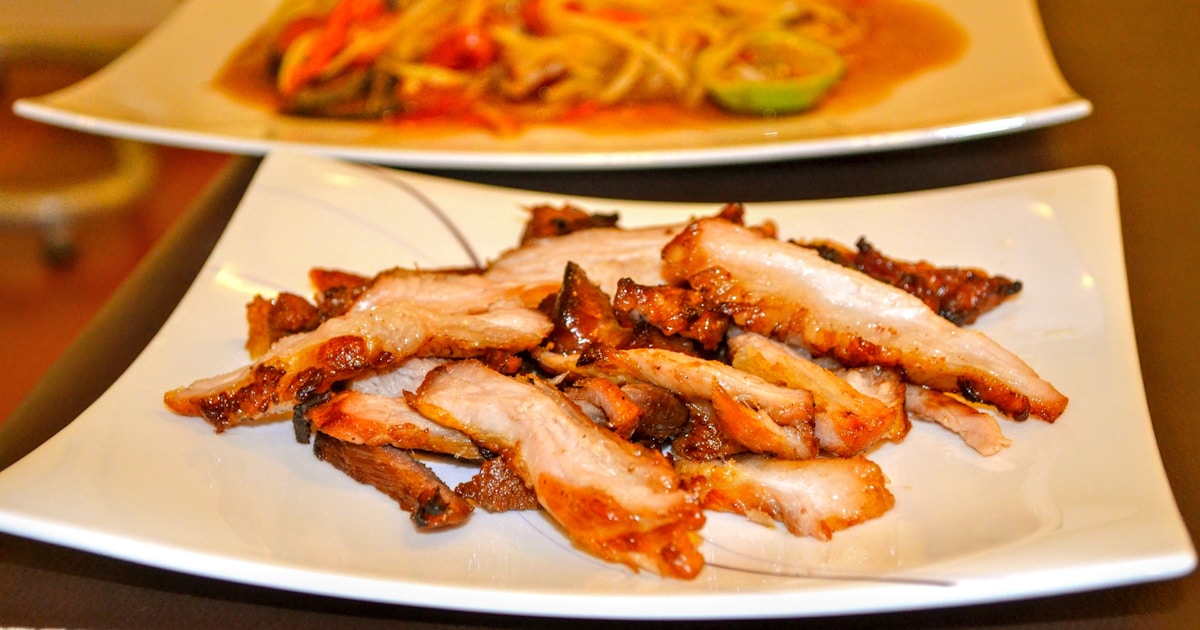
Have you ever stood before the window of a Cantonese restaurant, mesmerized by the glistening, crimson-edged strips of pork hanging in a row? That, my friends, is Char Siu, or Chinese BBQ pork. It has a lacquered, sticky-sweet crust that gives way to tender, savory meat. The sight alone is enough to make your mouth water. For years, I believed it was a culinary masterpiece achievable only in commercial kitchens with special ovens and secret, age-old recipes.
But what if I told you the true secret isn’t in the oven, but in your pantry? The magic of Char Siu lies in a symphony of specific, powerful ingredients that, once you have them, make this iconic dish surprisingly straightforward. Food tells the story of a culture, and the story of Char Siu is one of balancing bold flavors—sweet, salty, savory, and aromatic—to create something truly unforgettable. Today, we’re going to demystify the process by building the perfect Char Siu pantry. With these staples on your shelf, you’re not just ready to follow a recipe; you’re ready to understand the heart of Cantonese barbecue.
The Flavor Foundation Unlocking the Char Siu Code
Before we start stocking our shelves, let’s talk about what we’re aiming for. Authentic Char Siu is a masterclass in complexity. It’s not just sweet, and it’s not just savory. It’s a harmonious blend that hits every part of your palate.
First, you have a deep, salty umami that forms the foundation. This comes from fermented soybean products that are central to so much of Chinese cuisine. Next, a pronounced sweetness, but not a simple sugary sweetness. It’s a deep, caramelized flavor that comes from sugars that can stand up to high heat, creating that signature glossy char.
Then, there are the aromatics. A warm, fragrant whisper of spice that weaves through the other flavors, giving the pork a distinctive, perfumed quality. Finally, there’s that iconic red hue. While it doesn’t drastically change the taste, it’s visually tied to the identity of Char Siu. Understanding these layers is the first step. Now, let’s find the ingredients that build them.
Your Essential Char Siu Pantry Checklist
Think of these ingredients as your toolkit. Each one has a specific job, and while some minor substitutions are possible in a pinch, this core group is what will get you 99% of the way to restaurant-quality results. (Your future self will thank you for making the trip to an Asian market or ordering online.)
-
Hoisin Sauce: This is the undisputed star of the marinade. Hoisin is a thick, dark, fragrant sauce made from fermented soybeans, garlic, vinegar, sugar, and spices. It’s the primary source of that sweet and savory backbone. Don’t skimp here. A good quality brand like Lee Kum Kee is a fantastic and widely available choice. It provides depth that simple soy sauce and sugar just can’t replicate.
-
Soy Sauce (Light and Dark): Yes, you really need both. They serve very different purposes.
- Light Soy Sauce (or All-Purpose): This is your salt and primary umami source. It’s thinner and lighter in color. Brands like Pearl River Bridge or Kikkoman are excellent. This is for flavor.
- Dark Soy Sauce: This is much thicker, darker, and less salty than light soy sauce. It has a molasses-like sweetness and is used primarily for giving the Char Siu its rich, mahogany undertone. A little goes a long way. This is for color and a touch of sweetness.
-
Shaoxing Wine: This is the aromatic secret weapon. A traditional Chinese rice wine used for cooking, it adds an incredible depth and fragrance that cuts through the richness of the pork. It’s not for drinking and has a complex, slightly nutty flavor. If you absolutely cannot find it, you can substitute dry sherry, but Shaoxing is truly superior. For a non-alcoholic version, a mix of chicken broth and a teaspoon of rice vinegar can mimic some of its acidic depth.
-
Honey or Maltose: This is for the glaze! Honey is perfectly acceptable and easy to work with. It creates a beautiful, sticky coating when brushed on at the end of cooking. For a truly authentic, glass-like sheen, however, the traditional choice is Maltose. Maltose is a super thick sugar syrup that comes in a jar. It’s incredibly sticky and can be tough to work with. Kitchen Hack: To measure maltose easily, dip your metal spoon in hot water or oil before scooping. It will slide right off!
-
Five-Spice Powder: This is where the warm, aromatic notes come from. It’s a potent blend, typically containing star anise, cloves, Chinese cinnamon, Sichuan peppercorns, and fennel seeds. It gives Char Siu that unmistakable background perfume. Be gentle with it; too much can overwhelm the other flavors.
-
The Red Hue (Fermented Bean Curd vs. Food Coloring): Traditionally, the vibrant red color comes from Red Fermented Bean Curd (nam yue). It’s a type of preserved tofu that comes in a jar with brine. It adds not only color but also a unique, funky, and deeply savory flavor. You mash a small cube of it into the marinade. However, many restaurants and home cooks today simply use a few drops of red food coloring for a consistent, vibrant color without the fermented flavor. Both are valid, so the choice is yours! If you’re a beginner, food coloring is the easier route.
Choosing and Prepping the Perfect Cut of Pork
With your pantry stocked, the next step is the pork itself. The cut you choose will define the final texture. You want a cut with a good amount of fat, as it will render during cooking, keeping the meat moist and flavorful.
- Pork Shoulder (Boston Butt): This is the most popular and forgiving choice. It has beautiful marbling throughout, which ensures a tender and juicy result. It’s the perfect balance of meat and fat.
- Pork Loin: If you prefer a leaner result, pork loin can work, but be careful not to overcook it as it can dry out. Look for a piece with a nice fat cap on top.
- Pork Belly: For an incredibly rich and decadent Char Siu, pork belly is the way to go. The layers of fat and meat become melt-in-your-mouth tender.
Once you have your pork (about 2-3 lbs or 1-1.5 kg), cut it into long strips about 1.5 to 2 inches thick. This shape allows the marinade to penetrate deeply and gives you more surface area for that delicious, caramelized crust.
A Simple Method for Your First Char Siu
Now, let’s put those pantry staples to work. This isn’t a precise recipe, but a method that shows you how the ingredients come together.
-
Create the Marinade: In a large bowl, combine your ingredients. A good starting ratio for 2 lbs of pork would be: 1/3 cup hoisin sauce, 3 tbsp light soy sauce, 1 tbsp dark soy sauce, 3 tbsp honey (or maltose), 2 tbsp Shaoxing wine, 1 tsp five-spice powder, and if using, 1 cube of mashed fermented red bean curd or a few drops of red food coloring. You can also add a few cloves of minced garlic for extra flavor.
-
Marinate Deeply: Add your pork strips to the bowl and use your hands to massage the marinade into every nook and cranny. For the best flavor, this needs time. Transfer the pork and all the marinade to a zip-top bag or sealed container and refrigerate for at least 24 hours, and up to 48 hours. (Trust me, the wait is worth it.)
-
The Roasting Setup: Preheat your oven to 400°F (200°C). Line a baking sheet with aluminum foil for easy cleanup. Place a wire rack on top of the sheet. This is critical—it allows hot air to circulate around the pork, cooking it evenly and preventing it from steaming in its own juices.
-
Roast and Baste: Remove the pork from the marinade, letting any excess drip off, but save the leftover marinade! Place the strips on the wire rack. Roast for 20-25 minutes. While it’s roasting, pour the leftover marinade into a small saucepan. Add an extra tablespoon of honey or maltose and bring it to a simmer for a few minutes to create your glaze.
-
Flip, Glaze, and Char: After 20-25 minutes, flip the pork strips. Brush them generously with your prepared glaze. Return to the oven for another 20 minutes, or until the internal temperature reaches at least 145°F (63°C). For that final, irresistible char, brush on one last layer of glaze and turn on the broiler for 1-2 minutes. Watch it like a hawk—the sugar in the glaze can go from caramelized to burnt in seconds!
The Final Flourish Serving Your Masterpiece
Once the Char Siu is out of the oven, with its glistening, slightly charred edges, resist the urge to slice into it immediately. Let it rest on a cutting board for at least 10 minutes. This allows the juices to redistribute, ensuring every slice is perfectly moist.
Slice it against the grain into ¼-inch thick pieces. The cross-section is a thing of beauty: that iconic red ring just under the dark, savory crust, leading to the juicy, tender interior. Serve it piled high over a simple bowl of steamed rice, tucked into fluffy bao buns, or as the star protein in a bowl of wonton noodle soup.
Building a pantry of unfamiliar ingredients can feel daunting, but each jar and bottle holds a piece of a story. By bringing these foundational flavors into your kitchen, you’re doing more than just making dinner. You are connecting with a rich culinary tradition and proving to yourself that the most spectacular dishes are often born from a simple combination of the right ingredients, used with care. That beautiful, glossy pork from the restaurant window? You can now say, “I can make that at home.”