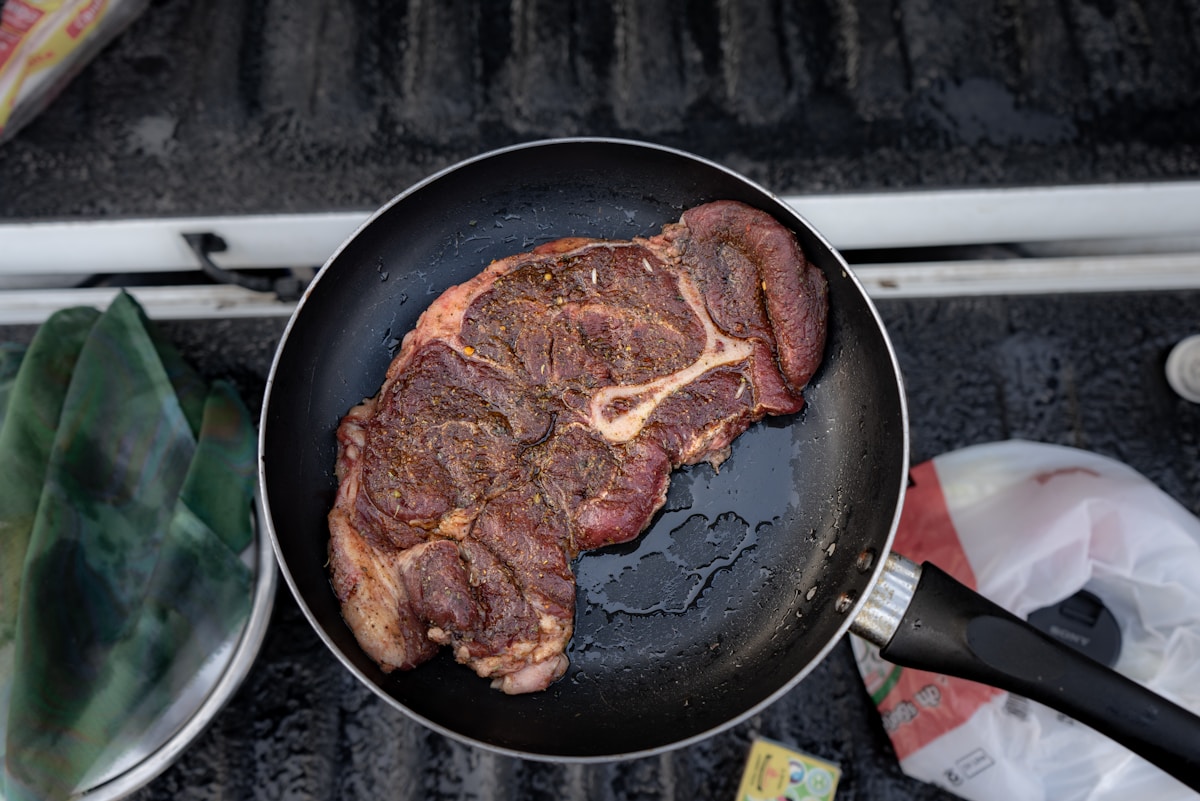
The other day, I saw something that made my heart sing: a photo from a 14-year-old who was proudly cooking his own birthday steak. He was excited, a little nervous, and asking for tips. It took me right back to my first time standing in front of a hot pan with a beautiful, expensive piece of meat, thinking, “Please don’t let me mess this up.”
That feeling is completely normal! Cooking a steak feels like a high-stakes event, but I’m here to let you in on a little secret: it’s one of the simplest, most satisfying things you can cook. The difference between a sad, grey, chewy steak and a restaurant-worthy one with a gorgeous, dark crust and a juicy pink center isn’t about magic or fancy equipment. It’s about understanding a few simple rules.
So, whether you’re 14 or 40, let’s walk through this together. Forget the fear. Today, we’re going to give you the confidence to cook a steak you’ll be proud of. And I promise, it’s more forgiving than you think.
Step 1 Your Pre-Flight Checklist for a Perfect Steak
Great results in the kitchen often start long before the stove is even turned on. Think of this as setting yourself up for success. Rushing the prep is where most of the mistakes happen!
Choose Your Cut Wisely: You don’t need the most expensive cut in the butcher case. A reliable, flavorful choice for a beginner is a Ribeye or a New York Strip. They have great marbling (those little white flecks of fat) which translates to flavor and juiciness. Look for a steak that’s at least one inch thick, preferably 1.5 inches. Thinner steaks cook too quickly and are very easy to overcook.
Let It Chill Out (On the Counter): Pull your steak out of the refrigerator a good 30 to 60 minutes before you plan to cook it. Placing an ice-cold steak in a hot pan is a recipe for disaster. The outside will burn before the inside has a chance to cook, resulting in a burnt exterior and a raw, cold center. Letting it come closer to room temperature ensures it cooks evenly from edge to edge.
The Most Important Secret The Paper Towel Pat-Down: If you remember nothing else, remember this. Moisture is the number one enemy of a good sear. A wet steak will steam in the pan, turning it a sad, boiled gray color. We want to sear it, to create that deep brown, flavorful crust. So, take a few paper towels and pat your steak completely and totally dry on all sides. Drier is better. (Yes, really!)
Season Like You Mean It: Just before you’re ready to cook, season your steak generously with coarse salt (like kosher salt) and freshly cracked black pepper. When I say generously, I mean more than you think you need. A lot of it will fall off in the pan. The salt not only adds flavor but also helps draw out the last bits of moisture from the surface, creating an even better crust.
Step 2 Mastering the Heat The Pan is Your Best Friend
The relationship between your steak and your pan is all about heat. Intense, direct heat is what triggers the magic we’re looking for.
Your Weapon of Choice: The undisputed champion for searing steak is a cast-iron skillet. Brands like Lodge make fantastic, affordable ones that will last a lifetime. Cast iron gets screaming hot and, more importantly, stays screaming hot even after you put the cold steak in it. If you don’t have one, your next best option is the heaviest stainless steel pan you own. Please, for the love of all things delicious, avoid a thin non-stick pan. They just can’t retain the high heat needed for a proper sear.
Crank It Up: Place your skillet over medium-high heat and let it preheat for at least 5 minutes. You want that pan to be seriously hot before the steak ever touches it. How do you know it’s ready? A drop of water flicked into the pan should sizzle violently and evaporate in a second or two.
Use the Right Oil: Just before the steak goes in, add a tablespoon of a high-smoke-point oil. This is an oil that can handle high heat without burning and turning bitter. Good choices are canola oil, grapeseed oil, avocado oil, or even clarified butter. Regular olive oil has too low of a smoke point and will burn. You’ll know the oil is hot enough when it starts to shimmer and you see the faintest wisp of smoke.
Step 3 The Sear The Art of Doing Nothing
This is where your patience will be rewarded. All that prep has led to this moment. Don’t rush it.
The Sizzle is the Sound of Success: Gently lay your steak in the hot pan, placing it away from you to avoid any oil splattering on your skin. You must hear a loud, aggressive SIZZLE the second it makes contact. If you hear a gentle fizzle or nothing at all, your pan wasn’t hot enough. It’s a common mistake! Take the steak out, let the pan heat up more, and try again. That initial contact is everything.
Now, Hands Off! This is the hardest part for any new cook. You will be tempted to poke it, press it, or move it around to see if it’s browning. Resist that urge! To form a perfect, wall-to-wall crust, the steak needs uninterrupted contact with the hot surface of the pan. This process is called the Maillard reaction—a beautiful chemical reaction between amino acids and sugars that creates hundreds of delicious flavor compounds. Moving the steak interrupts this process.
For a 1.5-inch thick steak, a good starting point for medium-rare is about 4 minutes on the first side. After 4 minutes, use tongs (never a fork, which pokes holes and lets juices escape!) to lift a corner and peek. If you see a deep, rich brown crust, you’re ready to flip.
Cook for another 3-4 minutes on the second side. For ultimate precision, an instant-read thermometer is a cook’s best friend. It takes all the guesswork out of it.
- 125°F (52°C) for Rare
- 135°F (57°C) for Medium-Rare
- 145°F (63°C) for Medium
Remember to pull the steak off the heat about 5 degrees before your target temperature, as it will continue to cook as it rests.
Step 4 The Most Overlooked Step The Mandatory Rest
You’ve done it. You’ve cooked a beautiful steak. The crust is perfect, and it smells incredible. You want to slice into it right away. But you must wait. This step is non-negotiable.
When you cook a steak, the heat causes the muscle fibers to tense up and push all the juices toward the cooler center of the meat. If you slice into it immediately, all of that flavor-packed juice will pour out onto your cutting board, leaving you with a dry, tough steak.
By letting the steak rest on a cutting board for 5 to 10 minutes, you allow the muscle fibers to relax and reabsorb all those wonderful juices. The result? A perfectly tender, incredibly juicy steak from bite to bite. A good rule of thumb is to let it rest for about half its total cooking time. Don’t worry, it won’t get cold.
Your “Try This Tonight” Mission Your First Perfect Steak
Ready to put it all together? Here is your game plan. You can do this.
The Shopping List:
- One 1 to 1.5-inch thick steak (Ribeye or New York Strip are great)
- Coarse kosher salt and freshly cracked black pepper
- 1 Tablespoon high-smoke-point oil (canola, grapeseed)
- Optional upgrade: 2 Tablespoons unsalted butter, 1 smashed garlic clove, 1 sprig of fresh rosemary or thyme
The Game Plan:
- Prep: Take your steak out of the fridge 30-60 minutes before cooking. Pat it completely dry with paper towels.
- Season: Just before cooking, season all sides very generously with salt and pepper.
- Heat: Place a cast-iron or heavy skillet over medium-high heat. Let it get very hot (about 5 minutes). Add the oil; it should shimmer.
- Sear: Carefully place the steak in the pan. Do not touch it for 4 minutes.
- Flip: Flip the steak with tongs. Cook for another 3 minutes.
- Flavor Boost (Optional): In the last minute of cooking, add the butter, garlic, and rosemary to the pan. As the butter melts and foams, tilt the pan and use a spoon to baste the steak with the flavored butter.
- Check Temp: Use a thermometer to check for your desired doneness (135°F / 57°C is a perfect medium-rare).
- Rest: Transfer the steak to a cutting board and let it rest for at least 7 minutes. This is critical!
- Serve: Slice the steak against the grain (look for the direction the muscle fibers are running and cut across them). Enjoy the delicious steak that YOU made. You earned it.