


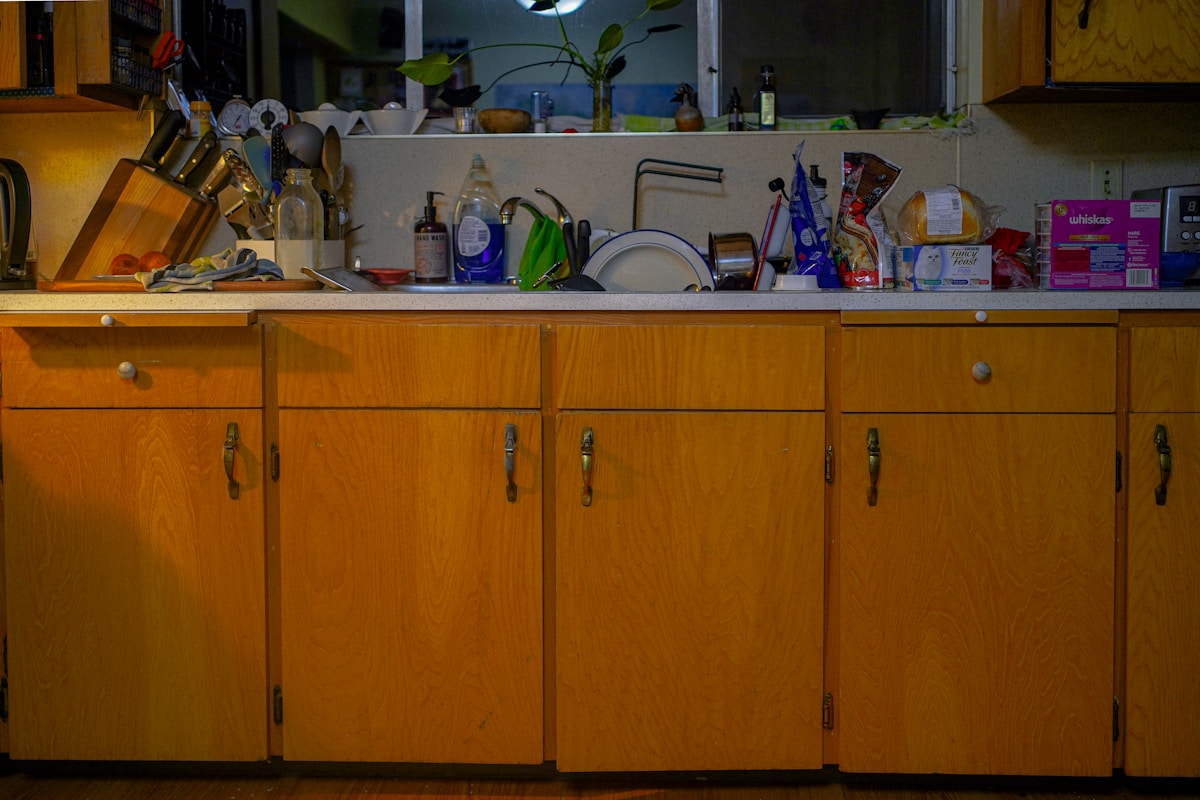
Hello there! Beatrice here, your friendly guide at kitchen-fun.com. Let’s be honest for a moment. Have you ever found yourself standing in a kitchen filled with a light haze of smoke, one hand frantically stirring something that’s sticking to the pan, while the other rummages through a drawer for a spatula you can’t find? The timer is beeping, the recipe says “add the diced onions,” but your onion is still sitting on the counter, whole and mocking you.
If this sounds familiar, please know you are not alone. This chaotic scene isn’t a sign that you’re a “bad cook.” It’s a sign that you’re a normal beginner running into a few classic hurdles. Cooking isn’t about being perfect; it’s about learning a rhythm. The stress usually comes from a few simple, fixable habits that we can smooth out together. Let’s turn that kitchen chaos into kitchen calm, one step at a time.
The Scramble Before the Sizzle: The Magic of ‘Mise en Place’
There’s a fancy French term chefs use: mise en place (pronounced meez-on-plahss). It literally means “everything in its place.” This is, without a doubt, the single most important secret to stress-free cooking. It’s the difference between a frantic scramble and a graceful performance.
Think about a TV cooking show. Do you ever see the chef stop halfway through sautéing to frantically chop a carrot? Never. All their ingredients are prepped—chopped, measured, and sitting in cute little bowls, ready to go. You can do this, too. (You don’t even need the cute little bowls, though they do help!)
The Chaotic Way: You heat oil in a pan. You throw in some garlic. While it sizzles, you start frantically chopping an onion, but the garlic starts to burn. You pull the pan off the heat, dump in the half-chopped onion, and now you have to find the soy sauce while the onion steams instead of sautés. Stress level: high.
The ‘Mise en Place’ Way: Before any heat is turned on, you chop your onion, mince your garlic, measure your soy sauce, and slice your chicken. Everything is lined up on your counter. You heat the pan. You add the ingredients calmly, one by one, at exactly the right time. You feel like a conductor, not a fire-fighter. Stress level: zero.
It might feel like extra work upfront, but it saves you an incredible amount of panic during the actual cooking process. You get to focus on one thing at a time: controlling the heat and developing flavor, not juggling a dozen different tasks under pressure.
Giving Your Food Some Personal Space: Why You Shouldn’t Crowd the Pan
This is a huge one. You have a pound of ground beef or a bunch of chopped vegetables, and you want to get dinner done fast. So, you dump it all into the pan at once. The result? A sad, grey, steamed pile of food instead of a beautiful, crispy, golden-brown collection of deliciousness.
Here’s the simple science: When you cram too much food into a pan, two things happen. First, the sheer volume of (often cold) food drastically drops the pan’s temperature. Second, all that food releases moisture. With no room to escape, that moisture turns to steam. You are now steaming your food, not searing it. Searing requires high, direct heat. Steaming happens in a moist, lower-temperature environment.
Think of it like this: Searing is getting a tan on a hot, sunny beach. Steaming is being in a crowded, foggy sauna. You won’t get a tan in the sauna.
That beautiful brown crust you get on a good steak or a roasted potato? That’s called the Maillard reaction, and it’s where all the best flavor lives. It can only happen in a dry, hot environment.
The Kitchen Hack: Cook in batches! Yes, it takes a few extra minutes, but the payoff in flavor and texture is monumental.
- For meat: Sear half of it until it’s deeply browned, remove it to a plate, and then cook the second half.
- For vegetables: Roast them on a large baking sheet in a single, even layer. If you have too many, use two baking sheets. Don’t pile them up!
If you need to keep the first batch warm, just place it on a plate in a low oven, around 200°F (about 95°C), while you finish the rest. Your future self, biting into perfectly browned food, will thank you.
The Right Tool for the Right Job: Understanding Your Pans
Not all pans are created equal, and using the wrong one can set you up for failure. For most beginners, the confusion boils down to two main types: non-stick and cast iron (or stainless steel).
Non-Stick Pans: These are fantastic for their forgiving nature. The coating is designed to prevent food from sticking, making them perfect for delicate items.
- Best for: Scrambled eggs, omelets, pancakes, crepes, and delicate fish like tilapia or sole.
- Avoid: Trying to get a hard, high-heat sear. Most non-stick coatings can be damaged by super-high temperatures, and they simply don’t create the same quality of crust as other materials.
Cast Iron Skillets: This is your powerhouse pan. A well-seasoned cast iron skillet from a brand like Lodge is a joy to cook with. It gets incredibly hot and, more importantly, stays incredibly hot.
- Best for: Searing steaks, smashing burgers, getting crispy skin on chicken thighs, roasting vegetables, and baking cornbread. It creates an unmatched crust.
- Avoid: Highly acidic foods like tomato sauce for long periods (it can strip the seasoning), or super delicate things like a perfect French omelet, unless your pan is seasoned like a sheet of glass.
Using the right pan makes your job easier. You’re working with the tool, not against it. Trying to fry an egg in a brand-new, poorly seasoned cast iron skillet is asking for frustration. Trying to get a deep brown crust on a steak in a non-stick pan is a recipe for disappointment.
Your Secret Weapon: The ‘Clean As You Go’ Philosophy
This final tip is less about the food itself and more about your own sanity. When you finish a recipe, do you turn around to face a mountain of every pot, bowl, and utensil you own? That post-meal dread can suck the joy right out of your delicious creation.
Professionals clean as they go. It’s not about being a neat freak; it’s about efficiency and maintaining control of your workspace. A cluttered counter is a stressful counter. It leads to spills, cross-contamination, and that feeling of being completely overwhelmed.
Build this simple habit: find the moments of downtime in any recipe. Those little 5-10 minute windows are your golden opportunity.
- Waiting for water to boil? Wash the cutting board and knife you used for the vegetables.
- Letting onions soften for 7 minutes? Put away the spices, the olive oil, and the container the onions came in.
- Simmering a sauce for 20 minutes? That’s enough time to load half the dishwasher.
When you adopt this rhythm, something amazing happens. By the time your meal is ready to eat, the kitchen is already 80% clean. The final cleanup is a quick, painless task, not a monstrous chore. This transforms cooking from an activity that creates a disaster into a process that is fulfilling from start to finish.
Try This Tonight: Let’s put a couple of these ideas into practice with something simple. Grab a chicken breast. Before you even think about turning on the stove, take out your salt, pepper, and garlic powder. Pat the chicken breast completely dry with a paper towel. Season it on both sides. Now you can heat up your skillet (cast iron or stainless steel would be great here!). Add a little oil. When it shimmers, gently place the chicken in the pan. Don’t add anything else. Give it space. Let it cook for 5-6 minutes without touching it. While it cooks, put the spice containers away. See? You’re already doing it. You’re cooking with confidence. You’ve got this.


