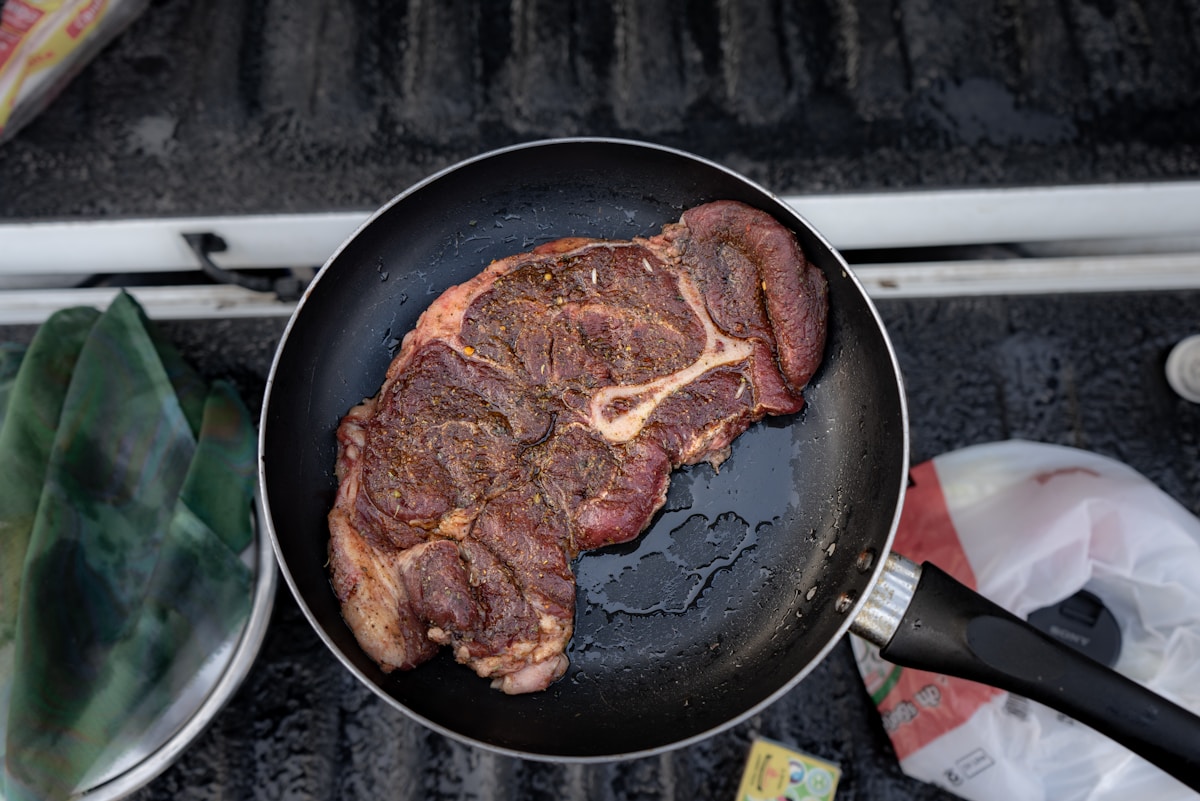
You’ve done it. You splurged on a beautiful, thick-cut steak from the butcher. You can already imagine that perfect, dark-brown crust and the juicy, pink center. You get your pan hot (or so you think), toss it in with a sizzle, and… a few minutes later, you’re looking at a sad, pale gray slab of meat swimming in its own juices. Your heart sinks. What went wrong?
If this sounds familiar, please know you are not alone. This is one of the most common hurdles for new cooks, and it’s not your fault! No one is born knowing how to sear a steak. It’s a skill, and like any skill, it just takes a little understanding of the ‘why’ behind the ‘how.’
Forget everything that makes you nervous about cooking steak. We’re going to break it down into simple, manageable steps. Because the truth is, a restaurant-quality steak is absolutely something you can achieve in your own kitchen, probably by tonight.
The One Magical Word Your Steak Needs You to Know
Before we talk about pans or oil or heat, we need to talk about the magic happening on the surface of your food. The word you need to know is the Maillard reaction.
That sounds very scientific and intimidating, but I promise it’s simple. Think about it like this: When you toast a piece of bread, it goes from soft and pale to brown, crispy, and incredibly fragrant. That transformation? That’s a Maillard reaction. It’s the same chemical process that gives a golden-brown crust to pretzels, a deep flavor to roasted coffee beans, and, most importantly for us, that incredible crust to a perfectly seared steak.
It’s a reaction between amino acids and sugars that happens under heat, creating hundreds of new aroma and flavor compounds. It is, quite literally, the flavor of ‘browned food.’ It’s not burning; it’s a beautiful, delicious transformation.
Now, for this magic to happen, the Maillard reaction has two non-negotiable requirements:
- High Heat: It really kicks off around 300°F (about 150°C).
- A Dry Surface: This one is the secret culprit behind most steak failures.
Almost every beginner mistake stems from violating one of these two rules. Let’s fix that.
Mistake #1 You’re Searing Water Not Steak
This is, without a doubt, the number one reason for a gray steak. You pull the steak from its packaging, it’s a little damp, and you throw it right in the pan. The problem? Your pan’s precious heat energy now has to do one thing before it can even think about browning your steak: it has to boil off all that surface moisture.
Water turns to steam at 212°F (100°C). As we just learned, the Maillard reaction doesn’t even get out of bed for anything less than 300°F. So, as long as there is water on the surface of your steak, the surface temperature is stuck at a measly 212°F. You’re not searing; you’re steaming. And steamed meat is gray and rubbery.
The Fix is So Easy: Before you even think about seasoning, take your steak out of the package and pat it dry with paper towels. I mean really dry. Pat the top, the bottom, the sides. Use more paper towels than you think you need. The surface should feel tacky, not slick or wet. (Your future self will thank you.)
Mistake #2 Your Pan is ‘Warm’ But Not ‘Screaming Hot’
Many beginners are afraid of high heat. They worry about smoke, about burning the food, about setting off the smoke alarm. I get it! But for a great sear, you have to embrace the heat. A pan that’s just ‘hot’ isn’t hot enough. You need it to be screaming hot.
A properly heated pan stores a massive amount of thermal energy. When the cool steak hits it, the pan has enough power to instantly vaporize any remaining moisture and start the Maillard reaction immediately. A warm pan will just lose all its heat to the steak, the temperature will plummet, and juices will start to leak out, creating that dreaded steak-boil.
How to Do It Right:
- Get the Right Tool: Your best friend here is a heavy-bottomed pan. A cast-iron skillet (you can get a great Lodge skillet for under $30) is the king of searing because it holds heat like nothing else. A thick, heavy stainless steel pan is also a great choice. Thin, cheap pans just won’t work well; they lose heat too quickly.
- Preheat Properly: Place your pan on the stove over medium-high heat and let it preheat for a good 5-7 minutes. Yes, an empty pan. You’re charging it up with heat.
- Test for Heat: How do you know it’s ready? Flick a tiny drop of water in the pan. If it sizzles and evaporates slowly, it’s not hot enough. If it instantly breaks into a dozen tiny balls that skitter across the surface like mercury, it’s perfect. That’s the Leidenfrost effect, and it means your pan is well above 350°F (177°C).
- Use the Right Oil: Add a tablespoon of a high-smoke-point oil like avocado, grapeseed, canola, or clarified butter after the pan is hot. The oil should shimmer and flow like water almost instantly. Do not use extra virgin olive oil; its smoke point is too low and it will burn and taste bitter. Season your dry steak generously with salt and pepper right before it goes in.
Mistake #3 You’re Moving the Steak Around Too Much
Okay, the pan is hot, the oil is shimmering, you gently lay your steak in the pan away from you, and it roars with a beautiful sizzle. Now comes the hardest part: do nothing.
Our instinct is to poke, prod, and shift the steak around. We’re nervous! We want to see if it’s browning! But every time you lift or move that steak, you are breaking the direct contact it has with the hot pan. You’re interrupting the Maillard reaction and preventing that deep, even crust from forming.
The Fix: Trust the process. Place your steak in the pan and leave it completely alone for at least 2-3 minutes for a steak that’s about an inch thick. Let the pan do its job. It will form a crust, and once that crust is formed, the steak will often release itself from the pan naturally.
On a related note, don’t overcrowd the pan! If you’re cooking two steaks, make sure there is plenty of room between them. If you cram them in, they will trap steam and dramatically lower the pan’s temperature, leading to—you guessed it—a gray, steamed mess. Cook them one at a time if you have to. It’s better to have two perfectly seared steaks cooked sequentially than two sad ones cooked simultaneously.
Mistake #4 You Skipped the Most Important Five Minutes
The steak is done. It’s got a gorgeous crust, it’s cooked to a perfect medium-rare, and you can’t wait to slice into it. You pull it from the pan directly onto your plate and cut a big piece. And all those delicious juices you worked so hard to keep inside come pouring out onto the plate, leaving your steak dry and chewy.
This is the final test of a cook’s patience: letting the steak rest.
Here’s what’s happening inside. Under high heat, the muscle fibers in the steak tighten up and squeeze, pushing all the moisture toward the center of the cut. If you slice it immediately, that concentrated pool of juice has nowhere to go but out. Resting allows the muscle fibers to relax and reabsorb all of those flavorful juices, distributing them evenly throughout the meat.
The Golden Rule of Resting: Let your steak rest on a cutting board or warm plate, tented loosely with a piece of foil, for 5-10 minutes before slicing. A good rule of thumb is to rest it for about half of its total cooking time. This one small step will make an enormous difference in how juicy and tender your final steak is. (Trust me on this one.)
Your First Perfect Steak Try This Tonight
Feeling ready? Let’s put it all together. You don’t need a fancy recipe. You just need a plan.
- Choose Your Steak: Start with something about 1-inch thick, like a New York strip or a sirloin. Take it out of the fridge about 30 minutes before cooking.
- Dry It Off: Pat your steak completely dry with paper towels. Seriously, bone dry.
- Heat Your Pan: Place a cast-iron or heavy stainless steel skillet over medium-high heat. Let it get screaming hot (about 5-7 minutes). Do the water-drop test.
- Season & Oil: Season the steak generously on all sides with coarse salt and freshly ground black pepper. Add 1 tablespoon of high-smoke-point oil to your hot pan. It should shimmer immediately.
- Sear, Don’t Touch: Gently place the steak in the pan. You should hear a loud, aggressive sizzle. Do not move it for 2-3 minutes. Flip it and sear the other side for another 2-3 minutes. For a medium-rare finish (130-135°F / 54-57°C), this is often enough time.
- Add Flavor (Optional): During the last minute of cooking, you can add a tablespoon of butter, a crushed garlic clove, and a sprig of thyme to the pan. Tilt the pan and spoon the foaming butter over the steak. This is called basting.
- Rest Is Best: Remove the steak from the pan and place it on a cutting board. Let it rest for at least 5 minutes.
- Slice & Serve: Slice the steak against the grain and enjoy every single juicy, flavorful bite.
See? It’s not magic; it’s just a little bit of science. Everyone starts somewhere, and every great cook has made a gray steak or two. Now you know the secrets, and your days of disappointing steak are over. You’ve got this.