


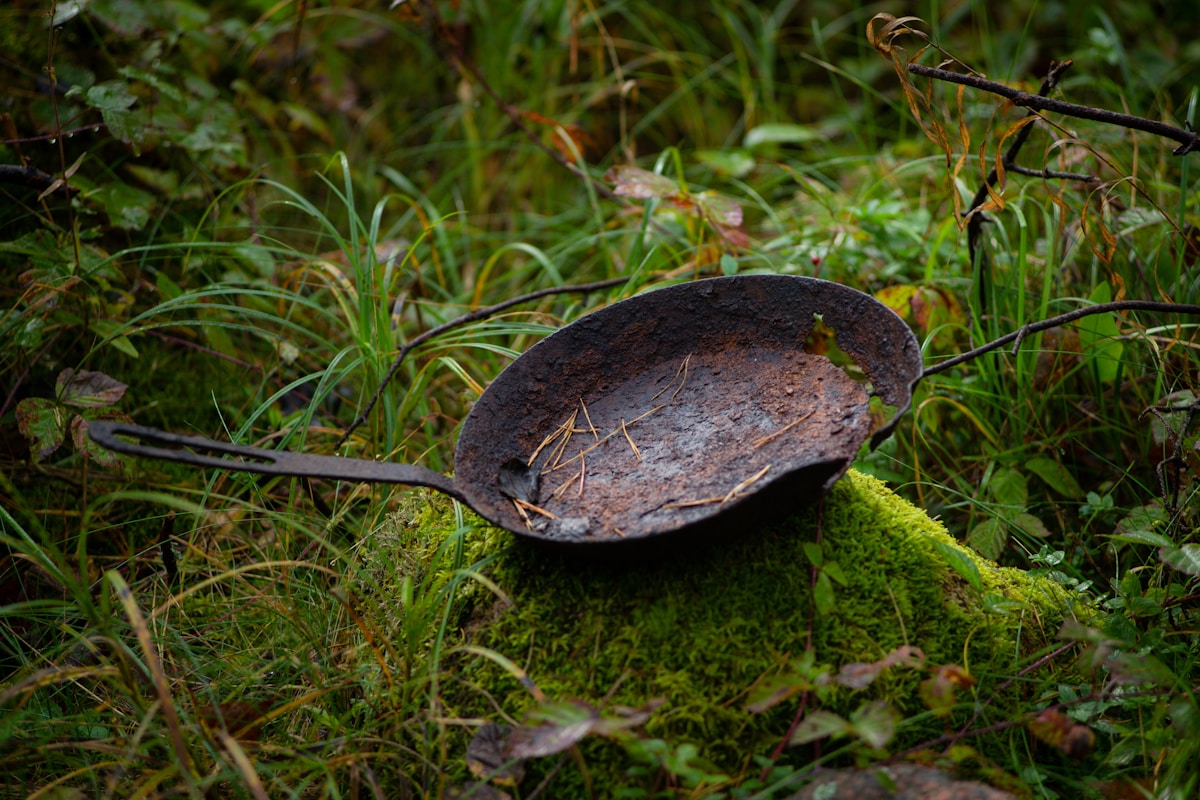
You pull open a kitchen cabinet in an old house, and there it sits: a heavy, black skillet buried under dust. Your first reaction is excitement, followed by doubt. The surface is mottled with orange rust. Can this pan be saved? The answer is almost always yes. With a few common household items and a little patience, you can clean a rusty cast iron skillet and bring it back to cooking condition.
Key Takeaways
- Assess rust severity first: light rust needs scrubbing; heavy rust needs a vinegar soak.
- Use fine steel wool and dish soap for light to moderate rust. Avoid chemical rust removers.
- Soak heavy rust in equal parts vinegar and water for 1–2 hours maximum. Check every 30 minutes.
- Dry the skillet immediately after cleaning to prevent flash rust.
- Season with a high-smoke-point oil (e.g., grapeseed or canola) at 450°F, repeating 2–3 times for a durable finish.
Assess the Level of Rust
Before you start scrubbing, take a close look at the skillet. The method you use depends on how much rust is present.
Light surface rust – The pan still has patches of dark seasoning. Rust looks powdery or shallow. Run a dry paper towel over it. If orange dust comes off easily, you have light rust.
Moderate rust – Rust covers large areas. You may see small pits or rough spots, but the metal underneath is still solid.
Heavy rust – Thick flakes of rust are visible. The seasoning is completely gone. The surface may feel rough and pitted.
Do the scratch test: if rust flakes off when you rub with your fingernail, you are dealing with moderate to heavy rust. For light rust, gentle scrubbing is enough. For moderate or heavy rust, a vinegar soak will be needed.
Safety note: Avoid using chemical rust removers from the hardware store. They can leave toxic residues that are unsafe for cooking. Stick to mechanical methods and kitchen-safe ingredients like vinegar and dish soap.
Step 1: Scrub with Steel Wool and Soap
For light to moderate rust, start with fine-grade steel wool (0000 is best) or a Lodge Rust Eraser. A stiff nylon brush also works, but steel wool is more effective on rust.
Add a few drops of mild dish soap to the pan. Soap helps lift rust particles and lubricates the surface. Scrub in circular motions, concentrating on the rusty areas. Rinse with warm water often and wipe to check progress.
Continue until the surface feels smooth and no orange residue remains. For light rust, this may take 5–10 minutes. For moderate rust, expect 15–20 minutes.
Important: Steel wool is safe on bare cast iron because it is softer than the iron. Do not use steel wool on a pan that still has good seasoning, as it will strip the seasoning. Since you are removing rust, you are already stripping the old coating, so steel wool is appropriate here.
Once the rust is gone, rinse the pan thoroughly with warm water.
Step 2: Vinegar Soak for Heavy Rust
If scrubbing alone does not remove all the rust, a vinegar soak will break down tougher patches. White distilled vinegar is acidic enough to dissolve iron oxide without damaging the metal when used correctly.
Mix equal parts white vinegar and water in a container large enough to fully submerge the skillet. A plastic storage bin or your kitchen sink works well. Place the skillet in the solution, making sure the rusty areas are covered.
Soak for 1 to 2 hours, checking every 30 minutes. You will see bubbles forming as the vinegar reacts with the rust. After an hour, remove the skillet and scrub immediately with steel wool or a stiff brush. The rust should come off easily.
If some rust remains, return the skillet to the vinegar solution for another 30 minutes. Do not soak longer than 2 hours total. Extended soaking can cause pitting – small permanent holes in the iron. For extremely heavy rust, multiple short soaks are safer than one long soak.
When finished, pour the used vinegar solution down the sink. The rust particles are harmless and safe for household wastewater.
Step 3: Dry Immediately to Prevent Flash Rust
After rinsing, drying is the most critical step. Bare iron rusts within minutes if left wet. This is called flash rust.
First, dry the skillet thoroughly with a clean kitchen towel. Then place it on a warm stove burner or in a low oven (200°F / 93°C) for 5–10 minutes to evaporate any remaining moisture. You should see no steam rising.
If you notice a thin orangish film forming during drying, that is flash rust. Scrub it off lightly with steel wool, rinse, and dry again quickly.
Once the skillet is bone-dry, it will look gray or slightly metallic. This is the bare iron surface, ready for oil.
Step 4: Season in the Oven
Seasoning bakes a thin layer of oil onto the iron to create a protective, nonstick coating. Without seasoning, the pan will rust again after one use.
Rub a thin layer of high-smoke-point oil all over the skillet – inside, outside, and the handle. Good choices are grapeseed, flaxseed, canola, or vegetable oil. Avoid olive oil, butter, or animal fats because they burn at high temperatures and leave a sticky residue.
Wipe off as much oil as possible. The layer should look almost dry. Use a lint-free cloth or paper towel. If you see pooling, you have too much oil.
Preheat your oven to 450°F (232°C). Place the skillet upside down on the middle oven rack. Put a baking sheet on the rack below to catch any drips. Bake for 1 hour. Then turn off the oven and let the skillet cool inside completely.
For the best results, repeat this seasoning cycle 2 to 3 times. Each layer builds a harder, more durable finish. After the final cycle, your pan will have a dark, smooth surface that improves with use.
Maintenance After Restoration
Once your skillet is restored, treat it right to keep rust away.
After each use, wash the pan with warm water and a stiff brush. You can use a small amount of dish soap if needed – modern mild soap will not damage a well-seasoned surface. Avoid abrasive scrub pads that can strip seasoning.
Dry the pan immediately on the stove over low heat for a minute. While still warm, rub a tiny amount of oil over the cooking surface with a paper towel. This maintains the seasoning layer.
Store the skillet in a dry place. If you stack other pans on top, place a paper towel or cloth between them to prevent scratching.
If rust ever reappears – from a forgotten soak or humid storage – simply repeat the scrubbing and seasoning steps. Cast iron is forgiving.
FAQ
Can I use soap on a cast iron skillet?
Yes. Modern dish soap is mild and will not damage a well-seasoned surface. Avoid harsh detergents or bleach. During restoration, soap helps lift rust particles. After seasoning, a little soap is fine, but rinse well and dry immediately.
How long should I soak a rusty cast iron skillet in vinegar?
Limit soaking to 1–2 hours total. Check every 30 minutes. Longer soaks can cause pitting and weaken the iron. For heavy rust, do multiple short soaks rather than one long soak.
What oil should I use for seasoning my restored skillet?
Use oils with a high smoke point: grapeseed, flaxseed, canola, or vegetable oil. Avoid butter, olive oil, or animal fats. A very thin layer is essential – wipe off as much as possible before baking.
How do I know if the rust is too deep to salvage?
If the skillet has deep pitting that goes through the metal, or if there are cracks or warps, it may be beyond saving. Surface pitting is normal and will fill in with seasoning over time. If the pan feels thin or fragile, check for holes. Otherwise, it can likely be restored.
What do I do if my pan develops flash rust after cleaning?
Flash rust appears as a fine orange dust within minutes of rinsing. Scrub it off lightly with steel wool, rinse again, and dry immediately on a warm burner. Then proceed with seasoning right away.
How many times do I need to season the pan after removing rust?
At least 2 to 3 oven cycles for a strong initial coating. After that, every time you cook, you add another layer. The seasoning improves with use.
Can I use the skillet immediately after seasoning?
Yes, as soon as it has cooled from the final cycle. You can cook with it right away. Start with an oil-rich recipe like cornbread or fried potatoes to help build the seasoning.
How do I dispose of rust residue and used vinegar safely?
Rust particles and the vinegar solution can go down the sink. They are non-toxic and safe for household wastewater. Rinse the sink afterward.


