


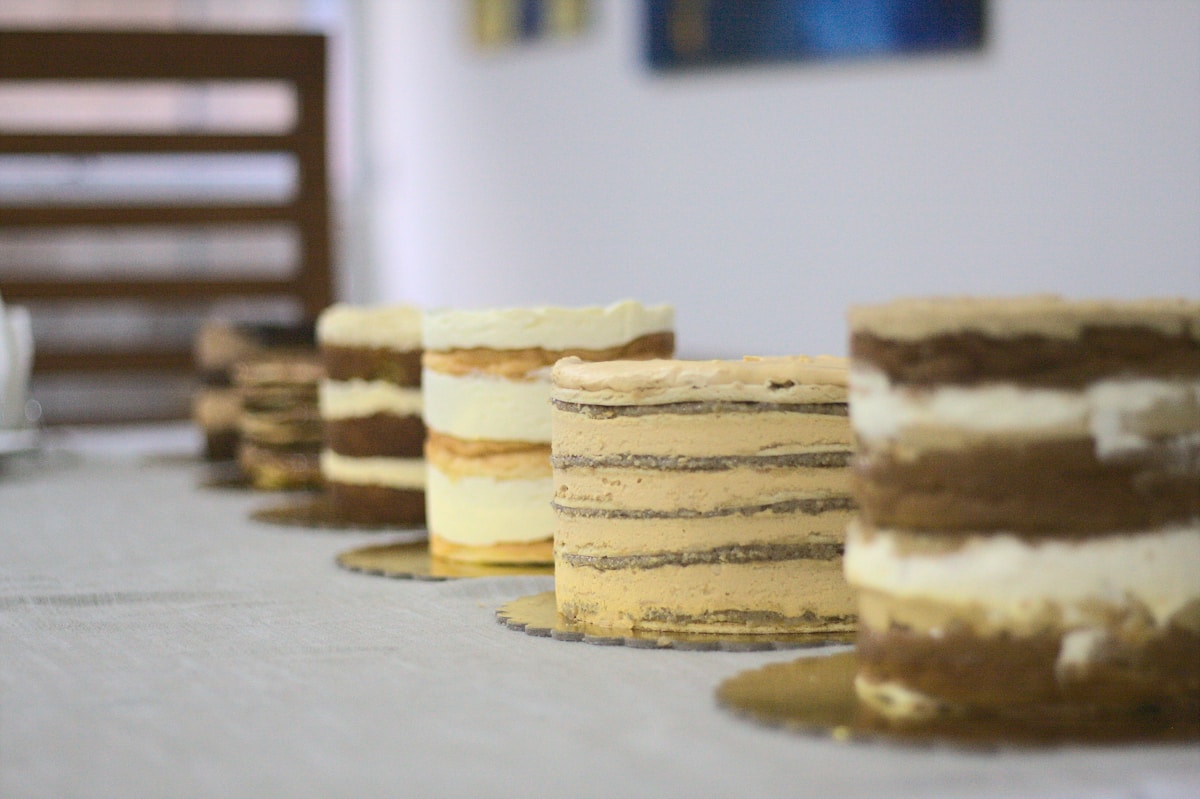
That Sinking Feeling of Uneven Cakes
We’ve all been there. You’ve followed the recipe for that three-layer birthday cake to the letter. You meticulously measured your flour, creamed the butter and sugar into a pale, fluffy cloud, and gently folded in your dry ingredients. You divide the batter with the precision of a scientist, pouring equal amounts into three identical pans. You place them in the preheated oven with high hopes. When the timer dings, you pull them out, and your heart sinks.
One cake has a massive dome, cracked like a miniature volcano. The one next to it is perfectly flat but suspiciously pale. And the third, tucked in the back corner, has edges that are dark, almost burnt. It’s a frustrating moment that can make you question the recipe, your ingredients, or even your baking skills. But I’m here to tell you the problem likely isn’t you—it’s your oven. Baking is chemistry, and your oven is the laboratory. Understanding its unique environment is the key to transforming that frustration into triumph.
The Science of Your Oven’s Hot Spots
Your home oven is not the perfectly uniform, evenly heated box we imagine it to be. It’s a dynamic environment with its own weather patterns—currents of hot air, zones of intense radiant heat, and cooler pockets. Most conventional ovens have two main heating elements: one at the very bottom (the bake element) and one at the top (the broil element). When you set your oven to 350°F (177°C), it doesn’t just sit at that temperature. It cycles on and off, with the elements glowing red hot to raise the temperature, then shutting off to let it fall, averaging out to your target.
This cycling creates a few predictable issues:
- Radiant Heat: The areas closest to those glowing elements get blasted with intense radiant heat. This is why things on the bottom rack often burn on the bottom, and things on the top rack brown too quickly.
- Convection Currents: Hot air rises. This creates a natural convection current inside the oven, often making the top and back of the oven hotter than the front and bottom. A fan-assisted or “true convection” oven helps mitigate this, but even they aren’t perfect.
- Obstructions: The pans themselves block the flow of air. When you place multiple pans inside, you create barriers that can trap heat or create cool spots, leading to wildly different results from pan to pan.
The result is an invisible map of “hot spots” and “cool spots” unique to your specific appliance. The cake in the back-right corner might be in a 375°F zone, while the one in the front-left is struggling along at 340°F. The solution isn’t to buy a new oven; it’s to learn how to outsmart the one you have.
Your Toolkit for Perfectly Even Layers
Before you even mix your batter, a few simple tools and preparations can set you up for success. Think of this as calibrating your laboratory for a precise experiment.
1. The Independent Oven Thermometer: This is the single most important, and cheapest, tool for better baking. Your oven’s built-in thermostat can be inaccurate by as much as 25-50°F (or more!). That’s the difference between a golden cake and a burnt one. Purchase a simple hanging thermometer (brands like Taylor or CDN are reliable and cost under $10) and hang it from the center of the middle rack. Preheat your oven and wait a full 20 minutes after it claims to be ready. The reading on your independent thermometer is the true temperature. Adjust your dial accordingly. If you want 350°F and it’s reading 325°F, you know you need to set the dial higher next time.
2. Bake-Even Strips: These are one of my favorite “kitchen hacks” that are actually pure science. They are fabric strips that you soak in cold water and wrap tightly around the outside of your cake pans. Wilton makes a popular version, but you can also make your own from old towels. The water in the strips creates a layer of insulation. This moisture cools the sides of the pan, forcing the cake batter to bake more slowly from the edges. The result? The center of the cake has time to rise at the same rate as the sides, giving you a remarkably flat, level top with no dome and no dark, crusty edges. (Your future self will thank you when you don’t have to saw off a giant dome to stack your layers.)
3. Light-Colored, Heavy-Gauge Pans: The type of pan you use matters. Dark, non-stick pans absorb and radiate heat more aggressively, which can lead to over-browning on the bottom and sides. For cakes, the gold standard is a professional-grade, straight-sided aluminum pan. Brands like Fat Daddio’s or Nordic Ware are excellent choices. Aluminum is a fantastic heat conductor, meaning it heats up quickly and, more importantly, evenly. This helps prevent the dreaded dark-edge-raw-middle scenario.
The Art of Strategic Pan Placement and Rotation
Now for the most critical technique: managing the space inside your oven. The goal is to maximize air circulation so that heat can move freely around every single pan. This is non-negotiable for even baking.
First, always aim to use the middle rack. This position is typically the most stable in terms of temperature, as it’s the furthest from the direct radiant heat of the top and bottom elements. If you can fit all your pans on that single rack, that’s the ideal scenario.
Follow the One-Inch Rule: Arrange your pans so there is at least one inch of space between each pan, and at least one inch of space between the pans and the oven walls (front, back, and sides). This buffer zone is essential for airflow. If the pans are touching each other or the walls, you create a massive heat block, and the sides of the cake touching the wall will bake far too quickly.
Now, for the game-changer: The Mid-Bake Rotation. No matter how well you place your pans, your oven’s hot spots will still have an effect. The rotation is how you counteract it. Look at your recipe’s total bake time. We’ll rotate at the halfway point. If the cake bakes for 30-35 minutes, set a separate timer for 15 minutes.
When that first timer goes off, work quickly but carefully:
- Open the oven door fully.
- Using oven mitts, pull the rack out slightly so you can reach all the pans.
- Swap the positions of the pans. The pan in the back moves to the front. The pan on the left moves to the right.
- As you move each pan, also turn it 180 degrees. The side that was facing the back of the oven should now face the front door.
- Quickly push the rack back in and close the door to trap the heat.
This simple maneuver ensures that every cake gets its fair share of time in every temperature zone of your oven. It’s the single most effective way to guarantee that all your layers will come out with the same color, texture, and level of doneness.
Troubleshooting Common Cake Failures
Even with these techniques, things can sometimes go awry. Here’s a quick guide to diagnosing and fixing common issues:
-
Problem: My cakes have huge domes.
- The Science: The oven is likely too hot. This causes the edges of the cake to set and form a crust before the center has had a chance to fully rise. The leavening agents keep working, forcing the uncooked center batter up through the only place it can go—the middle—creating a dome.
- The Fix: First, verify your oven temperature with an independent thermometer. Second, use bake-even strips to keep the sides of the pan cooler for longer, allowing for a more even rise.
-
Problem: The bottoms of my cakes are dark or burnt.
- The Science: Your bottom heating element is running too hot, and your rack is too close to it. The direct, radiant heat is scorching the pan.
- The Fix: Move the oven rack up one position from the middle. For a fantastic and permanent fix, place a pizza stone or baking steel on the lowest rack of your oven. It will act as a heat sink, absorbing and diffusing the harsh heat from the bottom element and creating a much more stable, even baking environment. (This is my favorite pro-tip for home bakers.)
-
Problem: My cakes are dense and gummy.
- The Science: This is often a sign of an under-baked cake, which can happen if your oven temperature is too low. Without enough heat, the gluten structure doesn’t set properly and the starches don’t fully gelatinize, leading to a heavy, wet texture.
- The Fix: Calibrate your oven! That 25°F difference matters immensely. Always test for doneness by inserting a toothpick into the center; it should come out with a few moist crumbs attached, but no wet batter.
By treating your oven not as a magic box but as a piece of scientific equipment, you empower yourself to take control. These aren’t just rules to follow blindly; they are techniques rooted in the physics of heat transfer. The next time you bake, you won’t just be hoping for the best. You’ll be executing a plan, confident that those beautiful, even, and perfectly golden cake layers are not a matter of luck, but a delicious result of science.


