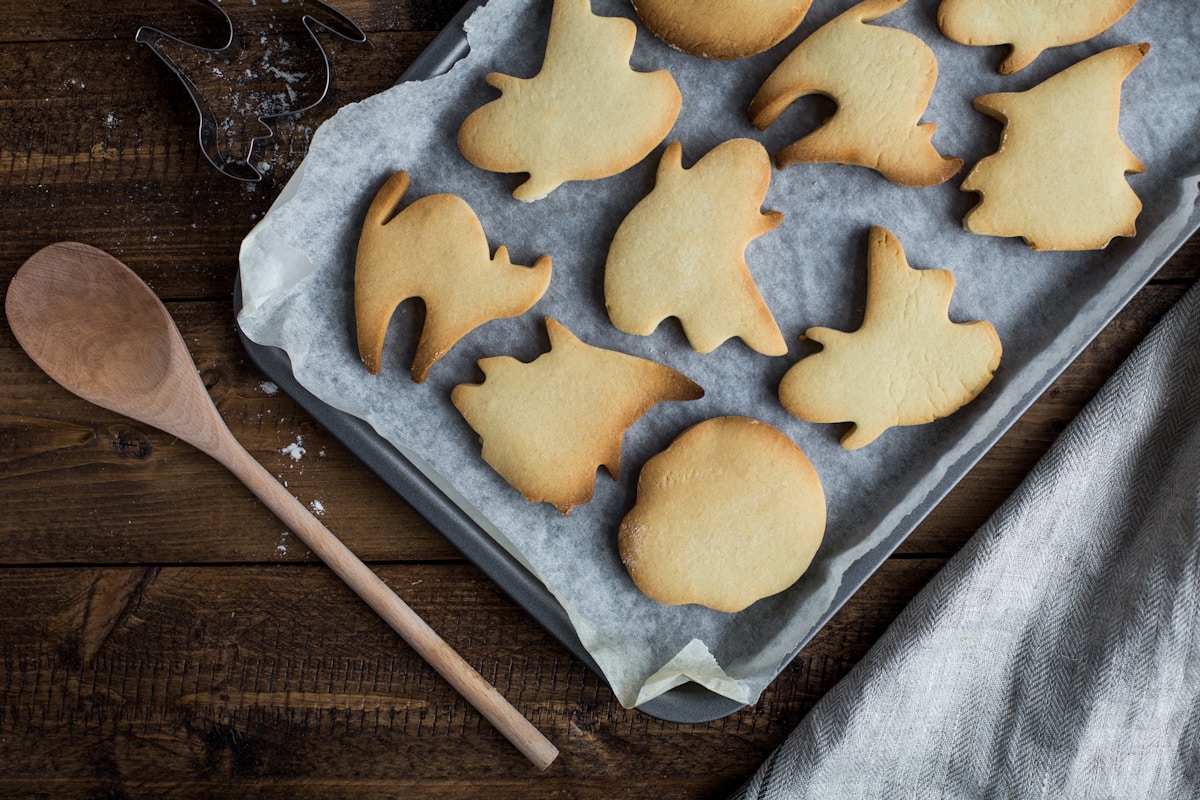
Have you ever seen those stunning slice-and-bake cookies where a perfect little bat or heart appears in the center of every round slice? It feels almost like magic — but the reality is that this technique, sometimes called picture cookies or stencil cookies, is completely achievable with a little patience and the right method. A Reddit baker recently wowed the r/Baking community with their "Aromantic Slice & Bake Cookies," carving a bat shape into a log of dough and filling it with contrasting dough. The result was a clean, defined shape that didn’t smear or distort after baking. The secret? It all comes down to temperature, dough consistency, and a few kitchen hacks that you can replicate right at home.
The Appeal of Hidden Shapes
There is something deeply satisfying about slicing into a log of cookie dough and revealing a hidden design. This technique is perfect for holidays, themed parties, or just surprising your family with a little extra effort. Unlike stamped or stenciled cookies, embedded shapes maintain their definition throughout the entire slice, creating a clean, professional look. The Reddit post used a bat shape for a whimsical Halloween vibe, but you can adapt this method for hearts, stars, flowers, or even initials. The process is essentially a form of icebox cookie — you shape the dough into a log, chill it until rock hard, then carve out a cavity and fill it with a contrasting dough. The key is to keep everything cold so the edges stay sharp.
The Science Behind Smear-Free Slice and Bake Cookies
When you carve into a frozen log of dough, you are essentially creating a negative space that will hold the secondary dough. If the log is too soft, the walls of the cavity will collapse or smear when you press the filling in. That’s why the first rule is to freeze the log solid — at least 2 hours in the freezer, or ideally overnight. The dough should feel like a rock. The secondary dough also needs to be chilled, but not as hard, so you can easily press it into the carved cavity without distorting the shape. Another critical factor is dough consistency: both doughs should have a similar fat-to-flour ratio and moisture level. If one is too soft or too crumbly, they won’t bake evenly. For example, if your base dough uses butter and your filling dough uses shortening, they might spread at different rates, causing the shape to blur. Stick to the same base recipe for both layers, just add different flavorings or colorings. Temperature-wise, bake at 350°F (175°C) for 10 to 12 minutes, slightly less if your cookies are thin. Let them cool on the pan for 2 minutes before transferring to a wire rack.
Step-by-Step Carving Technique
Start with your base dough. A simple vanilla sugar cookie work well because it holds its shape and doesn’t spread too much. King Arthur Flour’s sugar cookie recipe is a solid choice. Roll the dough into a log about 2 inches in diameter, wrap it in plastic wrap, and twist the ends to make a tight cylinder. Freeze for at least 2 hours. While that’s freezing, prepare your contrasting dough. For the bat shape, you might use a chocolate dough. Chill that too, but keep it pliable enough to press into the cavity.
Once the base log is frozen solid, unwrap it and use a sharp knife or a thin-bladed cookie cutter to carve out the shape. The Reddit baker used a small bat-shaped cutter to punch out the center from each slice individually, but it’s actually more efficient to carve the entire log at once. Use a sharp knife to cut a long channel that matches the profile of your shape. If you’re using a cookie cutter, you can press it into the end of the log to create an impression, then use a small paring knife to remove the marked dough. Work quickly to prevent the log from softening. After carving, you’ll have a negative space running the length of the log.
Now fill that cavity with your secondary dough. Lightly press the contrasting dough into the groove, making sure it fills every corner and is level with the surface. Don’t overwork it or the surrounding dough will warm up. After filling, rewrap the log and chill it again for at least 30 minutes. This second chilling step is crucial — it firms up the interface between the two doughs so that when you slice, the edges don’t smear. Some bakers skip this step and wonder why their shapes look blurry. (Don’t be that baker.)
Common Pitfalls and Solutions
Even with perfect technique, things can go wrong. One common issue is the secondary dough spreading and losing definition. This happens when the doughs have different consistencies. To fix this, ensure both doughs are similar — if your base dough is a shortbread style (high fat, low moisture), your filling should be the same. Another pitfall is the shape becoming distorted during slicing. The solution: use a very sharp knife and slice with a single, steady motion. A serrated knife can actually help because it saws through without crushing the dough. Also, slice the log cold but not rock hard — if it’s too hard, the knife might crack the dough. Let it sit at room temperature for 5 minutes before slicing.
Smearing is the biggest complaint. The Reddit commenters suggested chilling the filled log again before slicing, which we already covered. But also, avoid twisting the knife as you cut; pull straight down and through. If you notice smearing on your first slice, put the log back in the freezer for 10 minutes and try again. Another pro tip: use a piece of dental floss to slice thin rounds (about 1/4 inch thick) — it glides through without dragging the dough. This is a favorite trick among professional bakers.
Pro Tips for Perfect Results
Here are some additional tips straight from the Reddit thread and experienced bakers: Use a scale to weigh the doughs so they are exactly equal in consistency. Add a small amount of cornstarch to the dough to reduce spread. For the carving step, you can also use a homemade template: cut a piece of cardboard into your desired shape, freeze it, then press it into the dough log to create an impression. This works if you don’t have a cookie cutter that matches. Also, consider the geometry of your shape — stars with sharp points can be more fragile than rounded shapes. For intricate designs, it helps to carve in a straight line through the log, like a tunnel. Finally, don’t be afraid to experiment with colors and flavors. A red raspberry dough inside a vanilla log makes a beautiful contrast for Valentine’s Day. Or use matcha green dough inside a white chocolate base for a spring look.
The magic of slice-and-bake cookies with hidden shapes is that once you master the technique, the possibilities are endless. You can prepare multiple logs ahead of time and slice and bake them fresh whenever you need a quick, impressive treat. Yes, it takes a little extra effort, but the moment you slice into that log and see a perfect shape emerge, you’ll know it was worth it. Your friends and family will ask how you did it — and now you have all the answers. (Just don’t give away all your secrets too quickly.)
Give this technique a try, and let your creativity shine. Happy baking