


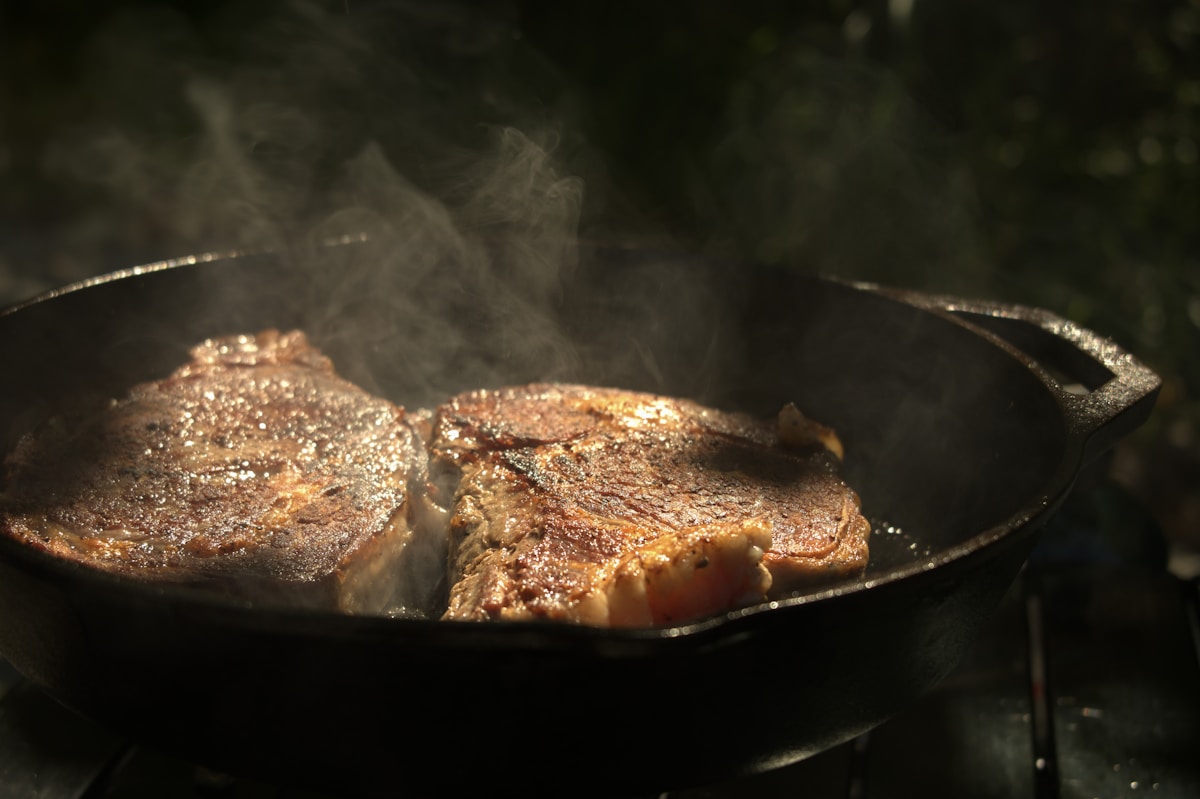
You’ve got the perfect steak for a special occasion—a thick-cut ribeye or a beautiful New York strip. You’ve seen all the videos, read all the articles, and they all say the same thing: get your cast iron skillet ripping hot. But you look in your cabinet and there’s no heavy, black, seasoned-to-perfection cast iron pan in sight. There’s just your trusty stainless steel skillet that you use for everything else.
So, what now? Do you give up on that steakhouse-level crust? Do you settle for a less-than-perfect dinner?
Let me be direct: Absolutely not. While cast iron is the undisputed heavyweight champion of heat retention, it is not the only pan in the ring that can score a knockout sear. The truth is, with the right technique, the pan you already own is very likely up to the task. The secret isn’t in the pan—it’s in the process. And I’m going to walk you through it.
Why Everyone Raves About Cast Iron (And Why It Matters)
Before we talk alternatives, let’s understand why cast iron gets all the glory. It’s not magic; it’s physics. A cast iron skillet is thick and dense. Think of it like a thermal battery. When you heat it on the stove, it slowly soaks up an enormous amount of energy.
When you place a cool, 1.5-inch thick steak into the pan, that steak immediately tries to steal all the heat. A lightweight pan will lose the fight; its temperature will plummet, and the steak will start to steam in its own juices. The result? A sad, gray band and no crust.
A preheated cast iron pan, however, has so much stored energy that its temperature barely dips. It keeps punching out high, consistent heat, which is exactly what you need for the Maillard reaction. That’s the beautiful chemical process that turns amino acids and sugars into hundreds of new flavor compounds, creating that deeply browned, savory, irresistible crust we all crave. That aggressive, roaring sizzle you hear when the steak hits the pan? That’s the sound of the Maillard reaction doing its job.
So, the goal isn’t necessarily to be cast iron. The goal is to replicate what it does best: deliver sustained, high heat to the surface of the steak.
Your Non-Cast Iron Pan Can Do The Job (If You Help It)
Two other types of pans are more than capable of stepping up: heavy-bottomed stainless steel and carbon steel. You probably have one of these already.
Heavy-Bottomed Stainless Steel: This is the workhorse in most home kitchens. Look for a pan that feels substantial in your hand, not flimsy. The best ones have a core of aluminum or copper sandwiched between layers of steel (this is often called “tri-ply” or “clad”). This construction helps them heat more evenly and retain heat far better than a cheap, thin pan. Brands like All-Clad are the gold standard (and have a price to match, often $100+), but excellent, more affordable options exist from Cuisinart, Tramontina, and Made In, typically in the $50-$80 range.
Carbon Steel: Think of carbon steel as cast iron’s lighter, more responsive cousin. It’s stamped from a sheet of metal instead of being cast in a mold. It heats up faster than cast iron and is a favorite in restaurant kitchens for its durability and performance. It can achieve a blistering sear and, like cast iron, requires seasoning to build a non-stick surface. It offers nearly identical searing performance to cast iron at a slightly higher price point. Expect to pay between $40-$80 for a solid pan from brands like De Buyer or Matfer Bourgeat.
The key takeaway is that both of these pans can get screaming hot. They just don’t have the same thermal battery capacity as cast iron, which means your technique becomes absolutely critical to success.
The 4 Rules for a Perfect Sear in Any Pan
If you nail these four steps, you will get a fantastic crust on your steak, whether you’re using stainless, carbon steel, or cast iron. This is where the real cooking happens.
1. Get It Dry. REALLY Dry. Moisture is the #1 enemy of a good sear. Before you even think about seasoning, take your steak out of the packaging and pat it thoroughly dry with paper towels. Press down. Use more towels than you think you need. Let it sit on a rack in the fridge, uncovered, for a few hours if you have the time. A dry surface browns; a wet surface steams.
2. Preheat Like You Mean It. This is the most common mistake people make. “A minute or two” isn’t enough. You need to preheat your stainless or carbon steel pan over medium-high heat for at least 5-7 minutes. (Yes, really.) You are manually building up the thermal battery that cast iron has naturally. Your pan should be shimmering and almost smoking before the steak gets anywhere near it. A simple test: flick a single drop of water into the pan. If it sizzles and evaporates slowly, it’s not ready. If it immediately forms a single, cohesive ball that glides and dances across the surface before disappearing, you’re good to go. The target surface temperature is around 400-450°F (205-230°C).
3. Use the Right Oil (And Not Too Much). You need an oil with a high smoke point. Extra virgin olive oil will burn and impart a bitter flavor. Instead, reach for neutral oils like grapeseed, canola, avocado, or even clarified butter. You only need a thin layer—about a tablespoon. It should shimmer instantly when it hits the hot pan.
4. Don’t Crowd the Pan. This goes back to heat retention. If you’re cooking for two, use a large 12-inch skillet. If you’re trying to squeeze two large ribeyes into a 10-inch pan, you’re setting yourself up for failure. Each steak will suck heat out of the pan, collectively dropping the temperature below the searing threshold. Cook one steak at a time if you have to. (Your patience will be rewarded.)
Step-by-Step Guide: The Stainless Steel Sear
Ready to put it all together? Let’s cook a perfect medium-rare steak in a standard stainless steel skillet.
-
Prep the Steak: About 30-45 minutes before cooking, pull a 1.5-inch thick steak from the fridge. Pat it bone dry with paper towels. Season it very generously on all sides with coarse salt and freshly cracked black pepper. Don’t be shy.
-
Preheat the Pan: Place your 10 or 12-inch heavy-bottomed stainless steel skillet over medium-high heat. Set a timer for 5 minutes. Just let it sit there and get hot.
-
Oil and Sear: After 5 minutes, add 1 tablespoon of high-smoke point oil to the pan. It should shimmer. Gently lay the steak in the pan, placing it away from you to avoid any splashback. You should hear a loud, aggressive sizzle. This is the only sound you want to hear.
-
Hands Off: Do not touch, poke, or move the steak for at least 2-3 minutes. Let the pan do its work and develop that crust. After 3 minutes, use tongs to lift a corner and check. If it’s a deep, rich brown, flip it.
-
The Second Side: Sear the other side for another 2-3 minutes. For a perfect medium-rare (130-135°F / 54-57°C), this is often enough for a thick steak. An instant-read thermometer is your best friend here.
-
The Pro Finish (Optional but Recommended): During the last minute of cooking, toss in 2 tablespoons of unsalted butter, a few crushed garlic cloves, and a sprig of thyme or rosemary into the pan. As the butter melts and foams, tilt the pan towards you and use a spoon to continuously baste the steak with the fragrant butter. This adds an incredible layer of flavor.
-
Rest Is Required: Remove the steak from the pan and place it on a cutting board or wire rack. Let it rest for 10 minutes. (Don’t skip this step!) This allows the muscle fibers to relax and reabsorb all the juices. If you cut into it too soon, all that flavor will end up on the board instead of in your mouth.
So there you have it. The pan is just a tool. A good tool helps, but a great technique is what truly makes the difference. Your stainless steel skillet isn’t a compromise; it’s a perfectly capable piece of equipment waiting for you to unlock its potential. Go make that perfect steak. You’ve got this.


