I remember it so clearly. My first attempt at a “fancy” dinner for my friends. I was going to make a beautiful chicken and vegetable stir-fry. I had the recipe, I had the ingredients, and I had… a complete disaster. The chicken was pale and rubbery, and the vegetables were a sad, soggy pile swimming in a watery sauce. What went wrong?
If this sounds even a little familiar, take a deep breath. You are in the right place, and I promise, it’s not you—it’s a few sneaky habits that trip up almost every single new cook. The kitchen is more forgiving than you think, and mastering a few fundamentals is like learning the secret code to delicious food. Let’s decode the five most common mistakes together, and I’ll show you how to turn them into triumphs.
The Cold Shoulder Why You Must Preheat Your Pan
This is, without a doubt, the number one mistake I see. You’re excited to get cooking, so you add a splash of oil to a cold pan, throw your food in, and then turn on the heat. This seems efficient, but it’s the express train to sad, steamed food.
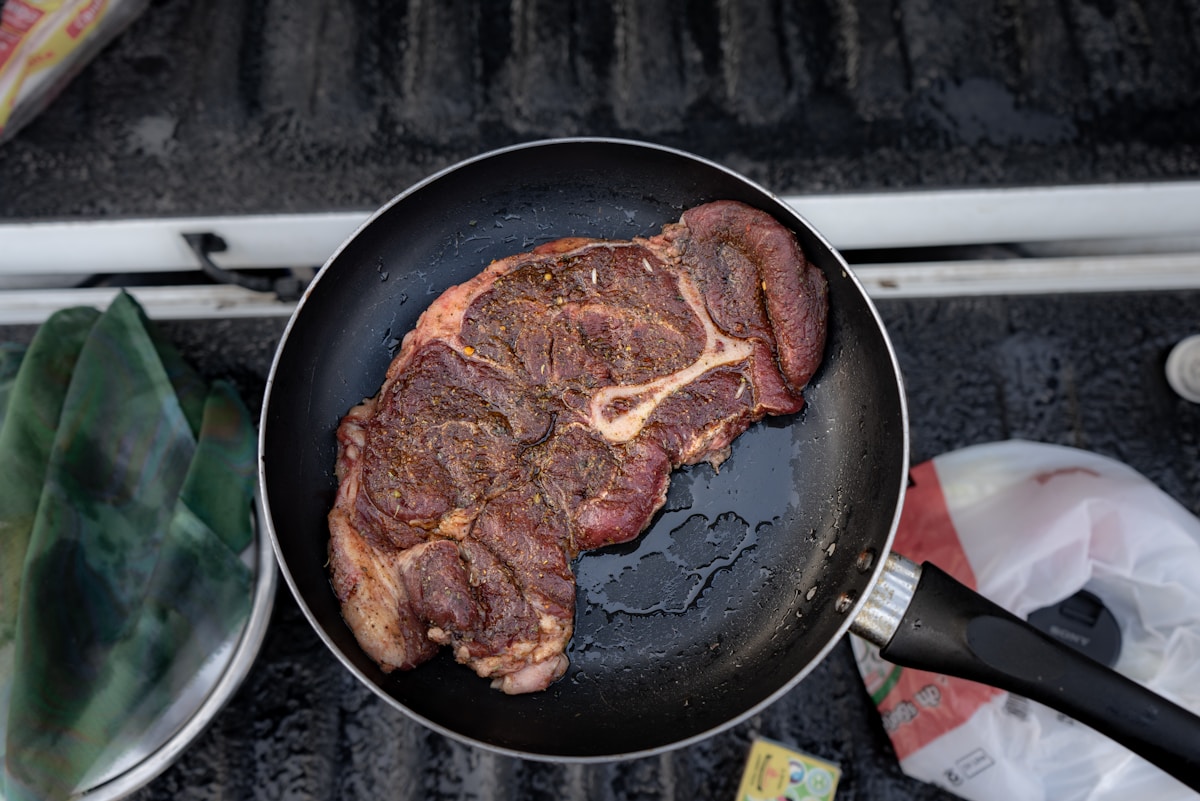
Think of a hot pan like a sizzling gatekeeper. When food, especially protein like chicken or beef, hits a properly heated surface, it immediately forms a delicious, golden-brown crust. This is the Maillard reaction, and it’s where all the deep, savory flavor lives. When the pan is cold, the food just sits there, slowly warming up in its own juices. It essentially boils instead of sears, resulting in a grey, unappealing texture.
How to Do It Right:
- The 2-Minute Rule: Place your pan (cast iron, stainless steel, or carbon steel) on the stove over medium to medium-high heat. Let it sit there, empty, for at least two to three minutes. (Yes, really.) Your patience will be rewarded.
- The Water Test (for stainless steel/cast iron): Not sure if it’s hot enough? Flick a tiny drop of water onto the surface. If it sizzles and evaporates immediately, you’re close. If it forms a single, shimmering mercury-like ball that dances across the surface, you’ve hit the jackpot. That’s the perfect temperature.
- Oil Last: Only add your cooking oil after the pan is hot. You’ll see it shimmer almost instantly. That’s your green light to add the food. For non-stick pans, you can add the oil cold but still let it heat up for a minute before adding food; never heat a non-stick pan empty on high heat as it can damage the coating.
Getting this one step right will single-handedly improve your cooking more than any fancy recipe.
The Overcrowding Catastrophe Giving Your Food Breathing Room
So you’ve preheated your pan perfectly. Fantastic! Now, you dump an entire package of mushrooms or a pound of diced chicken into your 10-inch skillet. You hear a promising sizzle for about five seconds, which then fades into a disappointing gurgle. You’ve just fallen into the overcrowding trap.
When you cram too much food into a pan, two things happen. First, the pan’s temperature plummets. Second, the moisture released from the food gets trapped. Instead of escaping as steam, it pools at the bottom of the pan, and just like that, you’re steaming your food again instead of searing it.
Imagine a crowded party. If everyone is packed shoulder-to-shoulder, it gets hot and steamy, and nobody can move. Your food feels the same way! Give it some personal space to allow air to circulate and moisture to evaporate. This lets the pan stay hot and gives every single piece a chance to make direct contact with the metal and get that beautiful brown crust.
The Fix:
- Cook in Batches: If you have a lot of food to cook, do it in two or even three batches. It might seem like it takes longer, but the final result is so much better it’s worth the extra five minutes.
- The Single Layer Rule: Arrange your food in a single, even layer with a little space between each piece. If you have to pile food on top of itself to make it fit, your pan is too crowded.
- Use a Bigger Pan: Sometimes the simplest solution is the best one. If you consistently find yourself overcrowding, it might be time for a larger skillet. A 12-inch cast iron skillet from a brand like Lodge is an affordable, versatile workhorse for any kitchen.
The Wobbly Cut Why Knife Skills Matter for Cooking
We’ve all seen chefs on TV dicing onions at the speed of light. While you don’t need to be that fast, understanding the why behind good knife skills is crucial. It’s not about showing off; it’s about even cooking.
If you chop a carrot into a mix of big chunks, thin slivers, and random trapezoids, they are all going to cook at different rates. By the time the big chunks are tender, the tiny pieces will be burnt to a crisp, and the medium ones will be mush. This leads to a dish with inconsistent texture and flavor.
Cutting your ingredients to a uniform size ensures everything cooks evenly and is finished at the same time. It’s the secret to a perfectly roasted tray of vegetables or a stir-fry where every bite is perfect.
Kitchen Hack for Beginners:
- Stabilize Your Board: Place a damp paper towel or a thin, damp cloth under your cutting board. This prevents it from slipping and sliding around, which is a major safety hazard.
- Learn the “Claw” Grip: Curl the fingertips of your non-knife hand inward, like you’re holding a ball. Rest these curled fingers on the food you’re cutting. Your knuckles act as a safe guide for the side of the knife blade. This keeps your fingertips tucked safely away from the sharp edge. (Trust me on this one.)
- Go Slow: Speed will come with practice. For now, focus on making deliberate, consistent cuts. Start with something easy like a zucchini or celery stalk before moving on to a wobbly onion.
The Tyranny of the Timer Learning to Trust Your Senses
A recipe says “sauté for 5-7 minutes.” You set a timer for six minutes and walk away. When the timer beeps, you declare it done, even if it looks pale or smells a bit raw. This is what I call the tyranny of the timer—letting a clock dictate your cooking instead of your own senses.
Recipes are guides, not scientific laws. Your stove might run hotter than the recipe writer’s. Your chicken breast might be thicker. Your onions might have more moisture. Timers are great for reminders (like for a cake in the oven), but they can’t tell you when food is actually ready.
Learning to cook is learning a new language, one spoken by your food. You have to learn to look, listen, smell, and touch.
- Look: Color is flavor! Are your onions translucent and sweet, or deep golden brown and caramelized? Is your chicken golden and crispy, or still pale? Golden-brown is almost always the goal.
- Listen: Pay attention to the sizzle. A loud, aggressive sizzle is great for an initial sear. As food cooks and releases moisture, it will quiet down. When pan-frying, a shift in the sound can tell you it’s time to flip.
- Smell: Your nose knows. You can smell the difference between a raw onion and a sautéed one. You can smell the nutty aroma of browning butter or the toasty scent of garlic (which tells you it’s about to burn!).
- Feel: Gently press on a steak or a piece of fish. You’ll learn the difference between the soft give of rare and the firm bounce of well-done. Use a fork to test a potato for tenderness.
The Forgotten Foundation Basic Kitchen Sanitation
This one isn’t about flavor, it’s about safety, but it’s a mistake that can have serious consequences. Cross-contamination—the transfer of harmful bacteria from one food to another—is a huge risk in a home kitchen.
The classic example: you cut raw chicken on a cutting board, then use the same board and knife to chop lettuce for a salad. You’ve just potentially transferred salmonella directly to food that won’t be cooked. Yikes.
Simple Safety Habits:
- The Two-Board System: This is the easiest fix. Have at least two cutting boards. Use one exclusively for raw meat, poultry, and seafood. Use the other for everything else (vegetables, fruit, bread, cheese). Many people use color-coded boards (e.g., red for meat, green for veggies) to make it foolproof.
- Wash Your Hands: Wash your hands with soap and warm water for at least 20 seconds after handling raw meat and before touching anything else.
- Clean As You Go: Don’t let dirty dishes and contaminated utensils pile up. Wash or place them in the dishwasher immediately.
Try This Tonight A Simple Sauté Challenge
Ready to put it all together? Let’s make a simple dish of seared chicken and broccoli. No fancy recipe needed, just a focus on technique.
- Prep Right: Cut one chicken breast into uniform, 1-inch cubes. Cut a head of broccoli into uniform florets. Pat the chicken dry with a paper towel (moisture is the enemy of a good sear!). Use separate cutting boards!
- Preheat: Place a large skillet over medium-high heat. Let it get hot for 2-3 minutes.
- Don’t Crowd: Add a splash of oil. Once it shimmers, add the chicken in a single layer, leaving space. If you have to, do this in two batches. Don’t touch it for 2-3 minutes.
- Use Your Senses: Listen for the sizzle. Look for the edges to turn golden brown. Smell the delicious savory aroma. Once it’s browned, flip and cook the other side.
- Repeat: Remove the chicken and set it aside. Add the broccoli to the same pan (don’t crowd it!). Let it get a little char and color on one side before stirring. Cook until it’s bright green and tender-crisp.
- Combine: Add the chicken back to the pan to heat through, maybe with a splash of soy sauce or a squeeze of lemon. Serve and be proud!
By focusing on these foundational skills, you aren’t just following a recipe; you are learning how to cook. You’re building the confidence to trust your instincts, and that’s when the real magic in the kitchen begins.