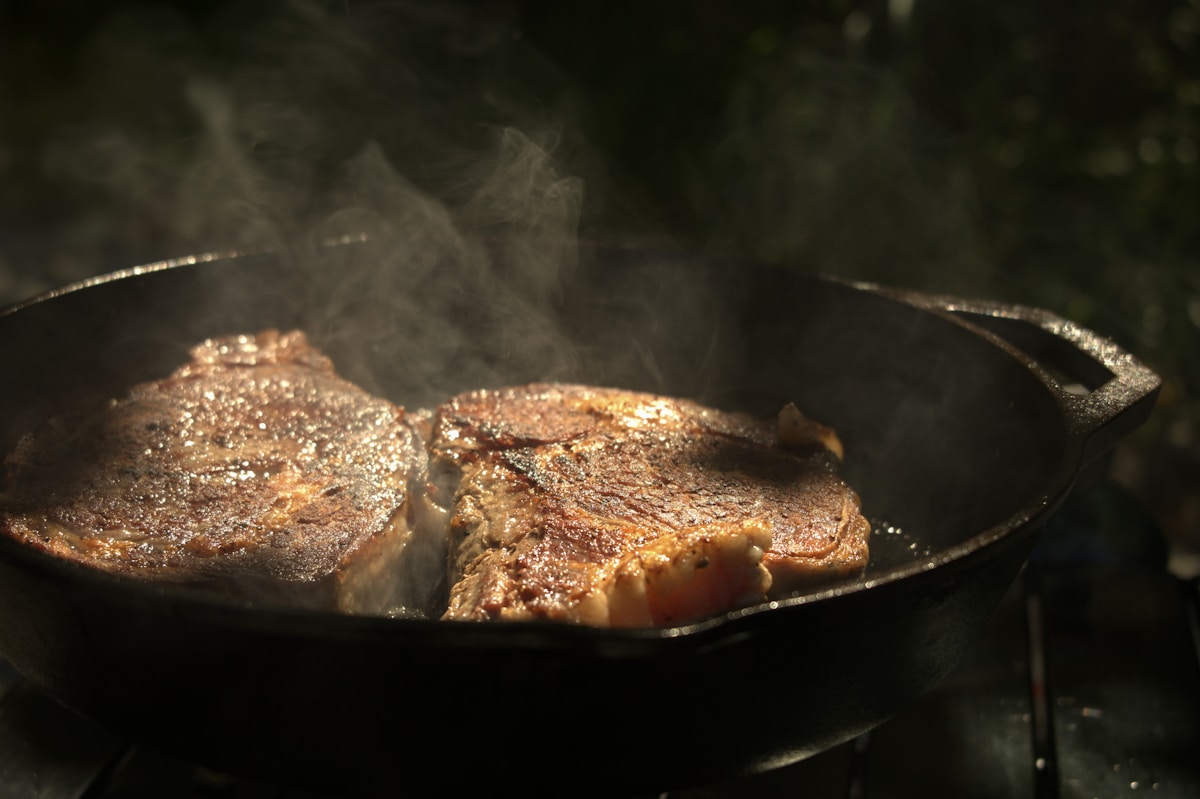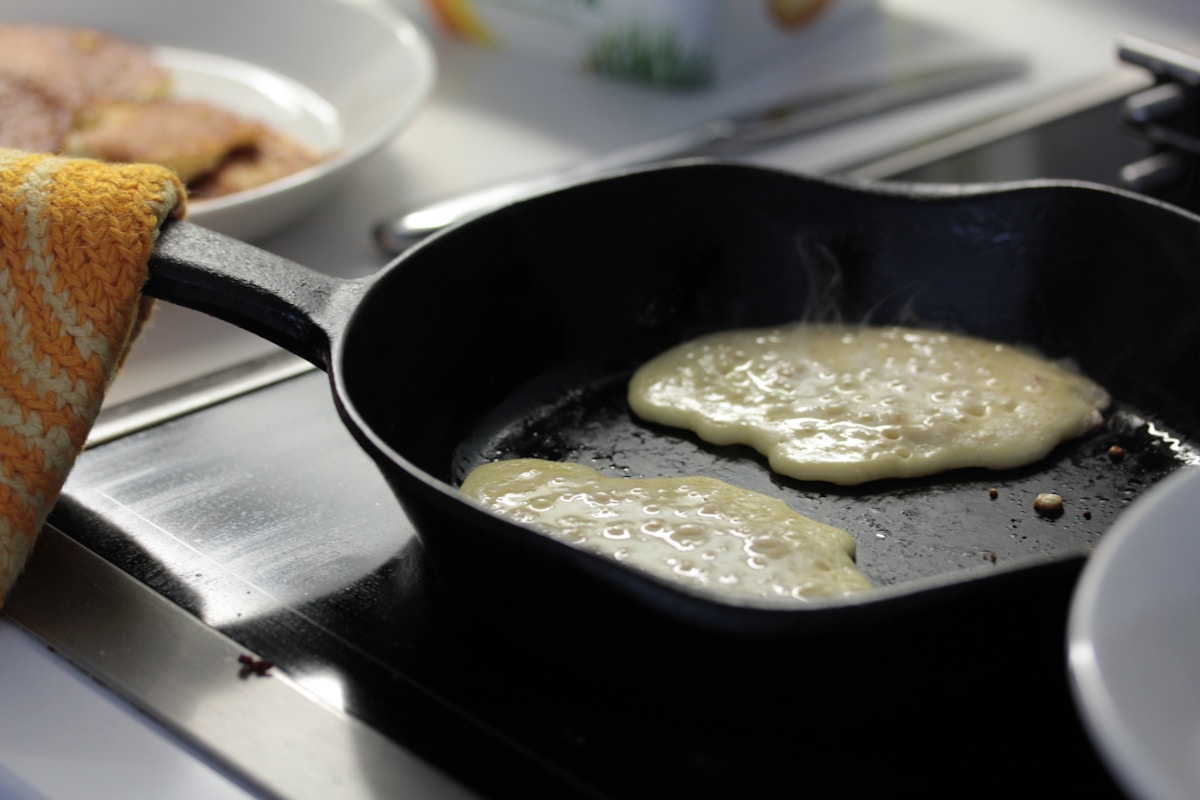
Dinner moves quickly when vegetables are ready, burgers need browning, and the skillet already feels crowded. That is when cast iron skillet size becomes a practical decision rather than a small detail.
For a family of four, a 12-inch cast iron skillet is often the most useful one-pan choice because it gives ingredients more room. But bigger is not automatically better: a 10-inch skillet is easier to lift, store, wash, and use for sides, baking, and smaller meals.
Key Takeaways
- A 12-inch skillet is usually the better single-pan choice for frequent four-person meals that need room to brown.
- A 10-inch skillet is excellent for sides, baking, eggs, smaller dinners, and meals where cooking in batches is fine.
- Compare the exact pan’s flat cooking surface, depth, empty weight, handles, and total footprint—not just its size label.
- A helper handle, clear stovetop space, oven clearance, and secure storage can matter as much as diameter.
The practical rule is simple: choose a 12-inch skillet if you regularly make full family meals in one pan and can comfortably manage its verified weight and footprint. Choose a 10-inch skillet if easier handling matters more, your main meals are usually smaller, or you do not mind cooking in batches.
Start With the Pan’s Actual Cooking Surface, Not Just Its Size Label
A skillet labeled 10 inches or 12 inches may be measured across its top rim. That measurement is helpful, but it does not reveal how much flat area is available on the bottom for browning food.
Two skillets with the same labeled diameter can have different usable interiors. One may have sloped walls and a broad cooking floor, while another has thicker walls, steeper sides, or a narrower base. Depth can vary as well, changing how much batter, sauce, or vegetables the pan can hold.
That is why cast iron skillet capacity is not determined by diameter alone. A wide, shallow 12-inch pan may be ideal for burgers, pizza, and cornbread but less useful for a liquid-heavy meal than a deeper skillet with a smaller opening.
Before buying, check the manufacturer’s specifications for the exact skillet. Compare:
- Overall diameter, often measured at the top rim
- Flat cooking surface or bottom diameter, if listed
- Interior depth
- Capacity, if provided
- Listed empty-pan weight
- Total length, including the main handle
- Helper-handle design
- Lid compatibility, if a lid matters to your cooking
The flat cooking surface matters when you want food to brown rather than sit in a crowded pile. Packed vegetables, mushrooms, chicken, or ground meat release moisture as they cook. More open space can make it easier to spread ingredients out and avoid repeated batches.
Be careful when comparing older cookware, too. Vintage skillet numbers can be confusing and do not necessarily match modern 8-, 10-, or 12-inch labels. Measure the actual pan or verify its maker and era before buying a lid or planning storage around it.
10-Inch vs. 12-Inch Skillet: What Each Size Can Handle
The 10-inch vs. 12-inch skillet choice is mainly a trade-off between maneuverability and one-pan capacity. The guide below is planning help, not a set of universal specifications. Exact dimensions, weights, capacities, and cooking surfaces vary by brand and pan shape.
| Common labeled size | Typical family meal role | Practical portion fit | Handling considerations | Burner and oven fit | Best uses |
|---|---|---|---|---|---|
| 10-inch skillet | Smaller main dish, side dish, baking pan, or second skillet | Often useful for one to three main-dish servings, depending on ingredients | Usually easier to lift, clean, and store than a larger pan | Often simpler to fit on compact burners and in smaller ovens; measure first | Eggs, small vegetable batches, cornbread, skillet cookies, reheating, side dishes |
| 12-inch skillet | Primary family-size frying pan | Often better suited to many four-person meals when ingredients need room | Can be much harder to move when hot and full; a helper handle is useful | Requires more burner clearance, oven width, and cabinet space | Burgers, larger sautés, family cornbread, pizza, queso, skillet desserts, one-pan dinners |
A 10-inch cast iron skillet can still be very useful for a family of four. It works well for eggs, small batches of sautéed vegetables, cornbread, skillet cookies, toasted sandwiches, reheating leftovers, and side dishes such as green beans or potatoes.
It can also handle family dinners when the recipe is compact or batches are acceptable. You might brown two burgers, set them aside, then cook the remaining burgers. That takes more time, but it may give each batch better spacing than forcing everything into one crowded pan.
The limitation appears when a meal needs broad, uncrowded surface area. Four large chicken portions, a generous sausage-and-vegetable dinner, or a full batch of fried rice-style leftovers can quickly overwhelm a 10-inch pan. In those cases, plan on batches, a second skillet, or another cooking method.
A 12-inch skillet is often the stronger option when you want one pan for frequent family meals. It may offer enough room for four burgers, larger vegetable sautés, family breakfasts, pizza, cornbread, skillet brownies, and warm queso.
Still, no 12-inch skillet is a universal four-serving guarantee. Four thin burgers take up less room than four oversized patties, and a shallow mound of vegetables behaves differently from a deep pile of mushrooms. Check the pan’s usable cooking surface and depth, then picture the meals you make most often.
Choose a 12-Inch Skillet When Family Meals Need Room to Brown
A 12-inch skillet earns its cabinet space when fewer batches make weeknight cooking easier. If you regularly brown protein and vegetables together, make a full breakfast in one pan, or finish stovetop meals in the oven, the larger format is often more practical.
Think about the meals you cook at least a few times each month. A 12-inch pan can be a good match for burgers, chicken pieces, sausage with peppers, larger vegetable sautés, scrambled eggs for several people, pan pizza, baked cornbread, and oven-finished chops.
The benefit is not simply that the pan is bigger. It is that food can be arranged with more separation. Chicken pieces can sit in a single layer more easily, and vegetables can spread out instead of forming a tall pile. That may reduce the stop-and-start routine of browning one batch, holding it aside, and repeating.
The trade-off is cast iron pan weight. A larger skillet may feel manageable when empty and cool but much less so when hot, full of food, or carrying a saucy meal. The listed empty weight is only the starting point.
A helper handle gives you a second gripping point and can make a large skillet easier to control. If you often move a pan from stovetop to oven or table, look for a helper handle that is practical for your grip and kitchen routine.
Treat every handle as hot during cooking, including the helper handle. Use dry oven mitts or suitable heat-resistant handle protection, follow the manufacturer’s instructions, and clear your path before moving a heavy, full skillet. If a 12-inch pan feels awkward when empty, it is unlikely to feel easier after dinner is inside it.
Decide Whether the Weight, Burner, Oven, and Storage Fit Your Kitchen
A skillet can look manageable online and feel very different in your kitchen. Measure before you buy, especially when choosing a larger family-size frying pan.
Start with the listed weight of the exact models you are considering. Do not assume all 12-inch skillets weigh the same. Wall thickness, depth, handle design, and other construction details can change how a pan feels in your hand.
Next, check total length. A long handle may offer useful leverage, but it also needs clearance. On a narrow cooktop, it can crowd another burner or point into a busy walkway. In a cabinet, a pan may fit by diameter but fail to fit once the handle is included.
For stovetop fit, measure the usable space around your preferred burner. Compare it with the skillet’s flat base, rim width, and total footprint. Make sure the pan can sit level and that nearby burners remain usable when the skillet is in place.
Do not assume every pan will perform the same way on every cooktop. The pan’s base, burner type, and manufacturer compatibility guidance all matter. If you cook on induction, confirm that the specific skillet is suitable for your appliance.
For oven fit, measure more than rack width. Check usable depth, door-opening clearance, and whether you can slide the skillet in and out without striking the sides or door. This matters most with compact ovens and long-handled 12-inch skillets.
Storage deserves the same planning. A heavy pan is easier to use when it has a reliable home near the stove. Options include a sturdy cabinet shelf, protected stacking in a lower cabinet, or a cookware rack rated for the pan’s weight. Confirm load limits before relying on a shelf, rack, or hanging system.
If you stack skillets, place a soft liner, towel, or pan protector between them to reduce scraping. Let cookware cool and dry fully before storing it.
When Two Smaller Skillets Are Better Than One Large Pan
One large skillet is not always the most flexible setup. Two smaller cast iron skillets can make more sense when you need separate cooking zones or lighter individual loads.
For example, use one pan for burgers and another for onions and mushrooms. Cook a mild portion in one skillet and a spicy version in the other. Make eggs in one pan while potatoes cook in another. This can be especially useful when foods need different cooking times or family preferences differ.
Two 8- to 10-inch pans may also reduce the weight you move at once. Instead of lifting one very full skillet, you handle two smaller pans separately. That can be appealing if a loaded 12-inch skillet feels difficult to control.
The drawbacks are straightforward: more cleanup, more burners in use, and less convenience for a single large pizza, cornbread, skillet dessert, or one-pan dinner. Two pans also require more total storage space, even if each one is easier to handle.
Use this quick decision guide:
- Choose a 10-inch skillet if most meals serve one to three people, you often make sides or baked treats, and easier lifting and storage matter most.
- Choose a 12-inch skillet if you want one main pan for frequent four-person meals, prefer fewer batches, and can comfortably manage its verified weight and footprint.
- Choose two smaller skillets if flexibility, lighter lifting, separate cooking zones, or different food preferences matter more than one-pan capacity.
FAQs
Is a 10-inch cast iron skillet big enough for a family of four?
It can be, depending on the meal. A 10-inch skillet works well for side dishes, baking, eggs, reheating, and compact recipes. For four full main-dish portions that need browning space, it will often require batches or a second pan.
Is a 12-inch cast iron skillet too heavy for everyday cooking?
It can be for some cooks and kitchens, especially when filled with food. Check the manufacturer’s listed empty weight, look for a practical helper handle, and consider how often you will move the pan from stove to oven. Handling a similarly sized skillet before buying can help clarify whether it suits you.
How do I measure a cast iron skillet before buying a lid, storing it, or checking stove fit?
Measure across the top rim for lid sizing, across the flat base for burner planning, and from the bottom to the rim for depth. Then measure total length from the handle tip to the opposite edge and total width including any helper handle or pour spouts. Compare those measurements with your oven rack, cabinet opening, shelf depth, and stove space.
For many households of four, a 12-inch cast iron skillet with a comfortable helper handle is a sensible default. The best cast iron skillet size, however, is the one you can lift, clean, store, and use often—not simply the largest pan you can buy.