


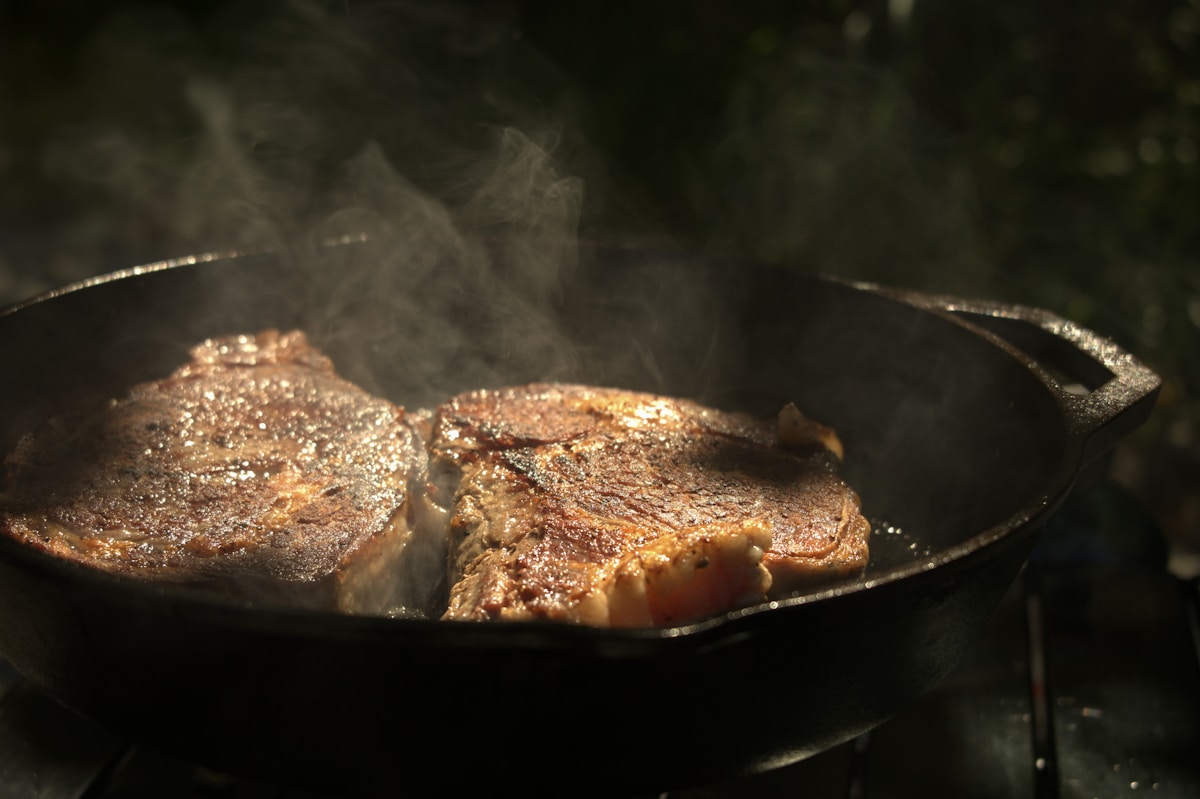
You are standing at the stove with two burger patties, sliced onions, and a pan that suddenly looks smaller than it did in the store. That is the real question behind choosing cast iron: not whether it can cook, but whether it gives you enough room for the meals you actually make.
A 10-inch cast iron skillet is usually big enough as an everyday pan for one or two people. It is a practical size for breakfasts, small dinners, baking, and cooking a main ingredient while sides cook separately. It becomes less practical if you regularly cook for a family, batch-cook for the week, or need plenty of open space to brown food rather than steam it.
Key Takeaways
- A 10-inch cast iron skillet is usually a strong everyday choice for one or two people.
- Compare the flat cooking surface, not just the diameter printed on the label; similarly sized pans can have different usable space.
- It comfortably handles small breakfasts, two modest burgers or steaks, a few chicken pieces, and skillet baking recipes sized for the pan.
- Choose a 12-inch skillet if you often cook four servings, batch-sear food, or make large one-pan meals.
- Check weight, total handle length, burner fit, oven clearance, and storage space before buying.
The best cast iron pan size depends less on the number printed on the label and more on usable cooking surface, weight, storage footprint, and your usual portions.
Quick answer: who a 10-inch cast iron skillet suits
A 10-inch skillet is a strong everyday choice if you usually cook for yourself, a partner, or a small household. It can handle eggs, pancakes, a small batch of vegetables, a couple of burgers, small steaks, chicken pieces, cornbread, and many one-pan dinners for two.
It is also a sensible choice when lifting comfort matters. Cast iron is heavy before food goes in, and a full skillet is more awkward to move from stovetop to oven or carry to the table. A smaller pan is generally easier to wash, store, and maneuver than a larger one.
The main limitation is crowding. A pan can physically hold plenty of food while still being too crowded to cook it well. When ingredients overlap or cover the entire bottom, moisture has less room to escape, which can make browning and roasting more difficult.
Choose a 10-inch cast iron skillet as your main pan when these points describe you:
- You mostly cook one or two portions at a time.
- You make separate side dishes instead of fitting an entire family dinner into one skillet.
- You value manageable weight and compact storage.
- You want a pan for eggs, simple sautés, small roasts, and skillet baking.
- You would rather use two smaller pans occasionally than handle one large, heavy skillet every day.
Consider a larger skillet first if you often cook four or more servings, sear food in batches, make large skillet meals, or want room for several burger patties at once.
What “10-inch” means—and why the cooking surface matters more
The 10-inch measurement commonly refers to the width across the upper rim of the skillet. It does not necessarily describe the flat cooking area at the bottom, where burgers, eggs, and vegetables actually sit.
That difference matters. Cast iron skillets have sloped walls, and those walls can take up a meaningful part of the total diameter. Two pans both labeled 10 inches may have different interior shapes, depths, and flat-bottom widths. One may feel roomy for two patties, while another may be better suited to one large omelet or a small cornbread.
When comparing pans, look for these measurements on the manufacturer’s current product page or care materials:
- Top or rim diameter
- Cooking-surface diameter or flat-bottom diameter
- Interior depth
- Total length, including the handle
- Empty-pan weight
- Capacity, when listed
- Presence of a helper handle or loop handle
The cooking-surface diameter is especially useful because it gives a clearer picture of usable room. A pan with tall, strongly sloped sides may be excellent for cornbread or saucy dishes but provide less flat space for browning than you expect from its rim measurement.
Pour spouts, thick walls, and handle design can also affect how a pan feels in daily use. None of these features is automatically better; they simply mean a cast iron skillet size guide should not stop at the advertised diameter.
Before buying, take a few minutes to measure your kitchen. Check the width of your largest stovetop burner, the depth of the cabinet or drawer where the pan will live, and the oven rack area where you expect to use it. Remember to account for the handle: a skillet that is 10 inches across can occupy much more space from handle to handle.
What a 10-inch skillet can realistically cook
Serving guidance is approximate. A meal with salad, rice, potatoes, or bread on the side needs less skillet space than a complete one-pan dinner. Ingredient size matters, too: two thin burger patties take up less room than two thick patties, and chopped vegetables fit differently from large wedges.
For breakfast, a 10-inch skillet is usually very comfortable. It works well for a small batch of fried or scrambled eggs, an omelet, several pancakes cooked in rounds, or breakfast potatoes for one to two people. If you are making eggs and sausage together, cooking in stages can give you better control than filling every inch of the pan at once.
For burgers and steaks, think in terms of two modest portions with a little space between them. That is the sweet spot for many 10-inch pans. Two large, thick steaks may fit physically but leave too little room for browning, especially if the pan is also holding onions, mushrooms, or other vegetables.
For chicken, a 10-inch skillet can handle a few pieces at a time, depending on their size and whether you are starting on the stovetop or finishing in the oven. It is generally better for a small dinner than for preparing several days of lunches. If pieces are crowded together, cook in batches or use a larger pan.
Vegetables are another useful test. A small batch of broccoli florets, sliced zucchini, mushrooms, peppers, or potatoes can work well for one or two people. A large mound of vegetables releases moisture and may become more of a steam-and-stir situation than a roast or sear. For more browned edges, leave the ingredients room.
A 10-inch skillet is also a good baking format for recipes written for that size. Cornbread, a small cobbler, skillet cookies, and compact cakes are common uses. Check the recipe’s pan-size guidance before substituting, since batter designed for a wider pan may sit deeper in a smaller skillet and need a different baking time.
Preheating and seasoning influence how a skillet cooks, but they do not guarantee a nonstick result. Warm the skillet gradually for the cooking task, add cooking fat when the recipe calls for it, and avoid assuming food will release instantly. A well-maintained seasoning layer and sensible heat management can support browning and food release over time.
10-inch skillet servings: when it is enough and when it feels cramped
For cast iron for two people, a 10-inch pan is often the practical middle ground. It makes enough food for a shared breakfast, a pair of pork chops, a small vegetable side, or a simple skillet meal with a modest amount of protein and vegetables.
It works best when the skillet handles one main component of dinner. For example, cook two chicken breasts in the pan while rice and green beans cook separately. Or use it for two burgers while fries bake on a separate tray. This keeps the skillet from doing a job better suited to a larger vessel.
It can feel cramped when you want the pan to do everything. A large pasta skillet, a family-sized chicken-and-rice meal, four full portions of roasted vegetables, or several large pieces of meat can quickly push the limits. The food may still fit, but it may not have the room needed for the texture you want.
A 10-inch skillet is likely enough if your normal dinner looks like this:
- Two servings of protein plus a simple vegetable.
- One or two portions of breakfast.
- A small baked dish or dessert.
- Leftovers for one additional lunch at most.
It is likely too small as your only skillet if your normal dinner looks like this:
- Four plated servings from one pan.
- Meal prep for several days.
- Multiple patties, chops, or chicken pieces browned at once.
- Big vegetable batches meant to roast rather than pile up.
- One-pan meals where every ingredient must cook together.
For many kitchens, the most flexible setup is a 10-inch skillet for daily meals plus a larger skillet for guests, family dinners, and batch cooking. If storage is limited, though, one 12-inch pan may offer more volume, provided you are comfortable handling its weight.
12-inch versus 10-inch skillet: choose more surface area or easier handling
The 12-inch versus 10-inch skillet decision is mainly a choice between room and convenience. A 12-inch skillet gives you noticeably more space for food, not merely a little extra width around the edge. That added diameter can create much more useful area for spreading ingredients into a single layer.
Choose a 10-inch skillet when you want easier daily handling. It is generally more realistic for a compact kitchen, smaller oven, narrow cabinet, or a cook who does not want to wrestle with a heavy pan full of hot food. It is also a better match for smaller recipes, where a large pan can leave food too spread out.
Choose a 12-inch skillet when cooking surface matters more than compactness. It is usually the better tool for multiple burger patties, family portions of vegetables, larger cuts of meat, or meals that need browning room before liquid ingredients are added. It is also useful when you want to cook a full meal in one pan instead of managing separate pots and pans.
Neither size is universally better. A 12-inch skillet can be frustrating if it barely fits your burner area, oven shelf, or sink, while a 10-inch pan can be frustrating if you repeatedly need to cook in batches. Compare the actual cooking-surface measurements and weights of the models you are considering rather than assuming similarly labeled pans are identical.
Everyday ownership checks before buying
Start with weight. Look up the empty-pan weight, then imagine adding oil, food, and possibly a sauce or casserole-style meal. If you have concerns about grip strength, wrist comfort, or moving hot cookware, prioritize a size you can confidently control with two hands and consider a design with a helper handle.
Cast iron handles can become hot during stovetop and oven cooking. Treat the handle as hot unless you know otherwise, use dry heat-protective tools, and keep the handle pointed away from the edge of the stove where it could be bumped. Follow the manufacturer’s handling guidance for the specific pan.
For stovetop use, choose a burner arrangement that gives the pan reasonable support and lets you work around the handle. A larger skillet is not automatically a problem on a smaller burner, but it may require more attention when cooking foods that need consistent browning across the pan. Match your expectations to your stove and the food you make most often.
For oven use, measure more than width. Check whether the handle clears the oven door and whether the pan can sit securely on the rack without blocking other dishes. This matters if you plan to bake cornbread, finish meat in the oven, or make skillet desserts.
Storage is the final reality check. A 10-inch skillet may fit in a cabinet where a 12-inch model does not, but total handle length can still make it awkward. A cabinet shelf or low drawer may be easier for frequent use than storing a heavy skillet high overhead.
Cleaning and seasoning instructions vary by manufacturer and finish, so use the care information that comes with the pan. The practical goal is simple: clean the skillet after use, dry it thoroughly, and address rust or damaged seasoning according to the maker’s guidance. Cast iron is durable cookware, but it still benefits from routine attention.
FAQ
Is a 10-inch cast iron skillet big enough for two people?
Usually, yes. It is a good size for many breakfasts, two burgers or smaller steaks, a few chicken pieces, a small vegetable side, and modest one-pan meals. It is less suitable for large portions or meals that need a broad, uncrowded cooking surface.
How many burgers fit in a 10-inch cast iron skillet?
Two modest burger patties are a realistic starting point for most 10-inch skillets. Exact fit depends on the pan’s flat cooking surface and burger size. If the patties touch or leave no open room around them, use a larger pan or cook in batches for better browning.
Should I buy a 10-inch or 12-inch cast iron skillet first?
Buy a 10-inch skillet first if you usually cook for one or two people, have limited storage, or want an easier pan to lift and clean. Buy a 12-inch skillet first if you regularly cook family meals, batch-cook, or often need open space for searing. The right first skillet is the one that matches your most common dinner, not the biggest meal you make once in a while.

