You pull a deeply browned cheesecake from the oven, only to spot a thin trail of batter on the pan below—or find that the springform latch feels loose when it is time to serve. Basque cheesecake is meant to look rustic, but a wobbly base, short sides, or poor parchment setup can make baking it unnecessarily stressful.
The best springform pan for Basque cheesecake is usually a sturdy 9-inch model with roughly 3-inch sides, a flat removable base, a secure latch, and a manufacturer-stated oven rating that meets your recipe’s needs. It should also comfortably hold tall, crinkled parchment. That practical specification matters more than a premium price tag or a broad claim that a pan is completely leakproof.
Key Takeaways
- Choose a sturdy 9-inch springform pan with sides close to 3 inches tall for many full-size Basque cheesecake recipes.
- Match the pan diameter and capacity to the recipe; 9-inch and 10-inch pans are not interchangeable without changing the cheesecake’s thickness and bake time.
- Prioritize a flat base, secure latch, rigid ring, and verified oven-temperature rating over leakproof marketing claims.
- Use oversized parchment and bake on a rimmed sheet pan to make release easier and contain possible drips.
- Replace a pan with a warped base, bent ring, unreliable latch, or damage that affects assembly and cleanup.
The best springform pan for Basque cheesecake: what to buy
For most home recipes written for a 9-inch pan, choose a 9-inch springform pan with sides close to 3 inches tall. This size gives you a familiar format for a full-size cheesecake while leaving useful room for parchment that rises above the rim.
Basque cheesecake is baked hot—many recipes use an oven around 400°F, although temperature and timing depend on the recipe. The batter rises noticeably, then settles as it cools. A shallow pan can leave parchment flopping inward, batter sitting too close to the rim, or both.
The best choice is not automatically the most expensive springform pan or the one with the boldest leakproof label. Look for a rigid ring, a latch that closes firmly without a struggle, and a base that rests flat on the counter. Those are the details that matter when you are carrying a filled pan to the oven.
A 10-inch pan can be the right choice when the recipe was developed for one. It makes a wider, generally shallower cheesecake than the same amount of batter in a 9-inch pan. Do not treat 9-inch and 10-inch pans as interchangeable unless you are prepared for a different thickness and potentially different bake time.
If you bake Basque cheesecake regularly, buy for repeatability. A plain, well-built pan with the right dimensions is more useful than a bundle of accessories you will not use.
Compare the features that matter most in a springform pan
A springform pan has a removable base and an outer ring that expands when its latch opens. That design makes serving easier because you can remove the side ring instead of turning a delicate cake upside down. For Basque cheesecake, however, the construction details matter.
Diameter and side height
A 9-inch springform pan is a common Basque cheesecake pan size, but your recipe should come first. Some recipes specify 10 inches, and smaller pans work only when the batter amount, expected height, and baking time are adjusted accordingly.
Side height matters as much as diameter. Aim for about 3 inches when buying a pan for this dessert. The extra vertical room helps contain the batter’s rise and supports parchment extending several inches above the edge.
A pan with lower sides is not automatically unusable, but it leaves less margin for error. It may suit a smaller batch, while a tall-sided pan is the more flexible option for a full recipe.
Flat removable base
Set the base on a flat counter before buying, if possible. It should not rock, bow visibly, or make the ring sit unevenly. A stable base supports consistent batter depth and makes a full, parchment-lined pan easier to handle.
Also assemble the pan and check that the base fits cleanly into the ring. It should feel properly seated rather than loose enough to shift during normal handling. The pan does not need to feel airtight, but it should feel solid.
Latch design
Open and close the latch several times. A good latch moves smoothly and closes securely without excessive force. If it feels flimsy, catches badly, or requires bending the ring to engage, choose another pan.
The latch is not a minor feature. It holds the ring tight against the base while the batter is in the oven. A latch that will not close securely, pops open, or has become bent is a strong sign that a pan should be replaced.
Material and sturdiness
Choose a pan with a ring that feels rigid enough for normal use. Very thin metal can be easier to dent or bend, especially around the rim and latch area. A sturdier body is usually the better value if you expect to bake cheesecake more than occasionally.
Do not assume one pan material will always brown more evenly than another. Construction, oven behavior, recipe method, and parchment all affect results. For this purchase, prioritize stable shape and reliable assembly over broad performance claims.
Nonstick finish
A coated finish can make cleanup easier, but it is not the main release system for Basque cheesecake. The parchment does most of the important work: it protects the cake from sticking, helps with removal, and creates the classic rumpled edge.
That means you do not need to choose a pan based on nonstick marketing alone. A well-maintained coating is helpful, but a parchment-friendly shape, correct size, and dependable latch are more important.
Oven-temperature rating
This is the check many buyers miss. Find the manufacturer’s current oven-safe temperature limit in the product information or care instructions, then compare it with your recipe’s baking temperature. Do not guess based on the pan’s color, material, price, or the fact that it is labeled nonstick.
A high-heat cake pan must be rated for the temperature you plan to use. If the listing does not clearly state an oven limit, choose another option or contact the manufacturer before baking.
Leak resistance and what a springform pan can promise
A springform pan has a seam where the ring meets the removable base. That seam is useful for releasing cheesecake, but thin batter can sometimes seep through it. Even a tightly closed pan should not be assumed to be completely leakproof.
Think in terms of leak resistance, not guarantees. A properly assembled pan in good condition may handle a typical cheesecake batter well, but small drips are still possible. The goal is to reduce mess rather than place all your confidence in one seam.
Before filling the pan, check three things: the base is seated correctly, the ring is fully lowered around it, and the latch is completely closed. Place the lined, assembled pan on a rimmed baking sheet before adding batter when your recipe and oven space allow. The sheet catches drips and makes the pan easier to carry.
Keep the springform pan on the rimmed sheet from counter to oven when you are using it for spill control. This is simpler and safer than trying to move a filled pan after it has been placed directly on the oven rack.
Some bakers wrap the exterior in foil for baking setups involving water. Basque cheesecake generally does not require a water bath, so foil is not a replacement for a sound pan or a rimmed sheet. It will not fix a damaged latch, warped base, or poor assembly.
If a pan repeatedly leaks despite careful setup, inspect the ring and base for warping or gaps. Repeated seepage is a practical reason to replace the pan rather than rely on increasingly elaborate workarounds.
How to line a springform pan for a rustic Basque cheesecake
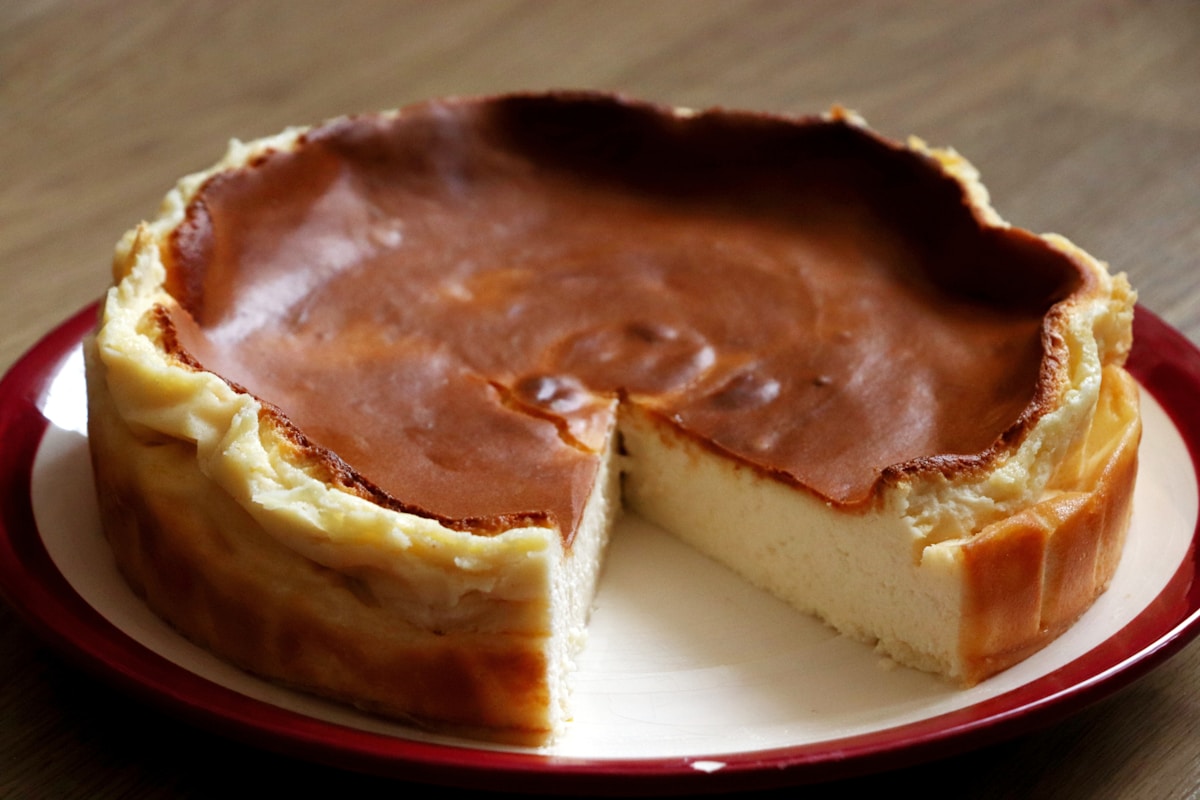
Parchment is central to a parchment-lined cheesecake pan. It makes release easier, protects the sides, and gives Basque cheesecake its intentionally crinkled, informal shape. Smooth, perfectly vertical edges are not the goal.
Start with parchment rated by its manufacturer for your recipe’s oven temperature. Check the box or product instructions rather than assuming every parchment paper has the same heat limit.
Here is a simple lining method:
- Assemble the springform pan and make sure the latch is closed.
- Lightly grease the base and sides if your recipe calls for it. A thin coating can help the parchment stay in place.
- Use one large sheet of parchment or two overlapping sheets for better coverage. Press the paper into the base and up the sides.
- Leave several inches of parchment above the rim. This extra height helps contain the batter as it rises and gives you something to hold during removal.
- Pleat and crease the paper as needed so it sits inside the pan without springing loose.
- Set the lined pan on a rimmed baking sheet, then pour in the batter.
Wrinkles are expected. They help create the uneven edge associated with this style of cheesecake. The practical concern is simply that the parchment stays in place and does not fold so far inward that it blocks a large area of batter.
Two overlapping sheets are useful when one sheet is not wide enough to rise well above the rim. If you layer parchment, press it firmly into the corners and keep the overlaps broad enough that batter is less likely to push between them.
Because parchment limits direct contact between batter and pan, do not rely solely on the pan’s coating for release. Let the cheesecake cool according to its recipe, open the ring carefully, and peel the parchment away gradually rather than tugging at a warm, soft cake.
Buyer checklist, care, and when to replace a springform pan
Before purchasing a springform pan for cheesecake, use this quick checklist:
- Confirm that the stated diameter suits the recipes you bake most often.
- Check the interior side height; about 3 inches is a useful target for many Basque cheesecakes.
- Verify the manufacturer’s oven-temperature rating.
- Open and close the latch to confirm smooth, secure operation.
- Set the base on a flat surface and check for rocking or visible warping.
- Inspect how cleanly the ring fits around the base.
- Review the coating type and care instructions.
- Check whether replacement bases or parts are available if that matters to you.
For frequent baking, prioritize a reliable latch and durable construction over decorative finishes, oversized accessory sets, or sweeping leakproof claims. A pan that stores easily and works predictably is better long-term value.
Cleaning depends on the manufacturer’s instructions, especially for coated pans. Follow the stated guidance on hand washing, dishwasher use, soaking, and acceptable utensils. Unless the maker specifically says otherwise, avoid abrasive scrubbers and metal utensils on a coated interior because they can damage the finish.
Pay attention to the latch and seam during cleaning. Batter residue can collect in those areas, so rinse and dry them thoroughly. Do not store the pan damp, since trapped moisture around the hardware can make future cleanup more difficult.
For storage, dry the base and ring completely. Store them where the rim will not be bent, and avoid placing heavy cookware directly on a coated interior. If stacking is unavoidable, place a soft towel or pan protector between pieces.
Replace the pan when the base is warped or unstable, the ring is bent, the latch no longer closes securely, or the coating is visibly damaged. Cosmetic marks do not automatically mean a pan is unusable, but damage that affects assembly, stability, or cleanup is a practical reason to move on. Also replace a pan that continues to seep after correct assembly.
FAQ
What size springform pan is best for Basque cheesecake?
A 9-inch springform pan is a common choice for home baking, especially when it has sides around 3 inches tall. However, the recipe should control the decision. Choose a 10-inch pan when the recipe specifies it, since changing diameter changes cheesecake thickness and can affect baking time and texture.
Do I need a leakproof springform pan for Basque cheesecake?
You need a well-assembled, leak-resistant pan, but do not expect any removable-base design to be absolutely leakproof. Check the base and latch before filling, use tall parchment, and bake the pan on a rimmed sheet pan to contain an occasional drip.
Can I bake Basque cheesecake in a regular cake pan instead?
Yes, a deep fixed-bottom round cake pan can work when the recipe permits it. Basque cheesecake does not typically need a water bath, which makes a fixed pan a practical alternative. Make sure it is deep enough, line it with tall parchment, and plan how you will lift or serve the cheesecake without flipping it upside down.