


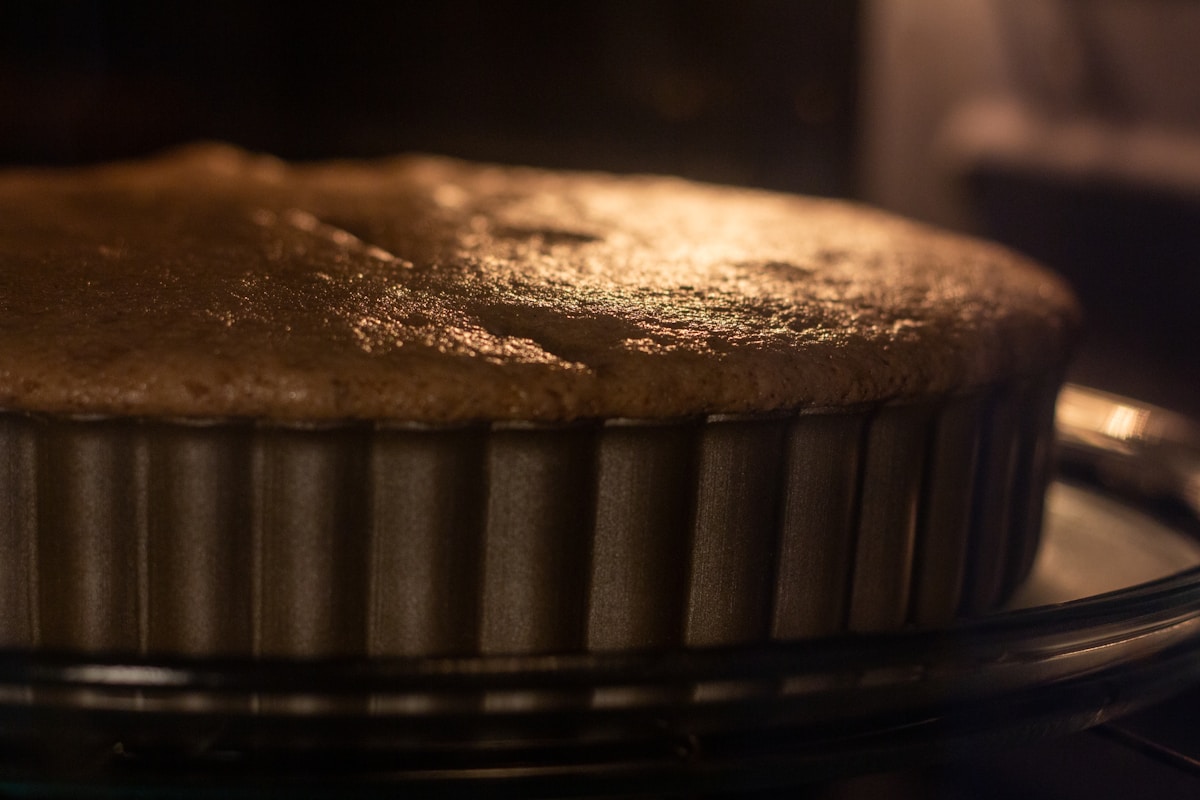
You’ve done everything right. You followed the recipe to the gram, used room temperature eggs, and sifted your flour. You divide the batter perfectly between three identical pans and slide them into your preheated oven with a hopeful heart. Thirty minutes later, you pull them out and face the classic baker’s frustration: one cake is perfectly flat, one has a dome worthy of a national monument, and the third looks like a geological slump.
Sound familiar? Before you blame the recipe or your baking skills, I’m here to tell you something that might be a relief: it’s probably not you. More often than not, the culprit behind uneven, domed, or lopsided cakes is your equipment and your oven’s unique personality. The good news is that these are problems you can fix. Getting flawlessly flat cake layers isn’t about buying expensive new gear; it’s about understanding heat and using the right tools for the job. Let’s break down the science and get you baking stackable, professional-looking layers for good.
Your Oven Is Lying to You (And Creating Hot Spots)
The first hard truth of baking is that your oven’s temperature dial is, at best, a hopeful suggestion. When you set your oven to 350°F (177°C), it doesn’t just magically hold that exact temperature. The heating element cycles on and off, causing the temperature to swing, sometimes by as much as 25-50 degrees. What you see on the dial is just the average temperature the oven is aiming for.
Worse yet, virtually every home oven has hot spots. These are areas that get significantly hotter than others due to the location of the heating elements and quirks in air circulation. This is why you might find one cake browning much faster than another, or why the back of a single cake is dark while the front is pale. The only way to know what’s really happening inside that box is to get an independent oven thermometer.
This is the single best $10 you will ever spend on your baking. Brands like Taylor Precision or KT THERMO make reliable dial thermometers you can hang from a rack or stand on it. Here’s how to use it:
- Find the True Temp: Place the thermometer in the center of the middle rack and preheat your oven to 350°F (177°C). Wait a full 20-30 minutes for it to stabilize. Now, look at the thermometer. If it reads 325°F, you know your oven runs cool and you need to set the dial to 375°F to achieve a true 350°F. If it reads 370°F, you know it runs hot.
- Map Your Hot Spots: Move the thermometer to different corners of the oven—back left, front right, etc.—to see where the temperature is highest. This knowledge is your superpower.
Knowing your oven’s true temperature is non-negotiable for consistent results. (Your future self, pulling out a perfectly baked cake, will thank you.)
The Great Pan Debate Dark Metal vs Light Aluminum
Not all cake pans are created equal. The material, color, and finish of your pan have a massive impact on how your cake bakes. The biggest division is between dark-coated metal pans and light-colored, reflective aluminum pans.
Dark Metal Pans: These are often non-stick and made of steel or coated aluminum. The dark surface is the key issue here. Dark colors absorb and radiate heat much more aggressively than light colors. This causes the edges and bottom of your cake to cook and set very quickly, long before the center has had a chance to bake through. The batter in the middle has nowhere to go but up, creating that classic dome and often a cracked surface.
Light Aluminum Pans: This is the professional standard for a reason. Light-colored, uncoated aluminum reflects heat rather than absorbing it so intensely. This allows for a more gentle, even transfer of heat from the pan to the batter. The entire cake—edges, bottom, and center—rises at a more consistent rate. The result is a flatter top, a more tender crumb, and less browning on the sides.
For my money, the best value and performance comes from professional-grade anodized aluminum pans. Brands like Fat Daddio’s and Nordic Ware’s Naturals line are fantastic and surprisingly affordable, usually running between $12-$20 per pan. Anodizing is a process that hardens the aluminum, making it non-reactive, scratch-resistant, and even better at heat distribution. I once baked two identical yellow cake batters side-by-side, one in a dark non-stick pan and one in a Fat Daddio’s pan. The difference was staggering: the dark pan produced a domed, slightly dry cake, while the aluminum pan produced a perfectly flat, moist, and tender layer.
If you only make one change, switch to light-colored aluminum pans. It’s a game-changer.
Mastering Airflow When Baking Multiple Layers
When you place multiple pans in the oven, you’re creating obstacles that disrupt the flow of hot air. If you put three pans on one rack, they’ll be crowded, trapping steam and preventing heat from circulating evenly. If you place one pan directly above another on a different rack, the top pan will shield the bottom one from radiant heat.
Proper pan placement is crucial for even baking:
- Stagger, Don’t Stack: If using two racks, place the pans in a staggered configuration. For example, place one pan on the top rack on the left side, and the other pan on the bottom rack on the right side. This allows air to flow freely around both pans.
- Give Them Space: Ensure there is at least one inch of space between the pans themselves and between the pans and the oven walls.
- The Golden Rule of Rotation: No matter how well you place your pans, your oven’s hot spots will still have an effect. The solution is simple: rotate the pans halfway through the baking time. Set a timer for the halfway mark. When it goes off, open the oven, turn each pan 180 degrees, and if they’re on different racks, swap their positions (top pan goes to the bottom, bottom goes to the top). This simple action ensures that no single part of any cake is exposed to a hot spot for too long, promoting incredibly even results.
The Secret Weapon Cake Strips
Even with the right pans and perfect rotation, you can still get a slight dome. If you’re after flawlessly, perfectly, ruler-flat layers for a show-stopping tiered cake, you need cake strips.
These are insulated bands that you wrap around the outside of your cake pan. They work by cooling the sides of the pan. By slowing down the baking process at the edges, the strips force the cake to rise evenly all at once, from the center to the sides, instead of having the edges set first. This completely eliminates doming.
You can buy commercial versions like Wilton Bake-Even Strips for about $10-$15 a set. They’re made of fabric, and you simply soak them in cold water, wring out the excess, and fasten them around your pans before filling with batter.
Kitchen Hack: DIY Cake Strips Don’t want to buy them? You can make your own with items you already have.
- Get an Old Towel: Find an old, clean 100% cotton kitchen towel or bath towel (avoid synthetics which can melt). Cut it into long strips that are about 1.5 inches wide and long enough to wrap around your cake pan.
- Soak and Squeeze: Soak the cotton strips thoroughly in cold water. Then, squeeze them out so they are very damp but not dripping wet.
- Wrap in Foil: Take a long piece of aluminum foil and fold it lengthwise to create a strip slightly wider than your towel strip. Place the damp towel strip inside the foil and fold the foil over to completely encase it.
- Secure to Pan: Wrap the foil-encased strip tightly around the outside of your cake pan and secure it with a metal paperclip or by folding the foil back on itself. (Yes, really.)
This DIY version works just as well as the commercial ones, insulating the pan and guaranteeing a flat top every time.
Putting It All Together A Foolproof Test
Ready to see the magic? Let’s run a test. Grab your favorite vanilla cake recipe or even a quality box mix like one from Ghirardelli or King Arthur.
- Calibrate: Preheat your oven with your independent thermometer inside. Let’s aim for a true 350°F (177°C). Adjust your oven dial as needed to hit that target.
- Prepare Pans: Take two 8-inch light-colored aluminum pans. Grease and flour them, or line with parchment. Wrap each pan with a soaked cake strip (commercial or DIY).
- Mix Batter: Prepare your cake batter, being careful not to overmix once the flour is added. Overmixing develops gluten and can lead to a tough cake. Mix only until the last streaks of flour disappear.
- Fill and Place: Divide the batter evenly between the two prepared pans. Place them on the middle rack of your oven, leaving space between them.
- Bake and Rotate: Bake according to the recipe’s instructions (usually 28-32 minutes for 8-inch rounds). Set a timer for the halfway point, say 15 minutes. At the 15-minute mark, rotate each pan 180 degrees.
- Check for Doneness: The cake is done when a wooden skewer inserted into the center comes out clean or with a few moist crumbs attached.
Let the cakes cool in their pans for about 10 minutes before turning them out onto a wire rack to cool completely. What you should have are two beautiful, perfectly flat cake layers. No leveling with a serrated knife needed. No wasted cake scraps. Just pure, stackable perfection.
Ultimately, baking is a science of heat management. By understanding how your oven works and choosing tools that help you control the heat, you can eliminate the most common frustrations. It isn’t about spending a fortune; it’s about spending wisely on the things that matter—a good thermometer and a couple of quality aluminum pans. Now go forth and bake with confidence.


