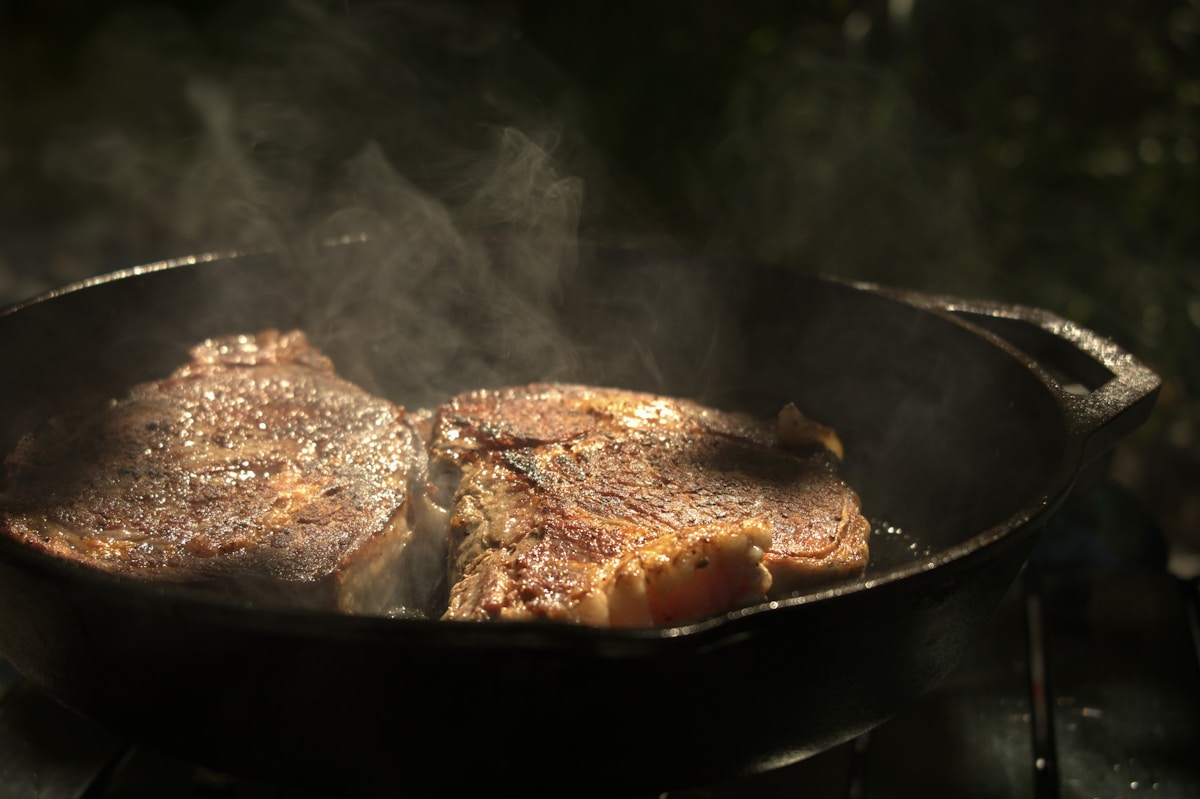
The pan is hot, the steak is ready, and suddenly the kitchen smells like a diner grill at full tilt. A little smoke is normal when building a serious crust, but thick, eye-stinging smoke usually means the oil, pan temperature, or preparation needs adjusting.
For most home cooks, grapeseed oil is the best oil for searing steak. It is neutral, well suited to high-heat cooking, and lets the beef flavor stand out. Refined avocado oil is an excellent premium alternative, while canola or vegetable oil are practical, low-cost choices.
Key Takeaways
- Grapeseed oil is the best overall choice for a neutral flavor and dependable high-heat searing.
- Refined avocado oil works very well, but it is not required for a great steak crust.
- Canola and vegetable oil are solid budget options when used in a thin layer.
- Butter and beef tallow are best added after the initial sear for flavor with less risk of scorching.
- Dry steak, a clean pan, controlled heat, and ventilation matter as much as the oil.
The short answer choose a neutral refined oil for the initial sear
Use grapeseed oil if you want the simplest all-around answer. It has a mild flavor, performs well for a hot pan sear, and works in cast iron or stainless steel. Apply it in a very thin layer rather than pouring a large puddle into the pan.
Refined avocado oil is the upgrade choice if the price works for your budget. It is commonly chosen for high-heat cooking and has a subtle flavor, but it is not necessary for a deeply browned crust. A properly dried steak in a clean pan with inexpensive canola oil can outperform an expensive oil used in an overheated, greasy pan.
Canola oil and standard vegetable oil are dependable everyday options. They are easy to find, affordable, and mild enough to let beef flavor come through. If grapeseed oil is reasonably priced where you shop, choose it; if not, canola is a sensible fallback.
Save butter for later. Butter adds richness, but its milk solids can brown and smoke quickly during the hottest stage of searing. Build the crust first with neutral oil, then lower the heat and add butter, herbs, garlic, or a little beef tallow for the finish.
What the best oil for searing steak needs to do
The best oil for searing steak needs four things: useful high-heat performance, a flavor that fits the steak, easy handling in a thin film, and a price that makes sense for your cooking routine. You do not need a specialty bottle for every weeknight steak.
Smoke point matters, but treat it as a practical guide rather than a fixed promise. Refined oils generally suit hotter cooking better than unrefined or extra-virgin oils. Published smoke-point figures vary by refinement, brand, age, storage, and conditions in your pan, so avoid relying on one exact number.
Use less oil than you may think. For one steak, about 1 to 2 teaspoons is often enough to lightly coat the meat or create a thin sheen across the pan. Excess oil can pool, splatter, catch drippings, and create more smoke without improving the crust.
You can oil the pan or lightly oil the steak. Oiling the steak is especially useful indoors because it limits the amount of loose oil sitting on hot metal. Coat both broad sides lightly, then season the steak just before it goes into the pan.
A dry surface matters just as much as the oil. Pat the steak thoroughly with paper towels before oiling. Surface moisture must evaporate before browning begins, and that delay can tempt cooks to raise the heat too far while the pan collects steam, drippings, and smoke.
Best oils for searing steak side by side
Here is the practical comparison. “Smoke behavior” means how forgiving the oil tends to be during a normal indoor sear, not a guarantee that it will not smoke.
| Oil or fat | Flavor | High-heat suitability | Cost and availability | Indoor-smoke behavior | Cleanup | Best use |
|---|---|---|---|---|---|---|
| Grapeseed oil | Very neutral | Strong choice for hard searing | Mid-priced; availability varies | Usually forgiving when used sparingly | Easy | Best overall for cast iron or stainless |
| Refined avocado oil | Mild to neutral | Strong choice for high heat | Often more expensive | Forgiving, but still smokes if the pan is too hot | Easy | Premium all-purpose option |
| Canola oil | Mild and neutral | Good everyday choice | Low cost and widely available | Good with sensible heat control | Easy | Best budget option |
| Vegetable oil | Usually neutral | Good, but blend varies | Low cost and widely available | Depends somewhat on the blend | Easy | Convenient pantry substitute |
| Refined olive oil | Mild, slightly more distinct | Suitable when labeled for higher heat | Moderate cost | Can work well; check the label | Easy | When you prefer olive oil and have refined oil |
| Beef tallow | Rich and beefy | Better with temperature control | Varies by source | Can leave more residue and smoke sooner than refined oils | More residue | Flavorful finish or controlled sear |
Grapeseed oil for steak: This is the balanced pick. Its neutral flavor keeps the focus on the beef, and it is a practical choice when you want a strong initial sear without adding another flavor note. Its main drawback is that it can cost more than canola and may not be stocked everywhere.
Avocado oil for steak: Choose refined avocado oil if you regularly cook at high heat and do not mind paying more. It is useful for indoor cooking, but it is not a magic smoke solution. If the pan is already smoking heavily before the steak lands, avocado oil will not solve the underlying temperature problem.
Canola oil for searing: Canola is the value leader. It has a mild taste and is easy to replace, making it realistic for cooks who do not want a separate specialty oil for steak night. Use a thin coating and keep the pan clean between batches.
Vegetable oil: Vegetable oil is often a blend, so its exact behavior can differ by brand. Still, it is generally a convenient neutral option for searing when that is what you have. If the label indicates it is intended for general cooking, use a moderate pan temperature and a light hand with the oil.
Refined olive oil: Refined olive oil can work for steak when the bottle is labeled as refined or suitable for higher-heat cooking. It is different from extra-virgin olive oil, which has a stronger flavor and can be less predictable for a very aggressive sear. For the cleanest, most neutral result, grapeseed or canola is simpler.
Beef tallow: Tallow brings a satisfying beefy flavor and can create a rich finish. It is not the easiest choice for a very hot indoor sear because residue and rendered fat can add to the smoke. Use a small amount after the crust begins to form, or use it from the start only with closer temperature control.
The ranking is straightforward: grapeseed is best overall, refined avocado oil is the best premium option, canola or vegetable oil are the best budget picks, and beef tallow is best for flavor when you can manage the heat carefully.
Use butter and beef fat at the right point in the sear
Butter belongs after the initial crust, not at the start. A steak pan needs to be hot enough to brown the surface efficiently, while butter’s milk solids can darken quickly and turn the pan smoky before the steak has developed a proper crust.
Use this sequence for a thick steak: sear the first side in a thin layer of neutral refined oil, turn it, and sear the second side. Once both sides are browned, reduce the burner to medium or medium-low, then add 1 to 2 tablespoons of butter with optional garlic, thyme, or rosemary.
Tilt the pan and spoon the foaming butter over the steak for about 30 to 60 seconds, watching closely. The exact timing depends on steak thickness and how hot the pan remains. If the butter darkens very fast or smoke rises sharply, take the pan off the heat briefly rather than trying to power through.
A small spoonful of tallow can be used in the same later stage if you want extra beef flavor. Remember that the steak itself releases fat, and browned bits left from a prior batch can burn. Even the right steak-searing oil cannot protect you from old residue in the pan.
Match the oil and technique to your pan and indoor setup
Cast iron, stainless steel, and broiler-finishing methods all benefit from a neutral oil, but they behave differently in a home kitchen.
| Method | Best oil choices | Practical approach |
|---|---|---|
| Cast iron | Grapeseed, refined avocado, canola, vegetable oil | Use a very thin coating. Cast iron retains heat strongly, so reduce heat if oil or residue begins smoking heavily. |
| Stainless steel | Grapeseed, canola, vegetable, refined avocado oil | Preheat steadily, then add or apply enough oil for a thin film. Avoid a large pool of oil. |
| Stovetop to broiler | Grapeseed, canola, vegetable, refined avocado oil | Sear on the stove, then finish under the broiler only if the pan and handle are rated for broiler use. |
Cast iron is excellent at holding heat, which helps build a bold crust. The trade-off is that it can stay too hot after you lower the burner, especially on an electric cooktop. If smoke ramps up, move the pan to a cooler burner or remove it from heat for a moment.
Stainless steel responds faster to burner changes but can develop sticking if the steak is moved too soon. Let the first side make contact and brown before trying to turn it. A steak that releases easily is often ready to flip.
For a broiler finish, check your cookware manufacturer’s instructions first. Handle materials, coatings, and oven-safe limits vary. Do not assume every skillet that works on the stovetop is suitable under a broiler.
Here is how to reduce steak smoke without giving up the crust:
- Pat the steak very dry before oiling and seasoning.
- Trim large dangling pieces of exterior fat that may render and burn rapidly.
- Start with a clean, dry pan. Burned residue from earlier cooking smokes early.
- Use one steak at a time in a typical skillet. Overcrowding traps moisture and slows browning.
- Apply only a thin coat of oil to the steak or pan.
- Heat the pan until hot, but do not wait for a heavy, continuous cloud of smoke before adding the steak.
- Turn on the range hood or kitchen vent before preheating, not after smoke fills the room.
- If smoke becomes aggressive, lower the heat, move the pan briefly, and check whether old residue or rendered fat is burning.
Hot oil deserves attention. Keep the pan handle turned away from traffic, do not leave the pan unattended, and keep children and pets clear of the cooking area. If a grease fire occurs, do not use water. Turn off the heat if it is safe to do so, cover the pan with a lid if appropriate, and follow local fire-safety guidance. Keep an appropriate extinguisher accessible and know how to use it before an emergency.
FAQs
Is avocado oil necessary for searing steak?
No. Refined avocado oil is a strong high-heat option, but grapeseed, canola, and vegetable oil can all produce an excellent steak crust. Buy avocado oil if you like it and the price fits; do not assume your steak will be disappointing without it.
Why does my steak smoke even when I use a high-heat oil?
The oil may not be the main cause. Wet steak surfaces, an overheated pan, scorched residue, rendered steak fat, too much oil, and weak ventilation all contribute. Dry the steak, clean the pan, use less oil, and begin ventilating before preheating.
Can I sear steak in butter or extra-virgin olive oil?
You can, but neither is the easiest choice for the hottest stage of an indoor sear. Butter can brown and smoke quickly, while extra-virgin olive oil has a stronger flavor and is less predictable under aggressive heat. For a simpler result, start with a neutral refined oil and add butter after the crust forms.