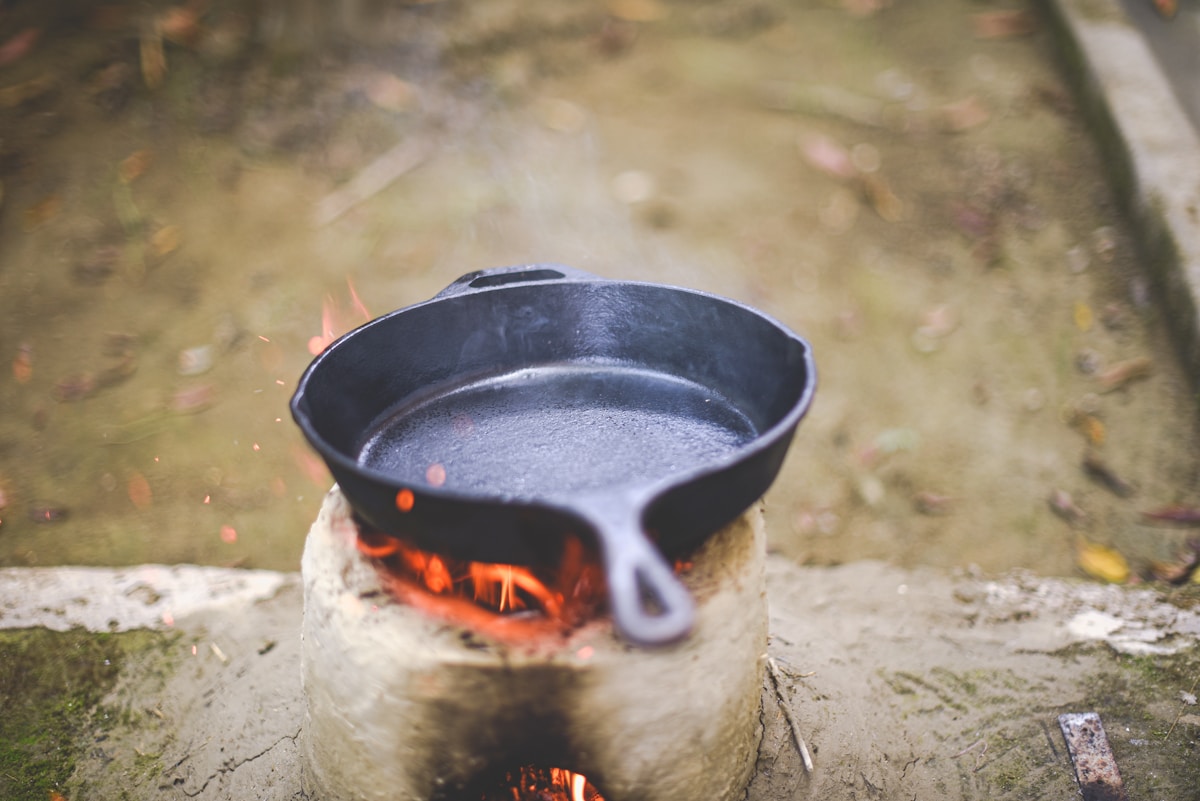
You finish frying eggs, slide them onto a plate, and notice tiny black specks clinging to the food. Then you wipe the skillet and more dark flakes come away on the towel. It is easy to assume the seasoning is failing—or that the pan is ruined.
Usually, black flecks in cast iron are a cleaning and surface-maintenance issue, not an automatic reason to replace the skillet. They may be loose burnt food and oil residue, raised carbon buildup, or poorly bonded seasoning. The useful test is not color alone: smooth, firmly attached darkness is usually stable; rough, raised, or shedding material needs attention.
Key Takeaways
- Smooth, dark seasoning that stays bonded to the pan is usually not a problem, even if its color is uneven.
- Rough, gritty, raised, or shedding black material is more likely to be carbon buildup, stuck residue, or unstable seasoning.
- Start with hot water, a stiff brush, and targeted scraping before stripping the entire skillet.
- Reseason only after cleaning reveals bare iron, rust, persistent flaking, or a dry-looking surface that needs protection.
- Prevent future flakes by removing stuck food promptly, drying the pan completely, and using very thin oil coats.
Start Here: What Black Flecks Usually Mean
Cast iron seasoning is not a factory-applied nonstick coating. It is a thin, dark layer that develops as oil is heated on the iron. A seasoned skillet can be dark brown, black, patchy, or slightly glossy without having a surface problem.
What matters is whether the dark layer feels smooth and attached. If it stays put through normal washing and feels relatively even under your fingers, it is likely doing its job. Color alone is a poor test because a skillet can look black whether it has stable seasoning, burnt residue, or a mix of both.
A cast iron pan black residue problem is more likely when material transfers to food, wipes away in powdery streaks, lifts in flakes, or feels gritty and raised. This can happen after food burns onto the pan, oil repeatedly collects in one spot, or fresh oil is heated over residue that was never fully removed.
Do not assume every speck is harmless seasoning, but do not strip the pan over a few flecks either. Begin with inspection and cleaning, then decide whether the exposed surface needs a light maintenance coat or more complete reseasoning.
How to Tell Seasoning, Carbon Buildup, and Surface Damage Apart
Let the skillet cool before inspecting it. Wipe the cooking surface with a light-colored paper towel. This will not identify every material with certainty, but it offers a useful clue when combined with touch and cleaning.
Healthy seasoning is generally thin, dark, and relatively smooth. It may not look perfectly even, especially in a frequently used skillet. The important point is that it feels attached rather than crusty and does not repeatedly shed onto food or towels.
Carbon buildup on cast iron usually feels different. It is often rough, raised, hard, and uneven—more like a crust than part of the pan. Check the center of the cooking surface, sidewalls, pour spouts, and any place where food commonly sticks or oil tends to pool.
Carbon buildup may come off as black crumbs, gritty dust, or irregular chunks during washing or scraping. A dark pan beneath the flakes does not prove that the flakes are healthy seasoning; it may simply mean one dark layer is sitting on another.
Cast iron seasoning flaking often appears as thin sheets or peeling patches. It can happen when seasoning was applied too heavily, oil remained wet-looking before heating, or a layer did not bond well. The exposed area may still look dark, or it may reveal dull gray iron.
Use these clues after basic cleaning:
- Smooth and dark: Likely stable seasoning. Continue normal care.
- Rough and raised: Likely stuck food, oil residue, or carbon buildup that should be removed.
- Loose flakes or peeling sheets: A layer is not well bonded; targeted scrubbing and reseasoning may be needed.
- Dull gray metal: Seasoning has worn away in that area, so the pan should be dried and protected.
- Orange rust: Remove it according to the cookware maker’s care directions, dry the skillet thoroughly, and reseason the affected area or cooking surface.
A quick check is simple: wipe the cool skillet, wash it with hot water and a stiff brush, dry it, and inspect again. If the surface becomes smoother and stops shedding material, you were likely dealing with loose residue. If flakes keep appearing or bare spots show through, move on to reseasoning.
Clean Black Flakes From Cast Iron, Starting With the Gentlest Method
The goal is to remove loose, rough material—not preserve every black mark and not strip stable seasoning unnecessarily. Work from mild cleaning to more focused scrubbing.
Step 1: Use hot water and a stiff brush. Clean the pan while it is warm enough to handle safely, not dangerously hot. Hot water helps loosen cooking residue before it hardens. Scrub the cooking surface, corners, and sidewalls with a stiff cookware brush.
Pay extra attention to spots where eggs, cheese, sugar, sauces, or heavily browned food were cooked. Rinse, then run your fingertips over the surface. A smoother surface is a good sign that the loose buildup is coming away.
Step 2: Scrape stuck-on buildup. For stubborn patches, use a pan scraper or another tool intended for cast iron. Focus on the raised patch instead of attacking the whole skillet. Short, controlled scraping is more useful than trying to remove all dark color from the pan.
Avoid using a kitchen knife. It can slip, damage the work surface, and create a cut hazard. A dedicated scraper is safer and useful for routine pan maintenance.
Step 3: Escalate only on rough areas. If brushing and scraping leave a hard, crusty patch, scrub that section more thoroughly. The goal is to remove loose carbon and stuck residue until the cooking surface feels reasonably even.
Follow the current care instructions from your skillet manufacturer for soap and abrasive tools. Many modern cast iron care guides allow a small amount of mild soap when needed. Avoid putting cast iron in the dishwasher or leaving it to soak for long periods, particularly if bare iron is exposed, because moisture can encourage rust.
Step 4: Dry completely. Towel-dry the skillet right away. Then warm it briefly over low heat to evaporate remaining moisture, keeping an eye on it rather than leaving it unattended. This is especially useful around the rim, handle junction, and pour spouts, where water can linger.
Step 5: Inspect after cleaning. If the skillet is smooth, dark, dry, and no longer leaves black flecks, stop there. A full reseasoning session is not needed every time you remove residue.
If cleaning reveals gray iron, rust, widespread peeling, or continuing flakes, the skillet needs more than routine cleanup. At that point, consider a maintenance seasoning coat or a strip-and-reseason approach.
When to Reseason or Strip and Reseason Your Cast Iron Skillet
A light maintenance coat is enough when the skillet is clean and smooth but looks dry, dull, or slightly patchy. This is common after thorough cleaning. Apply a very small amount of cooking oil, then wipe it away firmly with a clean cloth or paper towel. The skillet should look barely coated, not wet or greasy.
Too much oil can create sticky, uneven layers. If the skillet looks shiny with pooled oil before heating, wipe it again. A thin coat is more likely to bond evenly instead of baking into a tacky film that can trap residue and later flake.
When you need to reseason a cast iron skillet after cleaning, follow the temperature, timing, ventilation, and oven-placement guidance from its manufacturer. A common approach is to heat a very thinly oiled skillet upside down in a hot oven for about an hour, using a lower rack to catch any drips. Use oven mitts and remember that the pan stays hot long after the oven is turned off.
A full strip-and-reseason is more work and is not the default answer to a few black specks. Consider it when these problems remain after targeted cleaning:
- Widespread peeling across the cooking surface
- Persistent black flakes that return immediately after cleaning
- Heavy, rough buildup over much of the pan
- Large areas of exposed gray iron
- Rust beyond a small isolated spot
- A sticky surface that does not improve after cleaning away excess oil
For full stripping methods, use the cookware maker’s current instructions rather than improvising with harsh chemicals or aggressive heat. Different pans and manufacturers may have different recommendations, and unnecessary stripping can remove stable seasoning along with the buildup.
Normal seasoning wear does not mean a cast iron skillet needs replacement. Cracks, severe warping that prevents the pan from sitting stable, or damage that cannot be cleaned and restored are different concerns. Check the manufacturer’s guidance for your cookware model before continuing to use or replacing it.
Prevent Black Residue From Returning
The best way to prevent black flecks cast iron owners dislike is to avoid building new seasoning over old residue. Cleanup habits matter more than repeatedly adding oil.
Clean the skillet promptly after sticky, sugary, burnt, or heavily browned cooking. You do not need to scrub a clean pan until it looks silver-gray, but food bits and raised patches should be removed before they become a hard carbon layer.
Use enough cooking fat for the food and heat level, especially with delicate foods such as eggs or fish. At the same time, avoid leaving a thick oil film in the skillet after cooking. Leftover oil can become gummy, hold debris, and contribute to uneven buildup.
Dry the pan fully every time. Towel drying followed by a brief low-heat warm-up takes only a few minutes. Store the skillet in a dry place instead of putting it away while moisture may still be trapped on the surface.
Use very thin oil coats only when the pan needs them. Regular cooking and proper cleanup gradually support the seasoned surface. Heavy oil applications do not speed up the process; they often create the sticky, flaky layers that lead to another round of troubleshooting.
FAQ: Are Black Flecks From a Cast Iron Pan Dangerous?
It is not possible to identify every black fleck by appearance alone. Clean away loose residue before cooking again, especially if it is gritty, flaky, or regularly transferring to food.
If you suspect an unknown coating, find significant rust, or notice structural damage such as cracks, stop guessing and consult the cookware manufacturer’s guidance. A few dark spots do not automatically mean a cast iron pan is ruined, but persistent shedding deserves attention.
FAQ: Why Does My Cast Iron Pan Leave Black Residue on Food?
Likely causes include loose carbon buildup, burnt-on food and oil, excess seasoning layers, or a rough surface that was not fully cleaned after previous cooking. Start with hot water, a stiff brush, and targeted scraping before deciding that the skillet needs full reseasoning.
If black residue continues after cleaning and drying, inspect the pan for peeling or rough patches. Remove loose material first, then apply a thin maintenance coat only if the cleaned surface looks dry or exposed.
FAQ: Should I Strip My Cast Iron Skillet if Seasoning Is Flaking?
Not always. A small flaky or rough area may respond to targeted cleaning, complete drying, and a very thin reseasoning coat. This lower-effort option preserves stable seasoning elsewhere on the pan.
Consider stripping and reseasoning when peeling is widespread, rust is present, or flakes continue after you remove the rough buildup. Use current manufacturer directions for stripping and oven seasoning, and avoid thick oil layers when rebuilding the surface.