A cast iron skillet can look perfect in the store and become surprisingly awkward once it is full of potatoes, chicken, or a hot steak. The largest pan is not automatically the most useful, and the smallest one is not always easier in practice.
For most cooks, the best cast iron skillet size is 10 inches if you want one versatile pan for one or two people. Choose a 12-inch skillet for a family cast iron pan or regular batch cooking. An 8-inch skillet is excellent for small portions, while larger pans make sense only when you routinely cook for a crowd and have the storage and lifting capacity to match.
The right choice depends on more than the number stamped on the pan. Household portions, actual cooking surface, burner fit, weight, handle design, oven clearance, storage, and whether you need a lid all matter.
Key Takeaways
- Choose an 8-inch skillet for eggs, single servings, small sides, and individual desserts.
- A 10-inch skillet is usually the most versatile single-pan choice for one or two people.
- A 12-inch skillet is generally better for family meals, leftovers, and batch cooking.
- The labeled diameter is not the same as the usable cooking surface, so compare the pan’s interior dimensions when possible.
- A lid is useful for braising and simmering but is not required for searing, sautéing, roasting, or many baking tasks.
Cast Iron Skillet Sizes: What the Diameter Means in Practice
A skillet’s advertised diameter usually refers to the top rim, not the flat cooking surface. Two pans labeled 10 inches can have different interior shapes because of differences in wall slope, thickness, depth, and rim design. Always check the manufacturer’s measurements when specifications are available, especially if you need a lid or have limited storage.
As a practical guide, common cast iron skillet sizes work like this:
| Size | Typical household use | Common dishes | Handling and storage considerations |
|---|---|---|---|
| 8 inches | One small serving or a side dish | Two eggs, one steak, sautéed vegetables, individual desserts | Easy to lift and store, but limited for batch cooking |
| 10 inches | One or two people | Eggs, two steaks, chicken pieces, cornbread, skillet meals | Versatile without being as demanding as a large pan |
| 12 inches | Two to four people, depending on the meal | Larger skillet dinners, several pieces of meat, vegetables, baking | More room, but heavier and harder to store when full |
| 13 inches and larger | Crowds, party cooking, or specialized recipes | Large batches, deep-dish dishes, pan pizza, substantial roasting | Requires suitable burners, oven space, and sturdy storage |
These are working ranges rather than fixed serving rules. A shallow 12-inch skillet may not hold the same amount as a deeper model, and ingredients vary greatly in volume. Surface area is often more important than total capacity when you are browning food because ingredients need room instead of being packed together.
A smaller skillet can preheat, wash, dry, and lift more easily. A larger one gives you more room to spread food into a single layer, but its extra weight becomes noticeable when it contains hot oil or a complete meal.
The Best Size for One or Two Portions
An 8-inch skillet is large enough for many solo cooking jobs. It can handle a couple of eggs, a single burger or steak, a small portion of vegetables, reheating a side dish, or an individual baked dessert. It also takes up little cabinet or rack space and is easier to move from the stovetop to the oven.
The limitation is crowding. You may be able to cook two eggs comfortably, but adding potatoes, vegetables, or meat can quickly reduce the open surface. Crowding can make turning ingredients awkward and may encourage steaming when you wanted browning. An 8-inch pan is best when your portions are genuinely small or when you already have another larger skillet.
For many solo cooks and couples, a 10-inch skillet is the more flexible everyday option. It gives you enough surface for a larger breakfast, a couple of steaks, chicken pieces, vegetables, cornbread, or a one-pan meal without taking up the space of a 12-inch model. It is also a sensible starting point if you are unsure how often you will use cast iron.
The key question in the 10-inch versus 12-inch skillet decision is not whether either pan can cook a particular dish. Both can cook eggs, meat, vegetables, and baked recipes. The question is whether your usual quantity fits comfortably without crowding and whether you can lift the pan comfortably after cooking.
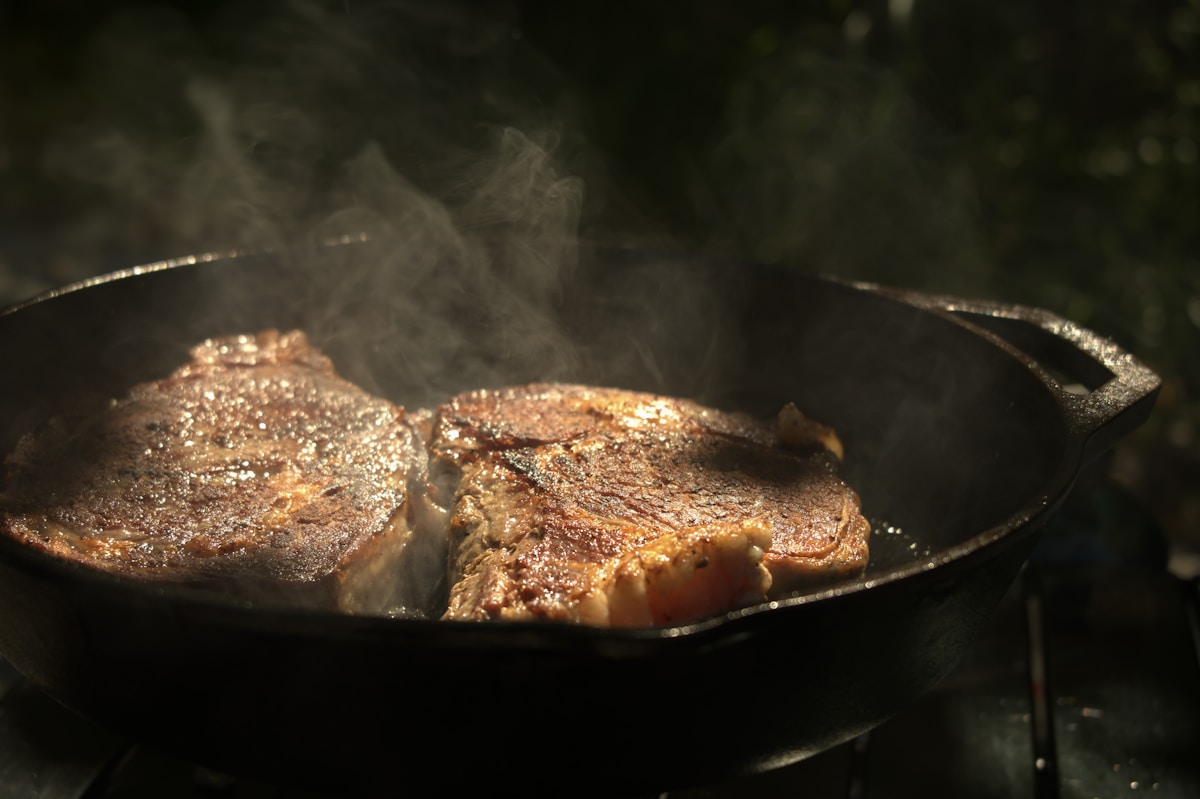
For the best skillet for steak, choose a diameter that lets each steak sit with visible space around it. One steak fits comfortably in many 8-inch skillets, while two steaks are more practical in a 10-inch or 12-inch pan depending on their size. If the meat nearly touches the walls or other pieces, choose the larger surface or cook in batches. Do not buy a large skillet only for occasional steak cooking if its weight and storage would make everyday use inconvenient.
The Best Family Cast Iron Pan for Batch Cooking
A 12-inch skillet is generally the better family cast iron pan when you regularly cook larger portions. The extra surface helps with several chicken pieces, a larger amount of vegetables, family-size hash, skillet pasta, or recipes that need ingredients spread across the base. It is also more forgiving when a recipe grows because of extra vegetables or leftovers.
For two people, a 10-inch skillet will usually be easier to handle and large enough for ordinary dinners. A 12-inch pan becomes attractive if you cook in batches, prefer leftovers, prepare large breakfasts, or often brown multiple ingredients at once. For three or four people, the 12-inch size usually offers a more comfortable working area, but the best choice still depends on appetite, recipe style, and whether you serve side dishes separately.
A 10-inch pan may be better than a 12-inch pan when your meals are smaller, your stovetop is compact, or you frequently need to lift the skillet with both hands supporting it. A 12-inch pan is better when the 10-inch feels crowded several times a week rather than only during an occasional large meal.
Going larger has real drawbacks. A full 12-inch pan can be difficult to lift safely, and a larger model can be cumbersome when transferring food to the table or washing it. It may occupy more storage space, exceed your available oven clearance, or crowd nearby burners. Very large pans can also be a poor match for a smaller burner, so check the relationship between the burner and the cooking surface rather than assuming bigger means better heating.
Choose a skillet over 12 inches only when you regularly feed a crowd, make large baked dishes, or have a specific recipe need. Before buying, measure your largest burner, oven opening, cabinet or rack space, and the route between those areas.
Weight, Handles, Burners, and Storage Matter as Much as Capacity
Cast iron is heavy before food is added. Once the pan contains hot oil, sauce, or a full meal, the difference between a manageable skillet and an awkward one becomes more important than the empty weight listed on a specification sheet.
Look for a main handle that gives you a secure grip and enough clearance from the hot pan. A helper handle on the opposite side can make a 12-inch skillet easier to support with both hands, especially when moving it from the stovetop to the oven or counter. It does not make an overloaded pan light, so practice lifting an empty pan and consider how you will carry it when full.
Follow the cookware maker’s instructions for hot handles, oven use, and moving the pan. Use appropriate protection for hot metal, and keep the skillet where children cannot pull or touch it. A cast iron pan can remain hot after cooking, including parts that do not look obviously hot.
Burner fit matters too. Ideally, the burner should provide useful heat to the pan’s cooking area without leaving a large outer ring significantly cooler. A pan that extends well beyond a small burner may still be usable, but edge heating can be less consistent. A tiny pan on a very large burner may heat aggressively, so use the settings and cookware guidance appropriate to your stove.
Measure the skillet’s total length, including the handle, not just its diameter. Check whether it fits in the oven with the door closing normally, whether the handle interferes with another rack, and whether you have a dry, stable place to store it. Vertical racks, sturdy shelves, and dedicated pan organizers can work well, but the support must be suitable for the pan’s weight.
Does a Cast Iron Skillet Need a Lid?
A lid is useful but not essential for every cast iron skillet. It helps retain moisture during covered cooking, supports braising and simmering, melts cheese, reduces splatter, and can help finish thicker pieces of food after browning.
You can still use a lidless skillet for searing, sautéing, roasting, baking, frying, and many one-pan meals. Leaving the lid off is often useful when you want moisture to evaporate or the surface of food to brown. A missing lid should affect the price and your intended recipes, but it does not automatically make a secondhand pan a bad buy.
If you want a cast iron skillet with a lid, check whether the manufacturer sells a cover made for that exact model. Similar labeled diameters do not guarantee a secure fit because rims and pour spouts differ. A replacement lid should sit properly, remain stable, and be rated for the cooking conditions you plan to use.
A properly sized heat-safe cover may be a practical alternative, but verify its temperature limits, fit, venting, and handle safety before using it. Treat every lid handle as potentially hot and follow the cookware maker’s instructions for handling and oven use.
How to Check a Secondhand Skillet Before Buying
Secondhand cast iron can be good value, but inspect the structure before thinking about seasoning or appearance. Hold the pan under good light and check the cooking surface, rim, exterior, underside, pour spouts, main handle, and helper handle.
Use this checklist:
- Look for cracks, especially around the handle, rim, and transitions between thick and thin sections.
- Set the pan on a flat surface and check whether it sits reasonably level without rocking.
- Inspect for severe pitting, deep gouges, or areas where the metal appears structurally damaged.
- Check that the handle and helper handle are solid and not visibly loose or broken.
- Distinguish ordinary surface rust from deep corrosion or damage. Light rust may be a cleaning issue, but not every heavily damaged pan is worth restoring.
- Measure the top diameter, cooking surface, total length, and depth if those details affect your burner, oven, or storage plans.
- Check whether a lid is included, and if so, whether it fits securely.
- Consider the asking price alongside the cleaning effort, the pan’s condition, and the cost of finding a compatible replacement lid.
Do not assume a very old, heavily rusted, warped, or cracked skillet can always be made practical. If the pan rocks badly, has a structural crack, or shows serious damage around a handle, keep looking. A clean-looking surface is less important than sound construction and a shape that suits your kitchen.
Care and Storage for the Size You Choose
After cooking, follow the manufacturer’s care instructions. In general, dry cast iron promptly after cleaning and avoid storing it with moisture trapped against the surface. If the instructions recommend oiling, use a thin coating rather than leaving a visibly wet layer that can become sticky.
Larger skillets need more attention during washing, drying, and storage because they are harder to hold over a sink and may not fit comfortably on a drying rack. Plan where the pan will cool and dry before buying it. Do not place a hot skillet on a surface that could be damaged by heat; use protection appropriate for the cookware and counter.
Care advice can vary by finish and manufacturer. Check the current instructions for soap, acidic ingredients, seasoning, oven use, and restoration rather than relying on absolute rules. The same caution applies to a thrifted pan whose original specifications are unknown.
The simple decision guide is this: choose 8 inches for frequent small portions, 10 inches for the most versatile single-pan setup, and 12 inches for family meals and batch cooking. Choose a larger skillet only when you regularly need the capacity and can comfortably support its weight, burner requirements, oven clearance, and storage.
FAQ
What is the most useful cast iron skillet size for everyday cooking?
A 10-inch skillet is usually the most useful single size for one or two people. It balances cooking surface, versatility, weight, and storage better than very small or very large options for many kitchens.
Is an 8-inch skillet large enough for one person?
Yes, if you usually cook small portions. It works well for eggs, one steak, a side dish, or an individual dessert, but it can feel crowded for larger dinners or batch cooking.
Is a 10-inch or 12-inch skillet better for a family?
A 12-inch skillet is generally better for family portions and batch cooking. A 10-inch skillet may still be the better choice for a smaller household, a compact stove, or anyone who finds a full 12-inch pan difficult to lift.
Can I use a cast iron skillet without its lid?
Yes. A lid is helpful for braising, simmering, melting, and reducing splatter, but many searing, sautéing, roasting, and baking tasks work well without one. Confirm that any replacement cover fits the exact pan and is suitable for the intended heat.