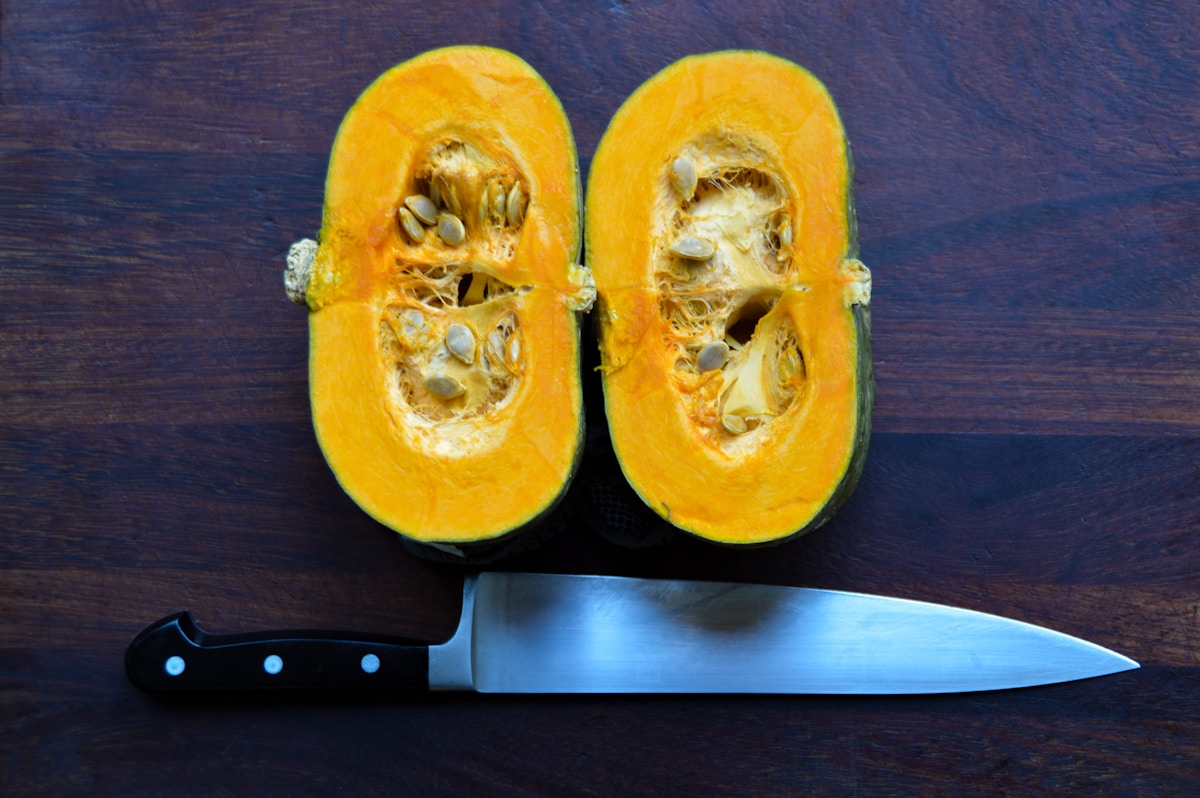
Let’s talk about that knife. You know the one. The big, sharp chef’s knife that came in the block, or the one you bought because a food blog said you should. Does it feel a little… intimidating? When you look at a pile of vegetables, does the idea of turning them into neat, even pieces feel like a magic trick you were never taught?
If you nodded yes, take a deep breath. You are in the right place. I remember standing in my first tiny apartment kitchen, trying to chop an onion that was rolling all over the cutting board. My slices were thick, thin, and everything in between. It felt clumsy and a little bit dangerous. The truth is, nobody is born knowing how to handle a knife. It’s a learned skill, just like riding a bike. And just like that bike, once you find your balance, you’ll never forget it.
Forget the lightning-fast chopping you see on TV. That’s not our goal today. Our goal is safety, confidence, and understanding why these skills matter. Let’s break it down, step by simple step.
Your First, Best Friend The Chef’s Knife
First, let’s clear up a common misconception. You do not need a block filled with 15 different knives. For 90% of what you’ll do in the kitchen, you only need one: a good 8-inch chef’s knife. This is your workhorse, your all-star player. It can chop herbs, dice vegetables, slice meat, and smash garlic.
So, what makes a good chef’s knife for a beginner? It’s not about price; it’s about feel.
- Balance: When you hold it, it shouldn’t feel awkwardly heavy in the blade or the handle. It should feel like a natural extension of your hand.
- Weight: Some people prefer a heavier German-style knife (like a Wüsthof) that chops with authority, while others like a lighter, more nimble Japanese-style knife (like a Shun). There’s no right answer, only what’s right for you.
- The Pro-Tip for Beginners: If you’re buying your first serious knife and don’t want to break the bank, look no further than the Victorinox Fibrox Pro 8-inch Chef’s Knife. It’s a legend in professional kitchens because it’s affordable, holds a great edge, and has a grippy, comfortable handle. (It’s the best fifty bucks you’ll ever spend on your kitchen.)
Whatever you choose, the most important thing is that it feels sharp. A dull knife is far more dangerous than a sharp one because it can slip off the food and into your finger. A sharp knife bites right into the food, doing exactly what you tell it to do.
The Two Hand Positions That Change Everything
This is the most important section you will read. If you master these two grips, you will be safer and more efficient than most home cooks out there. It will feel strange at first. That’s okay. Your muscles just need to learn a new way of doing things.
1. The Pinch Grip (For Your Knife Hand)
Forget holding the knife by the handle like it’s a hammer. Real control comes from holding the blade itself.
- How to do it: With your dominant hand, pinch the blade right where it meets the handle (this area is called the bolster) between your thumb and your curled index finger.
- Then: Wrap your remaining three fingers around the handle.
- Why it works: This grip gives you total command over the blade. You’re not just pushing it down; you’re guiding it. It’s the difference between steering a car with one finger versus having both hands firmly on the wheel.
2. The Claw Grip (For Your Guide Hand)
This is your safety shield. This is the technique that protects your fingertips and turns you into a precise cutting machine.
- How to do it: Take the hand that’s holding the food and curl your fingers inward, as if you were loosely holding a ball or gently clawing the table. Your fingertips should be tucked safely away, pointing back towards your palm.
- Your Guide: Your knuckles, specifically the middle ones, should be bent and sticking out slightly. This is what you’ll press the flat side of the knife blade against.
- Why it works: Your knuckles become a wall that the knife glides against. You physically cannot cut your tucked-away fingertips. You guide the food forward with your thumb (which is behind your fingers) and let your knuckles tell the knife exactly where to cut. Slow and steady wins the race here!
Practice these two grips together without even cutting anything. Just hold the knife and the food. Get a feel for it. (Yes, it feels weird. Trust me, it will soon feel completely natural.)
From Wobbly Slices to Perfect Dices
Now let’s put it into motion. The secret to professional-looking food is consistency. When all your pieces of carrot are the same size, they all cook at the same rate. No more burnt little bits and raw big chunks in your roasted vegetables!
Let’s use a carrot as our practice dummy.
-
Kitchen Hack: Create a Flat Surface. A round vegetable is an unstable vegetable. The first thing you should always do is carefully slice a thin piece off one side to create a flat, stable base. Now your carrot won’t roll away! Safety first.
-
The Slice: Place your carrot flat-side-down. Form your claw grip. Place your knife against your knuckles and use a gentle rocking motion. Push the knife forward and down, then pull back. Let the knife do the work. Your goal isn’t speed; it’s making each slice the same thickness.
-
The Dice: Dicing is just slicing in two directions.
- First, slice your carrot into even planks.
- Next, stack a few of those planks and slice them into even sticks (in chef-speak, these are batons).
- Finally, gather those sticks into a neat pile, use your claw grip, and slice across them to create a small, even dice.
See? It’s not one complicated cut. It’s three simple cuts in a row. This same logic applies to onions, potatoes, bell peppers—everything. This is the foundation. And why does it matter? Imagine roasting these perfect carrot cubes at 400°F (205°C). In 20-25 minutes, every single piece will be perfectly tender and caramelized. That’s the magic of a good cut.
Try This Tonight Your First Real Practice
Reading is one thing, but doing is where the confidence is built. So here is your homework. It’s simple, low-pressure, and will make you a better cook by tomorrow.
Your Mission: Take one single yellow onion.
Your only goal is to turn it into a pile of diced onion. That’s it. It doesn’t have to be perfect, and it doesn’t matter how long it takes. Put on some music. Take your time.
- Cut the onion in half from the root to the stem.
- Lay one half flat on your cutting board. (Instant stability!)
- Focus entirely on your two grips: the pinch on the knife, the claw on the onion half.
- Make thin slices, moving your claw hand back after each one. Let your knuckles guide the blade.
- Turn the sliced onion and chop across to create a dice.
Don’t worry about speed. Speed is a byproduct of doing something correctly thousands of times. Today, we are focusing on doing it correctly just once. Every time your fingers are tucked safely in a claw, that’s a victory. Every time you guide the blade with your knuckles, that’s a win.
Welcome to the club. You’re not just chopping an onion; you’re building a skill that will serve you for a lifetime of delicious meals. You’ve got this.