Have you ever stood in front of your open refrigerator, staring at a container of leftover chicken from two nights ago, and had a full-on debate with yourself? “It smells fine… but is it really fine?” That little whisper of uncertainty is something every cook feels, especially when you’re just starting out.
Here’s a secret: the pros aren’t just guessing. They follow a few simple, powerful rules that take the anxiety out of cooking and eating. Think of these not as strict laws to be memorized, but as your new kitchen superpowers. They give you the confidence to know that the delicious food you’re making is also wonderfully safe for you and your family to enjoy.
Let’s walk through them together. No judgment, no scary science terms, just practical advice you can start using today.
The Golden Rule Your Hands and Surfaces
Before we talk about temperatures or timers, let’s start with the absolute foundation of a safe kitchen: cleanliness. This isn’t about scrubbing your floors until they gleam (though that’s nice, too!). It’s about managing the invisible world of germs.
Your most important tools in this fight are your hands. You should wash them with soap and warm water for at least 20 seconds — that’s about how long it takes to sing “Happy Birthday” twice — before you touch food, after you touch raw meat, after you sneeze, and after you touch your phone. (Yes, really!)
Next up are your surfaces. Your cutting boards and countertops are ground zero for germs. After you prepare any raw meat, poultry, or fish, you must wash the surface, your knife, and any other utensils with hot, soapy water. This simple step prevents something called cross-contamination, which we’ll dive into next. It’s the number one way to keep pesky bacteria from hitching a ride onto your fresh salad.
Understanding the ‘Danger Zone’
Okay, this is the one piece of science you absolutely need to know. It’s called the Food Temperature Danger Zone, and it’s the temperature range where bacteria love to multiply like crazy. That range is between 40°F and 140°F (or 4°C and 60°C).
Think of it like a wild party for bacteria. Below 40°F (in your fridge), they slow way down, almost to a halt. Above 140°F (when you’re cooking), they can’t survive. But in that cozy in-between zone? They thrive. This is why you can’t leave groceries in a hot car or let a pot of soup sit on the stove for hours to cool.
The most important rule here is the Two-Hour Rule. Never leave perishable food (like meat, dairy, or cooked leftovers) sitting out at room temperature for more than two hours. If it’s a hot day, over 90°F (32°C), that window shrinks to just one hour. When the time is up, it either needs to go back in the fridge or be reheated properly.
The Great Divide Preventing Cross-Contamination
Cross-contamination sounds intimidating, but it’s a simple idea: it’s what happens when germs from a raw food item get onto a ready-to-eat food item. The classic example is cutting raw chicken on a cutting board and then using the same unwashed board to chop lettuce for a salad.
This is a huge no-no, but it’s so easy to prevent!
- Use Separate Cutting Boards: This is my favorite kitchen hack for beginners. Get two different colored cutting boards. Maybe green is for veggies and fruits, and red is for raw meats. This simple visual cue makes it almost impossible to mix them up.
- Strategic Fridge Storage: Store raw meat, poultry, and seafood in sealed containers or plastic bags on the bottom shelf of your refrigerator. This way, if any juices happen to leak, they won’t drip down and contaminate the produce you have in the crisper drawer.
- Wash Everything: As we said before, after working with raw protein, wash your hands, the knife, the cutting board, and the countertop thoroughly with hot, soapy water before you do anything else.
Cook It Right and Chill It Fast
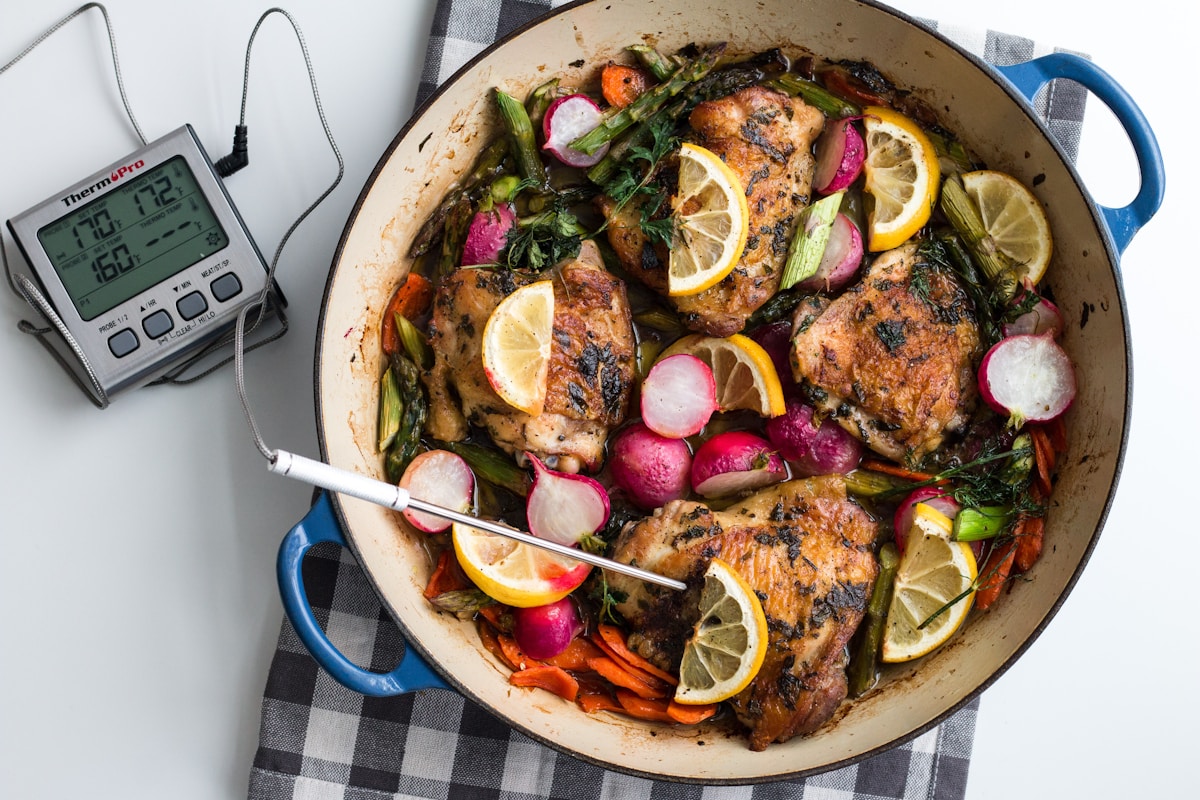
Knowing the danger zone is half the battle; the other half is knowing how to get food out of it. The only way to be sure that food is cooked to a safe temperature is by using a food thermometer. Guessing just doesn’t cut it.
An instant-read thermometer (brands like ThermoWorks make fantastic ones, but any reliable one will do) is a beginner’s best friend. Here are the key temperatures to remember:
- Poultry (Chicken, Turkey): 165°F (74°C)
- Ground Meats (Beef, Pork): 160°F (71°C)
- Fish and Seafood: 145°F (63°C)
- Reheating Leftovers: They must all be reheated to 165°F (74°C) to be safe.
Just as important is cooling food down quickly. Don’t put a huge, steaming pot of chili directly into the fridge; it will raise the internal temperature of the refrigerator and put other foods at risk. Instead, divide large batches of food into smaller, shallow containers. This allows them to cool down much faster, getting them through the danger zone and into the safety of the fridge in well under two hours.
Your Try This Tonight Challenge
Feeling a little overwhelmed? Don’t be! You don’t have to become a food safety expert overnight. The goal is to build small, consistent habits that become second nature.
So here’s your mission for tonight: a simple two-step kitchen audit.
- Check Your Fridge Temp: Find the thermostat in your refrigerator and make sure it’s set to 40°F (4°C) or slightly below. This is your first line of defense.
- Designate a ‘Meat Board’: Grab one of your cutting boards and declare it your official raw meat and poultry board from this day forward. Put a piece of masking tape on it or use a sharpie if you have to. This one small act instantly reduces your risk of cross-contamination.
See? You’re already cooking with more confidence. The kitchen is a place for joy and creativity, and understanding these basics is what gives you the freedom to explore without worry.